
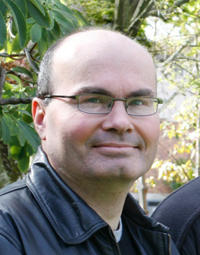
Professor Robert Poulin
Since arriving here from Canada in 1992, I have established a research programme in parasite ecology and evolution that focuses on broad questions and not on any particular taxa. Currently, our research has three main branches, reflecting my main long-term interests. First, we investigate the forces shaping the evolution of parasites, in particular the evolution of life history traits such as body size and fecundity, host specificity, the ability to manipulate host behaviour, and the complexity of the transmission pathways. Second, we are studying the role of parasites in freshwater and coastal marine ecosystems, i.e. how they affect community diversity and productivity and food web stability, and how parasitism may interact with climate change to influence the properties of ecosystems. Third, I have long been exploring large-scale patterns of parasite biodiversity and biogeography, in the hope of better understanding the processes behind the diversification and distribution of parasites and diseases.
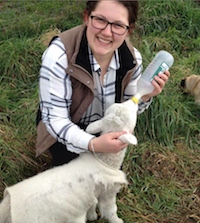
Dr Jerusha Bennett (Lecturer)
Kia Ora, I grew up in Geraldine, NZ, and received my BSc here at the University of Otago. I then completed a MSc in Ecology, again at Otago, investigating the trophic transmission routes of cestode parasites of New Zealand skates. After this, along with Bronwen Presswell, I investigated parasite biodiversity in New Zealand birds and fishes, producing new species descriptions and using genetic markers to resolve life cycles. This research was conducted in partnership with Otago Museum, and served to assemble New Zealand's largest parasite collection. This work developed into a PhD that allowed me to map parasite transmission patterns on the entire food web of the Otago coastal ecosystem, using genetic tools to match larval and adult helminth stages across all major food chains. At present, in partnership with the Cawthron Institute and funded by a MBIE Endeavour grant, I continue my research on the parasites of New Zealand animals, with a focus on their potential as agents of emerging infectious diseases in aquatic organisms.
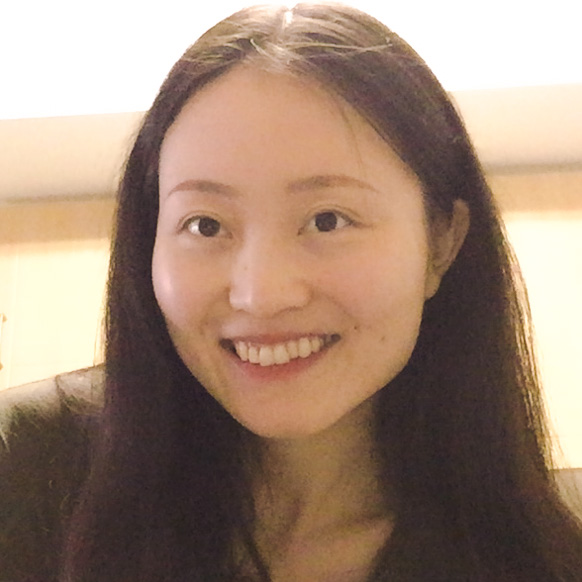
Dr Chenhua Li (Lecturer)
I grew up in China and completed my BSc degree in agriculture at the Northwest A&F University. Then I went to Winnipeg, Canada, for my MSc at the University of Manitoba and started my journey with parasites. I used stable isotope analysis to fill gaps in our knowledge of parasite lifecycles and transmission. One summer, I found a Leucochloridium-infected snail during my field collection, and I became fascinated by the host manipulation phenomenon. That led me to work on host manipulation for my PhD at the University of Calgary, where I studied the mechanisms underlying the zombie ant behaviour caused by the lancet liver fluke Dicrocoelium dendriticum. I'm looking forward to explore the parasites in New Zealand with my time here at the University of Otago.
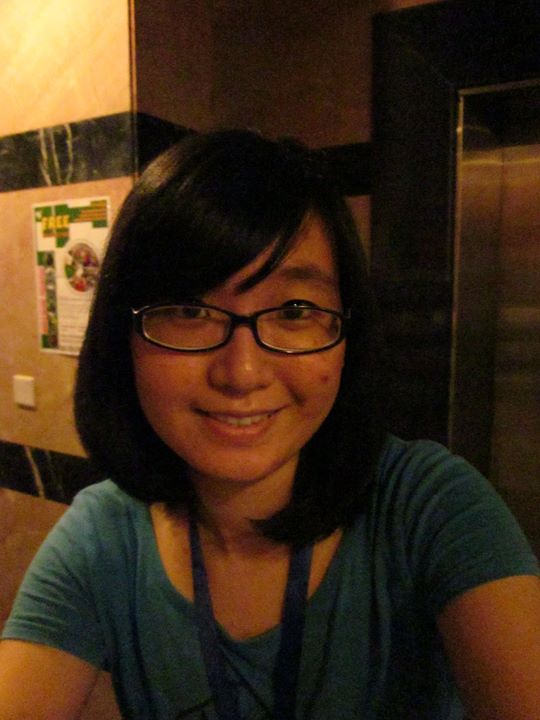
Xuhong Chai [Rose] (PhD student)
I am originally from China. I came to New Zealand for a working holiday in 2012 and in the end managed to live here. After working for several years I decided to follow my childhood dream of being a Zoologist, so I enrolled at the University of Otago in 2017. Fascinated by how parasites can manipulate host behaviour, I have been volunteering in Robert's lab since 2018 to learn more about the topic. After completing a BSc degree in Zoology with an Ecology minor in 2019, I went on to do a Master of Science degree focusing on deep-sea parasites. My research investigated parasite communities of different species of rattail fish and the co-evolutionary history of trematodes with their rattail hosts. And I've now embarked on a PhD to explore the impact of external environmental factors on the microbiome of trematode parasites within their amphipod intermediate hosts.
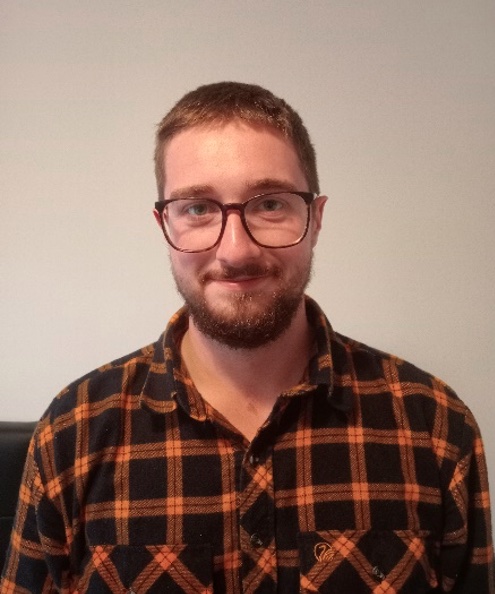
Cameron McDougall (PhD student)
Kia ora, I grew up in Invercargill, the only city in New Zealand further south than Dunedin. I moved up to Dunedin to study for my bachelor's degree at the University of Otago where I majored in both Zoology and Botany. I have always had a fascination with evolutionary biology and because of this I chose to complete my Bachelor of Science with Honours in the Evolutionary and Ecological Parasitology Research Group. During my Honours I studied the cophylogeny between a group of cestodes and their seabird hosts. I have now begun a PhD researching the coevolutionary patterns between a group of parasitic nematodes (family Mermithidae) and their invertebrate hosts throughout the South Island of New Zealand. Within this PhD, I also aim to further our understanding of the effect that mermithid infection has on the behaviour of their hosts and to quantify the variation in the microbiome of the mermithids as a function of their genetic divergence.
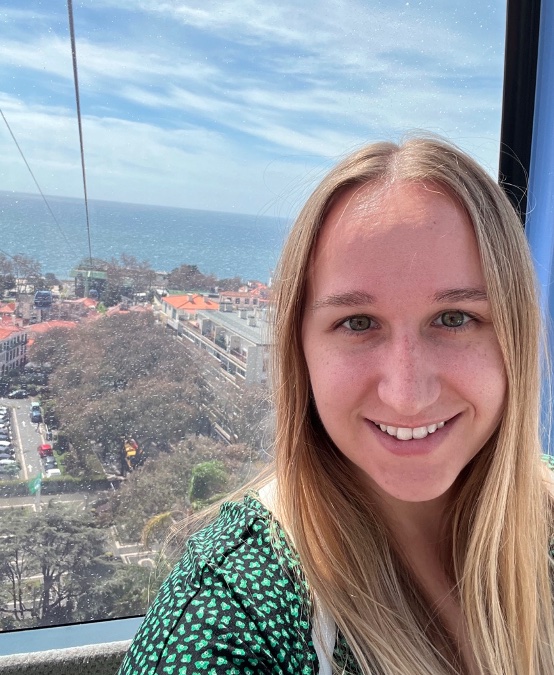
Katie Buschang (PhD student)
Hey! My name is Katie, and I am originally from Texas where I got my B.S. in biology and minor in chemistry from the University of North Texas (UNT). During my time at UNT, I worked in an aquatic toxicology/community ecology lab and did my honors thesis on the effects of climate change on dengue fever and valley fever. After graduating, I went to the University of Florida (UF) where I got my Master of Health Science degree in Public Health-One Health. During my time at UF, I assisted on a project using wastewater-based epidemiology to monitor SARS-CoV-2 around UF and nearby cities. Furthermore, for my capstone project, I performed a general surveillance, descriptive, study using molecular techniques to compare estimates of prevalence of Borrelia burgdorferi, Babesia spp., and Bartonella spp. across different rodent species. My current doctoral research explores the occurrence, determinants and prevalence of Toxoplasma gondii infections in New Zealand birds.
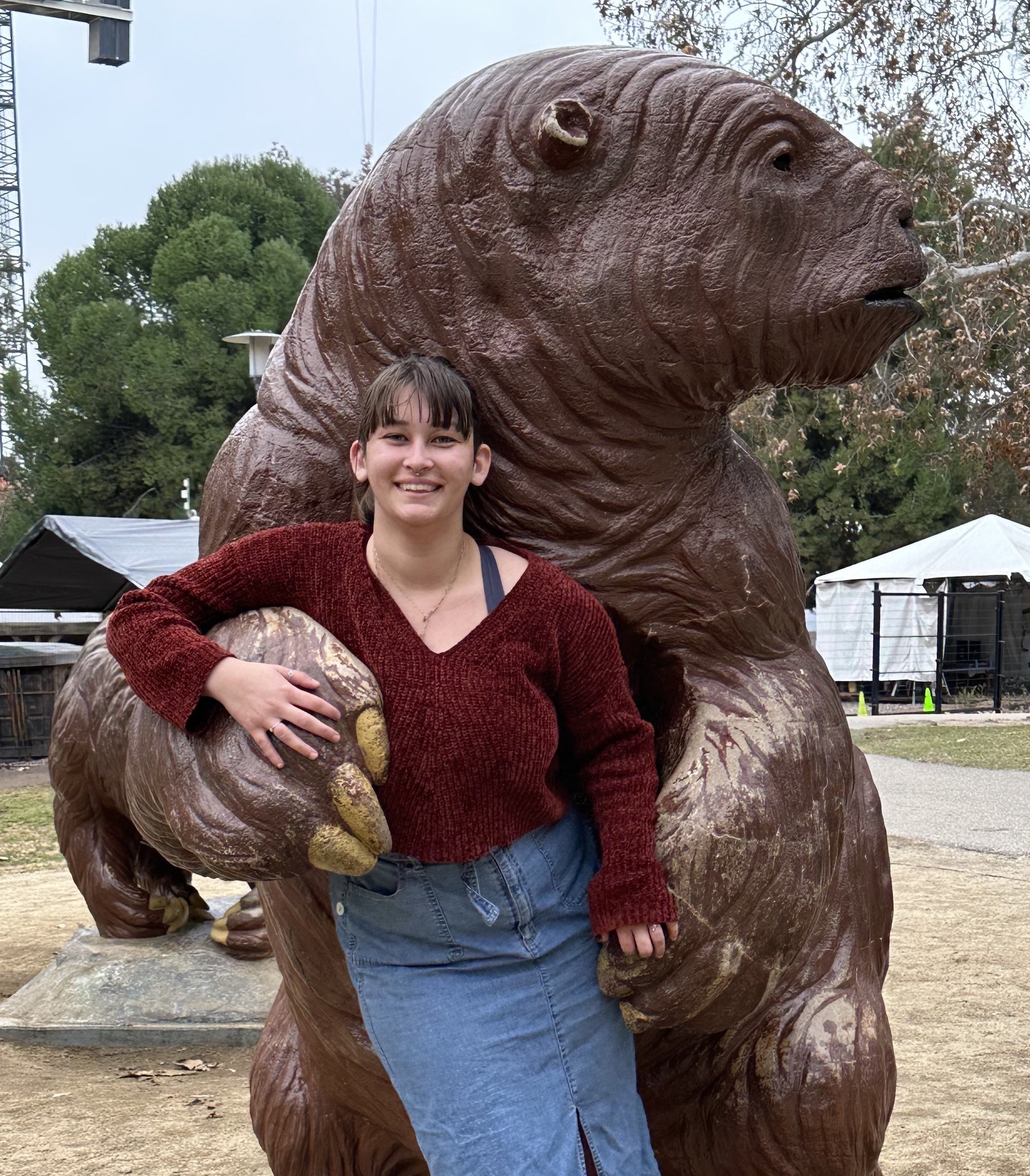
Rosemary Presburger (MSc student)
Hello! I grew up in California, where I attended the University of California, Riverside for my BSc in Psychology. There I worked in two different research fields, cognitive neuroscience and physiological evolution. In the evolution lab, I conducted an undergraduate project testing neuromuscular coordination between two groups of laboratory mice exposed to different selection regimes over several generations. These experiences solidified my love of research while I simultaneously developed a love for parasites. A behaviourist at heart, of course I fell for behaviour manipulation by parasites. Here in New Zealand, I look to characterise the virome of the hairworm Gordius paranensis and its contribution to behavioural manipulation of the worms's host, native cave wētā.
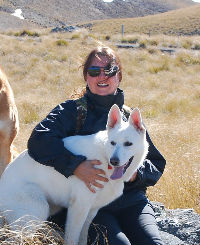
Dr Bronwen Presswell (Scientific Officer & Lab Manager)
I am from the UK where I gained a Masters in Advanced Methods in Taxonomy and Biodiversity at the Natural History Museum, London. For my PhD at Glasgow University and the NHM, I studied the morphological and molecular systematics of Indian caecilians at the intraspecific level. I currently investigate the identities and life cycles of parasitic helminths that are found in, and on, New Zealand wildlife, from invertebrates to fishes, elasmobranchs and birds. The parasitic worms of NZ wildlife have not been well studied, and I continue to find and describe new species all the time, and complete life cycles for species known only as larvae. A collaboration with the Dunedin Wildlife Hospital has allowed me access to their deceased birds, which have yielded hundreds of parasite specimens, forming probably the largest parasite collection in New Zealand, which has been submitted to the Otago Museum. Using molecular, histological, scanning electron microscope and other methods I hope to fill a few gaps in our knowledge of this parasite fauna.