North & South America

| Travels to North America generated more travel accounts than any other part of the world. The northwest passage remained an elusive possibility until 1850, while Spanish control of South America, and with it access to the Pacific, created sustained interest in any possibilities of trade or settlements on that continent. |
A voyage of discovery
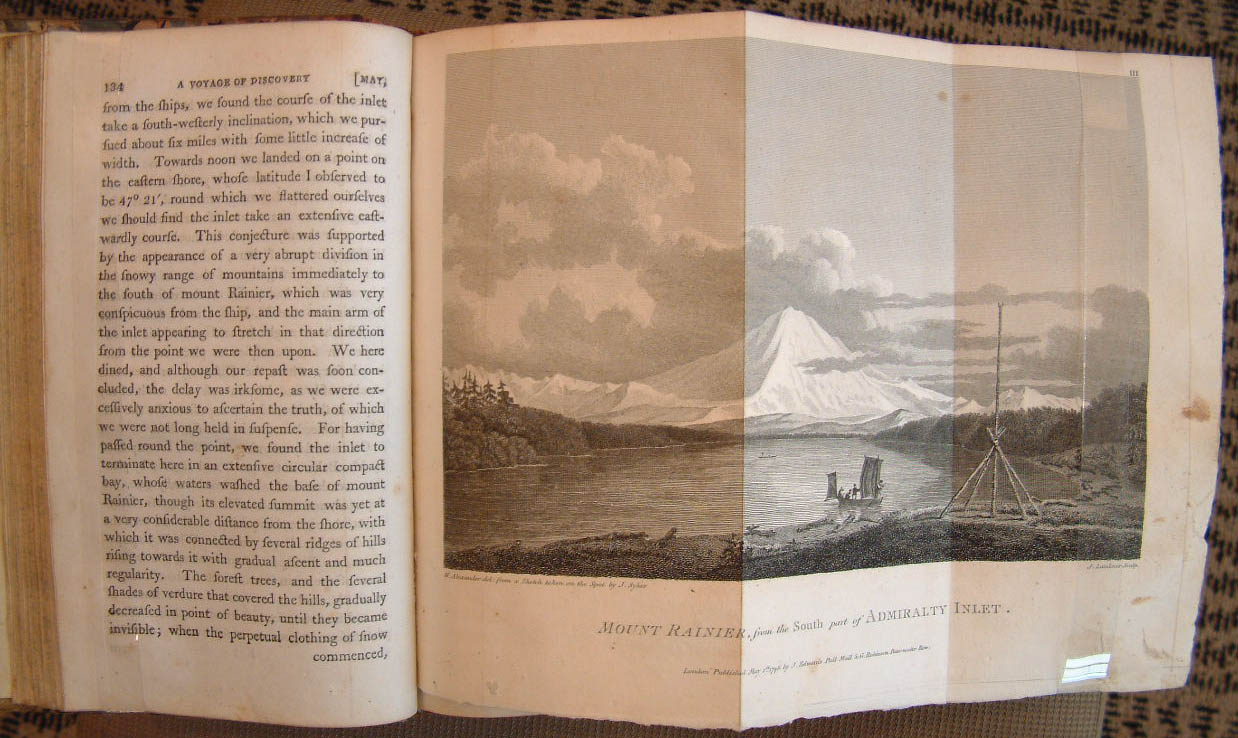
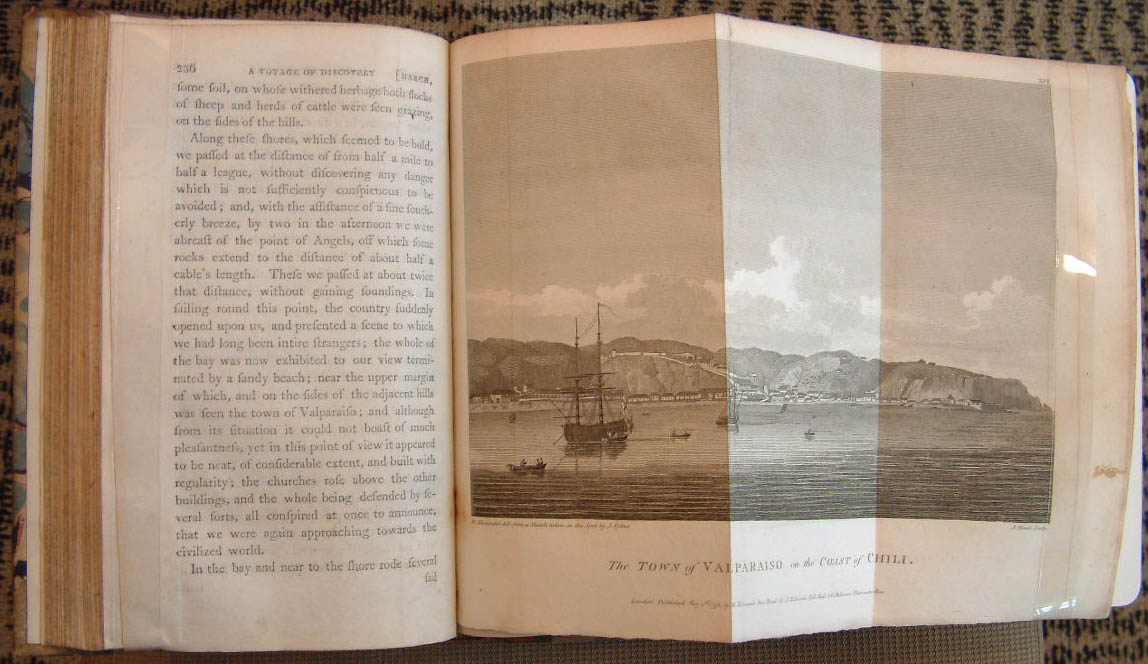
These two illustrations provide a concise summation of European associations
with North and South America and of the range of Vancouver's explorations
along the eastern shores of the Pacific. To the north is the vast unpeopled
landscape of the Pacific northwest (and mountains hiding Northwest Passages),
while to the south is the Spanish port of Valparaiso, where 'all conspired
at once to announce, that we were again approaching towards the civilized
world' (6.236). These images also aim for a high degree of verisimilitude,
to complement Vancouver's constant quest for accuracy, a trait he may
well have learned from his captain while sailing on Cook's second and
third voyages.
check list
A compendium of authentic and entertaining voyages

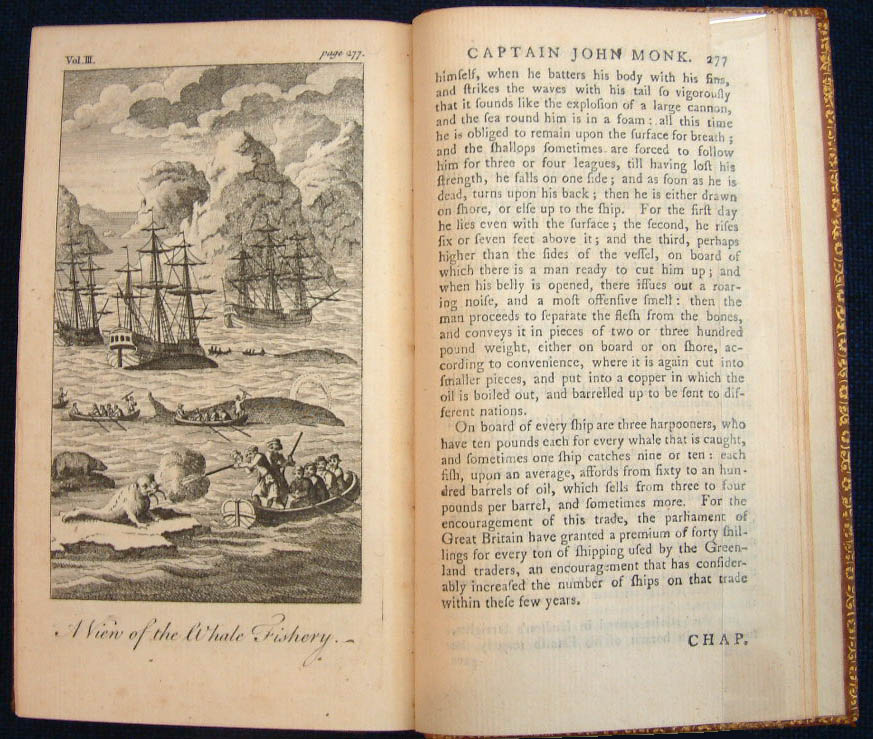
Smollett is best known as a novelist and historian, but his collection
of voyages was popular during the second half of the eighteenth century.
In his own travels, Smollett was a very grumpy character, but he clearly
possessed a good idea of what his readers were after. These two engravings
encompass the range of those readerly interests: the whale fishery implies
a strongly practical and exploitative interest in travel, while the stereotypical
cannibal scene, with whole appendages roasting on the grill and a toddler
either nibbling on a small bone (imbibing cannibal culture) or nursing
(itself a form of consumption of another human, albeit one acceptable
to European culture), implies a fascination and/or revulsion surrounding
the otherness of the new world.
check list
Wanderings in South America
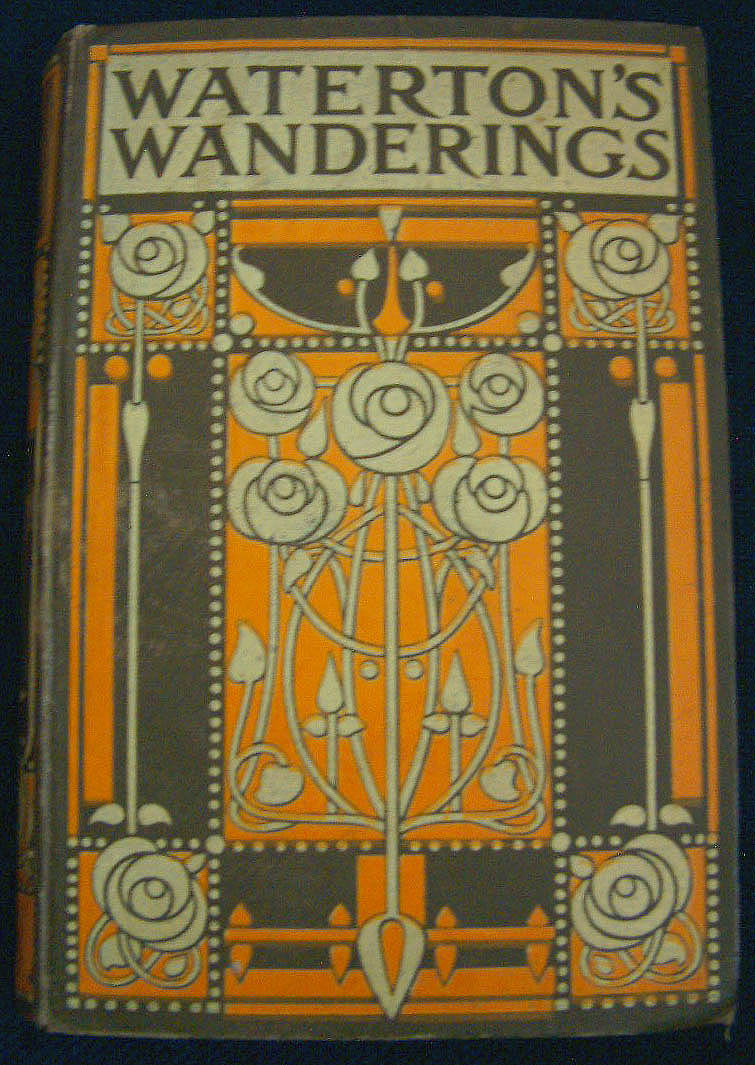
This book first appeared in 1825, though this edition, with its handsome binding, was printed much later, probably in 1894. Although Waterton's style is clearly dated and, to our ears, rather pompous, his work has been often reprinted even in the twentieth century, and his voice is engagingly enthusiastic once you accept the preachiness:
Cast thine eye around thee, and see the thousands of Nature's productions. . . . What a noble field, kind reader, for thy experimental philosophy and speculations, for thy learning, for thy perseverance, for thy kind-heartedness, for everything that is great and good within thee! (32-33)
Somewhat surprisingly in light of this lofty rhetoric, Waterton's initial interest in his travels was to learn about native poisons.
This edition concludes with sixteen pages of advertisements for 'Blackie's
Story Books for Boys', indicating that the publishers thought readers
of their day might appreciate the adventures more than the admonitions.
check list
|
|
|
| Detail. Smollett, Tobias
George [compiler] A compendium of authentic and entertaining voyages,
digested in a chronological series ... v.1 de Beer Eb/1766/S v.1-7 |
|
 |
|
![Detail. Smollett, Tobias George [compiler]A compendium of authentic and entertaining voyages, digested in a chronological series ... v.1de Beer Eb/1766/S v.1-7](../../gfx/Exhibitions/GrandTour/smollett2.jpg)