Pompei and Mount Vesuvius

| Pompei and Vesuvius combined the persistent fascination of active volcanoes with the historical excitement of the recent excavations of classical ruins. These books each highlight a different aspect of that appeal. |
Topography 
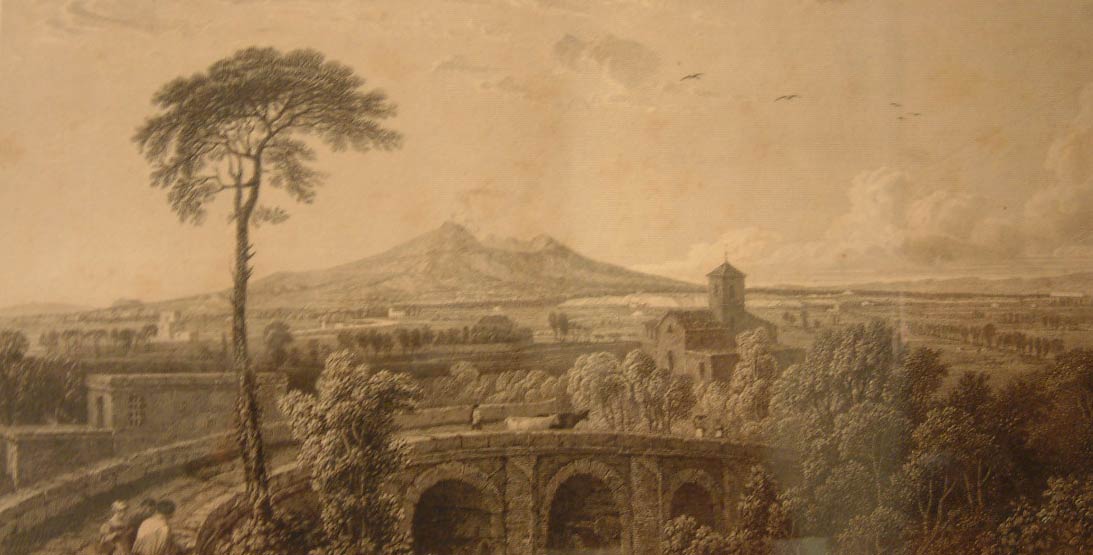
Gell's detailed study of the architectural discoveries unearthed at Pompei
over the course of the eighteenth century provides an example of the strong
English interest in topography and archaeology that often informed travel.
This particular image also shows the strikingly barren profile of Vesuvius
across the otherwise lush plain.
check list
The influence of Vulcan
This early account highlights the associations of volcanoes with Vulcan
and the underworld. Vesuvius had last erupted in 1631, with the loss of
4000 lives. Although the engraving exaggerates the descent, Raymond does
admit that 'wee went easily down, though almost up to the knees in ashes'.
(162-63).
check list
The active volcano
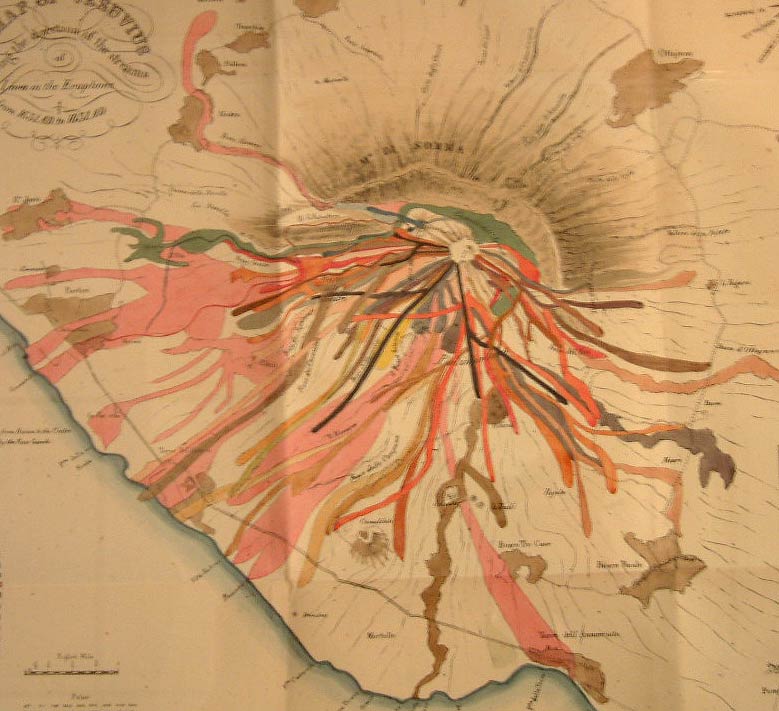
As this page vividly illustrates, Vesuvius continued to be quite active
after Raymond's visit. Published in Naples for an English audience, this
book represents the nineteenth-century traveller's increasingly scientific
interests.
check list
An early coffee table book
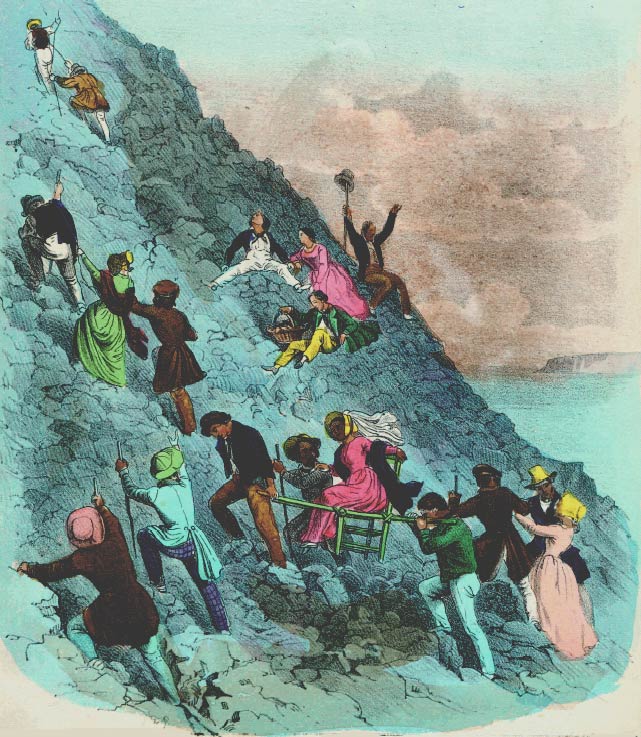
This early version of the coffee-table book provides interesting insights
into assumptions about Italian life, with its lively images of landmarks,
religious processions, and peasant life. Given the French title and lack
of publishing information, it is likely that a traveller collected the
pictures individually, and then had them coloured and bound upon return
home, much as we do with the modern photo album.
check list
|
|
|
| Detail: Salita al vesuvio.
Sauvenirs de Naples. [Naples : s.n., 18--?] de Beer Eb/1800/S |
|
 |
|
![Detail: Salita al vesuvio. Sauvenirs de Naples. [Naples : s.n., 18--?] de Beer Eb/1800/S](../../gfx/Exhibitions/GrandTour/happiness.jpg)