
PhD students
 Yi-lin Chen
BA (National Taiwan University), MA (Otago)
Investigating the plant economics of Neolithic Taiwan: an archaeobotany case study of the Wansan Site, northeast Taiwan
It is often assumed that Neolithic peoples in Taiwan practiced slash-and-burn agriculture for root, tuber, grain and fruit crops as early as the Neolithic Dabenkeng (TPK) Culture (5000-6000 years ago). Over the years, the discussion has focused on the horticulture of rice and millet, while the potential usage of tubers and tree crops has not been explored. This research will re-examine the model of Taiwanese Neolithic plant use through the identification and analysis of charcoal remains excavated from the archaeological site of Wansan, northeast Taiwan. A small-scale microfossils study is also proposed to examine the utilization of selected crops that have economic importance to prehistoric Austronesian societies.
Supervisors: Professor Ian Barber and Associate Professor Anne Ford
Email cheyi087@student.otago.ac.nz
 Marie Dunn
BA, MA (Otago)
Heritage practice as (re)connection to Whenus Tipuna: A Murihiku case study
Whenua tīpuna are the places that connect takata whenua to our whakapapa, and are an essential pillar to our Māoritaka. However, since the beginning of European colonisation of Aotearoa, Māori have lost access to many of these places. The removal of descendants from traditional lands by various means has generational impacts on communities, where the land plays an integral role in our identity as Māori. Situating itself in the southern Catlins region within the rohe of Awarua marae, this research aims to investigate how engaging in heritage practices may be used as a tool for takata whenua in strengthening the relationship between Māoritaka and whenua tīpuna, serving to counteract the adverse experiences of disconnection. Through kōrero and wānaka with whānau, forms of heritage practice will be co-designed, practiced, and examined in their effectiveness in connecting descendants to whenua tīpuna.
Supervisors: Associate Professor Anne Ford and Dr Zac McIvor
Email dunma743@student.otago.ac.nz
 Adelie Filippi
BASc, MA, BA(Hons) (Otago)
Adelie Filippi is a PhD candidate in the archaeology programme at Ōtākou Whakaihu Waka |University of Otago. She has a background in botany and archaeology, with special interests in ecology and evolutionary biology. Her research explores how archaeobotanical techniques can be used to investigate the relationship between plants and the ancestral peoples of Aotearoa, with a special focus on phytolith analysis.
Exploring Māori Native Plant Use (c.1200s –1810CE) in Te Tai Tokerau, Aotearoa New Zealand
When the East Polynesian settlers arrived in Aotearoa in mid to late CE 1200, they found themselves facing a starkly different environment than that of tropical Polynesia - a varied, diverse sub-tropical to temperate continental landscape with strange and unfamiliar species. How Polynesians adapted
to the unique conditions of Aotearoa is a central question in archaeology in Aotearoa, and the use of native plants is a vital component of this story.
This project uses microbotany to examine the role of native plants in the human story in Aotearoa, examining what phytoliths (tiny particles of organic silica) and other microparticles can tell us about the exploitation of native plants in te ao tawhito (the old world). The project involves analysing dental calculus and sediment samples from four burial sites in Te Tai Tokerau, exploring what can be learned about the diet and lifeways of the tūpuna buried there. These sites are associated with an ongoing Marsden project led by PI Dr Rebecca Kinaston, ‘From Hawaiki to Aotearoa: Unearthing stories of early Māori ancestry and adaptation in Te Tai Tokerau’, with this PhD research component serving as one small part of a greater series of analyses exploring the lives of these ancestors.
Supervisors: Dr Karen Grieg, Dr Monica Tromp, and Associate Professor Anne Ford
Email filad506@student.otago.ac.nz
 Lisa Mckendry
BA, MA (Auckland)
Māori archaeological textiles: An investigation of Māori textiles from cave sites at Te Rae Kura (Redcliffs), Canterbury
Archaeological Textiles represent one of the earliest technologies developed by humans and were a fundamental component of food, clothing, and housing. Textiles hold potential information about past human behaviours through the materials, the type of objects, the range of manufacturing processes and decorative elements, as well as the contexts in which manufacture and use/re-use and discard occurred. Textiles are constructed from various raw materials and with diverse techniques, such as, knotting, twisting, plaiting, twining, weaving, and sewing. A chaîne opératoire framework allows for the clear identification of these diverse technological processes within predetermined production sequences. As part of a holistic approach including archaeological science, ethnographic and customary knowledge, and practical experience this framework facilitates an investigation of the multifaceted, dynamic relationship between people and textiles.
Supervisors: Associate Professor Catherine Smith and Professor Richard Walter
Email mckli495@student.otago.ac.nz
 Anne-Claire Mauger
BA (Nantes), BA(Hons) (Bourgogne), MA (Montpellier)
Pounamu production and the archaeology of Māori society in East Otago / Ko te whakairo o te pounamu mō te mātai whaipara tangata o te porihanga Māori ki te tai rāwhiti o Otago
In the 19th and 20th centuries, multiple campaigns of fossicking on the east coast of Otago have extracted a large quantity of pounamu, with little regard to the tangata whenua and the archaeological context. The chronological background of these sites remains unknown, especially the framework of innovation in pounamu technology, and the society that enabled its change through time. This project aims to reconstruct manufacturing processes by examining debris and surface traces, and to compare with experimental and ethnographic data. This thesis also proposes to analyse radiocarbon information from archaeological sites, by using Bayesian modelling, to reexamine the chronology of technological change in pounamu manufacture. The research will assess the correlation between the implementation of innovative technology towards standardisation, and the control over specialised manufacture of prestige products by social regulations, guided by the following question: when and how did pounamu become a significant taonga in southern Māori society?
This research is funded by a Fanny Evans scholarship.
Supervisors: Professor Ian Barber and Associate Professor Anne Ford
Email mauan555@student.otago.ac.nz
 Brooke Tucker
BA(Hons), MA (Otago)
An archaeological examination of the occupation of Rakiura and the islands of Te Ara-a-Kiwa in the pre-contact period
This research contributes to the culture-history of a region of New Zealand that is not well known archaeologically. When referring to Te Ara-a-Kiwa (Foveaux Strait), archaeologists have generally followed ethno-historic models incorporating the islands and coastal mainland within the wider Murihiku interaction sphere observed during contact and post contact periods. However, this dynamic cannot be assumed for initial colonisation. An examination of island sites within the Strait (The Neck, on Rakiura, and Sealers Bay Camp, on Whenua Hou) will provide an “archaeology of starting points” for discussions of island archaeology, strategic migration, and interaction networks, and will investigate the role of "marginal regions" in models of colonisation and cultural trajectories over the duration of Murihiku's occupation.
This research is funded by a University of Otago Doctoral Scholarship and has also been assisted by a Skinner Fund grant (2019) from the Royal Society of New Zealand.
Supervisors: Professor Richard Walter and Associate Professor Karen Greig
Email dicbr464@student.otago.ac.nz
Master of Archaeological Practice Students
 Kristina Johnson
BA Anthropology (University of Alberta)
A collections crisis: What happens to archaeological collections after excavation?
Decades of archaeological excavation around the world have left millions of artefacts in storage in museums, universities, and consultancy offices. These institutions are becoming overwhelmed by the lack of storage space, and it is turning into a crisis of where to store excavated materials. This research aims to look at collections management in Aotearoa and Canada to assess what current methods are being used to handle the collections crisis, and what can be done to better this in the near future. It will also look at complex questions around ownership of taonga, and repatriation practices that are currently occurring in consultation with descendant communities.
Supervisors: Dr Charles Radclyffe
Email johkr188@student.otago.ac.nz
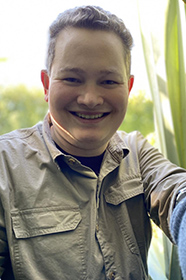 Tāne Tāmati (Waitaha, Kāti Māmoe, Kāi Tahu, Tūhoe)
BSc(Otago)
Towards a physical property database for pounamu provenance: The Beck International Jade Research Collection
The lack of a comprehensive database of pounamu sample physical properties with known provenance constrains our ability to discern pounamu source. Previous pounamu provenance studies have employed the use of destructive technologies with varying success. These technologies do not align with tikaka Māori when analysing taoka pounamu. Therefore, this research investigates if pounamu physical properties can be used to identify source by providing a systematic documentation of textural, mineralogical, and other physical properties representing the different pounamu source areas in Aotearoa New Zealand from the Beck International Jade Research Collection. It will test if observations on a selection of taoka pounamu from Tūhura Otago Museum can be used against this database to identify source location. The aim is to work towards the development of a reference dataset/tool that is:
- Accessible
- Low-cost
- Can be used in museum, archaeological, legal, and pounamu management contexts
Kāi Tahu takata, pounamu taoka, ko koe, ko tātou, ko tātou, ko koe.
Kāi Tahu are the people, pounamu is the treasure, together we are one.
Supervisors: Associate Professor Anne Ford, Dr Gerard O'Regan (Tūhura Otago Museum), Dr Simon Cox (Earth Sciences New Zealand).
Email tamta400@student.otago.ac.nz
MA students
 Rachel Clark
BASc, BA(Hons) (Otago)
Intra-spatial differences within the Lawrence Chinese Camp: An investigation into the agency and identity of the early New Zealand Chinese in Otago
The Lawrence Chinese Camp is an early and important New Zealand Chinese site associated with the gold rush in Otago. It was excavated over five seasons between 2005 and 2025. Much of the previous scholarship of Chinese diaspora sites has focused in theories of assimilation and acculturation , which strips agency from the residents and ties identity to ethnically related material culture. This research aims to use a transnationalist framework to analyse the material culture from three key areas in order to identify whether there are intra-spatial differences in the material culture at the site. With a focus on the ceramics from the site, as well as other material culture classes such as glass and meta, this research aims to investigate the agency and diversity of the residents of the site and the webs of interconnection between China and Otago in the late nineteenth and early twentieth centuries.
Supervisors: Associate Professor Anne Ford and Professor Richard Walter
Email clara513@student.otago.ac.nz
 Ben Heaps
BA, BA(Hons) (Otago)
From sand to sea: Digital technologies as tools for the reconstruction and simulation of partial archaeological material
There is a strong interest in the sailing technology of Polynesian explorers, including Aotearoa, but physical material is scarce in the archaeological record due to the material’s organic composition. Experimental archaeology uses physical recreation and testing to examine the performance of waka forms, but the focus has been on typology rather than recorded forms and requires highly specialised resources. This research aims to examine the life history of the Papanui Inlet waka (J44/47) through opensource digital methods, including the construction and testing of multiple forms. The simulated stability and speed of these forms when holding different loads will help to provide data about the Papanui Inlet Wakas life history, while also examining if digital technology can be used for low cost, non-invasive archaeological investigation.
This research is supported by a Coastal People: Southern Skies postgraduate scholarship.
Supervisors: Dr Zac McIvor and Associate Professor Tim Thomas
Email heabe384@student.otago.ac.nz
 Natalia C Lopes
BA, BA(Hons) (Otago)
Trade or Manufacture? Using geochemical analysis to source pottery from Popo, Orokolo Bay, Papua New Guinea
The ancestral site of Popo at Orokolo Bay, Papua New Guinea, appears to be one of the first Gulf sites to participate in the hiri, an annual long-distance trading voyage where pots and shell valuables from the Port Moresby area were taken to the Gulf by lagatoi canoes in exchange for sago. The site of Motupore in Bootless Bay, around 15km east of Port Moresby has been argued to be one of the manufacturing centres of the hiri and the source for most pottery excavated at Popo on stylistic grounds. However, Motupore is one of the only pottery manufacturing sites in the region, contemporaneous with Popo that has been extensively excavated by archaeologists. This thesis conducts a geochemical analyses of the pottery of Popo through the Scanning Electron Microscope (SEM) to eliminate assumptions of the pottery's origin caused by a lack of archaeological excavations on contemporaneous pottery making sites.
Supervisor: Associate Professor Anne Ford
Email cosna637@student.otago.ac.nz
 Bradley K McDonald
BASc, BA(Hons) (Otago)
Experimental investigation of the in-water behaviour of pre-contact Māori fishing lures in the Muruhiku region focussing on the impact of lure design on fish targeting
Previous work on sites throughout the Murihiku region of southern Aotearoa New Zealand, has shown fish to be a valuable member of the pre-European Māori diet. Despite this it is not well known how these fish were caught as early lure designs were no longer in use by the arrival of European ethnographers. In this project an experimental archaeology approach will test the ability of these early lures to determine the in-water behaviour of lure designs from coastal Murihiku sites. Comparing the results of the experimental test to fish locomotion and predation behaviour a profile will be developed indicating the species likely to feed on lure exhibiting this behaviour. Comparing this profile to midden composition will allow interpretation of landscape learning and resource exploitation in coastal Aotearoa New Zealand, and the wider Pacific region.
This research is supported by a postgraduate scholarship from Coastal People: Southern Skies and research funding from the Bruce Grandison Biggs Fund.
Supervisors: Dr Zac McIvor, Associate Professor Karen Greig, Dr Gerard O'Regan (Tuhura, Otago Museum)
Email mcdbr634@student.otago.ac.nz
 Oliver Walne
BA(Hons) (Otago)
A Geochemical Analysis of Soils from Site T11/2789, Cooks Beach
Excavated in 2015, T11/2789 was a 13ha site located in Cooks Beach in the Coromandel Peninsula. A large portion of the site consisted of anthropogenic soils which appeared to be modified for agriculture. By using geochemical methods performed in similar studies overseas, such as XRF and pH analysis, it may be possible to discern how human activity at the site was captured in the enrichment of elements in the soil record. The aim is to characterise how agricultural soils were modified by Māori in order to improve the growing conditions for cultivars in coastal dune environments. This investigation builds on a literature review from my BA(Hons) dissertation on the chemical analysis of soils and sediments in New Zealand. The review concluded that soil chemistry is an underutilised resource in New Zealand archaeology.
Supervisors: Professor Ian Barber and Dr Francisco Barraza (Geography)
Email oliver.walne@postgrad.otago.ac.nz
 May Wheeldon
BA, BA(Hons) (Otago)
The Taphonomy of Avifauna in Coastal Otago: The implications of element survivability and early Māori cultural processing
Eastern Otago is home to a variety of native forest and coastal birds that southern Māori once exploited. This project is an archaeozoological study to examine the role of small native birds in southern Māori life. The project focuses on taphonomic processes as they have impacted element survival and can highlight cultural choices and uses. This involves the analysis of bird bones from a variety of Eastern Otago archaeological sites, including Watson’s Beach, Doctors Point, and North Otago sites. Standard taphonomic categories will be applied to guide the differentiation of anthropological and environmental processes. This taphonomic information will be interpreted for different species to understand the uses and relationships of bird species and southern Māori of the past.
Supervisor: Professor Ian Barber
Email whema789@student.otago.ac.nz