Sally Angelson
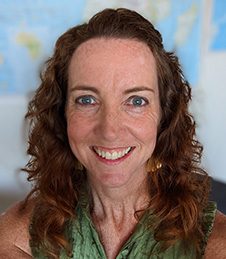 Sally Angelson began her PhD study with the National Centre for Peace and Conflict Studies | Te Ao o Rongomaraeroa in early 2023. Her research focusses on how to co-create a fit-for-purpose aid sector, which shifts the power and directionality of the aid architecture to one that is locally led and owned, through the Localisation Agenda, introduced in 2016.
In recent years, the Localisation Agenda has gained traction and in theory has the potential to shift power and decolonise the aid sector. In practice, it is mutually stuck from international and local perspectives, and Sally’s research will investigate why change hasn’t happened, and how change could happen, through a case study of Aotearoa New Zealand and the Solomon Islands.
Sally has spent more than 20 years working in various aspects of community development and peacebuilding across Africa, Asia, the Middle East, and the Pacific, including at home in Aotearoa, covering thematic areas of youth, education, livelihoods, health, gender-based violence, poverty alleviation and conflict resolution. The focus of the work has challenged the structures of the system and worked to amplify local voices and ensure the ownership of the process has locally centred.
Sally’s thesis for her master’s degree explored the relationship between Peacebuilding and Education for the Palestinian Refugees of Lebanon, through the University of Auckland. She is from Aotearoa New Zealand and lives in Dunedin with her husband and two young children.
Anna Burgin
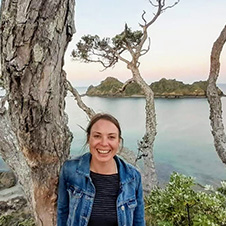
Anna completed a Masters in Peace and Conflict studies in 2016-2017 at the University of Otago, in the process interning with WISCOMP, a women's peacebuilding organisation in New Delhi, India. Prior to, and in between study, Anna has worked in the not for profit and social service sector in New Zealand, Australia and the United Kingdom, with a particular focus on managing volunteers, youth development, and program development.
Her current research is examining the host community within refugee resettlement, looking through the lens of volunteers and their capacity for everyday peacebuilding and the inherent tensions present in helping-receiving relationships amid structural violence inherited from colonisation. The research will examine the experiences of volunteers - their role/s, contributions, encounters and the challenges they experience as 'hosts' in Aotearoa New Zealand. It will explore the impact of the New Zealand resettlement strategy from the ground up by focusing on the diverse experiences of volunteers in the context of Ōtepoti Dunedin, Aotearoa New Zealand.
Her research is informed by her experiences of volunteering, volunteer management, third sector reform, and working with volunteers and asylum seekers and former refugees in Australia. Her other research interests include peace education, gender based violence, and Aotearoa New Zealand peace traditions.
J.M. Inton-Campbell
Having served in the United States Peace Corps (2012 – 2014, Morocco), I found myself asking several years ago whether international volunteering for development actually achieves what it aspires to do: build peace between nations through cooperative international exchange and friendship. My current research investigates how the intergroup contact experiences of international volunteers and host-community counterparts influences the attitudes and relationships between both of their wider communities. This builds upon my previous research in “Putting Peace Back Into the Peace Corps” (Journal of Peacebuilding and Development, 2019) and my master's thesis, “Volunteering for Peace” (International Christian University, 2017). I earned my M.A. in Social and Public Policy from International Christian University in Mitaka, Japan in 2017 and my B.A. in Political Science and International Studies from University of Nebraska in Omaha, USA.
Anita Clarke
I grew up on Te Motu Kairangi / Miramar Peninsula, the baby of a large family of Irish, Lebanese and English descent. After proceeding through the local Catholic school system, I studied International Relations and Media Studies at Victoria University of Welllington, where I completed a Bachelor of Arts with Honours.
I was working for a media monitoring company in Melbourne when I applied for the Master of Peace and Conflict Studies degree at the National Centre for Peace and Conflict Studies. Originally, I had wanted to write my Masters dissertation about colonialism in Palestine, where I had recently travelled for the olive harvest, but I felt uncomfortable and suspicious about the way I was writing. I ended up exploring epistemology itself, specifically the violent functions of the distancing techniques that characterise traditional academic research and the nonviolent potential of autoethnography and literary narrative.
My current doctoral research addresses the ways in which Pakeha culture is implicated in the reproduction of colonial violence.
Sonja Tamberg Dobson
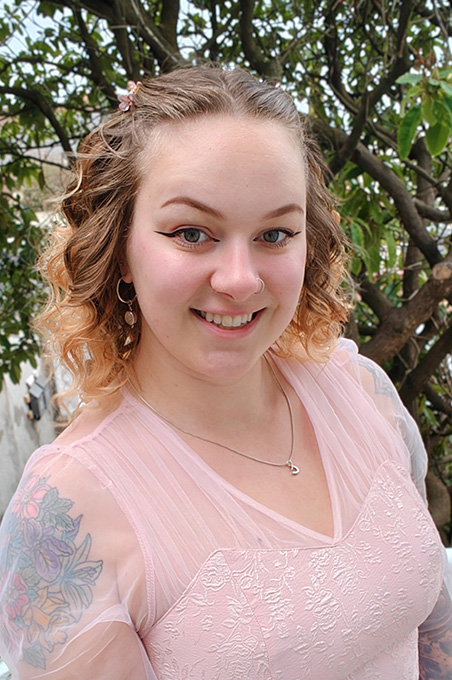 Sonja is a Canadian Estonian from Toronto, Canada and her PhD research is supported by the Rei Foundation. Although she started her PhD at Teo Ao o Rongomaraero a | National Centre for Peace and Conflict Studies in February 2022, it wasn't until September 2022 that Sonja was able to move to Dunedin, due to COVID restrictions. Sonja began her PhD from her mother's basement, which is fitting as Sonja also finished her Masters in Conflict Studies and Human Rights from Utrecht University in the Netherlands under COVID-restrictions, from a bedroom in her dad's house in August 2020. Her master's thesis was titled Is Timing Everything? Forecasting the Ripest Moment for Peace. In 2019, Sonja graduated from the University of Toronto with an Honours Bachelor of Arts in African Studies and Political Science, with High Distinction.
Sonja's interest in peace was born out of studying international development, particularly during a trip to Tanzania in 2014. When Sonja started her Bachelors in 2015, she was enrolled in a niche program at the Munk School for Global Affairs and Public Policy which focused on global innovation and global problem-solving. This program led Sonja to participate in a fully funded summer school program in Jerusalem in July 2016 to study the Israeli-Palestinian conflict. The program included trips to IDF bases, underground hospitals, UN headquarters, the disputed territory of the Golan Heights, the West Bank and Sderot, the latter now the site of a battle which triggered a relapse into conflict and violence between Israel and Palestine on 7 October 2023. The following year, in July 2017, Sonja went on a fully funded research trip to study the use of English as the language of education in Webuye, Kenya which resulted in a research paper titled Does English Deserve its Gold Medal in Development? She then moved to Ireland for a year abroad to study at Maynooth University, where she was privy to an insiders view of the Northern Ireland conflict and the Northern Ireland-Republic of Ireland dynamics. To conclude her time in Ireland, Sonja took part in a summer school program on EU Law and Human Rights. Sonja then began her final year of her Bachelors, during which time she wrote her senior thesis titled The Power in Participation: Why Rwanda and Burundi's Paths to Peace Diverged.
Sonja has studied many different aspects of peace processes, from peaceful revolution in Estonia (her motherland) to traditional peace in Uganda to local peace in Northern Ireland to UN peace processes in Rwanda and Burundi. Her PhD focus is on the peacemaking portion of UN peace processes, specifically regarding what the UN has communicated through their resolutions and guidance documents. This is analysed in terms of what the UN intends to do based on their publications and what the UN actually does,. The aim is to better understand this disconnect between words and action and how to shrink that gap.
Sonja's other areas of interest and expertise include the G7 and G20 commitments made at annual summits, particularly how they fare on their development commitments, and anti-money laundering and countering the financing of terrorism. She has been working with the University of Toronto's Munk School of Global Affairs and Public Policy research groups on tracking compliance by G7 and G20 members on their commitments since 2015, representing the research groups at the G20 2019 Osaka, 2021 Rome and 2022 Bali summits.
Matt Fuller
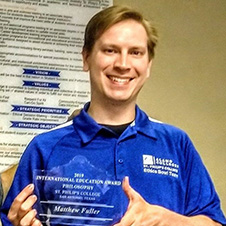
Matt Fuller began his PhD with the National Centre for Peace and Conflict Studies in February 2020. Matt's dissertation explores the nature of effective campaigns to ban weapons, the creation of weapons taboos, and the ongoing struggle to investigate the harm caused by Depleted Uranium, ultimately leading to the question “Why do some weapons get banned and others do not?”
Matt's career has taken him in many directions. Born and raised in Virginia in the United States, he has been a Programme Assistant at the Corrymeela Peace and Reconciliation Centre in Northern Ireland, a video editor for the Democracy Development Programme in South Africa, and a Philosophy Lecturer at St. Philip's College in San Antonio, Texas, USA. He has an MA in Ethics, Peace and Global Affairs from American University in Washington, DC. As a lecturer he presented and published on a diverse array of topics, such as the ethics of driverless cars, isiZulu poetry in Post-Apartheid South Africa, the level of confidence in the current Northern Irish peace process, and the creation of the Islamic State, the Irish Republican Army, and the Ulster Volunteer Force. His advisor is Dr. Richard Jackson.
Ashley Galbreath
Ashley started the PhD program at the National Centre for Peace and Conflict Studies in September 2020. She is originally from Perth, in Western Australia, and prior to moving to Dunedin to undertake the PhD program, she was working as a social worker with Housing First, in Auckland. She has also previously worked on: activist campaigns with Amnesty International Australia; as a community organiser; with vulnerable youth; with asylum seekers; and with rough sleepers.
Ashley's PhD research is on community-based conflict prevention, which she terms Proactive Peace Work. Her research has a specific focus on how communities foster peace and address conflict risk-factors before any violence is able to occur. So often, peace-work is not looked at until after violence has started. This research seeks to highlight the successful preventative work that is happening all the time, with a view to understanding how it can be strengthened.
Raymond Hyma
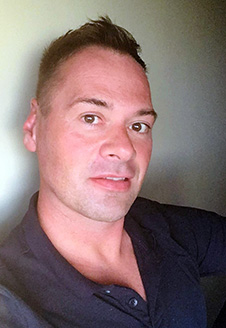 Raymond Hyma is a Canadian who has spent two decades working in government, academia, and civil society on issues of international development, migration, and peacebuilding. A two-time Rotary Peace Fellow, he holds a Master in International Relations from the Universidad del Salvador in Argentina, and a Bachelor of Arts in Political Science and Latin American Studies from Simon Fraser University in Canada.
Over the past ten years, he has been based in Cambodia focused on working with community researchers on a peace research approach known as Facilitative Listening Design. As a practitioner coming to academia, his interests lie in participatory action research and the potential for leveraging local inquiry practice as a tool for conflict transformation by research designed to foster cooperation and dialogue through the process itself.
His research explores community research for peace in initiatives in Southeast Asia and the potential for re-orientating typical power imbalances in academia/community collaboration, the ability to build trust among conflict groups through contact made in collaborative research, and the value of new knowledge generated through inquiry directly by impacted communities who are most often the subjects of research carried out by outsiders.
His doctorate project is a participatory project itself which he hopes can serve as an example of academic/community collaboration and challenge research paradigms that under-appreciate the value of research conducted from standpoints directly stemming from the communities at the centre of inquiry.
Maija Jespersen
Details to come.
Di Jiang
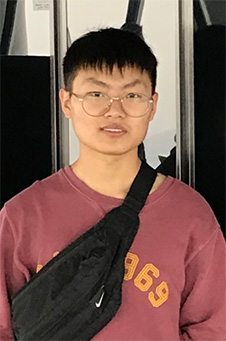 Di started his PhD with the National Centre for Peace and Conflict Studies (NCPACS) in September 2023. He is investigating the possibility of using Securitization Theory to shed light on Xinjiang terrorism.
In 2022, he was awarded a master’s degree by NCPACS for his studies on the relationship between the Little Pinks and Taiwan.
More details may be updated as progress continues.
Avanthi Kalansooriya
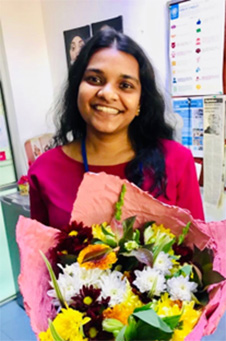 Avanthi Kalansooriya is a PhD Candidate at the University of Otago. Her PhD research focuses on women’s political activism in the elusive phases of peace, it particularly attempts to study how women who were formerly part of the militant movements exert their political agency during the state mediated phases of negative peace.
She has a MA in International Relations/Political Science from the Graduate Institute of International and Development Studies in Geneva, Switzerland and interned at the Political Affairs and the Partnership Section at the UN Office at Geneva (UNOG). She has worked for UN Women, Sri Lanka for five years, focusing primarily on peacebuilding and labour migration.
At UN Women, she specialized in standard employment contracts for women migrant workers with a special focus on promoting employment standards for women migrant workers in the Gulf and the Asian corridor.
She further worked on a peacebuilding project that intersected developing Sri Lanka’s first national action plan on Women, Peace and Security (WPS) and women’s economic empowerment both against post-war and covid contexts. Avanthi worked as one of the chief trainers of the UN Women’s training for the UN Peacekeepers and has trained more than 1000 UN peacekeepers from the Sri Lankan military on Department of Peace Keeping Operations (DPKO) mandated training on Sexual Exploitation and Abuse (SEA) and WPS.
She has also worked as a researcher for three thinktanks in Sri Lanka, including International Centre for Ethnic Studies, Regional Centre for Strategic Studies and Centre for Poverty Analysis specializing on violent extremism, peacebuilding and gender. Avanthi’s first degree is from the University of Colombo in International Relations (Hons). Currently, she specializes in critical terrorism studies, post-colonial and decolonial feminist theories.
Email kalav496@student.otago.ac.nz
Kalika Kastein

Kalika Kastein is an educator, peace advocate, and visual media specialist. She is the founder of the student-run peace association and online journal, Ad Pacem. Kalika is currently a Ph.D. student at the National Centre for Peace and Conflict Studies at the University of Otago and works remotely as a communications assistant in the Division for Prosperity at the United Nations Institute for Training and Research in Hiroshima. She also is a Girl Guides leader in Dunedin and volunteers with education-based peace initiatives in Hawai'i.
She is a certified teacher in Hawai'i, having earned her Master of Science in Education from Johns Hopkins University. Kalika holds a Master of Arts in Peace Studies from International Christian University in Japan which was funded by the Rotary Peace Fellowship. She also was a volunteer in the Peace Corps (Cameroon, 2011-2013), a Teach for America corps member, and was nominated as a Duke University Humanitarian Action Fellow.
Her writing has appeared in the national newspaper for the Federated States of Micronesia, the Kaselehlie Press, and has been featured in the St. Gallen Symposium's annual selected essays. She received a best speaker award at the 2019 Jean-Pictet International Humanitarian Law Competition and placed in the semi-finalist round with her team at the 2018 national ICRC Moot Competition in Japan.
Kalika's research started in 2020, funded through the University of Otago Doctoral Scholarship, and focuses on understanding forms of silence among teaching staff within institutions of higher education.
Chloe Mackenzie
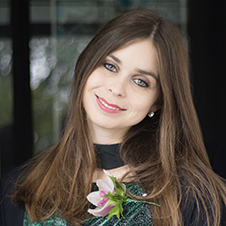 Chloe has a background in arts-based research, English and Spanish language teaching and migrant and refugee support work, working as a tutor with English Language Partners, Talent International and volunteering with the Red Cross.
In 2019 Chloe established a free art group for women at the Valley Project community centre. The group provided a welcoming space for women new to the community to connect and share skills. The group ran for over two years and its success inspired her current PhD topic which seeks to explore the potential of the arts in supporting peacebuilding and refugee resettlement. Through her research she hopes to contribute to the development of future art initiatives that support people resettle in Aotearoa New Zealand.
Julie Nalubwama
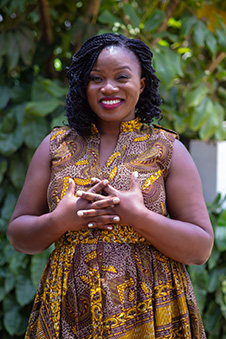 Julie’s PhD research at the National Center for Peace and Conflict focuses Studies focuses on resilience in faith communities and how it shapes local peacebuilding in protracted conflicts. Her thesis specifically focuses on the case study of South Sudan.
For the past 14 years, Julie has been actively engaged in designing, managing, and implementing peace and conflict transformation interventions in multi-ethnic and multi-religious contexts.
She has vast experience in faith-based approaches and programming to catalyze change and development. She is passionate about bridging the gaps between theory and practice in peace and conflict. She is a Commonwealth Professional Fellow from the Centre for Trust Peace and Social Relations, Coventry University-UK, has a Master’s Degree in International Security and Conflict Studies from Dublin City University- Ireland, and also holds a postgraduate diploma in Public Policy and Governance from the Uganda Management Institute. Julie’s other research interest include migration, refugees, and human rights.
Julie also possesses over 15 years’ experience as a Counselling Psychologist and holds Bachelor of Science in Psychology and Counselling. She is passionate about mental health in peace building.
Hussain Raissi
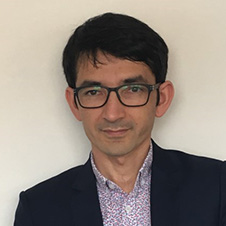
Hussain came to New Zealand from France, but he is originally from Afghanistan. He graduated from Sociology Department BA program, Kabul University in 2010. Between the years 2011-2012, he worked as cultural mediator in Abu-Dhabi, Emirates United Arabs with NATO forces. In Afghanistan between the years 2012-2014, he was responsible for the Media Library (Mediatheque) of the French Institute of Afghanistan. After obtaining a scholarship from the French government, he moved to France in August 2014. He earned a Master Degree in Sociological Studies and Diagnosis from the University of Bordeaux, France in 2016. From November 2016 until February 2019, Hussain worked with the different organizations and associations to assist Afghans and Iranian refugees and asylum seekers in their processes of integration and settlement into French society.
He began his PhD journey at the National Centre for Peace and Conflict Studies in April 2019. Hussain is conducting his PhD research through the Rei Foundation scholarship. He is exploring the impact of religiosity, ethnicity, life satisfaction and discrimination on the social capital and ultimately the sense of belonging of Muslim youth immigrants and refugees here in New Zealand. His interest in studying the sense of belonging of Muslim youth immigrants and refugees, comes from his own experience working with Afghan immigrants and refugees in France. In his PhD, he is interested in studying the sense of belonging of Muslim youth immigrants and refugees through their social capital (bonding, bridging and social links). In the research, the social capital of participants predicts their feeling of belonging that could be a national sense of belonging, ethnic-religion community belonging or a combination of both. To achieve this, he will apply a mixed method of qualitative and quantitative approach.
Hyeyoung Shin
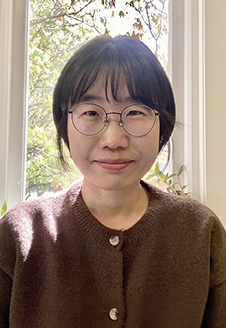 Hyeyoung Shin began her PhD journey at the National Centre for Peace and Conflict Studies (NCPACS) in November 2021.
Her research explores the everyday peace of migrant workers in South Korea, focusing on their experiences with peace and conflict as narrated from their own perspectives.
Her primary interest lies in the peace practised by those marginalised in society and their agency for conflict transformation and the promotion of peace. Before pursuing her doctoral studies, she was involved in civil society organisations (CSOs) for senior citizens and persons with disabilities in South Korea as a social worker.
She has also worked on development projects with grassroots organisations in the Philippines, Myanmar, India, Bangladesh, Zimbabwe, and Tanzania, while notably spending nearly eight years based in Cambodia.
She earned a master's degree from NCPACS through her research on Korean CSOs' approach to capacity-building in Cambodia.
David Whippy
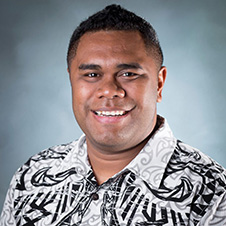
David is from Fiji and holds a Master's Degree in Diplomacy and International Affairs from the School of Government, Development and International Affairs at the University of the South Pacific, Fiji. His undergraduate work is in Psychology and Intercultural Peacebuilding. David's research interests are in peace education, conflict transformation, peacebuilding through sports and peace ecology.
His dissertation is focused on Fiji, where he is studying the validity and practicality of a local model of peace education within the public school education system. His thesis is that education targeted at the younger generation, through curriculum and systematic amendments, would influence transformation at multiple levels in the creation of a sustainable culture of peace. This perspective was developed in his work in Fiji's civil society around the areas of children's rights, contributions of youth in governance, transitions to democracy and restorative justice.
David is currently on a tenure-track at Brigham Young University – Hawaii, teaching courses on transformative mediation, intercultural peacebuilding, NGOs and conflict transformation, peace education and peace ecology. He hopes that his work empowers students to embrace peacebuilding initiatives and be influencers of good towards the establishment of peace in their spaces of influence.