
Rangatahi drug realities
By listening to rangatahi, we aim to inform more effective, supportive, and culturally responsive approaches to reducing drug harm in Aotearoa New Zealand.
Email us to learn more or get involved in the project.
Email rdr.project@otago.ac.nz
Project overview and aims
Our study investigates how young people navigate the risks and benefits of drug use, and how drug use effects their lives.
By ‘drugs’ we mean nicotine, alcohol and other legal or illegal substances that change how someone thinks, feels or behaves.
- We want to understand how young people define and experience drug harm — including harm caused by other people’s use — and what they do to stay safe or reduce risks
- Māori and Pacific youth perspectives are central, recognising the different contexts shaping their experiences, including the effects of colonisation
- Using what we learn, we’ll create a youth-specific drug harm framework — a world first
- We’ll then run a nationwide survey to find out how common different types of drug harm are among young people, and how this varies by ethnicity and gender
- Insights will inform specific and appropriate harm prevention strategies
We expect this study to positively impact young people themselves, services and communities that support them, and improve policy responses in Aotearoa New Zealand.
Why this project is needed
- Most drug harm research focuses on adults or measures drug-related harm in narrow or
clinical ways - It often misses what young people notice, feel, and deal within their everyday lives
- How can policies, services and communities reduce drug-harm among rangatahi, without a clear understanding of what young people experience and care about?
- By measuring harm directly, rather than relying on indirect indicators, this project offers a more grounded picture of young people’s experiences and what matters to them
- Policies and services informed by youth input are more likely to meet youth needs and lead to improved outcomes.
Phase one of our study
Qualitative interviews with young people
We will talk with around 45 young people aged 16–20 about how they understand, experience, and navigate drug-related risks and benefits. Interviews take about an hour and can be face-to-face or online. We have strict protocols in place to protect participants privacy, confidentiality and wellbeing.
We are seeking roughly equal numbers of Māori, Pacific, and non-Māori/non-Pacific participants, recruited through halls of residence, youth health, alt ed, and AOD services, with full informed consent.
Our data security protocol aligns with Te Ara Tika guidelines and Māori data sovereignty principles.
More details are provided in the Rangatahi Drug Realities information sheet for potential participants.
The findings will feed into later phases including collaborative workshops and a nationwide survey.
Read the Rangatahi Drug Realities information sheet (PDF)
Our people
Our experienced research team is based at the University of Otago and the University of Auckland. The team is supported by expert advisors.
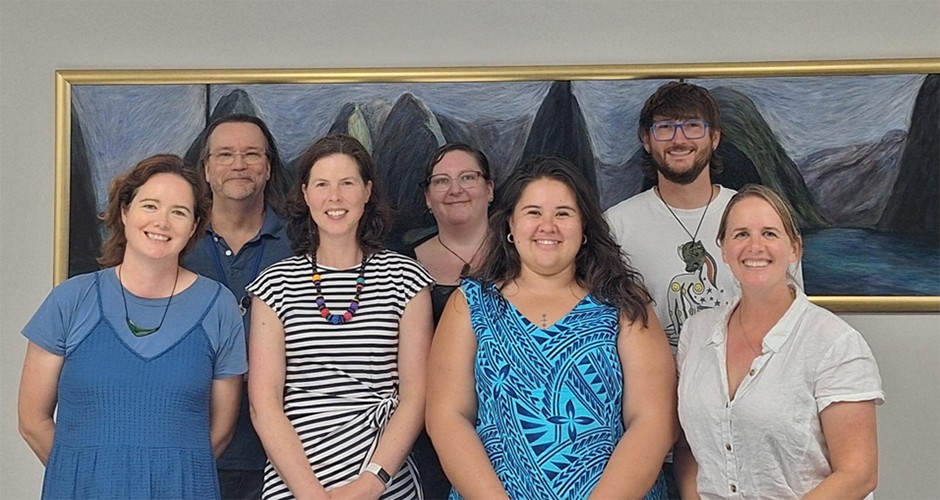
The Rangatahi Drug Realities researchers from left to right: Dr Christina McKerchar, Professor Joe Boden, Dr Jude Ball, Dr Michela Pettie, Dr Sarah McLean-Osborn, Dr Jai Whelan and Dr Rosie Crossin.
Researchers
Dr Rose Crossin
Department of Public Health (Christchurch)
Professor Joe Boden
Department of Psychological Medicine (Christchurch)
Associate Professor Christina McKerchar
Ngāti Kahungunu, Tūhoe, Ngāti Porou
Department of Public Health (Christchurch)
Dr Jude Ball
Department of Public Health (Wellington)
Dr Jai Whelan
Ngāi Te Rangi
Department of Public Health (Christchurch)
Dr Michela Pettie
Ngāti Pūkenga
Department of Pathology and Molecular Medicine (Christchurch)
Dr Sarah McLean-Osborn
Pasifika
School of Māori and Pacific Studies, University of Auckland
Advisory and guidance
Project partner
- Whāraurau who have deep expertise in youth engagement
Visit the Whāraurau website
External Advisory Group
- Dr Erena Wikaire, Te Whare Wānanga o Awanuiārangi
- Mr Dwaine Faletanoai, Health NZ
- Professor Vili Nosa, University of Auckland
Internal Māori advisory
- University of Otago Māori Research Advisory Rōpū
Funding
This research is funded by the Health Research Council of New Zealand.
Ethical approval
This project has been approved by the University of Otago Human Ethics Committee: H25/0732.