
 Associate Professor Andrew Reynolds, EDOR Co-Director and nutrition researcher, has talked with the Otago Daily Times (ODT) about the benefits of increasing dietary fibre intake - and how social media is unexpectedly promoting the same message.
Research evidence generated by Associate Prof Reynolds and his colleagues shows that people who consume more dietary fibre get less heart disease, less type 2 diabetes, less colorectal cancer, and are less likely to die prematurely.
Social media influencers are also promoting fibre as the latest thing to control weight, regulate hormones and improve your gut, and for the most part, science agrees.
What is dietary fibre?
Dietary fibre is a type of carbohydrate, as are sugars. It’s why the low carbohydrate diet concept is not particularly meaningful to health, as both fibres and sugars are carbohydrates, but they have different associations with human health.
Dietary fibres also differ from sugars in the way they are metabolised. Fibres are the carbohydrate structures that avoid human digestion entirely, and are either partially or wholly fermented by the gut microbiome instead.
How does dietary fibre improve health?
There are several ways that we know dietary fibre can improve health, with more being discovered as time goes on.
- In the mouth, fibres mechanically clean tooth surfaces while we chew, leading to less dental caries
- In the stomach, fibre stimulates the incretin response which makes you feel full for longer. The latest class of weight-loss drugs (GLP-1 receptor agonists like Wegovy) also mediate the incretin response to make you feel full.
- In the small intestine fibre slows down the uptake of sugars into the body, creating a more prolonged absorption which is handled better by our metabolism. Fibre also grabs onto and binds excess cholesterol so it cannot be reabsorbed, leading to less cholesterol in the body.
- In the large intestine fibre is fermented by our gut microbiome, producing many compounds that are beneficial for our body, including playing roles in reducing colorectal cancer occurrence and improved immune responses.
- Finally, because most fibres absorb water, higher fibre intakes (or increasing fibre intakes) are associated with easier bowel movements and less constipation.
‘‘There’s a whole pathway along the intestinal tract that fibre beneficially interacts with," says Reynolds.
Currently, New Zealanders eat an average of 20g of fibre a day. The minimum healthy intake of fibre is 25g so we can definitely gain some health benefits by increasing our dietary fibre.
How do we increase our dietary fibre intake?
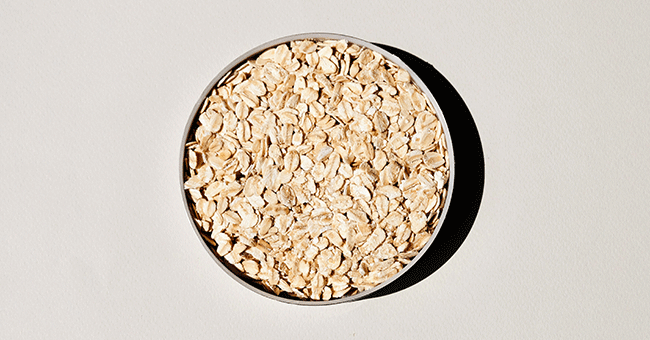
Dietary fibre comes from plants, so whole grains like wholegrain bread or oats as well as vegetables, fruit, legumes, nuts and seeds are key sources.
Legumes in particular are a great way to increase both dietary fibre and plant protein, and are a food group more New Zealanders are embracing due to their cost-effectiveness. There are many types of canned legumes available at supermarkets that can be used to replace or supplement red meat (kidney beans or lentils) or white meat (cannellini beans or chickpeas) in main dishes.
Access the ODT article:
Eating more fibre ‘becoming sexy’, ODT, 8 April, 2026
Find more EDOR news stories on the benefits of dietary fibre
Otago experts propose fibre as first new essential nutrient in 50 years
EDOR nutrition experts are calling for dietary fibre to be officially recognised internationally as an essential nutrien...

Higher fibre saves lives, but food processing may remove benefits
Higher fibre saves lives, but food processing may remove benefits

High fibre benefits those with diabetes or prediabetes
EDOR researchers have found that found high-fibre diets are a key aspect of diabetes management.