
Dates
17–18 February 2026
Call for Papers
Borders divide, define, and redefine territories, migrations, mobilities, languages, bodies, disciplines, discourses, and ideas. They are not inert lines or boundaries. Rather, as Sandro Mezzadra and Brett Nielson famously put it, borders are a “method” that brings social, political, and cultural worlds into existence. The Crossing Borders symposium invites scholars and artists to critically engage with the question of how borders – historical, geographical, political, intellectual, cultural, technological, ecological, artistic, bodily, or epistemological – are produced, maintained, and challenged at a time when borders dominate the social and political imagination.
This symposium seeks to bring together scholars and artists who engage with borders, bordering, and border crossing in their scholarship across a wide range of disciplines and practices. We welcome contributions that reflect the processes and consequences of crossing borders literally, symbolically, and metaphorically.
The potential areas of contribution are, but not limited to:
- Migration, (im)mobilities, and transnationalism
- Borders, bordering, and solidarity
- Reimagining borders and border-crossing
- Aesthetic, linguistic, and temporal borders
- Border walls, prisons, and policing
- Bodily borders, corporeal boundaries, and the body politic
- Interdisciplinary, transdisciplinary, and genre crossings
- Artistic and performative interventions across disciplines
- Decolonial, feminist, and queer border-thinking
- Liminality, hybridity, and in-betweenness
Please provide before the deadline of 18 December 2025:
- Title
- Abstract of your paper (250 words)
- Brief biographical information (including institutional affiliation and contact details)
- Presentation format (oral presentation, panel discussion, workshop, performance, or any other creative format)
Please send proposals to the symposium co-chairs:
Dr Pooneh Torabian
Email pooneh.torabian@otago.ac.nz
Dr Neil Vallelly
Email neil.vallelly@otago.ac.nz
Keynote speakers
Anne McNevin
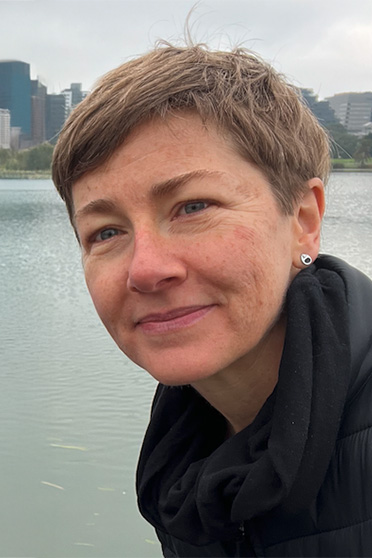 Anne McNevin was Associate Professor of Politics at The New School for Social Research from 2015 to 2025. She is currently based in Sydney as a non-resident research fellow at The New School’s Zolberg Institute on Migration and Mobility. Anne’s research spans the transformation of citizenship and sovereignty, the regulation of borders and migration, and spatial and temporal dimensions of world politics. She is author of Worldmaking and Border Politics (Stanford UP, 2026) and Contesting Citizenship (Columbia UP, 2011). She is co-editor of the forthcoming Routledge Handbook of Ideology and Temporality and a forthcoming special issue of Migration Studies, outlining a new agenda on "Mobile Temporalities".
Simon Barber
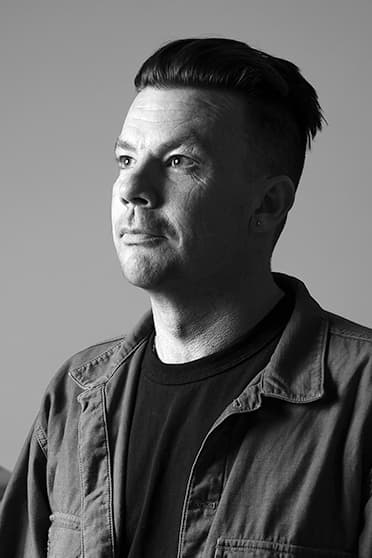 Simon (Kāi Tahu) is a Senior Lecturer in Sociology at Ōtākou Whakaihu Waka | University of Otago. He is a student of Indigenous thought and politics, Marxist and critical theory, black studies, communism, and conjunctions thereof. He completed his Master’s at the Centre for Cultural Studies, Goldsmiths, University of London, and his doctorate in the Centre for Research Architecture, also at Goldsmiths. As part of his doctoral research he undertook a postgraduate diploma in Ahunga Tikanga (Māori Laws and Philosophy) at Te Wānanga o Raukawa in Ōtaki. Simon co-edited a book with Miri Davidson (Through That Which Separates Us, 2021) centred around themes of deportation, incarceration, and colonialism. In a series of academic articles, he continues to think through and describe possible contours of an Indigenous historical materialism. Simon is a researcher for Economic and Social Research Aotearoa and is a member of the editorial board of Counterfutures.
Venue
All conference sessions will take place at the University of Otago, Dunedin, New Zealand.
Registration
The registration fee (approx. $60 including GST) will be available in due course and will include morning and afternoon teas on both days.
Registration is free for postraduate students and unwaged participants.