
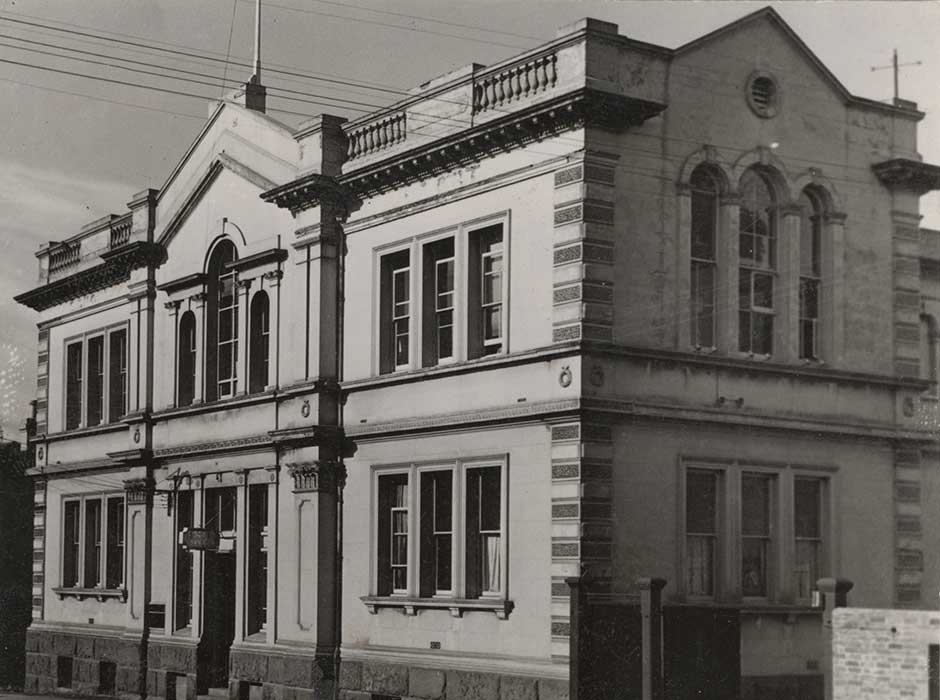
Training department of the Dunedin Normal School opens in Moray Place, establishing New Zealand’s first teacher training institution, 1876.
Opportunity. Resilience. Adaptability. Belonging.
For retiring University of Otago College of Education Professor, Hugh Morrison, these four words sum up 150 years of teacher education in Dunedin.
Hugh is a lecturer and research historian at the College. But his connection to the place, and its history, is far more personal.

Professor Hugh Morrison
His great-grandfather Edward Pinder was one of Dunedin’s first pupil-teachers and rose to become principal of what was then the Dunedin Training College. Hugh is part of the fourth generation of teachers in his family – his grandparents, parents and both his siblings also studied to become teachers in Dunedin.
As Hugh explains, 1870s Dunedin was a fast-growing settlement in need of teachers. Its Scottish Presbyterian founders drew on a model from their homeland – the ‘pupil-teacher’ system where bright senior students apprenticed in schools under a head teacher while completing their own education. For many emigrants from labouring backgrounds and women, the system offered an opportunity to elevate their standing through education.
In 1876, New Zealand’s first initial teacher education institution came into being when the Training Department was established within the Otago Normal School in Moray Place.
Its first rector, William Sanderson Fitzgerald, encouraged students to take University of Otago classes alongside their teaching work – in the first of many connections between the two institutions over time.
In 1877, the Education Act made schooling free, secular and compulsory – intensifying demand and purpose. In 1880, the Training Department was reformed as the Dunedin Training College, which, several iterations later, is now the University of Otago College of Education – Te Kura Ākau Taitoka.
During the 1900s, the Dunedin Training College evolved and adapted in response to the changing national context. It closed during the Great Depression, ramped up through the post-war boom, and in the early 1950s ran one-year ‘pressure-cooker’ programmes to meet shortages, including for returned servicemen.
A new College complex opened on Union Street in 1939 – built of timber following a government ban on brick for the construction of educational buildings after the 1931 Napier earthquake. In 1968, fire tore through the complex, destroying most of it and testing the resilience of the institution. A new one was built and developed on the same Union Street site in the early 1970s.
In 1953, the Dunedin Training College was renamed the Dunedin Teachers' College.
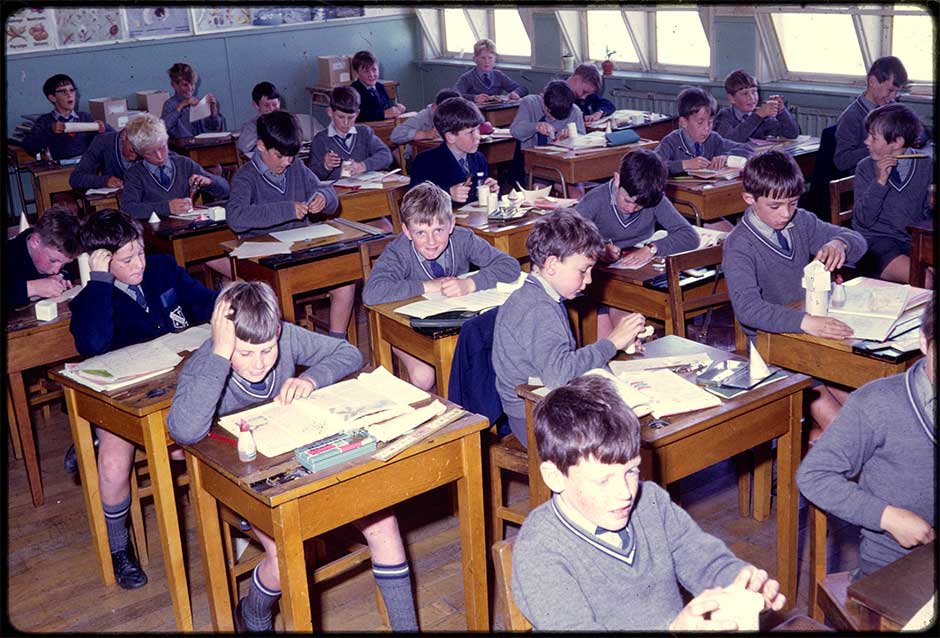
Boys seated at desks in classroom (1969). PHOTO: Hocken AG-744-117/003
In 1976, the first formal collaboration between the University and the College led to the development of the joint University of Otago–Dunedin Teachers’ College Bachelor of Education, with staff from both institutions contributing to students’ education.
Another significant milestone occurred in 1980, with the opening of the Dunedin Teachers’ College Invercargill campus – Ahuahu Te Mātauranga – extending teacher education opportunities to Southland. As well as offering core teacher education programmes, the campus would become a crucial base for delivering specialised bicultural initial teacher education.
Later that decade the Teachers’ College broke new ground again as one of two institutions granted permission to offer a new three-year integrated diploma of teaching for early childhood education (ECE) teachers – providing parity with primary qualified teachers for the first time.
It was a time of flourishing and growth for the profession and institution as the College expanded its portfolio to include graduate diplomas alongside a flagship primary bilingual and, later, bicultural education degree (Te Pōkai Mātauranga o te Ao Rua).
By the end of the 1980s, the College was building an international profile – through exchanges, advisory work, and partnerships that took expertise offshore and brought new perspectives back.
Hugh says the 1990s were a time of great change and challenge – including a time when the formerly cooperative Dunedin College of Education and University of Otago both offered separate teacher education options.
The decade saw the Tomorrow’s Schools reforms reshape schooling and initial teacher education and create significant challenges including increased competition that required further adaption and innovation.
In response, the College broadened its programmes and professional learning and development work – including more specialist initial teacher education options and more programmes for in-service teacher development.
Hugh says this adaptability, or willingness and ability to respond to social, cultural and political change, has been a hallmark of the College throughout its history.
The College’s outward-looking work included links with Malaysia, Niue and the Solomon Islands, with staff contributing to teacher education and professional learning in areas such as curriculum, literacy and Teaching English to Speakers of Other Languages (TESOL).
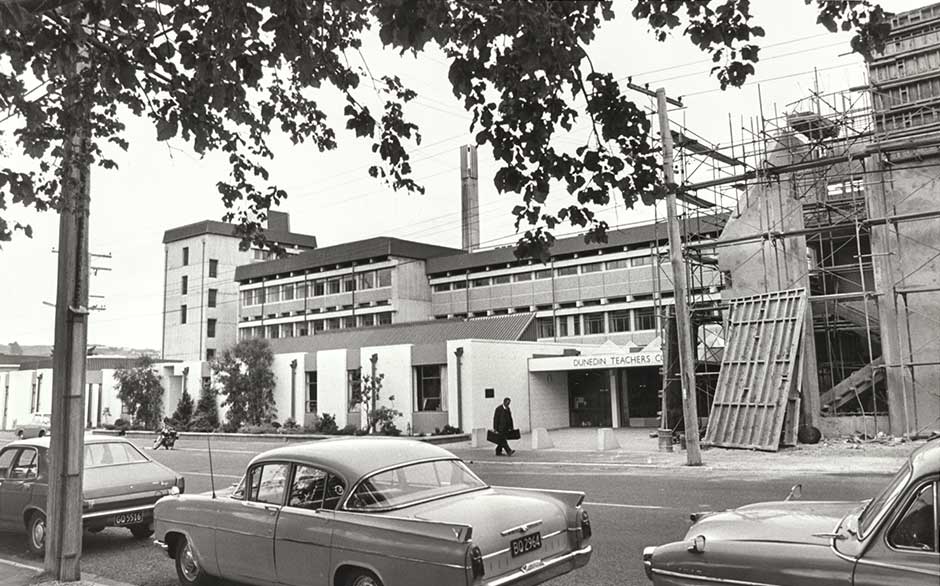
Launch of the joint University of Otago–Dunedin Teachers’ College Bachelor of Education (BEd), with shared teaching across both institutions, 1976.
Hugh says by the early 2000s government policy shifted again, favouring collaboration and consolidation. With two institutions in Dunedin offering similar qualifications, amalgamation discussions began in 2002 with a merger approved in 2006. On 1 January 2007, the University of Otago College of Education – Te Kura Ākau Taitoka – was established, bringing the College’s long history of initial teacher education into the University.
Current Dean, Professor Vivienne Anderson, says while the College’s history is well documented, the contribution of Māori and Pacific staff, students and graduates to the College’s legacy and Aotearoa New Zealand's national education landscape, has sometimes been overlooked.
“Māori and Pacific students and staff have long been part of this place,” she says. “What’s often missing from the public record is how they navigated the institution, changed it, and adapted what they learned for classrooms and communities, at times, despite real barriers.”
As part of the 150th celebrations, a Māori and Pacific alumni project is capturing some of these stories.
Vivienne says that, following a 2021 review of the College, rebuilding partnership with mana whenua became a key priority, as was the creation of Māori and Pacific leadership roles. She recognises the leadership of Dunedin papatipu rūnaka (Ōtākou, Puketeraki and Moeraki) in this process, and notes the work is ongoing to strengthen and grow reo and mātauranga Māori content within College programmes and attract more Māori and Pacific students into teaching.
Anderson acknowledges a sense of ‘back to the future’ in this regard. For example, Te Pōkai Mātauranga o te Ao Rua was originally approved as a bilingual (rather than a bicultural) programme, and many graduates of this programme have become educational leaders in kura kaupapa and bilingual settings as well as in mainstream education. In discussion with rūnaka, in both Dunedin and Southland (Waihōpai, Awarua, Ōraka Aparima and Hokonui), efforts have begun to revert to bilingual provision while making the programme accessible beyond Invercargill.
Vivienne is proud of the College’s research history, which has focused on many aspects of education, including educational equity and improving educational practice. Dunedin has been the home of the Ministry of Education’s national curriculum monitoring study for more than 30 years. Recent developments have included the creation of a new Kaihautū Māori role, which Anderson says, has transformed the study for tamariki and whānau Māori.
She describes the curriculum monitoring study as a taoka that is the envy of colleagues offshore.
The College has been a long-time leader in national curriculum development and review, although Vivienne acknowledges the education sector has always been a ‘political football’ and changes of government can bring big swings in curriculum and funding – with initial teacher education inevitably impacted. Responding to this requires a high level of resilience and adaptability from College staff, and a continued commitment to engaging with the sector and prioritising the needs of tamariki and whānau.
Covid-19 and its associated lockdowns brought upheaval, particularly to early childhood settings, schools, and to those initial teacher education candidates, where time spent in centres and classrooms is a critical part of programmes.
Vivienne says the 150th anniversary is an opportunity to reflect on successes and challenges over the College’s history – and look to the future – as articulated in a whakataukī marking the celebration.
Hoki whakamuri, kia anga whakamua – Look to the past to forge the future.
“The 150th milestone gives us a unique opportunity to honour and remember all those who have built this proud reputation and are part of the College’s story.
“It is also a time to look to the future, to consider our role in developing the educators and educational researchers of tomorrow, with a view to co-creating an education system that better serves the needs and aspirations of all tamariki, mokopuna and whānau.”
-Kōrero by Kim Thomas
This story first appeared in Issue 59 of the University of Otago Magazine, released in July 2026.
Download the full Magazine here.
College of Education
The University of Otago College of Education is dedicated to the enhancement of educational practice through high quality teaching, scholarship, research, professional leadership and community service, to benefit children, other learners, educators and the wider community (in local, national and international settings).
View