
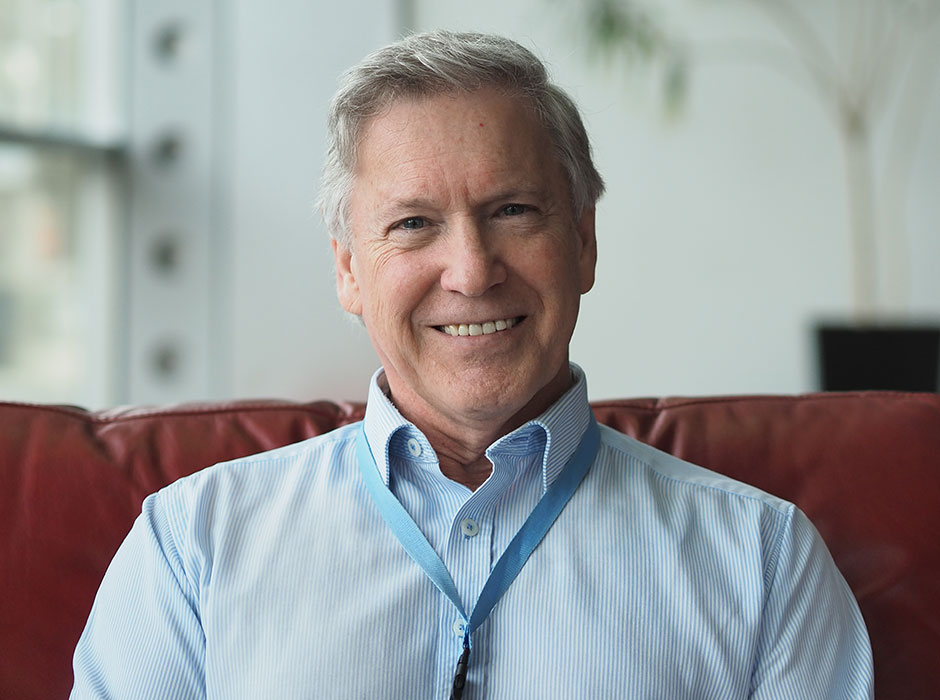
Christchurch Heart Institute Director Professor Mark Richards and his research team have been awarded an almost $5 million programme grant from the Health Research Council.
Otago heart researchers are on their way to developing potentially life-saving patient interventions, thanks to vital Health Research Council (HRC) funding.
Christchurch Heart Institute Director, Professor Mark Richards, and his research team have been awarded an almost $5 million programme grant in the latest HRC funding round.
The programme grant joins 16 other project grants, which have a combined total of $18.2 million, awarded to other University of Otago – Ōtākou Whakaihu Waka researchers.
Professor Richards’ team will use the five-year grant to embark on a pilot programme combining data from emergency department (ED) cardiac blood tests with clinical documentation, to identify patients at risk of adverse heart events.
The HRC grant is an “essential catalyst to get the ball rolling” on the pilot programme, providing necessary resources for clinicians and analysts, Professor Richards says.
“Successful pilots lead to full-fledged trials and successful full-fledged trials lead to change in international treatment guidelines and changes in standard-of-care clinical practice.”
About 100,000 people have cardiac blood tests at ED each year, but less than 10 per cent of those have an urgent heart issue on the day, he says.
However, 50-70 per cent of patients who present at ED with upper or above threshold markers for heart damage, go on to suffer an equal split of fatal or non-fatal heart and other health events in the following year.
“The total number of people involved exceeds those with proven heart attack or heart failure events on first encounter.”
By analysing the relationship of the ED marker results to adverse clinical outcomes suffered by patients in the following two years, the research team will be able to define at-risk groups among future patients attending ED.
Contributing features such as age, previous heart disease, risk factors like diabetes, high blood pressure, high cholesterol, and possibly other previously unrecognised features that confer risk will predictably place their chance of an adverse event (death, a new heart attack, new heart failure) above 30 per cent.
“We then use this immediately available ED profile to direct patients into appropriate improved or trial management pathways tailored to each newly defined at-risk subgroup,” he says.
New management may include anything from simple advice to the ED doctor and family doctor regarding risk management, immediate additional testing, the introduction of previously neglected standard-of-care cardiovascular medications for cardiovascular risks, through to completely new randomised controlled trials of plausibly appropriate therapy in previously unrecognised at-risk subgroups.
“Receiving the funding gives a great feeling of being enabled to pursue a great opportunity to put information, currently under-used, to work to improve patient outcomes.
“With the acknowledgement the grant implies and the opportunity it affords, comes a sense of responsibility to do the work rigorously and to push the new knowledge through to the clinic for patients.”
The University has already secured $23.2 million from the HRC for 2026, an increase on the total HRC 2025 funding.
Deputy Vice-Chancellor Research and Innovation Greg Cook says the results highlight the University’s strong performance in an increasingly competitive funding environment, as measures of research impact continue to evolve.
“It is particularly encouraging to see the breadth and diversity of the funded projects.
“These initiatives span a wide range of health innovation, including Māori health, pain management, cancer, cardiovascular disease, childhood wellbeing, disability-inclusive design, infectious diseases, and Alzheimer’s disease, reflecting a comprehensive and integrated approach to improving health outcomes in New Zealand.”
2026 Programme Grant
Professor Mark Richards, Christchurch Heart Institute, $4,998,662
Myocardial marker enhanced data to improve cardiovascular care in New Zealand (MEDICi-NZ)
This research aims to make widely collected cardiac blood tests fully useful in improving care for New Zealanders at risk of adverse heart events.
Every year 100,000 Kiwis have heart blood tests (troponin and/or BNP) done when they are seen in emergency departments (ED) to undergo assessment for possible heart emergencies. Less than 10 per cent of those tested have an urgent cardiac problem proven on the day. However, evidence suggests test results are powerful predictors of later (in the following year) adverse heart events even when a problem cannot be confirmed at the initial ED visit. The research team proposes to prove and apply this predictive aspect of these frequently conducted tests, combining blood test data with other routine clinical documentation to develop the best ways of converting this information into practical clinical guidelines to improve New Zealanders' heart care.
2026 Project Grants
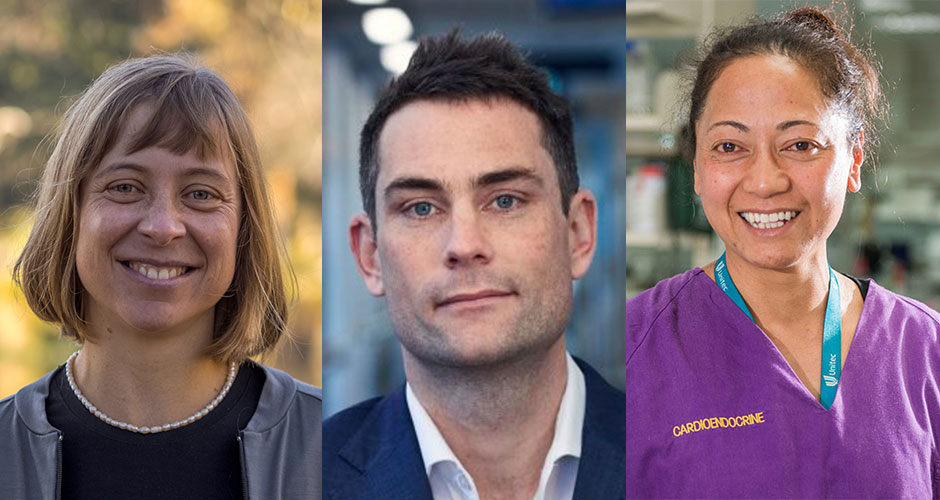
From left, Dr Anna Pilbrow, Dr Campbell Le Heron and Dr Allamanda Faatoese.
Dr Allamanda Faatoese, Christchurch Heart Institute, $1,199,108
Building a Pacific CVD biorepository for biomarker discovery and risk prediction
Cardiovascular disease (CVD) is the leading cause of premature mortality among Pacific peoples in Aotearoa New Zealand compared with the general population. However, their unique risk profiles and biomarker patterns remain under-researched and statistically underpowered. Diagnostic and prognostic biomarkers such as NT-proBNP and cardiac troponins are widely used in clinical practice, yet their relevance for Pacific populations must be confirmed. The Pasifika Heart Study, the first community-based CVD risk study of 200 Pacific adults in Christchurch, found that Pacific participants had two-fold lower NT-proBNP levels compared with Europeans. Investigations are now underway into cardiac troponins and GDF-15. Building on these insights, this proposal aims to recruit an additional 400 Pacific adults (aged 18-65 years) across four sites – Christchurch, Otago/Southland, South Auckland, and Northland – to establish a national Pacific CVD biorepository. This resource will both validate existing clinical biomarkers and enable new biomarker discovery to improve risk prediction and care for Pacific peoples.
Dr Anna Pilbrow, Department of Medicine, Christchurch, $1,199,762
Developing an epigenetic score to identify people at impending risk of a heart attack
Current screening tools for cardiovascular risk fail to identify many high-risk individuals, with more than 50 per cent of heart disease deaths occurring in people assessed by their GP to be low-moderate risk. This project tests whether adding information from our DNA (epigenetics) to traditional risk factors can help identify susceptible individuals before the onset of symptoms. The research team will profile epigenetic markers in DNA samples prospectively collected from asymptomatic people of middle-older age, prior to an unexpected cardiovascular event. This will allow them to perform an epigenetic association study and develop an epigenetic score to predict near future cardiovascular events. The study will show whether adding a simple blood test result and epigenetic score, alongside traditional risk factors, could improve our ability to identify people at impending risk of a heart attack. This could help guide GPs in their management cardiovascular risk factors and reduce the incidence of cardiovascular disease in New Zealand.
Dr Campbell Le Heron, Department of Medicine, Christchurch, $1,199,972
Transforming diagnostic pathways for Alzheimer’s disease using blood biomarkers
Blood biomarkers of Alzheimer’s pathology offer a transformative tool for diagnosis and prognosis of New Zealand's most common cause of dementia mate wareware. This project will address the most pressing challenges associated with their emergence. Firstly, the research team will determine how to integrate a reliable, scalable and affordable platform for the most promising blood diagnostic marker, p-tau217, into New Zealand's health system. They will analyse its performance against gold standard criteria in existing and prospectively collected New Zealand data, and determine appropriate parameters for different clinical situations via health economic analysis. Secondly, they will establish crucial prognostic markers to integrate with p-tau217 by determining the patterns of change in microRNA – a novel marker of Alzheimer’s processes – across the full disease spectrum by studying presymptomatic and symptomatic people with genetic Alzheimer’s. This will also involve establishing a New Zealand site of the international Dominantly Inherited Alzheimer Network Observational study at the University of Otago. The project will translate directly into efficient, equitable and future-proofed diagnostic pathways as New Zealand enters a new era of Alzheimer’s management.

From left, Dr Janice Chew-Harris, Dr Vanessa Lau (centre top), Dr Magda Ratajska (centre bottom), and Dr Euan Rodger.
Dr Euan Rodger, Department of Pathology and Molecular Medicine $1,199, 979
Transforming early prostate cancer detection with a blood-based epigenetic test
Prostate cancer is the second leading cause of cancer-related death among men in Aotearoa New Zealand, accounting for more than 700 deaths each year. Further, persistent inequities in early detection and diagnostic pathways continue to impact prostate cancer outcomes across New Zealand. Current detection methods can be costly and often lack optimal sensitivity and specificity, leading to delayed diagnosis, unnecessary invasive investigations, and over-treatment. There is a clear need for less invasive and more precise detection tools to improve patient care and outcomes. Epigenetic changes, particularly DNA methylation, play a key role in prostate cancer development and show strong promise as biomarkers that could be detected through a simple blood test. In this project, researchers will undertake the first comprehensive integrated genetic and epigenetic analysis of prostate cancer biopsy samples and matched blood samples from a New Zealand cohort. Using these data, the team aims to develop a DNA methylation-based blood test for earlier and more accurate prostate cancer detection. This approach has the potential to improve clinical decision-making, reduce unnecessary procedures, support more personalised patient management, and lower healthcare costs.
Dr Janice Chew-Harris, Department of Medicine, Christchurch, $1,200,000
Novel therapy for heart attacks
Heart attacks are a leading cause of death and disability in New Zealand and worldwide. Despite improvements in initial heart attack survival, many patients are left with damaged hearts, increasing their risk of long-term heart disease and dying prematurely. Thus, there is a critical need for more effective therapies in the early treatment of heart attacks. This ongoing research has identified a promising new therapy based on suPAR, a naturally occurring protein in the body. This project will further examine suPAR’s heart-protective effects through a comprehensive series of investigations, testing long-term protective actions in small and large pre-clinical models of heart attack, as well as in living human heart cells. The results from this research will generate essential data to support future investment and progression toward first-in-human clinical trials. suPAR could be a breakthrough therapy for heart attacks, reducing long-term heart damage, improving recovery, helping patients maintain quality of life and extending survival.
Dr Magda Ratajska, Medical Laboratory Science and Dr Vanessa Lau, Department of Pathology and Molecular Medicine, Christchurch, $1,200,000
Ara Hou, Ala Fou: New pathways for breast and ovarian cancer testing in Aotearoa
Breast and ovarian cancers are major health challenges in Aotearoa, and Māori and Pacific women face barriers to diagnosis and care. Current testing guidelines rely on overseas data that do not reflect our population, meaning many women miss out on genetic information that could guide prevention, treatment, and whānau planning. This research project will open new pathways for cancer testing by analysing inherited and tumour changes. The researchers will also measure homologous recombination deficiency, a DNA-repair weakness that helps identify women who may benefit from advanced treatments. ‘Ara Hou, Ala Fou’ means creating new pathways — a commitment to equity and improved cancer care in Aotearoa. Working with Māori and Pacific leaders, clinicians, laboratory experts, and researchers, this will be the largest study of its kind in Aotearoa. The research findings will support national guidelines, reduce inequities, and enable fairer access to precision cancer care for women, their whānau, and future generations.
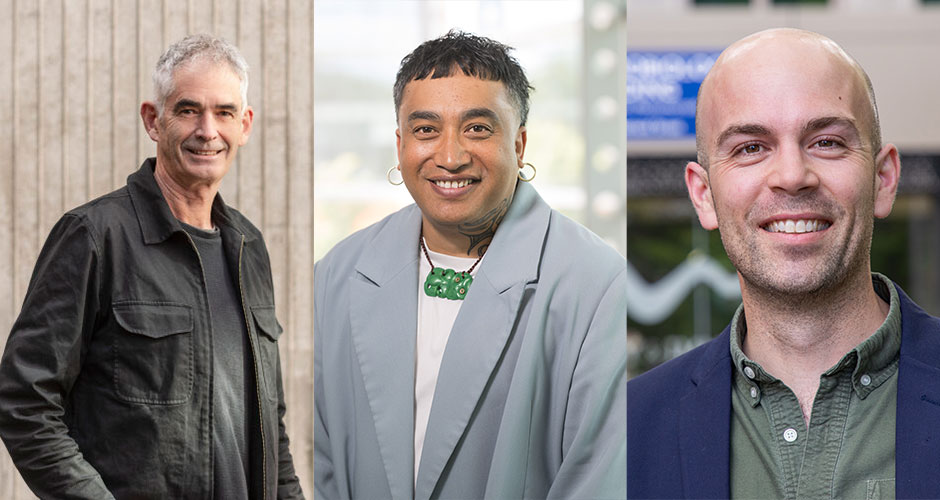
From left, Professor Parry Guilford, Mau Te Rangimarie Clark and Dr Matthew McNeil.
Dr Matthew McNeil, Department of Biochemistry, $1,199,888
Trapping antibiotics inside pathogens to accelerate infectious disease therapy
Disease causing (pathogenic) mycobacteria are the causative agents of some of humankind’s greatest afflictions, including tuberculosis (TB), leprosy, and Buruli ulcers. Social inequity continues to shape infectious disease outcomes with Indigenous populations, in Aotearoa and globally, bearing a disproportionate infectious disease burden. Antibiotic pumps in pathogenic mycobacteria remove antibiotics from the intra-cellular space. This reduces the clinical efficacy of antibiotics, including many that have just entered clinical practice, threatening the long-term use of these essential medicines. By understanding how these pumps remove antibiotics this project will develop the next generation of diagnostic tools and antibiotic regimens to ensure the use of essential medicines for in need patient populations. Achieving this will allow this investment to address public health problems of international and regional significance, whilst also generating significant economic value as the market for non-tubercular mycobacterial infections is expected to reach > US$4 billion by 2033.
Mau Te Rangimarie Clark, Department of Psychological Medicine, Christchurch, $1,199,994
Ka Ora! Improving healthcare provision and outcomes for Māori with ngā māuiui kai
Previous research from this team has revealed significant disparities in the diagnosis and treatment of ngā māuiui kai (eating disorders) for Māori. This kaupapa Māori and implementation science-informed study aims to improve healthcare provision and outcomes for Māori with ngā māuiui kai by addressing the need for culturally responsive assessment/screening tools, improving clinician awareness, and bridging access to treatment. The four-phased Māori-led approach will build on the researchers’ prior work to establish foundational awareness of the ngā māuiui kai landscape, analyse national policy and data to identify healthcare barriers, co-design three kaupapa Māori-grounded toolkits for system accountability, sector capacity, and culturally safe assessment, and pilot and refine the toolkits in both kaupapa Māori and mainstream services to assess usability and acceptability for national uptake and dissemination. The study aims to validate Māori worldviews in the treatment of ngā mauiui kai in order to significantly reduce delays in diagnosis and treatment, and ultimately achieve equitable health outcomes for Māori.
Professor Parry Guilford, Department of Biochemistry, $1,198,927
A blood test to mitigate and reduce New Zealand's colonoscopy waiting lists
Each month, 2,500 New Zealanders undergo a colonoscopy because of symptoms of colorectal (bowel) cancer. Unfortunately, Health New Zealand's colonoscopy capacity is highly stretched, resulting in long delays for most people. For people with colorectal cancer (two per cent of the total), these delays can significantly compromise their chances of surviving the disease. The research team has developed a prototype blood test which will be able to be used to identify the people on these waiting lists who are most likely to have cancer and require an urgent colonoscopy and prompt treatment. This research will clinically validate that test. As researchers build data on the test's performance, they anticipate it will also be able to be used as an alternative to colonoscopy for many people, resulting in cost savings and reduced waiting lists.

From left, Professor Peter Mace, Dr Rachel Purcell and Associate Professor Paula Toko King.
Associate Professor Paula Toko King, Department of Public Health, Wellington, $1,199,999
He Pā Harakeke: Effectiveness of mātauranga Māori early childhood models of care
Mokopuna are taonga tuku iho (ancestral treasure). With Otago’s Kaupapa Māori partner, Te Hou Ora Whānau Services, the research team will generate an evidence-base for effective mātauranga Māori-based preventive models of care (pregnancy through early childhood). 'He Pā Harakeke' directly impacts Government targets (mental health and addiction, childhood immunisations). They will use their maramataka-based theory of change tool, ‘Te Ao Mārama’, to measure outcomes as mokopuna and whānau progress through phases of improved health and cultural wellbeing. Using strengths-based cultural wellbeing indicators and StatsNZ Integrated Data Infrastructure, the research team will quantify impacts across multiple age bands for parent/caregiver and mokopuna (0-6 years) dyads against matched national comparison groups. Cost-modelling will examine return on investment, including downstream savings in health and other sector utilisation. The team’s moemoeā (dream) is a future where mokopuna and whānau are deeply grounded in whakapapa, and where cultural identity and belonging, and health and vitality are intergenerational.
Professor Peter Mace, Department of Biochemistry, $1,199,958
Developing new drugs to shape the local immune environment
Our immune system keeps us healthy by fighting infections and repairing damage, but it can also work against us. Immune cells can drive long-lasting inflammation after metabolic disruption, or they can shut down the body’s ability to fight cancer, stopping modern immunotherapy treatments from working in many patients. The research team aims to develop new medicines to reset the local immune environment. These drugs will work by blocking the breakdown of key signalling molecules to restore balance in how tissues and immune cells communicate. In turn, this will reset the signals sent by diseased tissues and the improper responses of the immune cells they attract. The potential impact is large: better treatments for millions of people living with chronic inflammation associated with metabolic disease, and wider access to life-saving cancer immunotherapies. These medicines would not only improve health but also create major opportunities for new therapies worldwide.
Dr Rachel Purcell, Department of Surgery and Critical Care, Christchurch, $1,200,000
Tackling early-onset colorectal cancer in Aotearoa
Rates of bowel cancer in younger adults under 50 are rising rapidly in Aotearoa New Zealand and overseas. These younger patients often present with advanced disease, face delays in diagnosis because current guidelines exclude them from urgent colonoscopy, and experience unique challenges such as impacts on fertility, family life and employment. This project will establish the first nationwide study of early-onset colorectal cancer (EOCRC) in Aotearoa New Zealand. The researchers will collect blood, stool and tumour samples, along with lifestyle and health information, to understand why EOCRC is increasing and to identify new risk factors. Researchers will also test simple blood-based biomarkers that could help doctors prioritise younger patients with bowel symptoms for investigation, leading to earlier diagnosis. By combining scientific, clinical and patient perspectives, this research will provide evidence to guide policy, improve services and reduce the personal, social and economic burden of EOCRC.
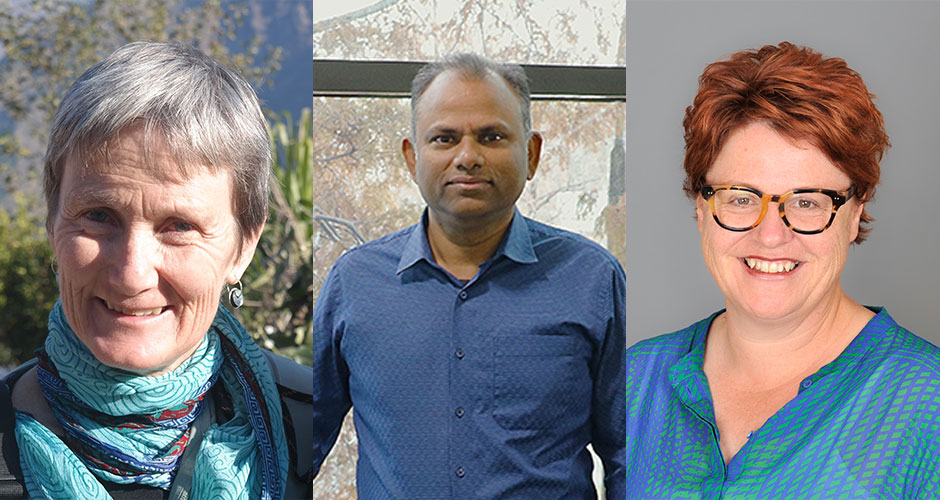
From left, Dr Sue McAllister, Associate Professor Ramakrishnan Mani and Dr Rachelle Martin.
Dr Rachelle Martin, Department of Medicine, Wellington, $1,199,775
Embedding disabled people’s expertise in health design
Disabled people possess valuable expertise in maintaining their health and wellbeing. While government strategies emphasise their voices should guide health service design, this is often not realised in practice, leading to gaps in care and access barriers. This work will enhance the health system’s capacity by developing validated methods for incorporating the voices of disabled people into service evaluation, design and delivery. Collaborating with disabled people, the researchers will examine how to best include them, and explore with Te Whatu Ora Health NZ policy planners what enables or hinders their meaningful participation. Next, in partnership with disabled people and policy staff, researchers will co-design practical tools to improve the inclusivity and effectiveness of health service design in a live setting. To develop these methods, they will jointly explore ways to improve access to health and rehabilitation services for non-ACC funded disabled adults, thereby co-designing health services that support timely, comprehensive care.
Associate Professor Ramakrishnan Mani, School of Physiotherapy, $1,439,534
Brief mindfulness meditation intervention for chronic musculoskeletal pain
Chronic musculoskeletal pain (CMP) affects one-third of the global population and is a leading cause of disability in Aotearoa New Zealand. Māori, Pacific peoples, and people living with disability experience disproportionately high rates of CMP. Current treatments provide modest benefits, are often costly, and access to pain services remains limited. Mindfulness meditation (MM) targets the complex biopsychosocial mechanisms underpinning CMP and offers a low-cost, non-pharmacological approach to pain management. Building on an HRC-funded feasibility randomised control trial, this pragmatic multi-centre clinical trial will evaluate the clinical and cost-effectiveness of a brief, biculturally responsive MM intervention incorporating tikanga Māori, delivered in community settings and via telehealth. Associate Professor Ramakrishnan Mani, together with co-first named investigator Dr Sharon Awatere (Ngāti Porou, Ngāti Kahungunu) and named investigator Dr Miriama Ketu McKenzie (Ngāti Raukawa, Ngāti Tūwharetoa), will work in close collaboration with an interdisciplinary team of senior researchers and clinicians to deliver this kaupapa.
Dr Sue McAllister, Centre for International Health, $1,198,720
Implementing a new partnership model for elimination of tuberculosis for Māori
Tuberculosis (TB) is the leading infectious disease killer of humans globally. The New Zealand incidence of TB in Māori is more than five times higher than in New Zealand Europeans. This team’s previous research shows that, for Māori, there is ongoing stigma, and lack of trust in health services, together with significant limitations and capacity of the current health system to meet the needs of Māori with TB. The overall aim of this implementation research project is to expand the model of care to include a partnership between public health teams and community providers to improve health outcomes and eliminate TB amongst Māori. The model will be Māori-led and whānau centred, use a holistic approach to improve health, and enhance the reach of contact tracing. The He Pikinga Wairoa Framework will be used for power-sharing and co-design using research tools, including health facility assessment, gap analysis, TB cascade indicators, and economic evaluation.
Research at Otago
Globally significant, regionally responsive research excellence at Otago.
Find out more