
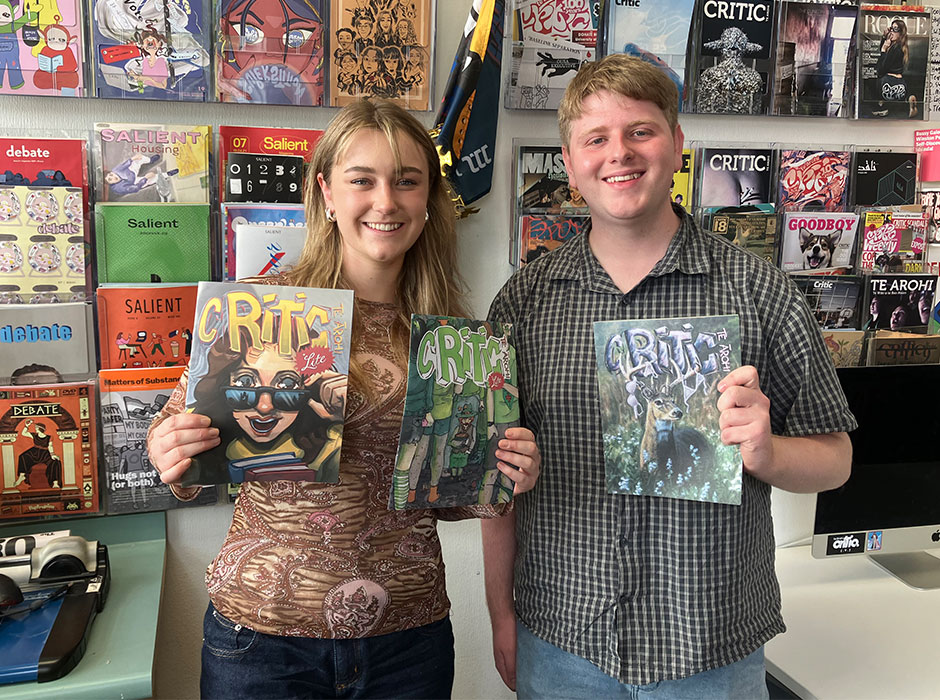
Critic Te Ārohi Co-Editors for 2026, from left, are Hanna Varrs and Gryffin Blockley. They are the first Co-Editors at Critic Te Ārohi in 28 years.
2026 has been a rollercoaster for the team at Critic Te Ārohi – and it’s only May.
The year started strong with the announcement of Hanna Varrs and Gryffin Blockley as Co-Editors. This is the first time in 28 years there have been two editors, the last Co-Editors being Brent McIntyre and Gavin Bertram in 1998.
Then one of the first major decisions the pair had to make was how to help the Otago University Students’ Association (OUSA) handle the rising costs of producing Critic Te Ārohi. Critic Te Ārohi ‘Lite’ was Hanna and Gryffin’s solution, a decision made alongside, and with support from, OUSA's Student Media Manager Elizabeth Leach-Young.
Critic Te Ārohi has typically been a 48-page, free, weekly magazine, changing to 36-pages in Semester 2 last year. But due to a lean budget for 2026 and the increasing costs of everything, Hanna and Gryffin opted to alternate between a 16-page Critic Te Ārohi ‘Lite’ version one week, followed by a 36-page Critic Te Ārohi the week after.
Neither Hanna nor Gryffin anticipated having to make such large calls at the start of their tenure.
Gryffin says they discussed multiple potential formats for the magazine with the Student Media Manager, Each format had its pros and cons, but the Co-Editors were determined to keep it as a weekly publication.
“Making a call on this was daunting, as it’s impossible to make everybody happy. Ultimately, we believe we made the right call,” he says.
And no sooner had the change come into effect, with a handful of editions of Critic Te Ārohi ‘Lite’ having gone to print, it was announced that as of Semester 2, Critic Te Ārohi will shift to a 32-page magazine every week.
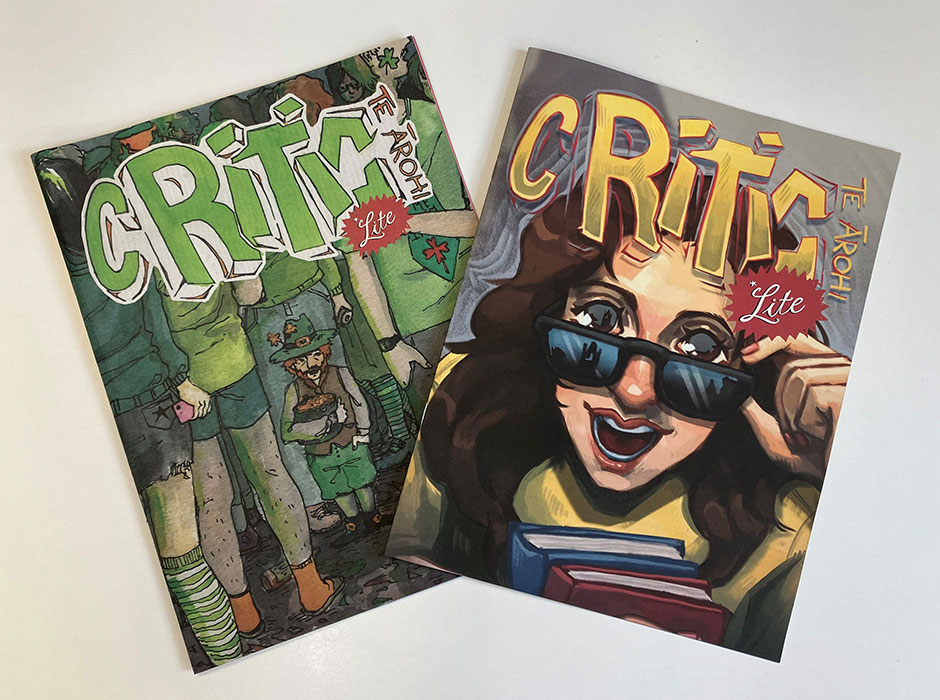
Two of the Critic Te Ārohi ‘Lite’ to have hit the newsstands.
The pair acknowledge that while Critic Te Ārohi ‘Lite’ helped them address some of the immediate financial challenges they were presented with, not everyone was on board.
Feedback was mixed, with former staff weighing in on the decision in national media, but Hanna says many people liked the new look and were appreciative of what was being done under financial constraints.
“Critic Te Ārohi ‘Lite’ didn’t encapsulate what students, alumni and the wider community wanted from Critic Te Ārohi as an OUSA student service,” Hanna says.
Most importantly, they tried something new, Gryffin says.
“It didn’t land, and that’s okay. You never know unless you give things a go.
“The same applies to having Co-Editors. It hasn’t been done in years, and we’re trialling it to see how it works.”
Hanna says they are both very excited that Critic Te Ārohi will be in a standard 32-page format, every week, from the beginning of Semester 2.
“The Semester 2 start will allow the team to plan for a new print structure, and deliver content that has been planned for the rest of the semester in Critic’s current form," Gryffin says.
“We’re excited to return to a consistent weekly format, with a stable page count, familiar structure, and the same quality of content students expect to see on stands each week."
More about the Co-Editors
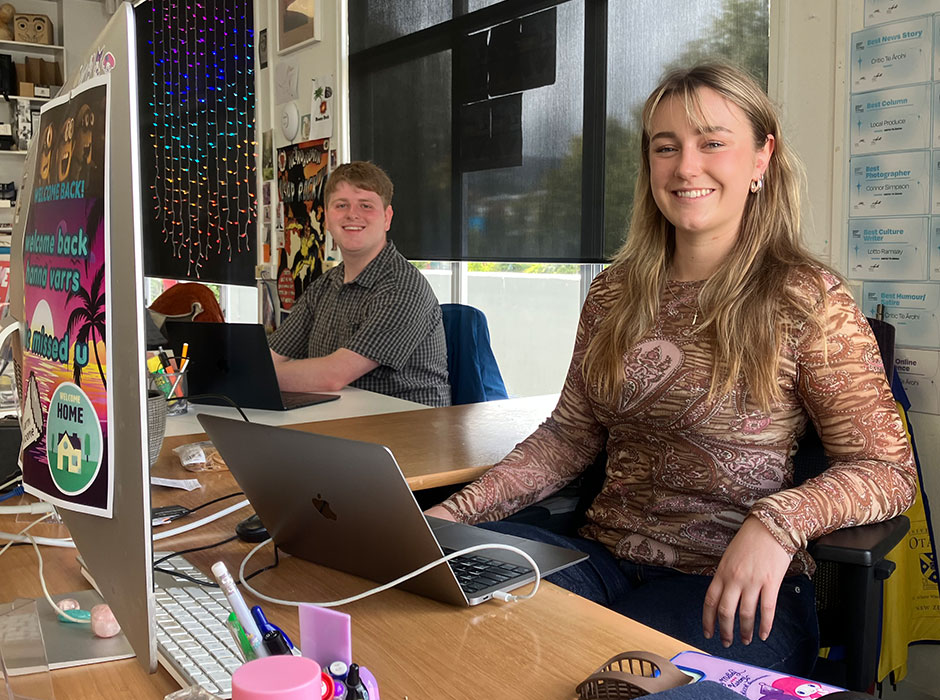
Having collaborated on the news section last year made teaming up as Co-Editors this year a happy solution that enables Gryffin, left, and Hanna to continue studying this year.
Hanna joined Critic Te Ārohi at the start of her third year because she thought it would look good on her CV.
“It definitely has grown to be something a lot more meaningful to me than that!”
Hanna began as a contributor in early 2024, becoming a Staff Writer by the end of the year. She eventually transitioned to News Editor in Semester 1 of 2025 and became Features Editor in Semester 2. As a result, she’s written a wide range of content including festival reviews and how to handle a zombie apocalypse, as well as articles holding the OUSA student executive to account.
Gryffin joined as a second-year student at the beginning of 2024 in the role of Staff Writer before moving to News Editor in Semester 2 of 2025.
“From the beginning, I gravitated towards writing in the news section as I found the whole process really enjoyable – from researching, to interviewing, and writing up articles all on a tight turnaround,” he says.
They are both full-time students this year – Hanna in her fifth and final year of a Bachelor of Laws and Bachelor of Commerce specialising in Management, while Gryffin is in his fourth year of study, undertaking a Master of Science in Genetics.
Even though Hanna had always wanted to be Editor, she didn’t think she could make it work while studying full-time – usually the role is 40 hours per week for one person, so is generally taken on by a recent graduate.
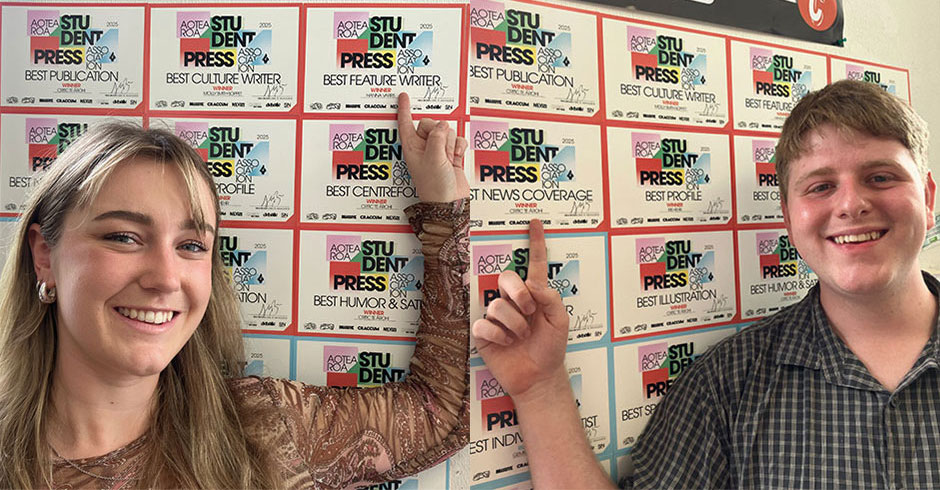
Hanna was proud to win the Best Feature Writer at the Aotearoa Student Press Awards last year, while Gryffin was proud of the contributions he made that helped Critic Te Ārohi take out the Best News Coverage award.
Gryffin says it was previous editor Nina Brown who suggested a Co-Editorship. As Hanna and Gryffin had already spent 2025 collaborating in the news section, teaming up felt like a great solution.
“The more we thought about it, the more we began to like the idea,” he says.
“Co-Editorship was a solution that allowed us to keep the best of both worlds. We quickly realised that it would be a really good idea for both of us, and meant that we would both still be very tapped into student life due to still studying alongside editorship,” Hanna says.
Hanna and Gryffin would love to hear from anyone keen to contribute as a writer or an illustrator for Critic Te Ārohi.
“If you’re keen for an extracurricular that will 100 per cent change your life for the better, please reach out,” Hanna says.
“Critic is for all students from all walks of life. It can be what you make of it – serious, funny, strange, provocative, uplifting… You name it! There is a place for everyone here.”
This year, Gryffin hopes to cover as many topics as possible in an attempt to appeal to as many students as he can.
“Every week there’s something different on offer, and we hope in every issue there can be something you can enjoy – whether it's a relatable article, an interesting news piece or some art you’d like to put up in your room,” he says.
“Critic has just entered its 101st year – it has been around long before our time, and will continue to be once we’re done with our studies. One of Critic’s values is kaitiakitanga – we have guardianship over this special part of the University culture, and we want to make sure future generations of students are able to enjoy it for years to come.
“In 2026, I’m hopeful we can continue to build Critic’s presence on campus, uplift the voices of a wide range of students and ensure that behind the scenes, Critic can continue for another hundred years!”
-Kōrero by communications advisers Koren Allpress and Laura Hewson
Media, Film and Communication
The Media, Film and Communication programme offers two undergraduate majors: Film and Media Studies, and Communication Studies. We also offer an exciting range of postgraduate study options.
View