
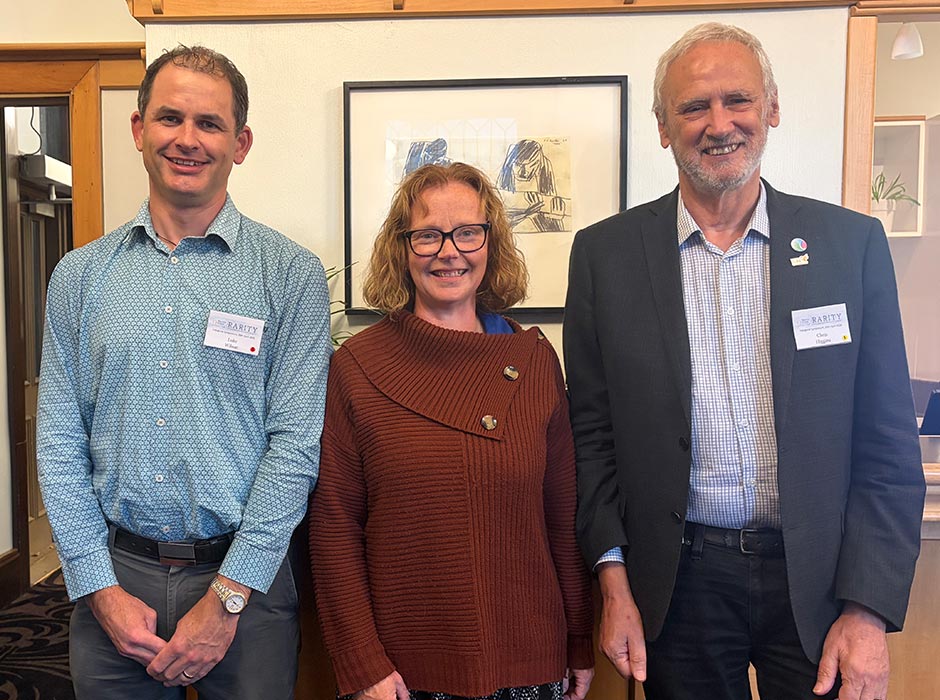
“There is strong momentum building across the rare disease community in Aotearoa, and the Research Alliance for Rare Illness Translational Pathways (RARITY) is part of a broader effort to connect people, ideas, and opportunities,” RARITY Director Professor Stephanie Hughes (centre) says. Stephanie is accompanied by RARITY Co-Director Māori Research Fellow Dr. Luke Wilson (left) and Rare Disorders New Zealand Chief Executive Chris Higgins (right).
One Otago research alliance is determined to bridge the gap between research and real-world application for the rare disease community.
That is a lofty goal when you look at the stats – the Ministry of Health estimates around 300,000 New Zealanders, and their whānau, are thought to be impacted by one or more of over 7,000 known rare disorders.
Research Alliance for Rare Illness Translational Pathways (RARITY) Director Professor Stephanie Hughes and Co-Director Māori Research Fellow Dr Luke Wilson say the biggest challenge for the rare disease community is not the lack of expertise, but the lack of coordinated pathways to impact.
“New Zealand has strong capability across fundamental research, clinical care, and advocacy, but these efforts are often not well connected or aligned toward real-world outcomes for patients and their whānau,” Stephanie says.
RARITY, one of 14 Otago research themes funded in 2024, was established specifically to address this gap, she says.
“Our main focus is helping researchers, ensuring that they are supported to engage beyond their own discipline and building understanding of processes needed to move research toward impact.
“We also aim to support advocates, to strengthen the link between research and community priorities. And for patients and whānau, to ensure research is aligned with what matters most to communities, supporting pathways that lead not just to diagnosis, but to improved care, access, and outcomes.”
Luke says the community theme also strongly reflects in RARITY’s commitment to Te Tiriti o Waitangi and the University’s Māori Strategic Framework.
“In practice, this means ensuring the work we support is done in partnership with Māori communities, supporting co-design of research, and ensuring that engagement, data use, and outcomes are aligned with principles of equity, trust, and long-term benefit,” he says.
To highlight the work done since the alliance was established, RARITY held its inaugural symposium last month, bringing together researchers, clinicians and advocates.
RARITY has focused on building the foundations of a connected and collaborative network, including establishing a cross-disciplinary network of researchers, clinicians, community organisations, and policy makers, delivering workshops to bring stakeholders together and initiating national and international connections to support future collaboration.
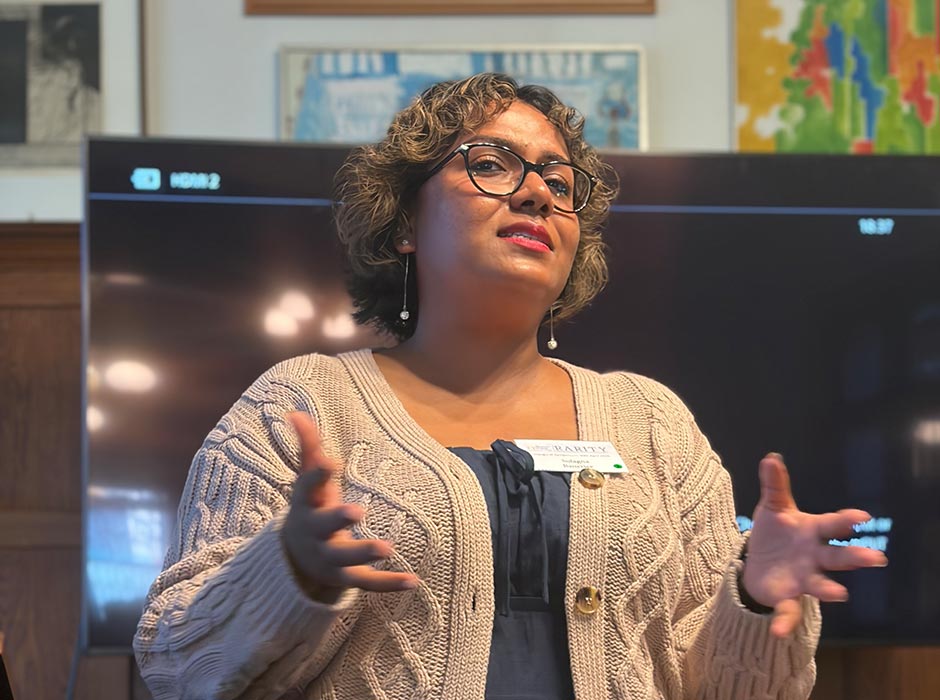
Zoology Postdoctoral Fellow Sulagna Banerjee presents her RARITY Internship Programme report at the Symposium.
One such initiative is the RARITY Internship Programme, aimed at supporting early career rare disease researchers.
Zoology Postdoctoral Fellow Sulagna Banerjee, one of two researchers selected for 2025-26, did her internship with Rare Disorders New Zealand (RDNZ).
Sulagna says her motivation for participating in the programme was to better understand what happens beyond scientific discovery.
“As a researcher working in rare diseases, I’m aware that identifying a gene or mechanism is only one part of a much larger journey.
“I was particularly interested in learning how research translates into real-world impact – including how therapies are developed, how policy decisions are made, and how patient advocacy shapes these processes. The programme offered a unique opportunity to engage with these aspects directly.”
During her internship, Sulagna participated in several key events, including the Parliament launch of the 2025 Rare Voices survey whitepaper report and a support group leads networking session.
“These experiences gave me insight into how different stakeholders come together to address challenges in the rare disease space."
The experience has been incredibly valuable in shaping how she thinks about her role as a researcher, she says.
“It reinforced the importance of stepping outside the lab to understand the broader context in which our work exists.
“It also highlighted the need for researchers to be more actively involved in advocacy and communication, helping bridge the gap between science and the patient community.
“One of the most impactful takeaways for me was realising that there is truly a seat for researchers at the table, and that our perspectives are not only welcomed but actively needed in these spaces.”
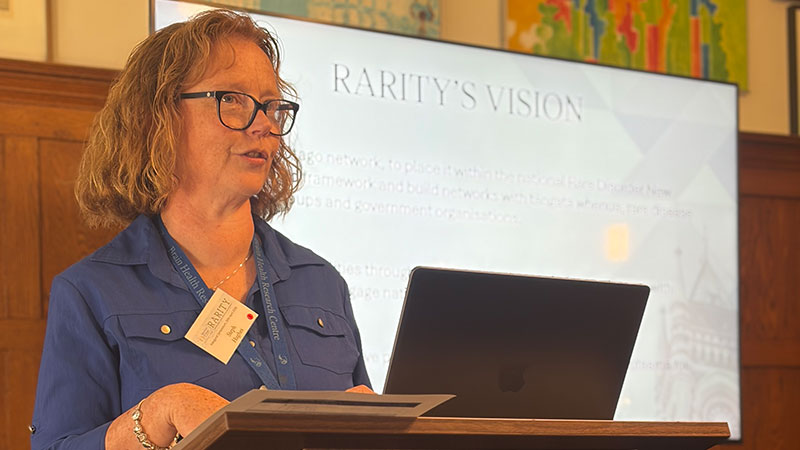
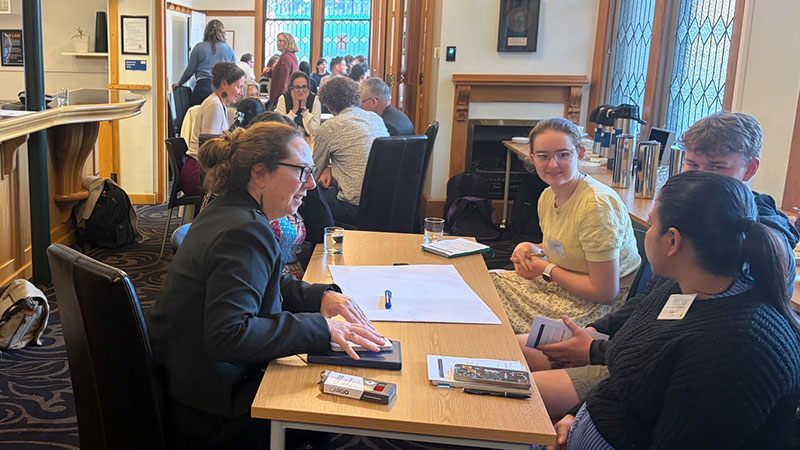
Another key part of RARITY’s work is developing partnerships with organisations such as RDNZ.
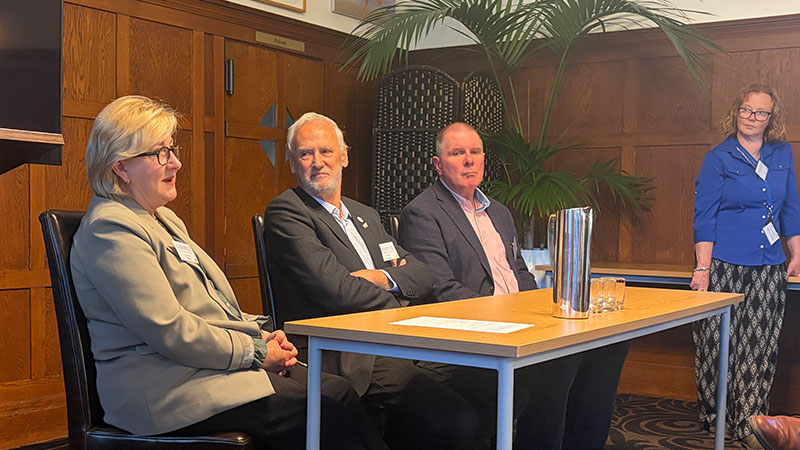
RDNZ Chief Executive Chris Higgins was one of the speakers at the Symposium, sharing his perspective on rare diseases in Aotearoa New Zealand and RDNZ’s role.
“Advocacy is central to the work we do. While each individual disorder has its own needs and challenges, for the most part they face the same systemic barriers to getting the care they need.
“We work closely with the rare disorder community to ensure we represent a strong common voice.”
RARITY plays an important part in enhancing connection and collaboration and accelerating work to improve diagnosis and treatment options for people living with rare disorders, he says.
“It gives people living with a rare disorder a huge amount of hope, comfort and reassurance to know that a researcher has taken an interest in their particular disorder.
“And when researchers invest time in engaging with those with lived experience, it not only strengthens the research but also benefits the outcomes of the research for people living with the disorder.”
Partnering with RARITY on the internship programme is another way to connect to the advocacy work and to the people directly benefitting from the research, Chris says.
“It helps create alignment in the work in the rare disorders space to ensure we are all working in the same direction.”
~ Kōrero by Sandra French, Adviser, Internal Communications