

Clockwise from top left, Committee for the Advancement of Learning and Teaching (CALT) Fellows Senior Teaching Fellow Celia Lie, Senior Lecturer Tessa Romano, Associate Professor Megan Wilson, Teaching Fellow Susi Otto, Senior Lecturer Mathew Parackal, Senior Teaching Fellow Nicole Power, and Lecturer Stu Hayes.
Innovative approaches to learning and teaching are in the spotlight at Otago, addressing some of the key challenges in today’s fast-changing higher education landscape.
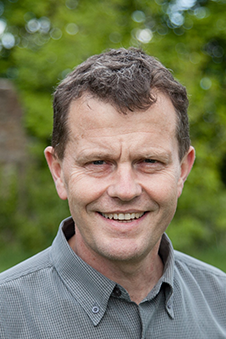
Professor Tim Cooper
Leading the charge are Otago’s 2026 Committee for the Advancement of Learning and Teaching (CALT) Fellows, with projects spanning student engagement, AI, support for neurodiverse tauira, and discipline-specific teaching models.
Dean of Learning and Teaching and CALT Convenor, Professor Tim Cooper says he is “very excited by the potential I see among this year’s Fellows”.
“There is a lovely alignment of interests, and each project will contribute to a pressing need in the current context of higher education.
“The Fellows will help to ensure that the learning experience remains the very best it can be in changing and challenging circumstances.”
The Fellowships play an important role in shining a spotlight on Otago’s in-house teaching innovations and expertise, Tim says.
“There are so many staff across our University who are passionate about teaching and learning. I am strongly committed to supporting them and making them visible.”
The Fellowships underway at the moment focus on a mix of important priorities from student engagement with learning to generative AI.
Senior Teaching Fellow Celia Lie (Department of Psychology), Associate Professor Megan Wilson (Department of Anatomy), Senior Teaching Fellow Nicole Power (Department of Biochemistry)
Embedding neuroinclusive practice across teaching, training, and pastoral care at the University of Otago.
This CALT Fellowship project is a collaborative initiative led by a team of three Fellows, each contributing complementary expertise to advance neuroinclusive practice across the University of Otago. The project addresses teaching practice, staff capability, and student pastoral care. Together, the project aims to move beyond diagnosis-based accommodations toward proactive, universal design approaches that assume neurodiverse students are present in all learning environments.
Nicole says neurodivergent students often navigate environments that were not intentionally designed with their needs in mind.
“Rather than relying solely on individual accommodations, this project seeks to better understand students' experiences and identify practical ways to create more inclusive systems of support,” she says.
Celia says that implementing inclusive teaching practices can have wide-ranging benefits.
“We’re aiming to find a way to improve educators’ understanding of, and attitudes towards, neurodiversity, as well as suggest easy-to-implement strategies for how teaching practices can be adjusted to better suit neurodivergent learners.
“It is my hope that improving teaching practices in ways that will benefit our neurodivergent students, it will ultimately benefit all of our students.”
Megan says their project is ultimately about belonging.
“I want to help build greater understanding of neurodiversity across the University and support teaching staff in feeling more confident about using inclusive practices.”
Senior Lecturer Mathew Parackal, Department of Marketing
A flipped thinking pedagogy: making thinking visible in the age of AI
This project aims to respond to the pedagogical challenges posed by GenAI by developing and examining a flipped thinking pedagogy. The goal is to establish baseline insights into the extent students are currently critically thinking and then investigate how a flipped thinking approach might strengthen the cognitive processes that traditional assessments no longer reliably capture. The project seeks to support a pedagogical shift towards thinking process in contributing to learning in the current AI era.
Mathew says the advent of GenAI has changed the pedagogical landscape of higher education.
“The flipped thinking pedagogy ensures our curriculum remains aligned with an AI-driven world, reinforcing the ongoing relevance of higher education.”
Lecturer Stu Hayes, Department of Tourism
Understanding the ecology of contemporary student engagement
This project reconceptualises student engagement in higher education as an ecological phenomenon, shaped by the complex interactions between students and the environments in which they live, work, and learn. Drawing on Bronfenbrenner’s ecological systems theory, it develops the Ecology of Contemporary Student Engagement model alongside a reflective prompt tool that encourages educators to consider how learning environments, student circumstances, institutional structures, and wellbeing factors influence engagement, while supporting teaching approaches that remain consistent with their own pedagogical values and philosophies.
Stu says that through talking to tauira he came to appreciate that contemporary student life is often far more complex than is immediately visible from within the classroom.
“This led me to ask whether we need a broader way of understanding engagement – one that recognises the wider environments shaping students' experiences.”
Teaching Fellow Susi Otto, Department of Physics
First-Year Physics demonstration video library
This project aims to develop a library of high-quality Physics lecture demonstration videos for first-year Physics teaching, with an initial focus on the Health Sciences First Year (PHSI 191) course. The videos will enable students to revisit key concepts and demonstrations outside of lectures at their own pace. The resource will be integrated into Aoroa and has the potential to expand over time to include additional learning materials, such as worked example problems, explanations of challenging concepts, and further Physics demonstrations.
Susi says demonstrations are one of the most effective ways to make abstract concepts engaging, memorable, and accessible for students.
“By creating a dedicated video library, I hope to provide accessible, course-specific resources that complement live teaching, support revision, and allow students to learn at their own pace.”
Senior Lecturer Tessa Romano, Music – School of Performing Arts
A cross-cultural comparison of best practice Music performance teaching in the tertiary sector.
For this project, Tessa has teamed up with Professor Karyn Paringatai (Ngāti Porou) at Te Tumu School of Māori, Pacific and Indigenous Studies to observe and analyse Music performance teaching in Italy, France, and Aotearoa. Their primary goal is to better understand how western classical performance is taught in its countries of origin (Italy and France) and compare it to how kapa haka is taught in Aotearoa, so that when western classical performance teaching practice at Otago shifts in order to become more Te Tiriti-led, it will both honour and respect whakapapa practices (teaching practices in Italy and France) while embracing the teaching practices of kapa haka.
Tessa says it was a sense of curiosity and urgency that led them to explore how a paper focused on producing great classical musicians could be more Te Tiriti-led.
“This project is a way to better understand how our tauira can both embrace western classical music and their relationship to this beautiful place, by investigating how western classical music is taught in its places of origin.
“It is a way forward in creating a more inclusive, Te-Tiriti-led learning environment that still strongly maintains its connection to the whakapapa of western classical music and the music itself.”
Fellowships lead the way to greater impact
Introduced in 2025, the CALT Fellowships mark a significant step forward in fostering deeper relationships and lasting collaborations with teaching-focused academics across Otago.
Building on the foundation established by the former CALT University Teaching Development Grants, the Fellowships were created through a collaboration between CALT and Kōkiri ki Tua (the Educational Network), with support from the Centre for Educational Design and Innovation (CEDI).

Senior Teaching Fellow Rebecca Bird
Senior Teaching Fellow and CALT Fellowships Coordinator Rebecca Bird says the key difference is that the Fellowships place greater emphasis on supporting the individual alongside the project, and with a focus on strategic alignment and long-term impact.
“The focus on the people means that the Fellowships are not just about an output but also about the journey of professional growth, educational leadership, collaboration and capability development.
“By investing in people as well as projects, the Fellowships aim to ensure that innovative teaching practices can be sustained, shared, and scaled across the University, helping the University respond to the changing needs and expectations of students in a rapidly evolving educational environment.”
In addition to funding towards temporary teaching cover and project costs, Fellows also have access to mentoring, guidance in the scholarship of teaching and learning and opportunities to connect with other CALT Fellows and colleagues across the University.
As a relatively new initiative, the programme is still evolving, Rebecca says.
“We continue to learn from each cohort and refine the experience for both Fellows and mentors, strengthening the community, visibility and long-term impact of the programme.
“I encourage anyone who has an idea they are passionate about exploring – whether it is a fully developed project or even just the beginning of a conversation – to get in touch. Applications for the 2027 CALT Fellowships will open later this year, and we are always keen to talk with potential applicants about their ideas and how the Fellowships might support them in bringing those ideas to life.”
~ Kōrero by Sandra French, Adviser, Internal Communications
CALT Fellowships
Find out more about the CALT Fellowships and watch videos of the Fellows talking about their projects. Applications for the 2027 Fellowships open in September.
Explore the CALT Fellowships