
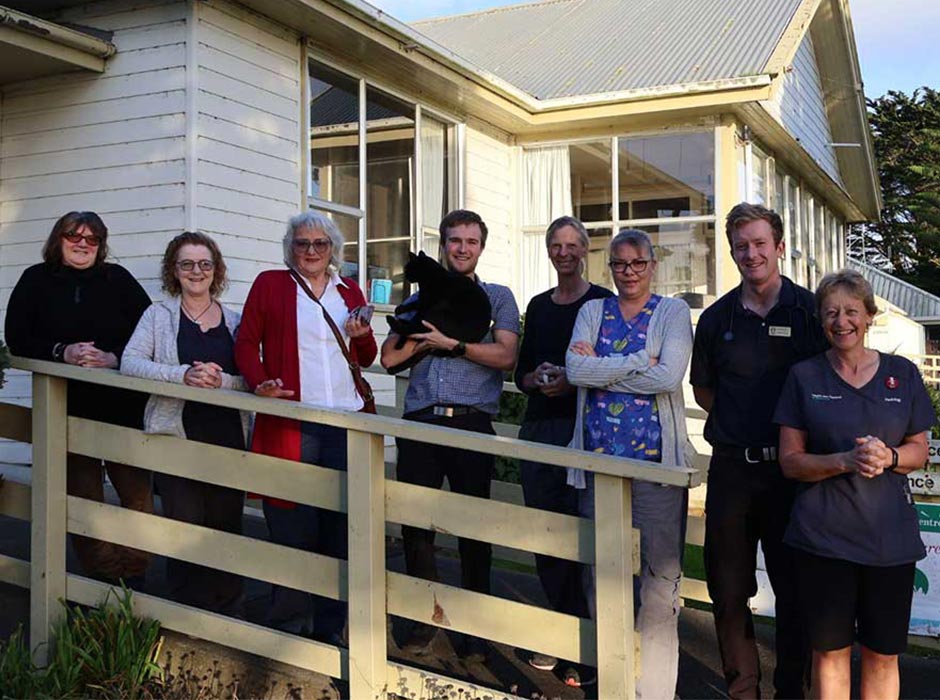
Final-year medical students Jack Clerke, fourth from left, and Leo Ashcroft, second from right, say their time on the Chatham Islands gave them great, hands-on experience. They were warmly welcomed by the locals, including the Chatham Islands Health Centre team, pictured here. Jack is holding the centre’s cat, Bruce, who is loved by many of the patients and staff.
For medical students keen to experience life as a rural doctor in Aotearoa, it doesn’t get much more remote than the Chatham Islands.
In May, final-year Otago medical tauira Jack Clerke and Leo Ashcroft finished a five-week rural GP placement on the Chatham Islands, which lie more than 800 kilometres east of Christchurch. The pair have been based at the Ōtautahi campus for their clinical training years.
Jack wants to train as both a rural GP and a rural hospital medicine specialist and “you can’t get much more rural than the Chathams”, he says.
“I was also really keen to put into practice the cultural safety skills I’d learnt throughout med school. The Chathams has a very high Māori population, so it seemed like a great place to do that.”
Leo says he has always enjoyed the sense of adventure that comes with travelling to somewhere remote, whether that’s exploring a high-country station on his motorbike or driving across the Australian outback.
“The Chatham Islands were no different – I was so intrigued as to what life would look like 800 kilometres offshore, and how people would sustain their own health, homes and livelihoods in such a far-flung location.”
Both Jack and Leo are keen on the outdoors and relished the great opportunities for freediving and fishing, often catching their dinner off the rocks.
They highly recommend the Chathams as a rural health placement to other trainee interns, saying it was a privilege to spend time there.
Jack says it was an excellent opportunity to put the skills they have learnt into practice.
“Having fewer resources makes you think on your feet and be adaptable, which is important when working in rural areas. The health centre staff also really appreciate having trainee interns out there to help – you quickly become an important part of the team and feel like you're valued and making a difference.”
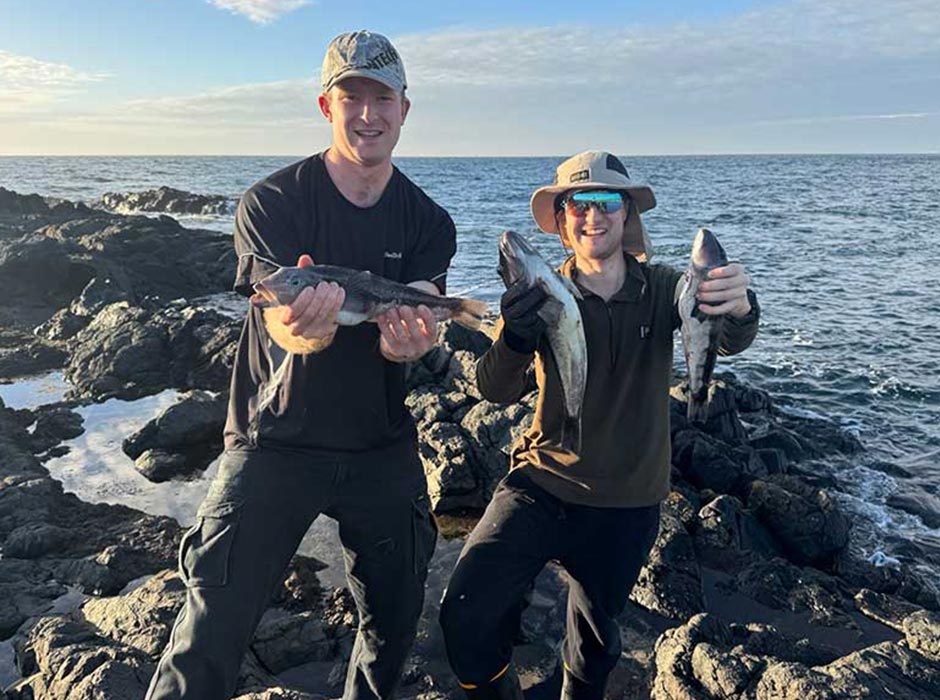
Leo, left, and Jack proudly display their catch – one of the highlights of their time on the Chathams was the fantastic fishing.
Leo agrees, saying as well as seeing their own patients with GP oversight, they also got involved in logistical matters with the nurses, which gave them a real appreciation of the work that goes into running a medical practice.
His clinical highlight was a medical evacuation to New Zealand in April. Because of aviation fuel restrictions, regular transfer planes could not fly to the Chathams, so a business jet was chartered from Hawke’s Bay.
“Jack and I gave the patient handover to the ICU doctor on the tarmac while the turbines whirred in the background, briefly chatted to the pilots and then saw them on their way.”
A close second was attending a vehicle rollover as first responders, where all occupants sustained minor injuries. This was an excellent learning opportunity in first aid and trauma management principles.
Jack says building rapport with patients was a big highlight. That continuity of care is what makes him keen to pursue rural medicine.
In their free time they explored the wild and beautiful landscape, and enjoyed being part of the tightknit, welcoming community, whether that was playing in weekend social netball tournaments or swapping work stories (anonymised of course) with the local police.
There were a few challenges to negotiate – the remoteness of the islands means food is expensive. A keen tramper, Jack’s innovative solution was to pre-make and dehydrate lots of meals, which saved him money and space in the suitcase.
Leo says having an adequate quantity of in-date medications to give to patients was at times a challenge. Orders for medication or medical goods could take weeks to arrive, so occasionally treatment plans had to be adapted to work with what supplies were available.
Jack, who grew up in the rural Marlborough Sounds, has been interested in becoming a rural GP since he decided, about halfway through high school, that he wanted to be a doctor. His interest in also becoming a rural hospital medicine specialist was sparked by attending wilderness medicine weekends, which are run by student rural health clubs in Dunedin and Christchurch.
Leo says that among other potential specialties, he has enjoyed emergency department placements and if he did train in emergency medicine, he would be very interested in going to a rural or small regional centre. For now though, he’s likely to apply to work in Christchurch next year.
“I like living here, and there's still lots to learn in a large centre with a high volume of patients, lots of complex patients and tertiary speciality services available.”
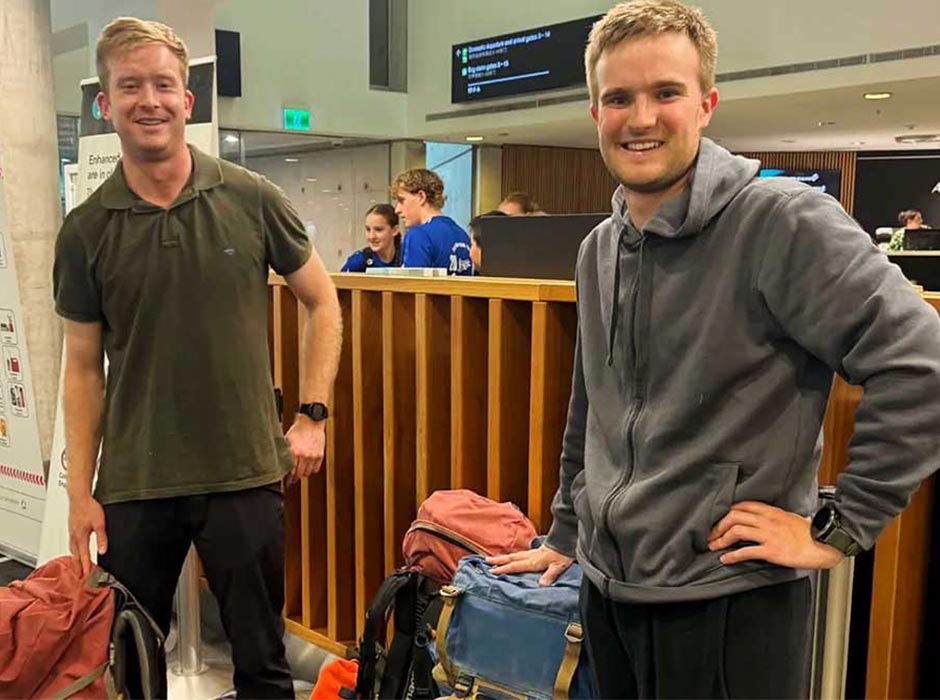
Leo, left, and Jack prepare to depart Christchurch Airport for the Chatham Islands. They are very grateful to the Canterbury Chair of General Practice Trust, which paid for their airfares.
The pair have thoroughly enjoyed their time at Otago and are grateful to the many lecturers and clinicians who have supported and encouraged them over the years.
Leo emphasises the value of the “clinically rich nature” of their last three years of training, the close integration of the medical school with the clinical working environment, and the educational culture and welcoming nature of medical teams towards students.
“As one example, I think back to my fourth year general surgery placement, where in hindsight there was lots we did not know about the basics of acute abdominal conditions, and yet we still had registrars and consultants who invited us to theatre, bought us coffees, answered our questions and took time to teach us.”
Jack says he has made friends for life through Otago and they have supported each other through a challenging programme to grow as people as well as aspiring health professionals.
Through his medical studies, he has also had the privilege of developing relationships with patients and supporting them through what is sometimes one of the toughest times in their lives.
“I've met some truly inspiring patients through my degree and their stories and resilience inspire me to keep going and try to make a difference, in rural health and beyond.”
Professor Lutz Beckert, Dean and Head of Region, Christchurch, says rural medicine is rewarding, important, and central to training future doctors.
“Jack and Leo’s placement on the Chatham Islands shows the value of learning in rural communities. These experiences help students grow in confidence, clinical judgment, and understanding of the communities they serve. We are proud to support more opportunities like this, whether on the Chatham Islands, the West Coast, or in other rural parts of Aotearoa.”
- Kōrero by Andrea Jones, Team Leader, Divisional Communications