
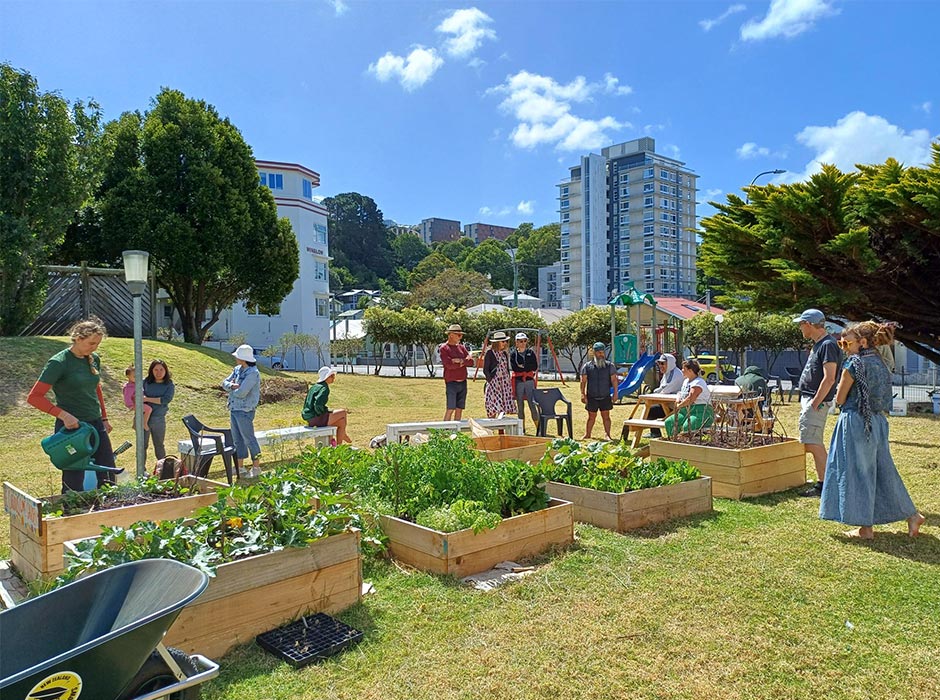
Te Ngae’e o Rau ‘īnau – the māra kai (food garden) at the Pukehīnau Flats in Pōneke evaluated by researchers from the Public Housing and Urban Regeneration Research Programme at the University of Otago, Wellington.
From creating community gardens to developing age-friendly cities and facing the effects of climate change, local and international experts will explore a range of opportunities to create healthier more resilient cities at a global conference being held in Wellington next month.
The International Conference on Urban Health will be held at the Tākina Convention Centre from 17-21 November. The conference is being co-hosted by the University of Otago and the International Society for Urban Health (ISUH) and has attracted participants from more than 35 countries, with visitors coming from as far afield as India, Uganda, Denmark, Saudi Arabia and China.
The theme of this year’s conference is ‘Weaving Climate Action, Equity and Wellbeing – From the Pacific to the World’, to reflect the urgent need to integrate Indigenous knowledge systems, climate resilience and health equity in urban development.
Distinguished Professor Philippa Howden-Chapman, from the Faculty of Medicine’s Department of Public Health at the University of Otago, Wellington, says she is delighted to be able to bring the conference to Wellington, the first time the event has been held in Oceania.
“The conference offers an unparalleled opportunity for delegates to engage with the most pressing urban-health issues facing New Zealand, Australia and the South Pacific islands, from climate change to sustainable transport to environmentally sustainable public and community housing developments. It is a unique opportunity to learn from others and share successful initiatives to build sustainable cities.”
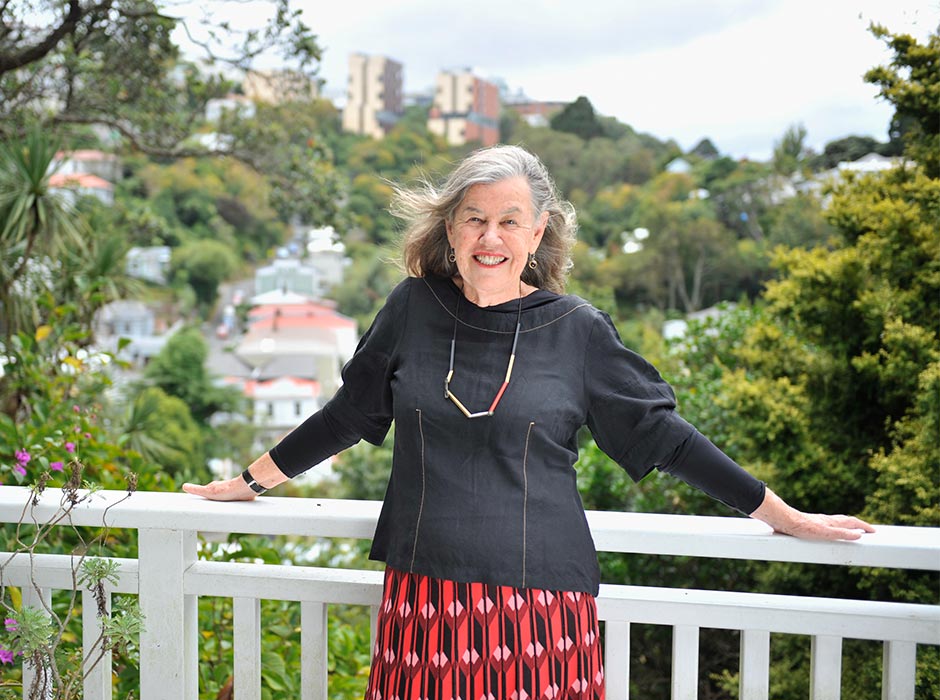
Distinguished Professor Philippa Howden-Chapman, the Co-director of the He Kāinga Oranga –Housing and Health Research Programme at the University of Otago, Wellington, says she is delighted to be able to bring the International Conference on Urban Health to Wellington. It will be the first time the event has been held in Oceania.
ISUH Executive Director Giselle Sebag says having the conference in the Pacific region offers participants the chance to learn from Pacific and Indigenous voices, that are too often missing from global urban health conversations.
The programme features more than 100 sessions, including interactive workshops, poster presentations and panel discussions. The panel sessions include a discussion on nourishing landscapes in which Māori researchers and practitioners will come together to share Indigenous insights and solutions for restoring food systems, and on the World Health Organization’s age-friendly strategy, which has been adopted by councils throughout Aotearoa.
Keynote speakers at the conference include Skye Duncan, the Executive Director of the Global Designing Cities Initiative, who will discuss human-centred urban design; Professor James Ward (Pitjantjatjara, Narungga), the Director of the Poche Centre for Indigenous Health at the University of Queensland; Professor Mike Davies from the Institute for Environmental Design and Engineering at University College London, who will discuss the provision of healthy and comfortable built environments in a changing climate; and Professor Deidre Brown, the Director of the Centre for Māori and Pacific Housing Research at the University of Auckland, who will share insights on the impacts of housing design on hauora Māori and Pacific peoples.
More than 25 academic staff from Otago will be presenting at the conference, including Pōneke researchers. Philippa will lead a panel of colleagues on the findings from a five-year Endeavour Fund research programme on the value of public and community housing in Aotearoa New Zealand; Professor Nevil Pierse will share his findings about the outcomes of the Healthy Homes Initiative; Dr Lucy Telfar-Barnard will discuss the impact of the WHO healthy housing framework; and Guy Penny (Ngāti Kahungunu ki Wairoa) will talk about his work on the Papakāinga development at the Wainuiomata Marae.
Giselle says she is excited that for the first time the conference will include a government round table bringing together national and local government leaders from across Aotearoa New Zealand and their international counterparts to explore how urban policy and governance can drive health, equity, and climate resilience in our cities. The session will be free and open to the public and will be held on Thursday, 20 November from 3pm to 4.30pm at Tākina.
The organisers have partnered with Business Events Wellington to develop a legacy programme which can continue after the conference ends, working with the Wellington City Council on their action plan to develop a sustainable, equitable, healthy, and resilient food system in Pōneke.
The conference opens on 17 November with a free symposium on Age-Friendly Cities and Communities at the Faculty of Architecture and Design Innovation at Te Herenga Waka – Victoria University of Wellington, which will explore how cities can be better designed to support people at every stage of life.
The 21st International Conference on Urban Health
ICUH 2025 will focus on diverse perspectives from across the Asia-Pacific region (APAC) while also fostering a global exchange of ideas. Registrations close on 1 November.
Find out more