
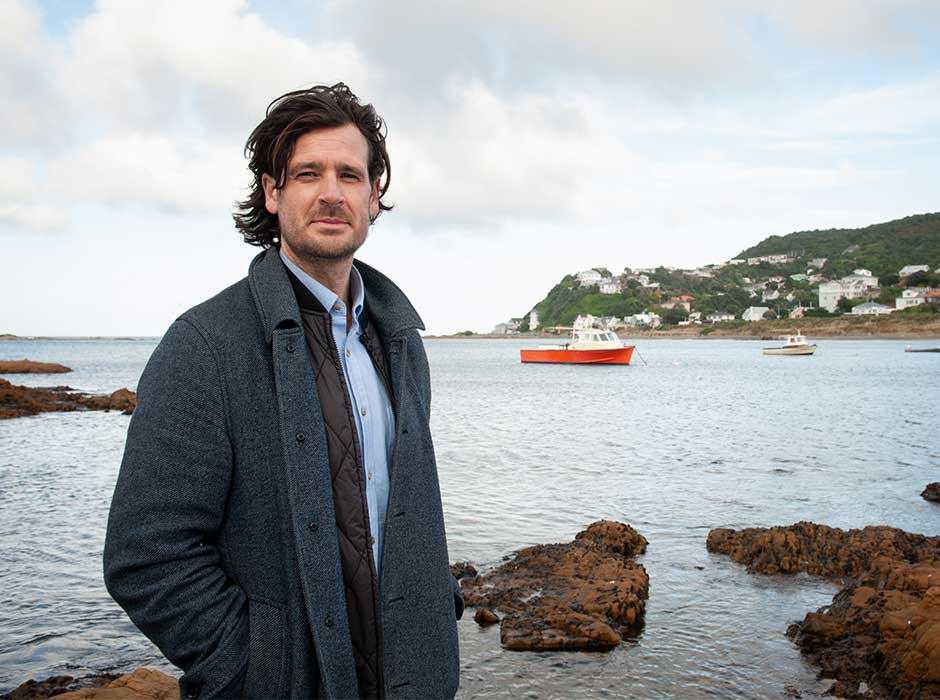
Dr Matt Jenkins, a Senior Research Fellow in the Department of Psychological Medicine, Wellington.
Young people with early experiences of psychosis have contributed to a new artwork which will hang in the waiting room of Health New Zealand – Te Whatu Ora’s Early Intervention Service in Wellington, where they receive treatment and support.
The Spaces and Places artwork creates a new map of Pōneke, one which features the places the young people feel best support their wellbeing. The four-panel artwork is designed so photos taken by rangatahi on disposable cameras, many of them of the ocean or other natural spaces, can be placed in different spots or moved around on the map.
The work was created as part of a 12-week-long Te Hekenga Whaiora (journey to wellness) programme for rangatahi aged between 16 and 24 led by Dr Matt Jenkins, a Senior Research Fellow in the Department of Psychological Medicine on Otago’s Wellington campus, and Dr Victoria Chinn from the School of Health at Te Herenga Waka – Victoria University of Wellington. The programme was facilitated with the assistance of Nuku Ora, an organisation that empowers Wellington region communities to boost wellbeing through inclusive, accessible physical activity.
At the start of the programme, rangatahi were asked for ideas for a creative project to work on. When they spoke about not being able to see themselves reflected in the design of the waiting room of the Early Intervention Service the team got to work to create an art work for the walls. Their idea has been brought to life with the help of Wellington design studio, StudioCDesign, which produced an artwork which can be used as a 3-D floor display or hung on a wall.
Two copies have been made so one can remain on permanent display at the Early Intervention Service in Wellington. The other will be used as a travelling exhibit, which can be taken on tour to community spaces around the country. It will go on display at BGI, the Wellington Boys’ and Girls’ Institute, next July.
As well as creating the art work, rangatahi in the programme were able to participate in once a week workshops focused on different aspects of health and wellbeing. The activities included playing music, making healthy food, creating art, engaging in physical activities, and learning about gardening, as well as experiences in natural environments including the Zealandia wildlife sanctuary and the Marine Education Centre in Island Bay.
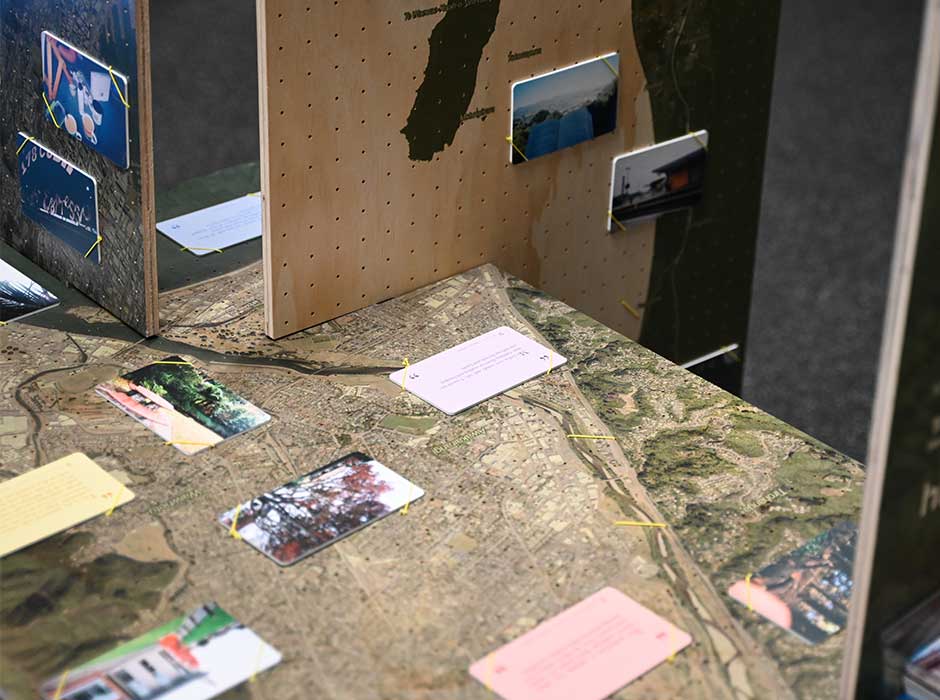
The Spaces and Places artwork creates a new map of Pōneke, one which features the places where young people with early experiences of psychosis feel best support their wellbeing.
Matt says the programme helped the young people find or rediscover activities they enjoyed and to learn to feel comfortable spending time in the community.
“Early intervention services are important for young people to get well, but it is about getting beyond those to feel comfortable in different spaces.
“This programme provides them with an outlet and some social connection to help them feel better, and reduce the likelihood of relapse.
“Giving them a say in the exhibition and the chance to tell their stories is empowering.”
The rangatahi involved were also offered the chance to work as research assistants on the programme. Dante Dawes (22), a student at Te Herenga Waka, was one of those who took up the opportunity.
He described his experiences in a video about the programme, saying he found it really helpful to spend time around other young people facing similar struggles.
“Psychosis is a very alienating thing because it is hard to talk about those things with anyone who hasn’t experienced it, and so it is nice to be with people who understand that it isn’t this intense, scary thing which has to be made a big deal of at all times.”
The participants submitted feedback using emojis to express how they felt at the beginning and end of each workshop, rating their physical, mental and spiritual health and feeling of social connection.
The information provided will form part of a research project to evaluate the programme, which Matt hopes will help show the value of wellbeing activities for young people who have experienced psychosis.
“If we show that these holistic approaches to wellbeing work, it will help them gain ongoing funding to run these programmes.”
For Matt, who did his PhD in Physical Education at Otago, working with rangatahi was an opportunity to help young people experiencing mental illness adopt and maintain healthy lifestyles to help them avoid preventable health issues later in life.
The programme has been supported with funding from Lottery Health Research, the Health Research Council and the University of Otago.
A booklet to assist rangatahi with their journey to wellness is available for digital download at the Moving with Psychosis website https://movingwithpsychosis.org/. To find out more about the 12-week wellbeing programme, watch the Te Hekenga Whaiora video on YouTube: https://www.youtube.com/watch?v=onA5xAxZ4Rc
- Kōrero by Cheryl Norrie, Wellington Communications Adviser
Department of Psychological Medicine, Wellington
Staff in the Department of Psychological Medicine are very enthusiastic about research, teaching and clinical practice. Our core academic staff includes award-winning psychiatrists, clinical psychologists, a clinical neuropsychologist, social scientists, behaviour change researchers, nurses and service user academics.
View