
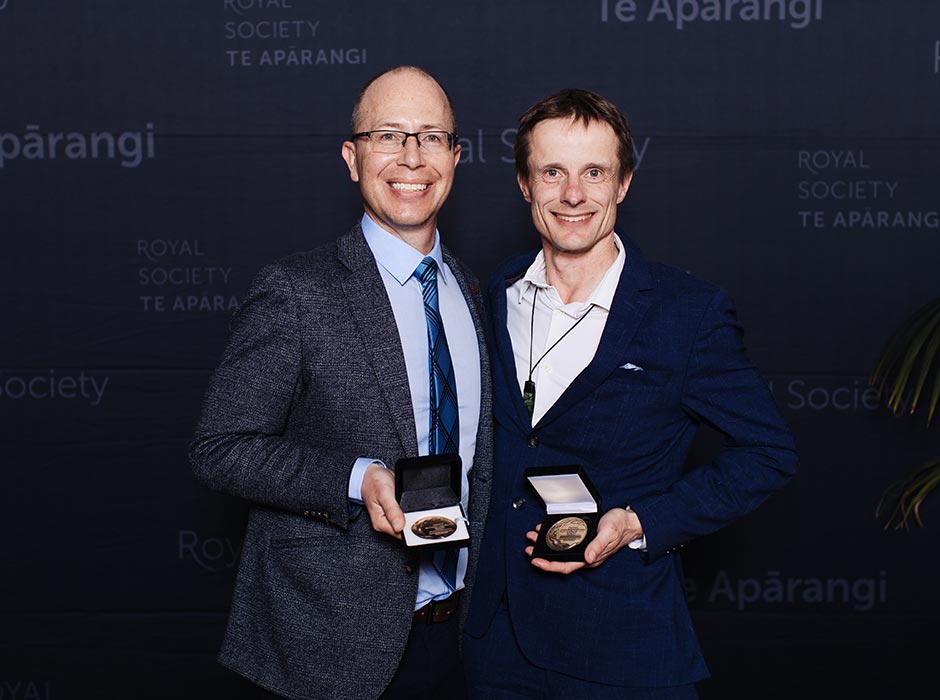
Two Otago paediatric endocrinologists, Professors Ben Wheeler of the Faculty of Medicine – Dunedin and Martin de Bock of the Christchurch campus, are working at the cutting edge of treatment for type 1 diabetes – and were jointly awarded the Health Research Council’s prestigious Beaven Medal in late 2025 for their work.
University of Otago researchers are leading a revolution in treatment for type 1 diabetes – helping people with the autoimmune disease lead freer, healthier lives.
The patch-like device that Rosie Barton wore covered just a tiny part of her body, but unlocked a new world of freedom for the North Canterbury school girl.
The 11-year-old is among an estimated 26,000 New Zealanders who live with type 1 diabetes – and a daily burden of checking blood sugar, counting carbohydrates and pumping insulin.
Her mother, Lisa Barton, says even her training as a nurse didn’t prepare her for this reality.
“It’s huge. Like any disease, you don’t realise what’s involved until you’re going through it.”
But, through an Otago-led trial, the family was introduced to next-generation technology that gave them a glimpse of a simpler future for Rosie.
It involved none of the cumbersome tubes and cords that have been a constant presence since her diagnosis at age five, and which have got in the way of the everyday activities she loves.
“It wasn’t like looking at a piece of medical equipment hanging off Rosie’s body,” she says.
“It was small, contained and the control it gave her was amazing. I’ll be honest… it was an absolute game-changer.”
A ‘driverless car’
Arriving a century after the discovery of insulin made it possible to manage diabetes, pumps like the one Rosie trialled represent a revolution.
In people with the disease – accounting for around one in 10 of all diabetes cases in Aotearoa New Zealand – the immune system mistakenly attacks cells in the pancreas that produce insulin, which the body needs to convert glucose into energy.
For a long time, the disease has been managed by either injecting insulin, as Rosie initially did, or pumping it. This treatment also requires regular finger-pricks to ensure blood sugar levels stay in a safe range.
As paediatric endocrinologists at the clinical frontline, University of Otago professors Ben Wheeler and Martin de Bock know what these demands mean for families.
“Where we’ve seen these challenges, we’ve tried to focus our research on addressing them,” says Ben, who works between Otago’s Faculty of Medicine – Dunedin and Dunedin Hospital.
Over the last decade, that has involved studies on what are called hybrid closed loop (HCL) systems that act much like an artificial pancreas. They connect a continuous glucose monitor (CGM), which senses blood sugar levels in real-time, with an automated insulin delivery (AID) pump.
A smart computer algorithm then calculates and delivers the precise amount of insulin needed. This removes hundreds of daily decisions from the patient, reducing the constant stress and anxiety that comes with managing the disease.
Ben likens the technology to a self-driving Tesla car.
“You've got cameras and sensors that look all around the car. You've got an engine that drives the car – that's like the insulin pump; and you've got the smart computer that takes all that sensor information and makes the car go in the right direction.”
In one recent study, Ben and colleagues trialled another advanced HCL system over 13 weeks among 80 young people who had been struggling to control their glucose levels.
The results, published in the leading scientific journal NEJM Evidence, were striking: those who used the system spent an average 8.4 more hours each day in a normal blood sugar range, compared with those receiving usual care, and reported less fear of hypoglycemia (low blood sugar).
In all, Ben says, the trial showed the largest benefits ever published in a randomised controlled trial for glucose regulation.
In separate studies, meanwhile, Christchurch-based Martin and fellow researchers have been exploring the benefits of the tubeless and waterproof pump Rosie trialled.
Most recently, they evaluated the next-generation algorithm the system uses.
“What we do is try to speed that process up, so people worldwide can benefit from better algorithms sooner.” – Professor Martin de Bock
“This is a challenge for companies: every time they improve their algorithm, they need to show evidence and get regulatory approval, which can take years,” Martin explains.
“What we do is try to speed that process up, so people worldwide can benefit from better algorithms sooner.”
Their study found the device to be effective at improving blood sugar control for both type 1 and type 2 diabetes, among other benefits.
For Rosie, it meant being able to shower, swim or play netball without having to disconnect it.
She also liked that the pump was easy to remove and constantly tracked her blood sugar range, “especially at nighttime”.
“I would absolutely wear these if they became funded,” she says.
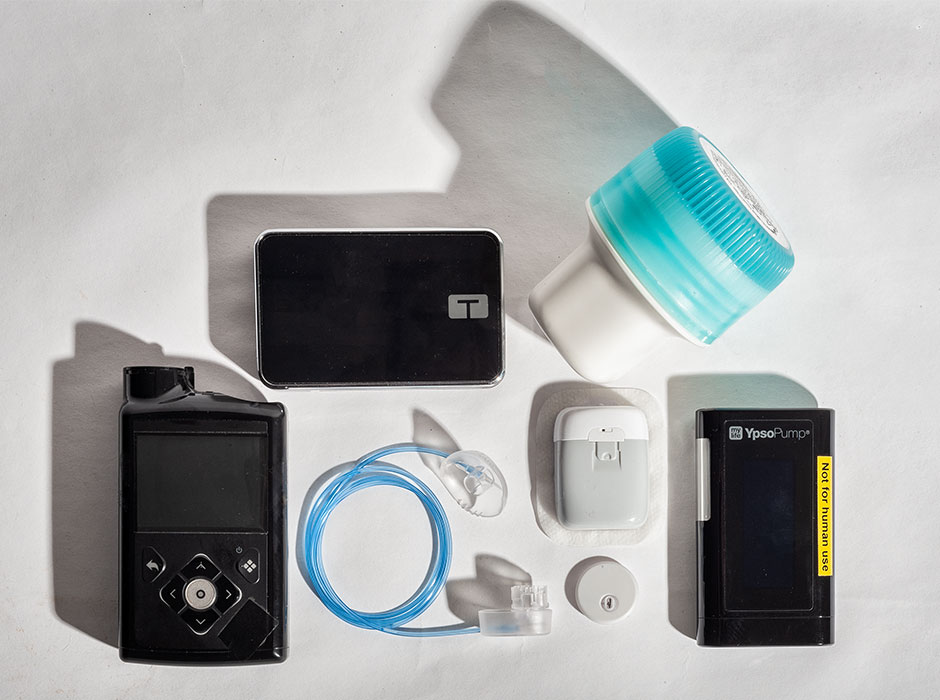
These devices come in different shapes and sizes, but all have one thing in common – they are changing the lives of diabetics.
Martin says it has been fascinating to follow the evolution of this technology over the 12 years he has been publishing research in the space.
“It’s remarkable how transformative it has been.”
While there is yet no conventional cure for type 1 diabetes, Martin says the latest HCL systems are taking treatment as close as possible to one.
“There are really two paradigms: a biological cure, restoring insulin-producing beta cells – which we’re not there on yet – and a technological cure, where devices can do most of the work of the pancreas,” Martin says.
“Each generation of technology reduces burden further.”
Ben says the best systems currently available today can lower these burdens, like self-administering injections and managing blood sugar levels, by as much as 70 percent.
“With the new generation of systems, hopefully we might push this to 90 or 95 percent.”
A new model of care
As this life-changing new technology comes online, Ben and colleagues are shifting their focus to a parallel challenge: readying our health system for it.
Across Aotearoa New Zealand, AID systems are used by an estimated 15 to 20 per cent of people with type 1 diabetes. But, with Pharmac recently widening funded access to them, uptake is expected to surge to as much as 80 to 90 per cent over coming years.
Ben says this soaring demand poses an obvious capacity issue for the country’s health system. A few thousand people can be trained each year to use the technology, compared with 12,000 to 15,000 people expected to seek it.
There is also a risk of worsening inequities observed among patients from rural and low socioeconomic communities – and particularly those of Māori and Pacific ethnicity.
Ben notes that type 1 diabetes can lead to a shortened life expectancy, with a loss of up to 20 years reported, especially in those diagnosed at a young age, and among Māori and Pacific peoples.
This underscores the need to get the technology into the hands of those who need it most.
“They really have the most to gain.”
In a just-launched programme, supported by a $1.4 million grant from the Health Research Council, Ben and a much wider team are working with health providers to develop a new model of care to support the roll-out.
Their goal is to provide fast, effective and equitable access for all New Zealanders, using remote support and “fly-in-fly-out” training to reach rural and underserved communities.
“We’ve taken everything we’ve learned from putting hundreds of people onto pumps, all the tricks and techniques, and packaged them into a new model of care,” Ben says.
Among the first regions the team is working with is Taranaki, where patients are now being trained on the new systems.
“We’re aiming to completely wipe out their waiting list while we try to get other sites up and running – and then hopefully it spreads around the country.”
“We might not be the ones inventing this technology, but from here, we’re able to test its safety, push its limits and show what’s possible.” – Professor Ben Wheeler
Ben says he is proud that work led by Otago has made a difference to patients like Rosie not just in Aotearoa New Zealand, but around the world.
“We might not be the ones inventing this technology, but from here, we’re able to test its safety, push its limits and show what’s possible,” he says.
“In fact, one of the world’s main systems was approved for use in Europe and beyond, partly on the back of our South Island study.”
His ultimate dream, he says, is that he and Martin might see a day where their work is no longer needed.
“The Holy Grail is a system where the human doesn’t need to make decisions at all: you put it on and it does what your pancreas used to do. That’s where we want to be,” Ben says.
“At some point, there might even be a biological cure, and I’ll need to find something different to research.
“Unfortunately, I don’t think that will happen in next few years … but I’ll be very happy when it does.”
In October 2025, Ben and Martin were jointly awarded the HRC's prestigious Beaven Medal in recognition of their work transforming type 1 diabetes care in New Zealand and influencing global practice.
– Kōrero by Jamie Morton
This story first appeared in He Kitenga 2025 – Impacts. He Kitenga is the University of Otago’s flagship research publication, which showcases the University’s cutting-edge research and explores how it is making a difference to people’s lives.