
Five Otago researchers working in areas ranging from how housing affects health and wellbeing to learning more about immune system responses have been recognised for their outstanding achievements.
The recipients of a 2026 University of Otago Early Career Award for Distinction in Research are Dr Nick Bowden, Department of Paediatrics and Child Health (Dunedin); Dr Elinor Chisholm, Department of Public Health (Wellington); Dr Kathryn Hally, Department of Surgery and Critical Care (Wellington); Dr Leah Smith, Department of Microbiology and Immunology; and Dr Ana Stojanov, Department of Psychology.
The awards are part of the Otago Research Awards, which were announced in September.
Each early career researcher receives a $5,000 grant and membership to the Otago Early Career Researcher Forum, which promotes the research of early to mid-career academics at Otago and provides collaboration and networking opportunities.
Deputy Vice-Chancellor (Research and Innovation) Professor Greg Cook says these annual awards are an important way to recognise the talent and dedication of Otago’s early career researchers.
“These staff are leading by example – their research has real-world impact and they are developing strong collaborations nationally and internationally. This recognition is well deserved and I look forward to seeing their careers go from strength to strength.”
The winners
Dr Nick Bowden, Department of Paediatrics and Child Health (Dunedin)
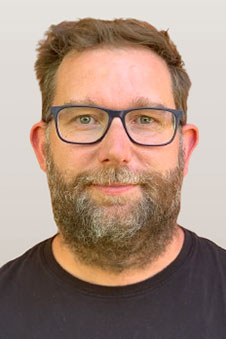
Dr Nick Bowden
Linking health and non-health outcomes to provide an evidence base that communities need is a very rewarding part of Nick’s work.
Nick is a quantitative social scientist whose research has established him as one of Aotearoa New Zealand’s leading experts in the use of linked whole-of-population administrative data for health and social research.
He leads a team working with the Integrated Data Infrastructure (IDI), a large national research database that holds de-identified microdata about people and households, including health, education, justice and migration.
“We often look at health in isolation, but this data shows the true impact of good and bad health on people and their families.”
Nick has made substantial contributions to Māori and Pacific-led research initiatives, particularly in relation to neurodevelopmental conditions and linked administrative data research. As well as collaborating extensively with researchers across Aotearoa, he has strong international links with institutions such as Brown and Harvard Universities in the United States.
He has published 75 peer-reviewed journal articles and has contributed to securing more than $8.6 million in research funding, including more than $1.2 million as principal investigator.
Nick says he was thrilled to receive the award.
“I feel really lucky to be able to do this work. It’s something I genuinely enjoy, but there’s also a huge amount of work that goes on behind the scenes, so it was lovely to have that recognised.”
Dr Elinor Chisholm, Department of Public Health (Wellington)
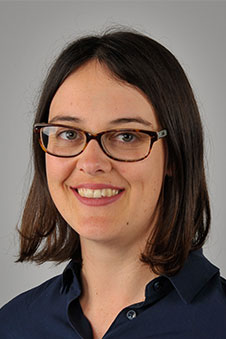
Dr Elinor Chisholm
Elinor is a Senior Research Fellow whose work explores how the places people live, and the policies and systems that shape those places, affect health and wellbeing.
She was drawn to work in the field by the experiences she had living in rental accommodation.
“I wanted to know more about why rental housing is often insecure, expensive, cold and dilapidated, and how this harms wellbeing,” she says.
Her career highlights include doing research on the Healthy Housing Initiative (which aims to improve health outcomes for children by ensuring their homes are warm and dry) alongside community providers she admires.
“Being involved in setting up the advocacy group Renters United and being able to draw on my research to support the organisation also meant a lot to me.”
Her long-term research goal is to understand how the social, economic and environmental conditions people experience shape their opportunities to live well, including as the climate changes, and to use that knowledge to inform better policy and practice.
Elinor was surprised and delighted to receive the Early Career Award.
“In my role, I have to secure funding to keep doing this work, and I've had a few disappointments recently. So it felt great to have my work recognised and to be reminded of the value of continuing to do research like this.”
Dr Kathryn Hally, Department of Surgery and Critical Care (Wellington)
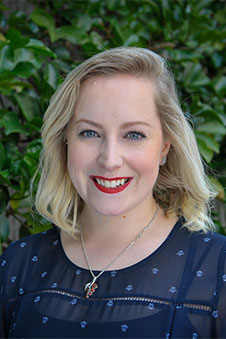
Dr Kathryn Hally
Kathryn is a translational research scientist working to build a detailed picture of the immune system response with a spectral flow cytometer, which uses lasers to analyse individual blood cells stained with fluorescent dyes.
She has partnered with clinicians to develop a rapid testing platform which could give surgeons a guide to which of their patients are more likely to suffer complications after surgery – and which could also be used by ED doctors to discover whether a patient’s infection is more likely to be caused by a bacteria or a virus.
Kathryn says she’s always been interested in why people who experience the same illness, or who undergo a similar surgical procedure, can have very different outcomes.
“The immune system is central to many of those differences, but there is still so much we don’t understand about how it responds in individual patients.”
She says one of the highlights of her career has been establishing the Surgical Immunology Research Group and working with an excellent team to bring laboratory science and clinical medicine together.
As an early career researcher, Kathryn says it has been very encouraging to have both the direction of her research and the progress her team has made recognised by the University.
“It has also given me confidence that we are building something valuable and worth pursuing.”
Dr Leah Smith, Department of Microbiology and Immunology
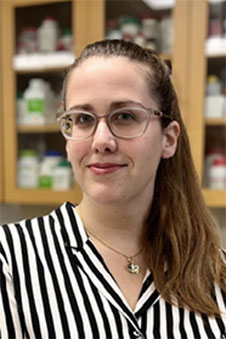
Dr Leah Smith
Leah has already established herself as an outstanding emerging researcher with an impressive international research profile. She has an exceptional publication record, sustained success in securing competitive funding, and has taken on leadership in scientific service.
Leah completed her PhD in the Department in 2020. Her thesis on developing high-throughput functional genomics methods for bacteria made it to the Division of Health Sciences’ List of Exceptional Theses, and resulted in publications in the prestigious Nature Microbiology and Nature Protocols journals.
She was awarded a prestigious Marsden Fast-Start Grant in 2023 to establish her independent research programme focused on improving the efficacy of bacterial viruses (phages) as therapies against biofilm-forming bacteria associated with antibiotic-resistant infections.
Recently, she was co-corresponding author on research developing a new tool to mutate phages – the viruses that infect bacteria – which featured on the cover of Nature Microbiology.
Her growing international profile is reflected in oral presentations at leading international conferences, including the Viruses of Microbes Conference (Czech Republic and Portugal) and the CRISPR Conference (USA). Her research has also been recognised with the 2025 New Zealand Society for Biochemistry and Molecular Biology (NZSBMB) Early Career Award and the 2025 Otago Faculty of Biomedical Sciences Paper of the Year award.
Beyond her research achievements, Leah has demonstrated a strong commitment to mentorship and community engagement, and is an outstanding advocate for science communication and women in science.
Dr Ana Stojanov, Department of Psychology
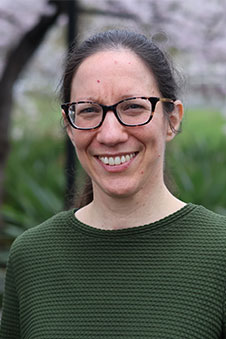
Dr Ana Stojanov
What’s the collective noun for a group of psychologists – a ‘complex’? In Dr Ana Stojanov’s family, perhaps it’s a ‘faculty’ – because not only does Ana have her Psychology PhD, but both her parents are Professors of Psychology.
“My husband is also a psychologist, and his dad was a psychologist,” Ana adds.
Raised in Macedonia and trained in the US and at the University of Cambridge (UK), Ana moved to Otago to undertake her PhD and has now found her research home in the Science Communication Programme – which sits within the Department of Psychology.
Ana’s academic talent was recognised early on, with her PhD thesis on conspiracy theory belief named an Exceptional Doctoral Thesis. She has gone on to establish an internationally significant research record, tackling some of the most relevant and challenging issues of our time – conspiracy beliefs and human-AI interaction. Her citation metrics reflect growing international interest, with her 23 peer reviewed articles being cited more than 2.5 times the world average.
Ana is looking forward to spending the prize money running further studies as she continues to research the limitations and possibilities of generative AI as a learning tool.
From next year, she’ll also teach a paper that picks up on her early interest in conspiracy theory belief: Science Communication in the Post-Truth Era.