
In this Q&A we talk to Associate Professor Andrew Moore from Philosophy, who is retiring after 34-years teaching and researching ethics at the University of Otago – Ōtākou Whakaihu Waka.
Q&A
Can you tell us about your main areas of research in ethics?
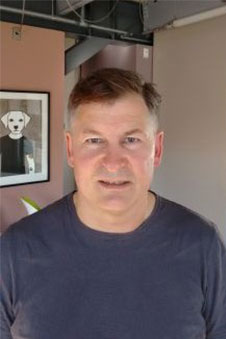
Associate Professor Andrew Moore
My first publication was about ethical theory. My second was with medical co-authors, about mild mania and well-being. That started with a ‘clinical ethical round’ presentation of mine at Warneford Hospital, when I was a graduate student at Oxford.
These early contributions set topic themes that resonate throughout my research: philosophy of wellbeing, ethical theory, and health-related practical ethics or bioethics. These themes continue in the 2025 hardback edited collection that includes my latest article, ‘Wellbeing and Intergenerational Ethics’.
My main questions have been: What is wellbeing, and what’s its place in ethics and public policy? What is it for people or conduct to be ethical or unethical?
My practical ethics and bioethics research often has multi-disciplinary co-authors, and it is wide-ranging: pandemic ethics, reform of health research ‘ethics committees’, assisted reproduction, and roles and limits of consent in health research ethics.
Some of these publications are also ‘public philosophy’; philosophy-informed advice and recommendations to NZ Ministers of Health. Ministers often accepted and implemented those recommendations, generating significant change.
How has teaching changed in your 34 years at Otago?
The core of teaching hasn’t changed much, while its surface features have changed quite a bit.
Our students are curious and they desire to learn. Some of that desire is intrinsic, some of it is instrumental to other ends. One art of the teacher is to find ways to highlight the intrinsic interest, while also making vivid the nature and range of its wider significance.
I’ve become more aware of the learning power of student-peer collaboration and teamwork. I’ve altered my class plans and assessment set-ups to embody that.
I’ve also got more mindful of the importance of students becoming engaging verbal communicators. In classes I emphasise these things through having students verbally present their ‘work in progress’, then develop that content further in writing, informed by presentation feedback from their peers and from me.
Can you share some of the highlights of your time at Otago?
Soon after I started as a Lecturer at Otago, a Professor colleague encouraged me to propose to the University that it re-start its Inaugural Professorial Lectures (IPLs). These had long lapsed.
I pitched this to the just-arrived inaugural Deputy Vice-Chancellor Academic, Phil Meade. Phil’s positive response was swift. He also brought me into the working group that advised him on particulars of getting IPLs re-started. And re-start they did. In IPLs there’s a wonderful range of presentations of self and of research. I’ve loved attending them.
About 10 years into my Otago time, the Gisborne Cervical Screening Inquiry recommended this country’s health and disability ethics committees be reformed. Minister of Health Annette King gave to the newly established National Ethics Advisory Committee (NEAC) the job of addressing that matter more fully.
My ‘ethicist’ expertise, and the Otago-supported policy advisory experience I’d gained by then, informed the decision to appoint me NEAC chair. NEAC conducted a consultative and careful review, and recommended some major reforms. The Minister accepted these.
One enduring practical upshot is the principle and practice that intensity of ethics committee review of research should vary with the risk level of the research.
My NEAC years also generated the publication Getting Through Together (2007) on pandemic ethics (read more online). The World Health Organisation invited NEAC to present that work at a Geneva conference. The presenter was Dale Bramley, then a NEAC member, now Chief Executive of Health NZ (Te Whatu Ora).
What will you miss, and what are you looking forward to in retirement?
I’m satisfied with the contributions I’ve made through my University of Otago work in teaching, supervision of graduate students, and service activities.
I remain keen to contribute further published research in philosophical ethics and bioethics. I look forward to being freer to prioritise that research and publication work.
When I retire, I’ll reside just in Wellington. I’ll miss how easy it is for me at present to catch up in Dunedin with my many excellent colleagues and students, my two adult children, and my Mazagran Café community of friends.
Alumni & Friends
If you're a former student, staff member, friend or supporter of the University of Otago, we warmly welcome you as a member of our alumni community.
Find out more