
Thursday 25 October 2018 12:47pm

Biochemistry's Professor Tony Merriman has won a prestigious James Cook Fellowship to support his work on the genetics of metabolic disease in Māori and Pacific people.
A University of Otago scientist recognised for his sustained research excellence and two highly promising researchers at the early stages of their careers have been awarded fellowships and scholarships today by the Royal Society Te Apārangi.
Professor Tony Merriman (Biochemistry), one of the country’s leading scientists in the area of gout and metabolic disease, is one of three researchers nationally to receive the prestigious James Cook Fellowship. This Fellowship is awarded annually to support researchers with knowledge, skills and ideas and to recognise “research professionals of excellence”.
Recognised as highly promising researchers at early stages of their careers, Dr Alana Alexander (Anatomy) received a two-year Rutherford Foundation Postdoctoral Fellowship and PhD student Rachael Baxter (Geology) received a three-year Cambridge Rutherford Memorial PhD Scholarship. They are among 10 researchers nationally to receive the awards.
"The Society seeks to support all New Zealanders to explore, discover and share new knowledge. We look forward to hearing what these talented researchers uncover with their research."
Royal Society Te Apārangi President Professor Wendy Larner says the Society is pleased to award fellowships and scholarships to these outstanding researchers who are at varying stages of their careers.
“The Society seeks to support all New Zealanders to explore, discover and share new knowledge. We look forward to hearing what these talented researchers uncover with their research.”
Professor Merriman says he is very pleased to receive the James Cook Fellowship and recognition for his research programme.
“It is wonderful to receive the Fellowship and be able to concentrate on the genetics of metabolic disease (gout, diabetes, kidney and heart disease) in Māori and Pacific people.”
In a very practical sense, Professor Merriman says it will also give him some respite from having to find precious research funding for his salary and enable him to concentrate on his research over the next two years.
Gout occurs in some people with increased levels of urate (hyperuricemia). It is a form of arthritis caused by a build-up of urate crystals within joints and other tissues. These crystals trigger an immune response causing pain and swelling in affected joints and if untreated, can cause serious joint and kidney damage.
Professor Merriman is leading an international consortium to scan the human genome for genes controlling the progression from hyperuricemia to gout.
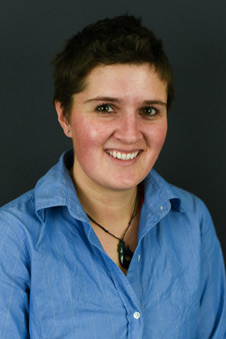
Dr Alana Alexander.
Dr Alexander has been awarded the Rutherford Foundation Postdoctoral Fellowship to investigate for the first time whether hologenomic approaches can answer key questions in conservation biology.
Hologenomics takes a holistic approach to genome sequencing where the DNA of the host animal as well as its co-existing microbes is sequenced.
“The project hinges on the idea that the bugs that we carry on our skin, in our lungs and all through our bodies are just as much a part of our general make-up as our own cells.
Together we form a super organism, or a holobiome,” Dr Alexander explains.
“I’m interested in whether patterns of genetic diversity across the holobiome, also known as the hologenome, can be used in conservation biology.”
The test case she proposes to use are the Māui and Hector’s dolphins. There remains significant uncertainty about crossbreeding between these two subspecies, the degree of population fluctuation, inbreeding and disease susceptibility and the ongoing impact of human activities such as fishing. Hologenomics could be an important tool to understand the mechanisms behind these issues.
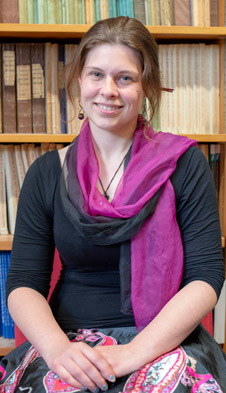
Rachael Baxter.
Ms Baxter is one of three people nationally to receive the Cambridge Rutherford Memorial scholarship with her research aimed at discovering more information about volcanoes.
While volcanoes have been implicated in catastrophic events, many of the fundamental aspects of volcanism, such as the initial trigger for magma ascent and eruption, remain poorly understood.
The scholarship will enable Ms Baxter to study the crystals formed throughout the storage of magma preceding eruptions in Iceland. Studies to date have investigated changes taking place in the crystals from days to weeks preceding eruptions. In her PhD work, she will collect and chemically characterise new samples, which will ultimately lead to a better understanding of the relationship between key elements of crystal structure, magma activity and the eventual volcanic eruption.
Ms Baxter says she is delighted to receive the scholarship and is looking forward to expanding her network of “incredible scientists” to work with.
“I am very excited to have this opportunity to study Icelandic volcanoes for my PhD, as they fascinated me throughout my undergraduate studies.
“Studying this will in turn help us better understand magmatic processes both abroad and in New Zealand.”
The scholarship will cover university fees and provides a stipend.