
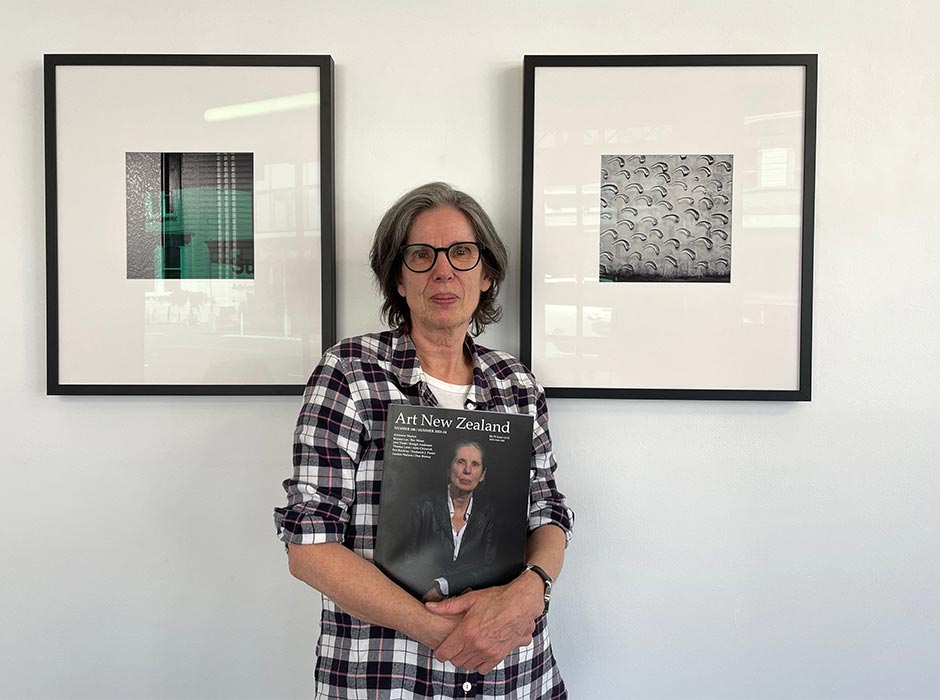
New Zealand photographer Adrienne Martyn at a showing of her Surfaces 1981 exhibition in Wellington, 2023.
Major works of renowned New Zealand photographer Adrienne Martyn will soon be on display at the Hocken Collections Uare Taoka o Hākena.
The exhibition, Adrienne Martyn: Photographer, is her largest to date and recognises Martyn’s early connections and longstanding relationship with the University of Otago – Ōtākou Whakaihu Waka library, dating from the 1980s when the institution first began purchasing her work for the permanent collection.
It celebrates her dedication to photography and contribution to New Zealand’s art history.
Exhibition prints and additional pieces on loan will also be added from other public institutions spanning the length of the country, from Waihōpai - Invercargill to Tāmaki Makaurau - Auckland.
Martyn was born in Te Whanganui-a-Tara -Wellington and grew up in Waihopai.
After spending her early years in the 1970s mastering the technical aspects of photography as a medium and informed by her experiences documenting the rise of second-wave feminism in New Zealand and Australia, she set up an Ōtepoti - Dunedin portrait studio in 1980 photographing friends, artists and commissions.
During this time Martyn became known for her distinct style of portrait work, some of which she staged inside the empty Hotel Excelsior on the corner of Dowling and Princes Street, using its austere kauri staircase lit by a stairwell cupola.
Now residing again in Te Whanganui-a-Tara, Martyn says returning to Ōtepoti for this exhibition is an important landmark in her career.
“It highlights the Excelsior staircase series which is close to my heart.
“The Hocken recognised this series soon after it was created and is now presenting it in context with my later architectural and portrait images which I hope viewers will enjoy.”
Head Curator of Art and Photography Collections Robyn Notman, who worked closely with Martyn to curate the exhibition, says her use of analogue and digital camera formats over the last 50 years has resulted in an expansive portfolio spanning portraiture, architecture, abstraction, and landscape.
“When choosing works for the exhibition we wanted to ensure that we included photographs that are already highly regarded within her oeuvre – such as examples from the Artist Portrait series, also her portrait of painter Joanna Paul, and 1980s studio shots and examples from the Excelsior group, in addition to some surprises such as examples of her photography undertaken in Sydney in the 1970s.”
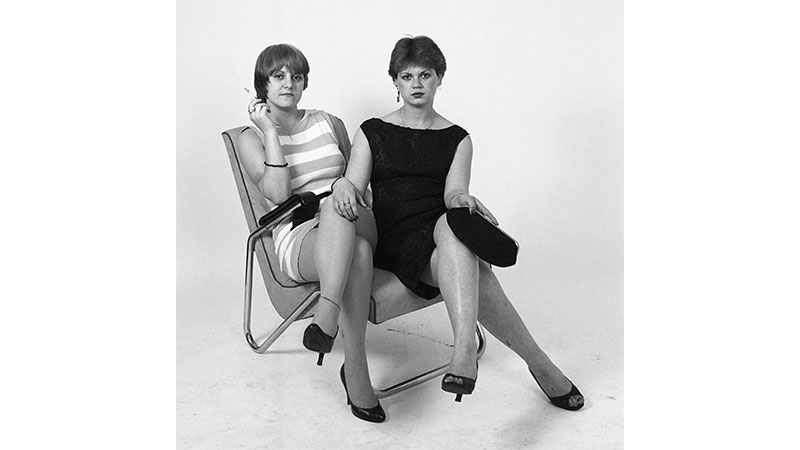
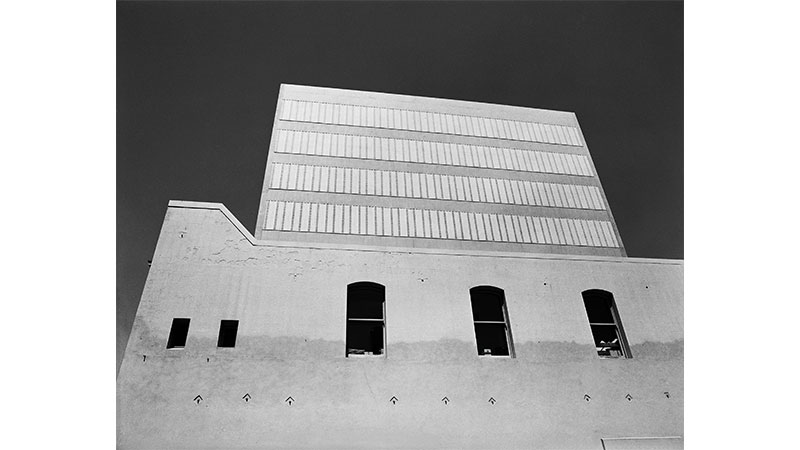
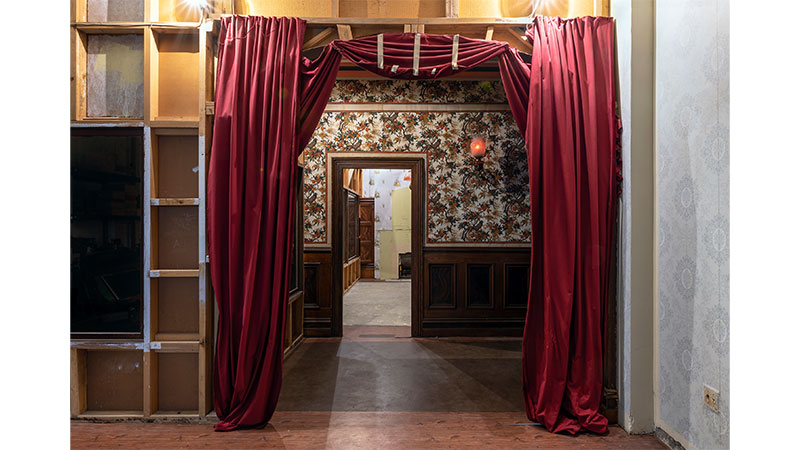
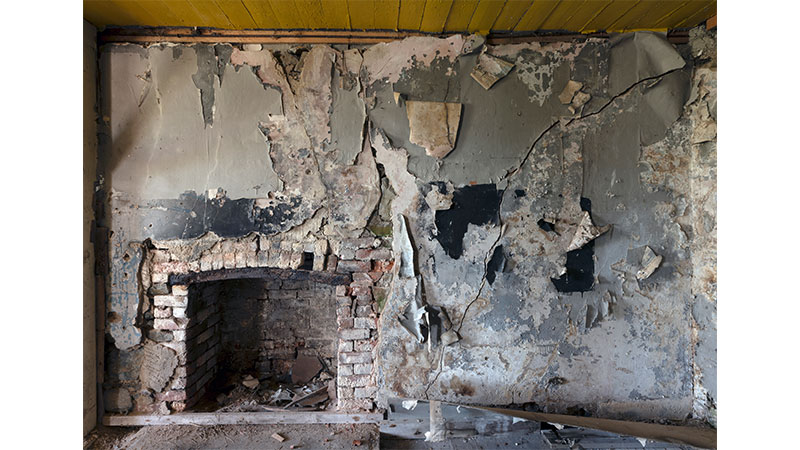
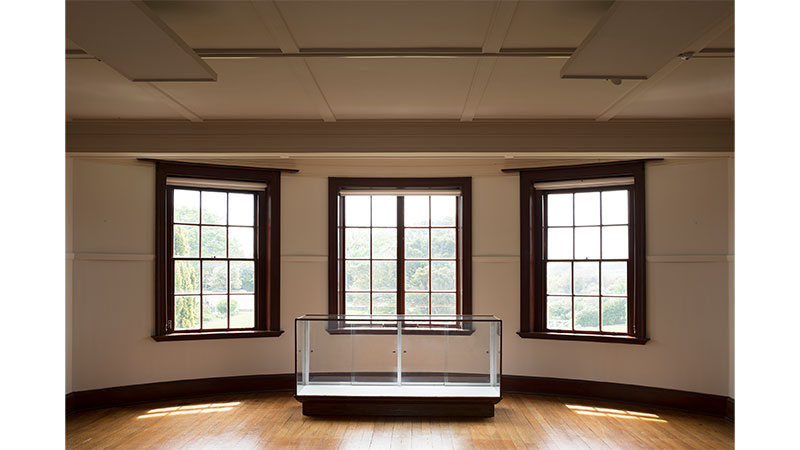
Ms Notman says Martyn’s work “exemplifies technical finesse combined with aesthetic informed by a perceptive understanding of the formal elements of art combined with her own imagination and interests”.
“She has this wonderful ability to draw out the life-force of all of her subjects, be they portraits of people, or places or buildings. It’s more about ‘communion’ than ‘capture’- her relationship with the subjects of her photography and how they align with her imagination and world view,” Ms Notman says.
“I admire Adrienne’s dedication and commitment to her art as well as the intensity and quality of her work – it’s strength and haunting beauty.
“She expertly balances and nuances tensions and opposites – such as ease and unease, absence and presence, light and dark. Her work is informed by a modernist aesthetic so is clean and minimalist but also rich with energy and emotion.”
Some recent works on show will be examples from a series she completed this year – notably ‘The Quest’ featuring University of Otago Theatre Studies student graduates which was shot at Allen Hall Theatre, as well as examples from work commissioned recently by organisations in her hometown of Invercargill – notably the ‘Seen/Scene’ series, featuring formal portraits of Southland’s LGBTQI+ community.
A substantial illustrated book accompanies the exhibition, designed by Duncan Munro with essays by curators and art historians Bridie Lonie, Milly Mitchell-Anyon, Jess Clifford, and Julia Waite.
Ms Notman hopes that the exhibition and book satisfies existing audiences but also attracts new people to her practice.
“We’d love to see her included in teaching and learning at the University of Otago, since her work offers many ways into thinking about the human condition, our contemporary view of the world and of our relationships with one another and our environments.”
The exhibition opens on Tuesday, 24 November 2026 and runs until Saturday, 1 May 2027 at the Hocken Gallery, first floor of the Hocken Collections.
A second iteration of the exhibition focussing on portraiture, will subsequently tour to The New Zealand Portrait Gallery Te Pūkenga Whakaata where it opens on 18 August 2027 until 7 November 2027.
Hocken Collections
Hocken's collections celebrate the histories, cultures and natural environments of Aotearoa New Zealand, the Pacific and Antarctica with special emphasis on southern New Zealand.
View