
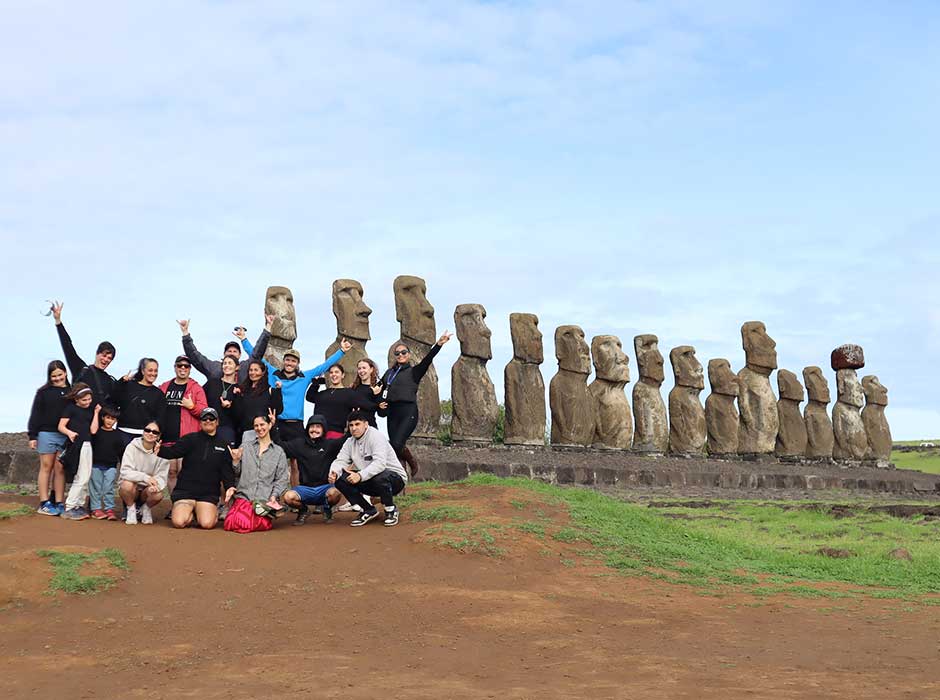
The group at the Moai site, just two days before making the return home to Otago.
For Sammi Ammar, the opportunity to travel to Rapa Nui came at the perfect moment.
The 23-year-old, who is of Samoan (Vaimoso and Sataua) and Syrian descent, is studying for a Bachelor of Physiotherapy alongside a Bachelor of Science Honours in Nutrition.
He had been talking with friends about places they would like to visit when he named Easter Island.
“Within the next 48 hours, I receive an email from the Associate Dean of Pacific for Physiotherapy saying, ‘You should apply for this’.
“So, well, I put my name in.”
For fellow tauira Ollie Ihaka-Gudsell, the decision came from a different place.
The 23-year-old Bachelor of Laws and Bachelor of Arts student, who majors in Indigenous Studies, grew up in Tauranga and has whakapapa to Ngāti Tapu, Ngāi Te Rangi, Ngāti Ranginui, Ngāti Raukawa, Ngāti Whakaue and Rarotonga.
As he developed his Māori and Pacific identities, he became interested in what it meant to be Indigenous across Te Moana-nui-a-Kiwa.
“I wanted to put myself in a context that was away from both of those whenua, from Kūki ‘Āirani and Aotearoa, and see what it meant to be an uri of Moana-nui-a-Kiwa.”
Ollie knew very little about Rapa Nui before applying.
“That to me was the beauty of wanting to apply to it. Finding my perspective as someone that was just eager and curious.”
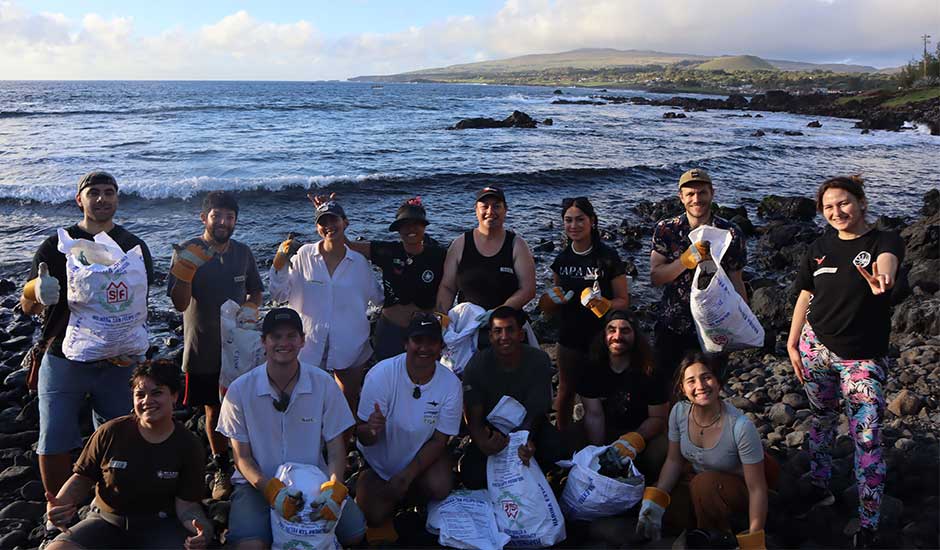
Both were among eight University of Otago – Ōtākou Whakaihu Waka tauira selected to join a delegation travelling to Rapa Nui for a month in June, made possible through a Prime Minister’s Scholarship awarded to Dr Moira Fortin Cornejo and Associate Professor Esther Willing.
The group represented a range of subjects including law, medicine, pharmacy, environmental science, exercise and sports science, peace and conflict studies and physiotherapy.
The delegation shared knowledge with the Rapa Nui community while learning from local perspectives, with kōrero and talanoa sessions held with Rapa Nui institutions and the wider community.
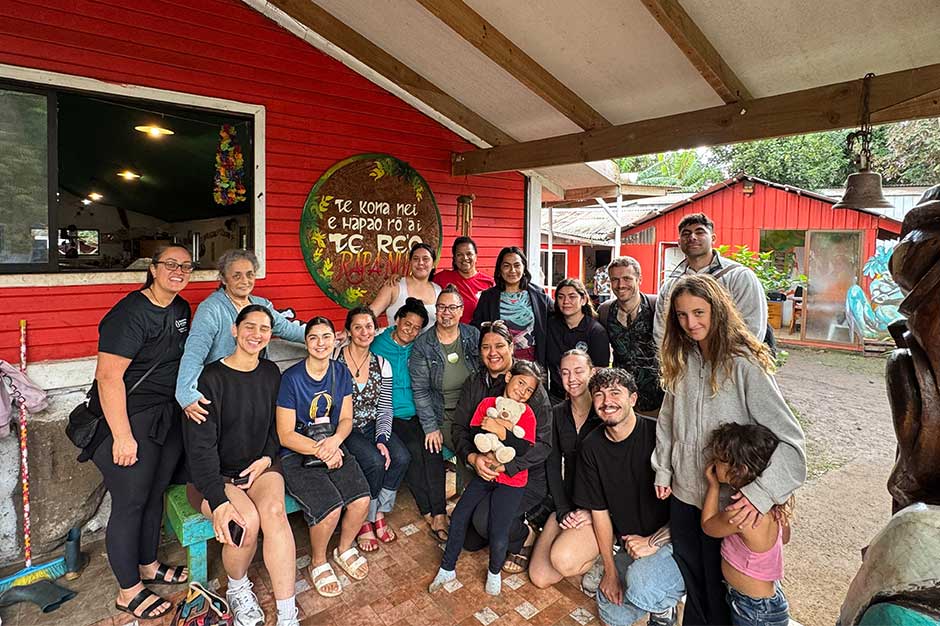
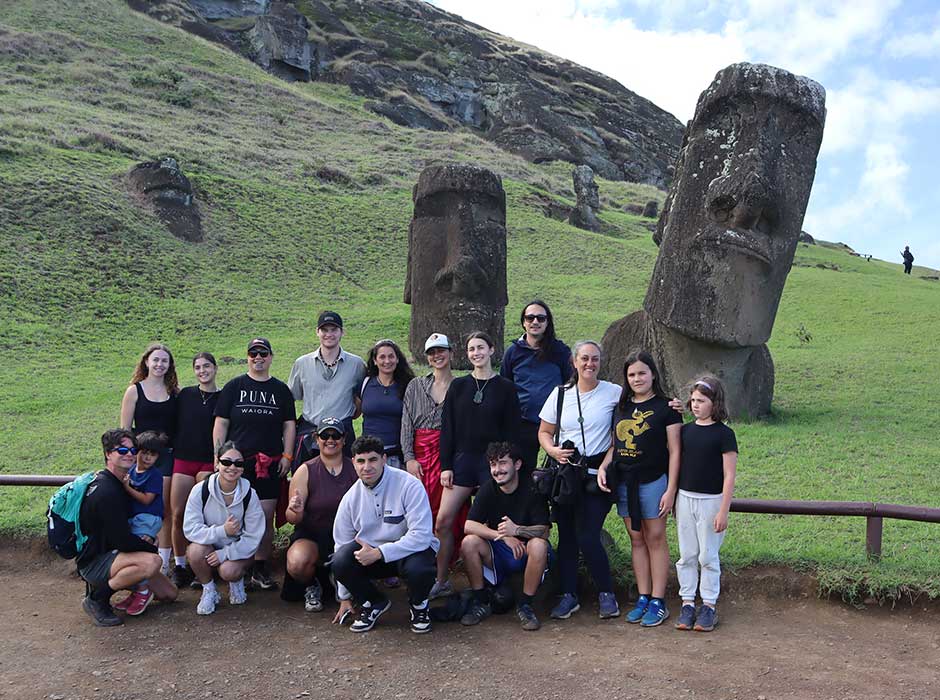
For Sammi, the experience was a chance to explore a place he had been curious about but knew little beyond its geographic isolation.
“I knew it was the most isolated place on planet Earth, but I didn’t really know much about the cultural history and its political state.”
His Spanish, which he studied for three years at high school, also came in handy. Spanish is widely spoken on Rapa Nui, alongside te reo o Rapa Nui, which is more commonly spoken by older generations.
For Ollie, the experience of navigating multiple languages became part of everyday life.
“We were always speaking around four languages the entire time,” he says.
Te reo o Rapa Nui also created a familiar point of connection. While there were times when the tauira did not understand every word, Ollie says the similarities with te reo Māori helped create a sense of familiarity.
“I could feel the mauri between us. It was beautiful.”
That sense of connection extended beyond language.
One of Ollie’s most memorable moments came during a Sunday spent with his host whānau at Anakena, Rapa Nui’s only sandy beach.
The afternoon reminded him of summer days at Papamoa or Maunganui beaches with his whānau. His “host papa” cooked food over a makeshift barbecue, while his host mother and aunty delegated jobs to the group. Ollie and fellow tauira Awhi were put on babysitting duty, taking the children for a swim before everyone came together for kai.
“What was so meaningful was the connection there felt so natural. It was that affirmed moment of, ‘we are part of this community’.
“I’ve made a memory that I’ll hold for the rest of my life. It was truly a beautiful moment, and I absolutely will hold that forever.”
Ollie says the experience offered a new perspective on what Indigenous communities can learn from one another.
He saw this through several aspects of Rapa Nui life, from the annual Tapati Festival, where the entire island comes together to celebrate traditional performing arts, weaving and athletic competitions, to the community’s growing administrative control over its ancestral lands through organisations such as Ma’u Henua.
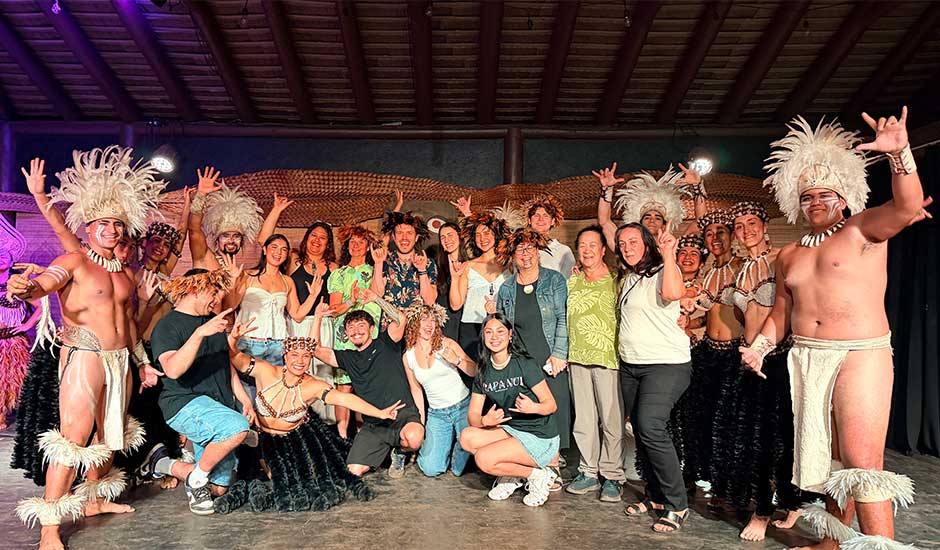
He was also struck by the recognition of traditional medicinal practices within the local hospital, where Papa Ra’au, or traditional plant-based remedies, are incorporated alongside Western medicine.
Seeing how deeply cultural practices are woven into everyday life in Rapa Nui gave him a new appreciation for the strength and achievements of Indigenous communities, while also highlighting the different circumstances and possibilities created by their respective histories and systems.
Ollie recognises the significant achievements of Māori movements such as Te Matatini, IronMāori, Indigenous fashion shows and the revitalisation of te reo Māori through movements such as Kōhanga Reo.
“But I would not have truly understood how well we were doing without going somewhere else,” he says.
For Sammi, the scale of the experience was difficult to explain after returning home.
“Seeing my family and friends, they weren’t going to understand the magnitude of what we actually had just experienced,” he says.
“When we were on the Moai site on the second to last day, just being there and seeing them in person, it felt super surreal. Words, or even pictures, don’t do it justice.”
Both tauira say the welcome they received from the Rapa Nui community was one of the most lasting parts of the haerenga.
“Everyone there was super keen to get to know us,” Sammi says. “We didn’t feel like outsiders.”
For Ollie, that feeling became especially clear during his time with his host whānau.
“I never felt like we were intruding on their family time. We felt like family.”
On Thursday, September 10, the kaimahi and tauira involved in the haerenga will be hosting the ‘Rapa Nui – Aotearoa Knowledge Exchange Symposium’. Taking place in the Terrace Lounge, tauira will get the chance to speak on their experiences and share content and findings with family, friends and anyone interested in the exchange.
-Ani Ngawhika, Kaitohutohu Pāpāho Māori
Te Tumu
Our multi-cultural and multi-disciplinary staff, students, teaching and research is reflected in our name Te Tumu, a pan-Polynesian term which is often used in Māori in the phrase te tumu herenga waka – the post for tying up canoes.
View