
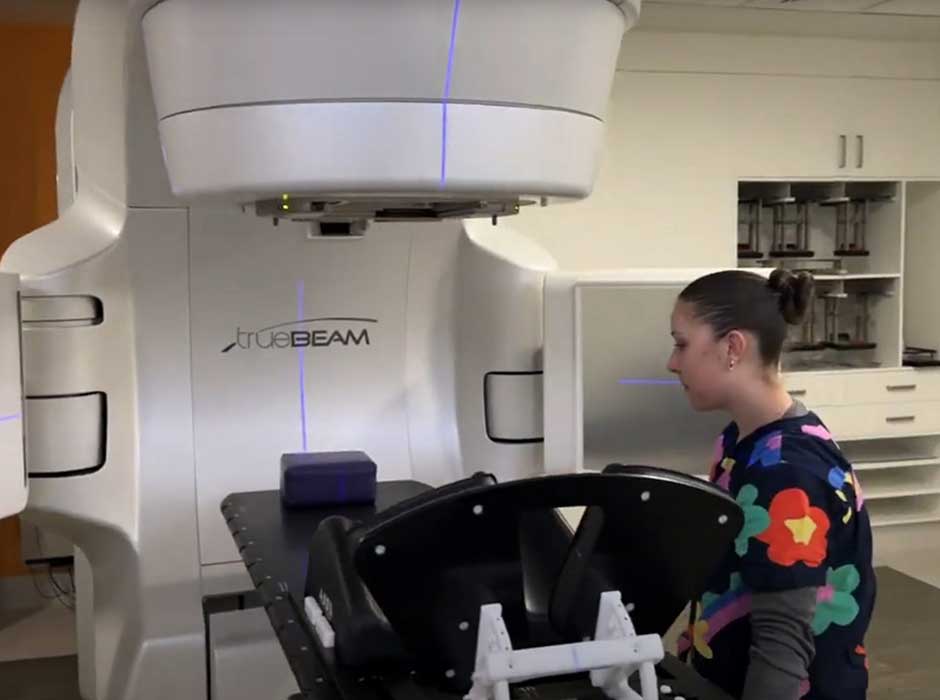
Radiation Therapist and Otago Alumna Hayley Taylor credits much of her learning success to her time completing the University of Otago’s Interprofessional Education Programme (IPE).
Bringing light to what can be dark times is the highlight of Radiation Therapist Hayley Taylor’s career.
The Otago alumna, who works at the Bowen Icon Cancer Centre in Wellington, says it’s a privilege to be welcomed into someone’s life to provide lifesaving healthcare during what might feel like rock bottom for them.
Radiation therapists can see patients every day for up to seven weeks for treatment, and so they’re able to truly connect with them, becoming a sort of a temporary treatment family.
“No one wants to be in a radiation therapy department receiving treatment and so it’s important to make a patient’s experience the best it can be,” Hayley says.
“Whether that’s having a laugh, giving them a hug, or even sharing in something as small as a smile, I’m so glad to play my part in helping their journey.”
Hayley credits much of her learnings to her time completing the University of Otago’s Interprofessional Education Programme (IPE).
The IPE programme was implemented during the first year of Hayley’s Bachelor of Radiation Therapy and involves learners from different health care professions, of equivalent stages of learning, coming together to gaining clinical experience in rural Aotearoa New Zealand.
Knowing she would be empowered by learning more about the wider healthcare framework, Hayley jumped at the opportunity.
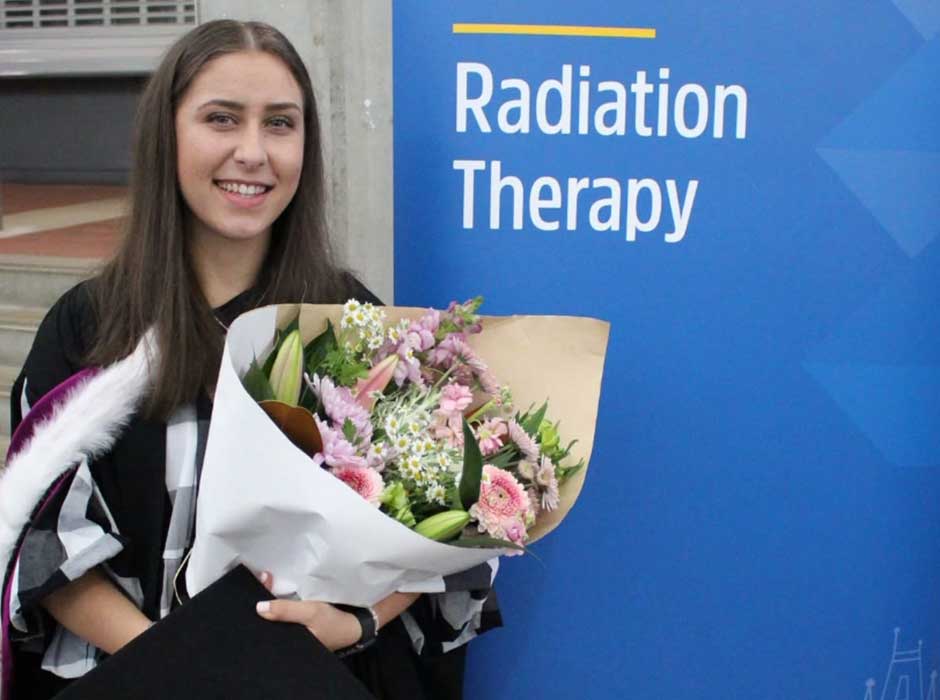
Hayley says it’s the patients that motivate her to do this work because its moving to be welcomed into someone’s life to provide lifesaving healthcare during what might feel like rock bottom for them.
The more a person knows, the better care they can provide for their patients and the IPE programme helped her both realise this and implement it, she says.
“Radiation therapy utilises a lot of multidisciplinary teams to support our patients while they undergo treatment, but the IPE programme helped give me context and awareness to what other experiences patients might be having with other professions – potentially experiences prior to or after receiving treatment.”
The experience grew her respect for other occupations and demonstrated how several healthcare professions are woven into the experience of a patient – all of which can positively influence a person experience.
The programme was truly an adventure where she got to meet people and learn a great deal, she says.
During one patient case study her team organised to meet at a patient’s house on two separate occasions – a challenge for various healthcare practitioners operating on different work schedules – only to find the patient absent from their home both times.
While it wasn’t what had been planned, it meant the group was able to get to know each other and their roles before they met the patient, therefore providing a better level of support.
“Experiences like this work well to show that life doesn’t always go to plan but sometimes the best opportunities come out of those developments.
“I learnt a lot about myself while at university and during the IPE programme, and got to reflect on the kind of person I wanted to be. Learning a whole degree and then going into a career completely centred around people can be challenging but, over time, I learnt to bring my own individual flair into the space.
“We can all make a difference and be a light to people even if it’s only a small one.”
Kōrero by the Division of Health Science Communications Adviser, Kelsey Swart
Interprofessional Education: INVOLVE
INVOLVE is an interprofessional education (IPE) initiative for pre-registration health sciences and social care students. It is offered by the University of Otago, Wellington.
View