
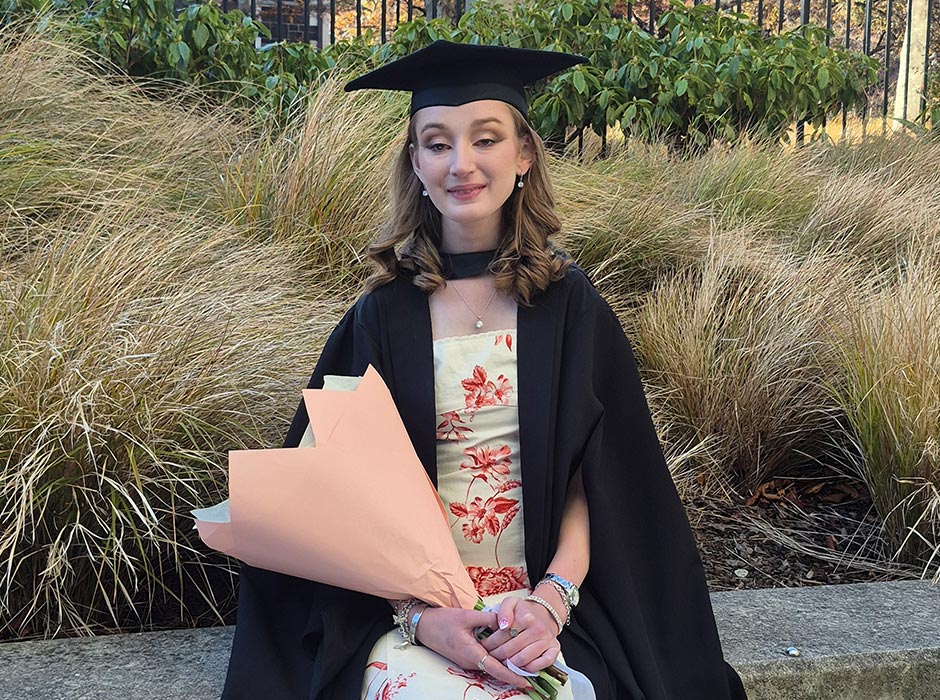
Food Science graduate Adine Russell overcame all the usual challenges that undergraduate students face … and more.
As Adine Russell bites into a chocolate chip cookie, she explains that lay people often get food science and nutrition confused.
"They’re interlinked, but they’re different,” says Adine, who recently graduated with a Bachelor of Science with a major in Food Science and a minor in Sport and Exercise Nutrition.
“Food science encompasses areas like product development, sensory evaluation, packaging and shelf-life testing. It focuses on understanding the quality and characteristics of food products, including how they taste, smell, look and how they are perceived by consumers.”
The home baker says nutrition is different to food science but complements it by focusing on people and their individual needs.
“Nutrition can vary for everyone depending on factors such as the person’s age, lifestyle, budget and health requirements. It looks into how food and diet can support overall health and wellbeing.”
Adine’s interest in studying Food Science was influenced by a childhood spent in Southland on a sheep and beef farm. She came to University knowing she wanted to study something that had the potential to contribute to the food industry and help make a positive difference.
“Part of the reason I love food science so much is because I want to give back to the industry in some way. Growing up on a farm really helped me understand the importance of getting food from pasture to products and out to market in the best possible condition to meet the needs and wants of consumers.”
Adine overcame all the usual obstacles facing undergraduate students – getting used to a new city, making new friends and adjusting to student life. But though Adine stresses she’s just like everyone else, she has also faced unique challenges.
“I’m one of the youngest and one of very few people in New Zealand diagnosed with Kearns-Sayre syndrome (KSS),” Adine says.
“It’s a very rare mitochondrial disorder that affects how my body produces energy. The condition causes symptoms such as fatigue, muscle weakness and vision problems, as my body’s cells struggle to produce energy efficiently.”
When she was first diagnosed, her parents were told she’d be unlikely to reach the age of twenty. Adine’s twenty-two now, so she can add medical marvel to her long list of accomplishments.
“It’s kind of cool that I’ve broken all the expectations,” she says.
“My parents and siblings have always treated me the same as everyone else, and I’m pleased they did. They’ve been with me through multiple medical treatments. I wouldn’t be here without my family, that’s for sure. I’m also grateful for the support I’ve had from the Disability Information and Support team, the Food Science Department and the Nutrition Department while being here at Otago. They’ve been really friendly and supportive.”
A high achiever in all areas of her life, Adine enjoyed her studies so much that she’s returned for more.
“I’m doing the Postgraduate Diploma in Food Science. It's only one year, it’ll give me another qualification, and it gives me time to connect with other people in the industry and look for future jobs. I’m really enjoying it.”
The girl who grew up helping on the farm is now conducting a literature review into the potential use of bobby calves. But right now, she’s basking in the glow of having graduated with her Bachelor of Science.
“I loved my degree and I’m really excited to have graduated,” Adine says, as she finishes her cookie. “I’m proud of myself, and even though some times have been tough, life has taught me to be grateful.”
Study Food Science at Otago
Food is more than fuel. At Otago you’ll learn how to innovate, transform and shape the future of food.
Explore Food Science