
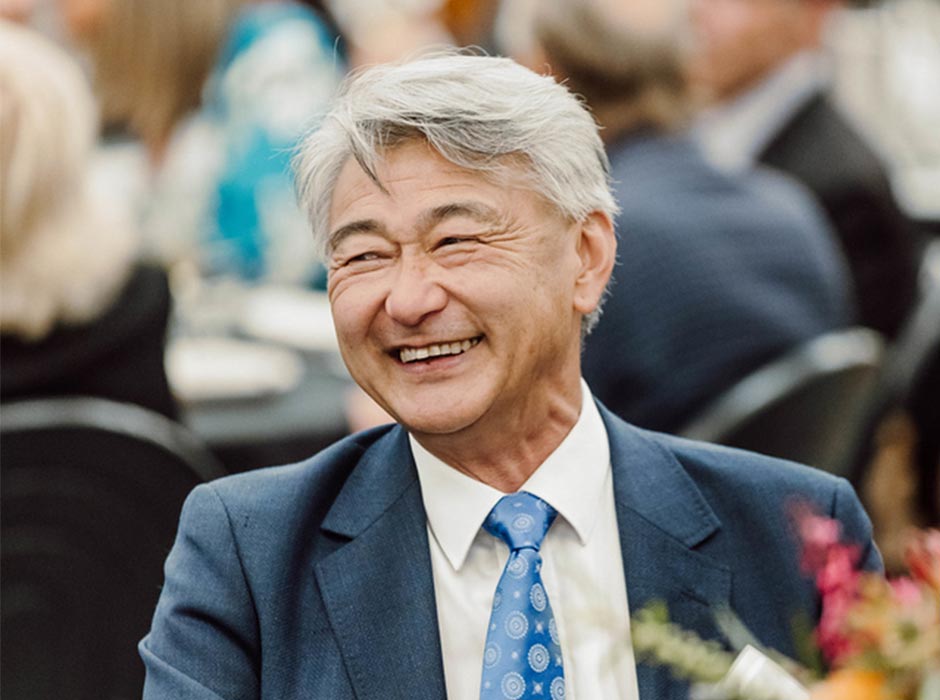
Otago alumnus and Science graduate Rodney Wong was made an Officer of the New Zealand Order of Merit for services to business and the community this month. Photos: Supplied
Otago alumnus Rodney Wong (黃 华 鈴) says his favourite quote comes from philosopher Sun Tzu: “Opportunities multiply as they are seized.”
This might explain why the Science graduate ended up becoming a CEO, starring in a documentary and, most recently, being made an Officer of the New Zealand Order of Merit for services to business and the community.
It’s quite a trajectory for someone who spent his University years living in a flat called “The Hovel”.
“‘The Hovel’ was already condemned when I moved there in 1977,” Rodney says.
“It cost fifteen dollars a week for the whole flat, but because I cooked, I didn’t have to pay rent. It was a pretty rough flat,” he says, rattling off several unprintable stories.
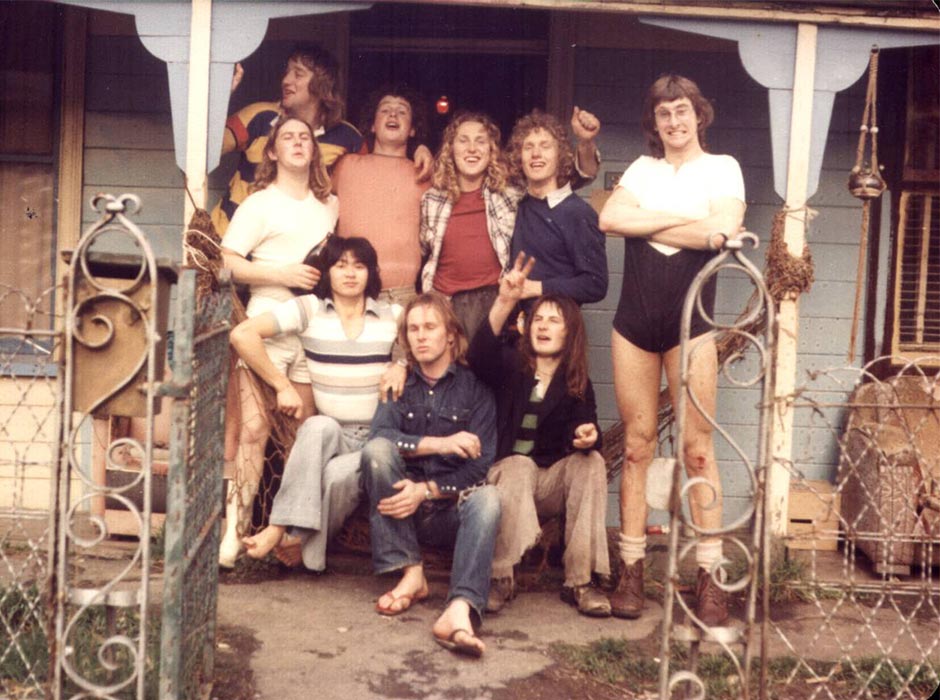
Science graduate Rodney Wong (bottom left, circa 1977) has come a long way since his days in a condemned Castle Street flat. “This isn’t the standard photo you’d get from many ONZMs,” he says. “The photo was taken after a friendly game of netball with the student nurses across the road.”
Rodney’s Chinese refugee family wasn’t well-off, but it was expected that he would go to university and receive an education. He chose Otago because it was affordable, and because he had his sights set on Medical School.
“I had problems learning and I tend to see things differently, which makes me a troublemaker,” Rodney says.
“I didn’t get into Medical School, so I did a double major in Biochemistry and Human Physiology instead.”
Rodney enjoyed studying milk proteins and enzyme activations with his “hugely intelligent” lecturers. He also made the most of the University’s extracurricular activities, particularly the Tai Chi lessons he took with Olympic coach Peter Chen.
But it was a young Business Studies student who made the biggest impression on Rodney.
“I met my wife, Angela Gee, at Otago,” he says.
“She was staying at Studholme College, and one of our first dates was a hall of residence ball at Larnach Castle.”
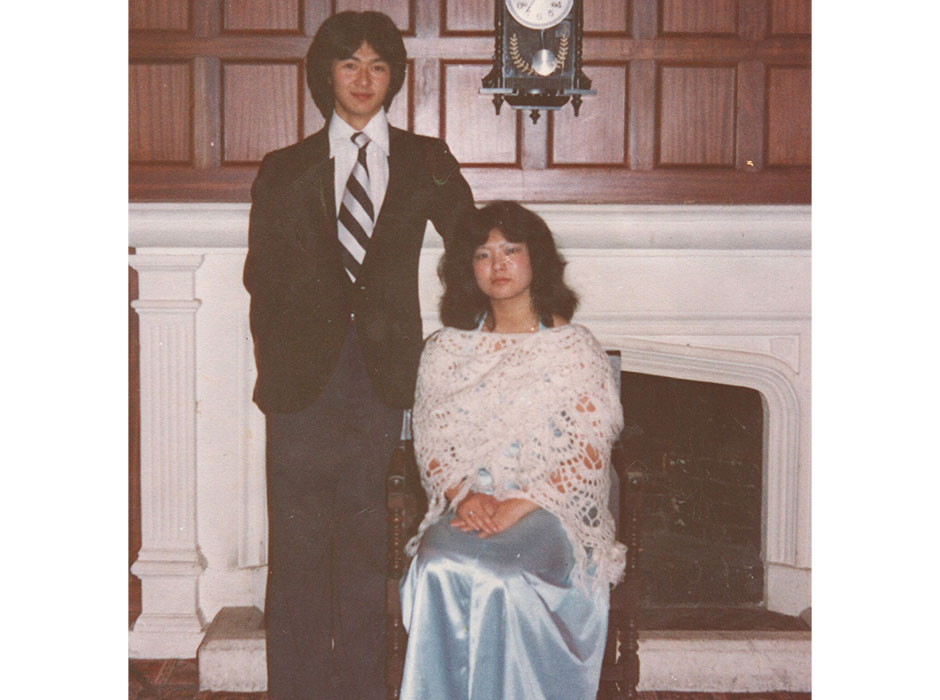
Rodney Wong met his wife Angela (née Gee) while they were students at Otago.
The pair got married and started a family, and Rodney interviewed for two jobs that would make the most of his Bachelor of Science.
“One was for the company that was the forerunner of Montana Wines, and one was at New Zealand Dairy Company, the forerunner to Fonterra. Back then our wine exports were around $4m and dairy was about $4b, so I went down the track of dairy.
“We developed value-added products and consumer products like infant formula and UHT milks that are well-known today.”
At age thirty-two, Rodney became the CEO of Yoplait New Zealand. He and three partners later bought the business, which became one of the largest private dairy companies in New Zealand.
After an illustrious career that included becoming Chair of the New Zealand Institute for Crop and Food Research, Director of the National Science Challenge’s Centre for High Value Nutrition, and Fellow of the New Zealand Institute of Food Science, he pivoted to a career as a professional company director and “international trouble shooter”.
“When people ask me to do something, I invariably say yes if I can,” Rodney says.
And that’s how he found himself co-founding the Wildbase Recovery wildlife hospital, initiating the formation of the Palmerston North Hospital Foundation that led to the building of a new children’s emergency department, and getting involved in everything from airports to air conditioning systems for submarines.
He also makes a significant contribution as Chair of the Chinese Poll Tax Heritage Trust.
“When my grandfather Wong Kwok Kee paid the Poll Tax to enter New Zealand in 1920, it was equivalent to the average male salary for a year. Imagine if you came from a peasant village – where do you get that sort of money from?"
“The Poll Tax was discriminatory legislation that prevented Chinese from entering New Zealand for over 75 years,” Rodney says.
“When my grandfather Wong Kwok Kee paid the Poll Tax to enter New Zealand in 1920, it was equivalent to the average male salary for a year. Imagine if you came from a peasant village – where do you get that sort of money from? He was an indentured labourer, paying it back over decades.”
Rodney’s grandfather sought a new life in New Zealand because “it was worse at home”. But life was made unjustly tough for Kwok Kee and others like him.
“Their wives and children were only allowed in as itinerant refugees in 1940, staying on a year-by-year basis. It wasn’t until 1947 that they allowed these wives and children to stay permanently,” Rodney says.
“I’m the third child of five in my family, and the first generation to be born in New Zealand. When I learnt about our refugee background, it explained why we as a family are different from a lot of Chinese.”
The Trust has told the stories of itinerant refugees through its involvement in RNZ documentary series Farewell Guandong and Ockham Book Award-finalist Golden Enterprise: New Zealand Chinese Merchants 1860s – 1970s.
While Rodney’s giving voice to history, his daughter Jessica has been instrumental in sharing contemporary Chinese stories, including TVNZ documentary series Sik Fan Lah! and Reviving the Dying Art of the Chinese Earth Oven, where Rodney showcases the cooking skills he honed during his flatting days in “The Hovel”.
Son Jackson has also followed in his parents’ footsteps.
“When our son was accepted into Physiotherapy at Otago, he went to Studholme. We drove him to Dunedin, took him to the hall, walked into his room, and thought – this looks familiar! He’d been given Angie’s old room.”
There’s now warm, modern accommodation where “The Hovel” once stood, but some things never change – Rodney’s still seizing opportunities and watching them multiply.
– Kōrero by Kathryn van Beek, Communications Advisor | Kaiarataki Pārokoroko
Division of Sciences
Your future in Science starts at Otago, where world-renowned researchers and unique natural resources combine to create a scientific learning environment like no other.
Science at Otago