
A University of Otago – Ōtākou Whakaihu Waka researcher whose mahi involves investigating the way crystals can be used in quantum memory storage has been given a four-year funding boost.
Royal Society Te Apārangi has today announced Fellowships for researchers at different stages of their careers.
Department of Physics Postdoctoral Fellow Dr Luke Trainor is one of five researchers from Otago and 20 in Aotearoa New Zealand to be awarded a Mana Tūāpapa Future Leader Fellowship.
Fellow Otago researchers Dr Alice-Roza Eruera, Dr Rebecca French, Dr Caitlin Owen and Dr Wahineata Smith were also awarded a Future Leader Fellowship.
Internationally-renowned geneticist, Distinguished Professor Neil Gemmell, has been awarded a Mana Tūārangi Distinguished Researcher Fellowship. He is one of only two recipients of the highly-competitive Fellowship, worth $220,000.
The mana Tūāpapa Future Leader Fellowship, worth $820,000 over four years, supports early career researchers to establish the foundations of an impactful research career.
Dr Trainor says it is a fantastic opportunity to continue research in a field he is passionate about – and in his hometown of Dunedin.
As part of his research, he works with specially lab-grown crystals that have small amounts of rare earth elements in them, such as erbium and neodymium.
The crystals are cooled to a temperature colder than outer space and laser pulses are used to control the elements.
“I have been using such crystals to store single particles of light (photons) and recall them, which could be used as part of a future quantum network,” Dr Trainor says.
A possible quantum network involves sending information via single photons down optical fibres – the same kind that is used for fibre internet.
Any changes in the magnetic field inside the crystal may limit the time particles can be stored, he says.
“Big changing magnetic fields can be created in a crystal by unpaired electrons (electrons in pairs tend to cancel each other out), so conventionally we had mostly avoided crystals that had lots of lone electrons in them.”
This research stems back to last year when he and fellow Otago researchers Masaya Hiraishi, Gavin King, Zach Roberts and Jevon Longdell began looking for impurities in a crystal that had been used for other experiments and was full of unpaired electrons.
“We found rare earth impurities in that crystal which were not there on purpose. Surprisingly, those rare earth elements could store light for a similar length of time as if the unpaired electrons weren’t there at all,” he says.
“The key was that they were locked in place in a regular pattern due to how cold they were and couldn’t change their orientation.”
Dr Trainor believes his research could eventually have implications for advanced technology.
“Though Otago might be far away from most other universities, studying these rare earth elements in crystals is a really international field and highly collaborative.
“The Fellowship will help me grow a new research direction and really help me come into my own as a researcher internationally.”
Mana Tūārangi Distinguished Researcher Fellowship
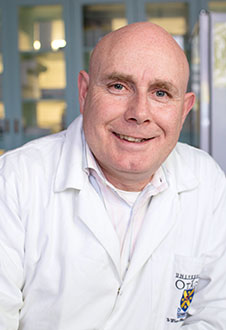
Distinguished Professor Neil Gemmell
Distinguished Professor Neil Gemmell, of the Department of Anatomy, has been named a recipient of a Mana Tūārangi Distinguished Researcher Fellowship.
Professor Gemmell has pioneered the use of genetics to control invasive species and protect rare species. His expertise encompasses evolutionary genetics, genomics and molecular ecology.
He will receive $220,000 over up to two years and will be supported by the Society to extend his leadership role.
“First, I am very grateful to receive this opportunity and delighted to now be able to explore the effects of mitochondrial mutations (a long-term interest) using the very latest genetic tools,” he says.
“I believe we will unlock a lot of new information and opportunities through this work that could have benefits to fertility, longevity, and health.”
He is humbled to be one of the two recipients of this highly-competitive fellowship.
Professor Gemmell’s research seeks to explore the critical role of mitochondrial DNA (mtDNA) in fertility, ageing and health.
“This work will enhance our understanding of the mitochondrial genome's sex-specific influence on fitness, behaviour, health, and ageing,” he says.
It will also establish the framework for the systematic, base-by-base interrogation of the mitochondrial genome's role on the way organisms look and function; empowering novel studies of mtDNA inheritance, gene function, expression, and regulation.
Such work could lead to the identification and validation of mtDNA mutations suitable for use in genetic biocontrol and generate the know-how and tools that could enable animals and plants to be modified to better survive as the global climate alters.
“Finally, this work will aid the development of novel diagnostic tools and more effective treatments for debilitating mitochondrial diseases, and by illuminating the mechanisms linking mtDNA to ageing, our work could unlock new strategies for improving longevity and health,” Professor Gemmell says.
Acting Deputy Vice-Chancellor (Research and Enterprise) Dr Martin Gagnon says these fellowships highlight that the University is filled with talented researchers at all stages of their careers.
“Neil has been a leading researcher in his field for many years now, so I’m thrilled to see him recognised with this fellowship.
“The talent and determination among our early career researchers shows the future is bright. I look forward to following their careers.”
Mana Tūāpapa Future Leader Fellowship recipients:
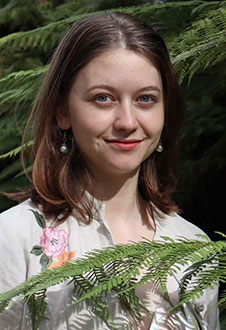
Dr Alice-Roza Eruera
Dr Alice-Roza Eruera will study ancient viruses and their evolution to assess how they might be useful for biotechnology or medicine.
Dr Eruera (Ngāpuhi) will use their New Zealand Mana Tūāpapa Future Leader Fellowship to study the whakapapa ancestry of viruses and examine how their structure and function have adapted over time.
Traces of ancient and extinct viruses within permafrost and archaeological specimens can be identified through modern DNA-sequencing techniques. These ancient viruses also have potential applications for biotechnology, including for human medicine. Viruses have been adapted for use in gene therapy to treat various human diseases.
However, a known problem with gene therapy is that it can trigger pre-existing immunity, causing severe and dangerous side effects. Because ancient viruses no longer circulate in modern populations, they are less likely to trigger immune-system defences.
Alongside laboratory work to investigate potential uses for this pool of ancient and extinct viruses, Dr Eruera will explore Māori whakaaro perspectives on virus-based biotechnology tools, especially those involving gene therapy.
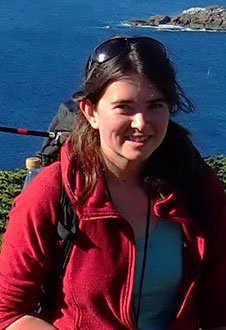
Dr Rebecca French
Dr Rebecca French will investigate whether viruses carried by rats in Aotearoa New Zealand could cause outbreaks in humans.
Dr French will use tissue collected from kiore Polynesian, ship, and Norway rats caught in community-trapping initiatives and analyse the genomes of the viruses they carry.
Rats are often reservoirs for zoonotic diseases that jump between animals and humans. Despite this, we know almost nothing about the viruses carried by the rat species living in Aotearoa New Zealand, or if they present a threat to other species, including humans.
Dr French will assess whether these viruses could jump between hosts and whether ecological disruption (for example, due to climate change or changes in land use) might contribute to the risk of host-jumping.
This research will enhance our understanding of zoonotic disease risks and provide insights into viral ecology and evolution.
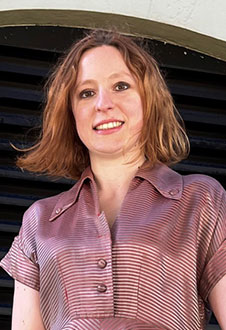
Dr Caitlin Owen
Dr Caitlin Owen will develop a more transparent and energy-efficient system for automated machine-learning.
Automated machine-learning allows anyone to use artificial intelligence to identify patterns within their data and make predictions about the future.
However, current versions of this technology are energy intensive and act as ‘black boxes’, offering no explanation for their predictions.
This lack of clarity is a major barrier for applications like health diagnosis or disaster prediction, where understanding the ‘why’ behind decisions is essential.
Dr Owen will use her Fellowship to pilot a more transparent approach that will allow the user to pinpoint any sources of inaccuracy or error. Instead of ‘the computer says no’, the approach will move towards ‘the computer says no because...’, by allowing errors to be fixed and improvements to be targeted.
This approach should require less computational power than current systems, and should also foster greater trust and enable safer adoption of artificial intelligence.
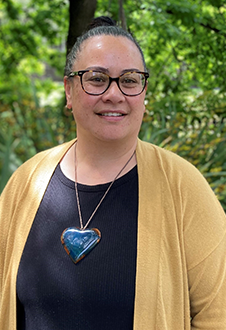
Dr Wahineata Smith
Dr Wahineata Smith will study the experiences of Māori and Tongan families raising children with dual heritages
Cultural identity plays a critical role in shaping the development and wellbeing of tamariki.
People who identify solely as Pacific score higher on the Pacific Identity and Wellbeing Scale than those with mixed Pacific and non-Pacific identities, suggesting that dual ethnicities may lead to identity-confusion and negative effects on mental health.
In their Fellowship, Dr Smith (Ngāti Korokī Kahukura, Ngāti Ranginui) will use mixed methods to investigate how Māori and Tongan whānau raise dual-heritage children and how culture, language, and identity shape their wellbeing.
This research will clarify the realities facing dual-ethnicity families, and allow development of practical strategies and digital resources to support this growing demographic. The research is about understanding and celebrating the richness of dual identities. It is also about ensuring systems, from education to health, recognise and support the realities of Māori and Pacific families raising the next generation.
The project will contribute valuable insights into how cultural knowledge and family practices can strengthen wellbeing, belonging, and resilience for whānau across Aotearoa.
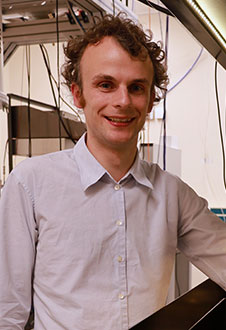
Dr Luke Trainor
Dr Luke Trainor will study how ‘rare-earth-doped magnetically ordered crystals’ may unlock quantum technology
Quantum technologies have the potential to make our current computer, security, and networking technologies obsolete. But to bring this rapidly emerging technology into mainstream use, the development of novel materials and optimisation of the conditions for their use, are required.
Recently, Dr Trainor and co-workers demonstrated that a class of materials known as ‘rare-earth-doped magnetically ordered crystals’ show promise for application in optical quantum memory. Quantum memory, in analogy to computer memory, can be used for storage of data.
In their Fellowship, Dr Trainor will explore and characterise these crystals, seeking to understand the conditions under which they function best, and attempting to demonstrate, through practical experiments, their potential for applications in quantum memory storage.
This is an important step towards the real-world utilisation and commercialisation of quantum technologies