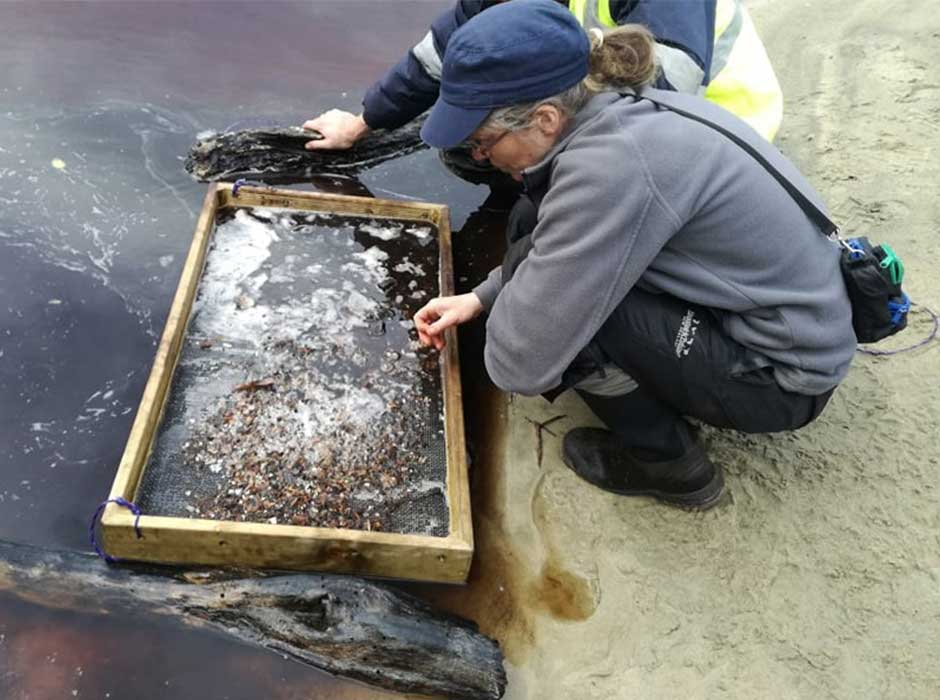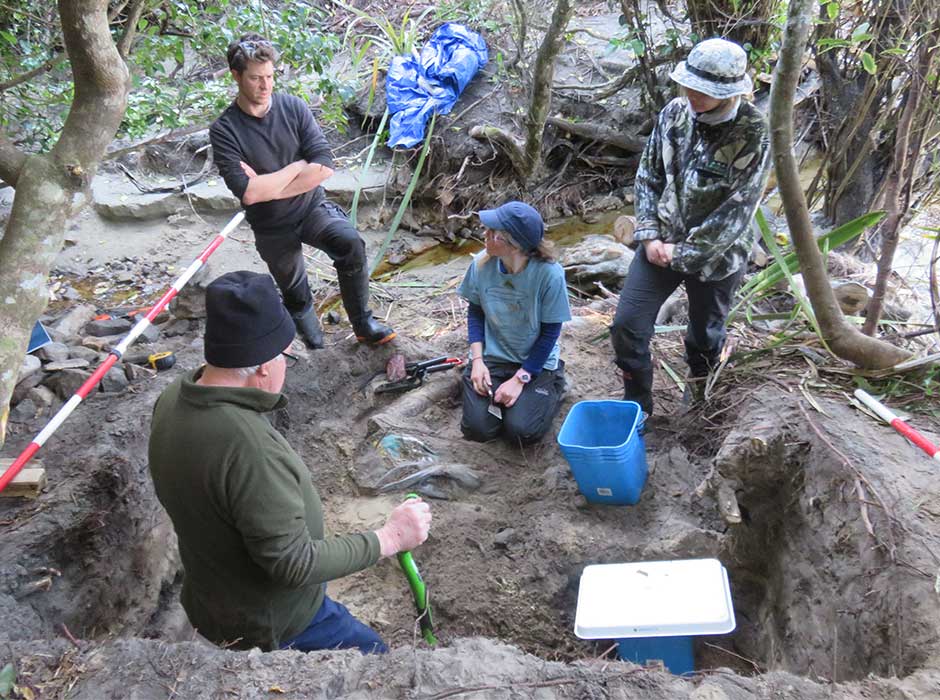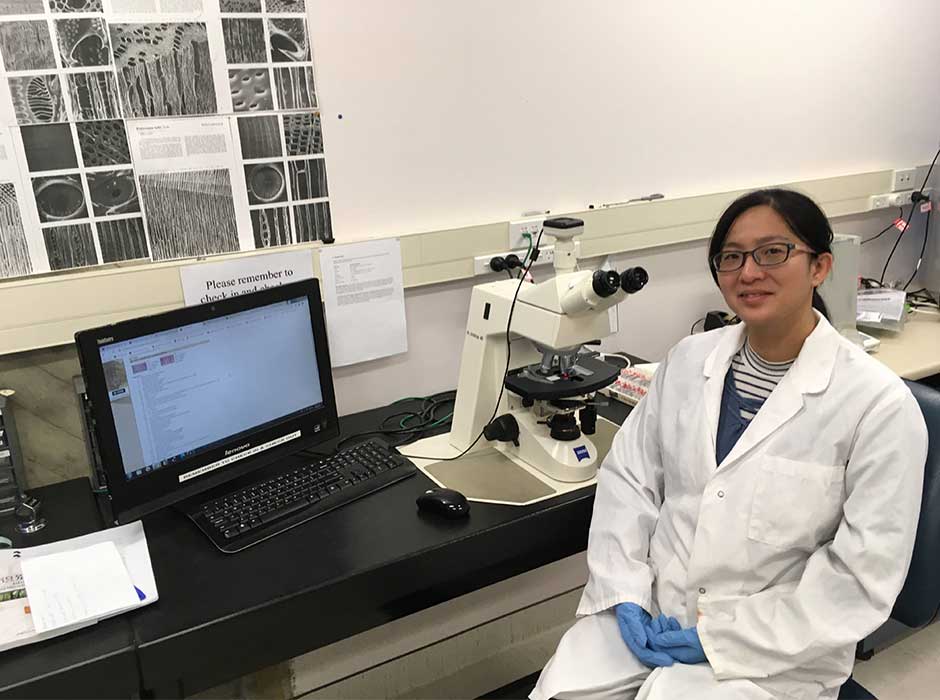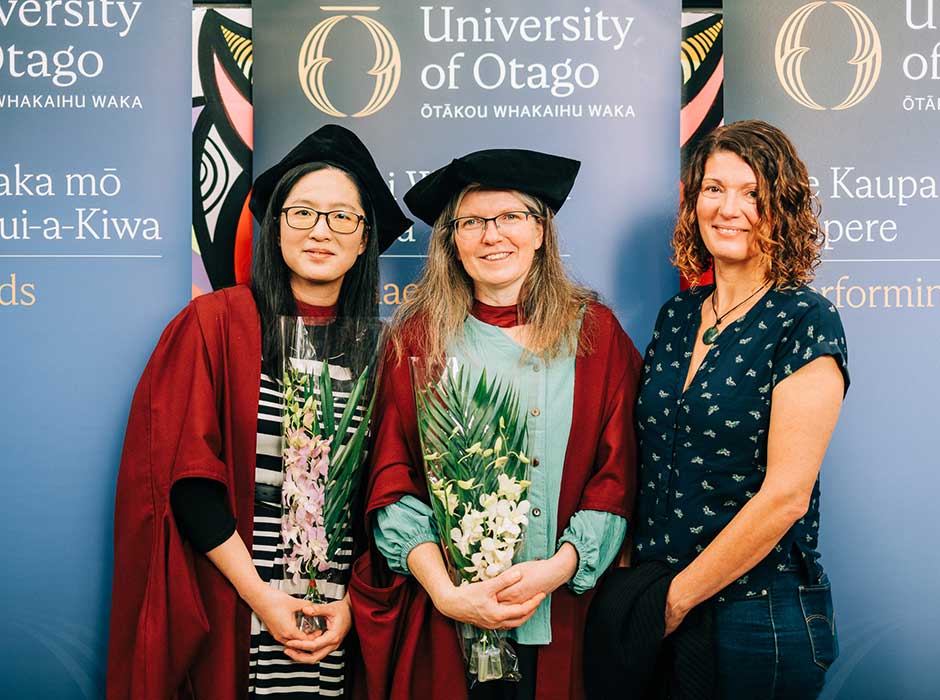
Graduates and good friends, from left, Dr Elaine Chen, Dr Brooke Tucker and PhD candidate Claire Mauger, all from the Archaeology Programme. Elaine and Brooke graduated on Saturday while Claire will graduate in August. PHOTO: Pio Moana
Everything is better when shared with a friend, and that includes doctoral study.
Doctoral graduates Dr Brooke Tucker and Dr Yi-lin (Elaine) Chen, of the Archaeology Programme, crossed the stage on Saturday, while their friend PhD candidate Anne-Claire (Claire) Mauger, also of the Archaeology Programme, will graduate this August.
Brooke, originally from Australia, and Claire, from France, began their PhDs mid-2019, while Elaine, from Taiwan, began hers mid-2020. Through the highs and the lows of studying in an adopted country, each with a young family and during the Covid pandemic, the three women supported and inspired each other, having met as a result of their studies.
Brooke remembers first meeting Claire in the department tearoom.
“One of the things I learned about doing my PhD was that even though it’s very independent, it’s also very important to show up in person to the department, occasionally, to run into your fellow postgrads,” Brooke says.
Elaine says she finds it “quite amazing” that three women from different countries, each sharing a passion for archaeology while working on completely different topics, could come together and support each other.
“When I found myself in hard situations, juggling between study, research, teaching and family, I just look at Claire and Brooke. I only have one kid, they have two, and four. If they can do it, I can do it.”
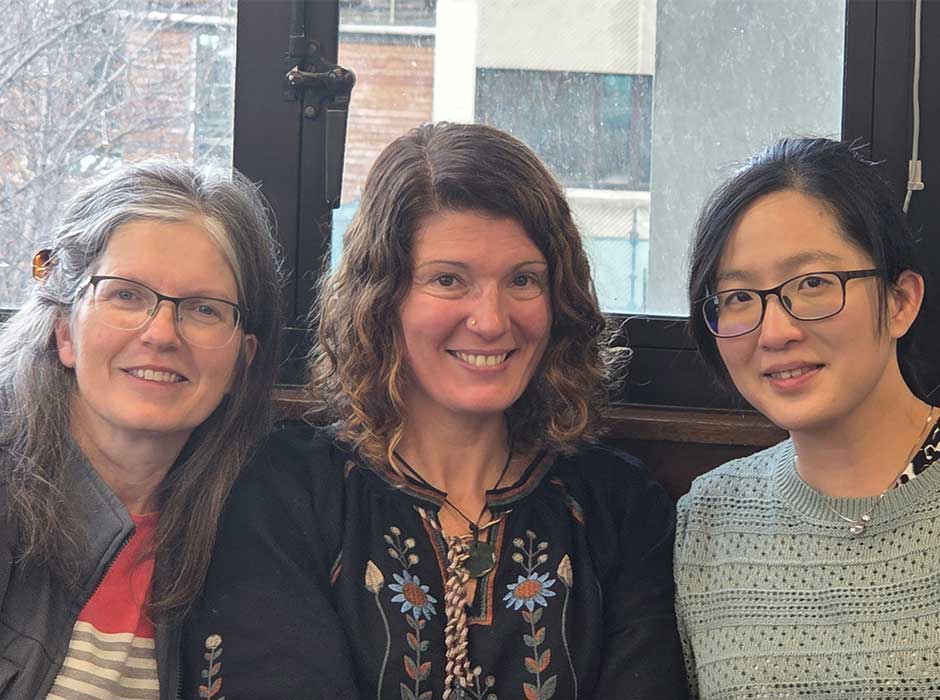
An ordinary day in the Archaeology tearoom… pictured from left to right are Brooke, Claire and Elaine.
Covid not only delayed Elaine’s arrival to Otago’s Dunedin campus, it then slowed her research when she did arrive.
“It was just kind of like a nightmare. As the three of us are mothers, I remember we chatted on Zoom and tried to share about our situation at home. Everyone was in the same boat, so that helped me, knowing that I’m not alone.”
Brooke says there isn’t any one way to do a PhD, that everybody works on a different timeline and different parts of their project become important at different stages.
“That’s very useful to keep in mind. As a returner student, you often compare yourself to students who are up to 20 years younger than you, with different requirements and demands on their time.
“Because we are all mothers and kind of mature students… we had a lot of similar issues. It was really good to be able to learn from each other and pool our information and strategies.”
Claire remembers at one point during Covid, when her husband had a double fracture and she was trying to help her kids do their school work from home, while carrying out her own research, she found herself thinking ‘what am I doing?’.
She compared starting her project before being abruptly stopped by Covid to “just starting to run before hitting a wall”.
“What was really keeping me in check with reality was to discuss these topics with Elaine and Brooke.”
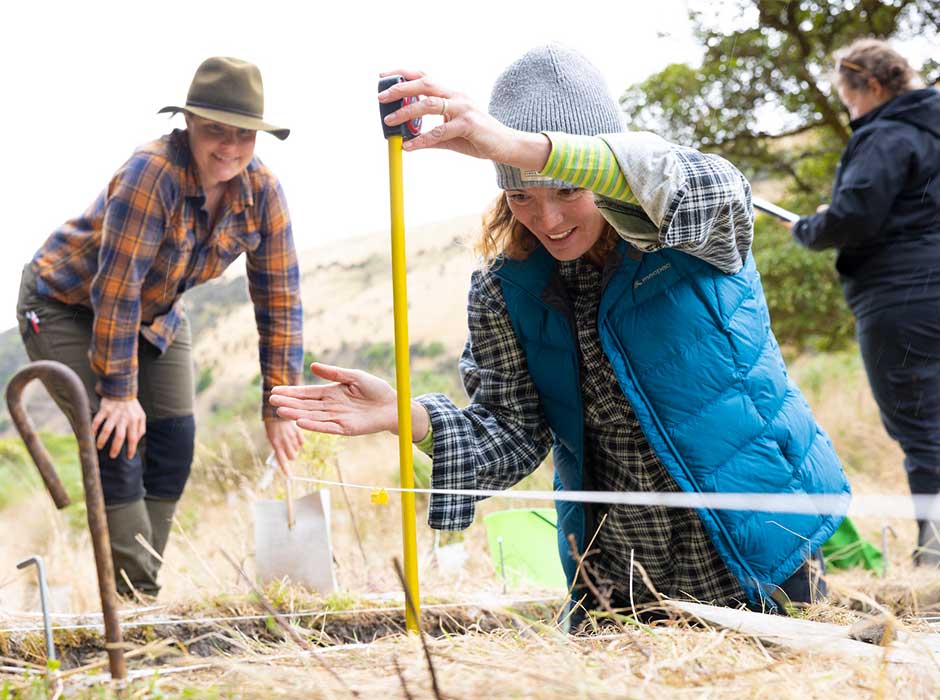
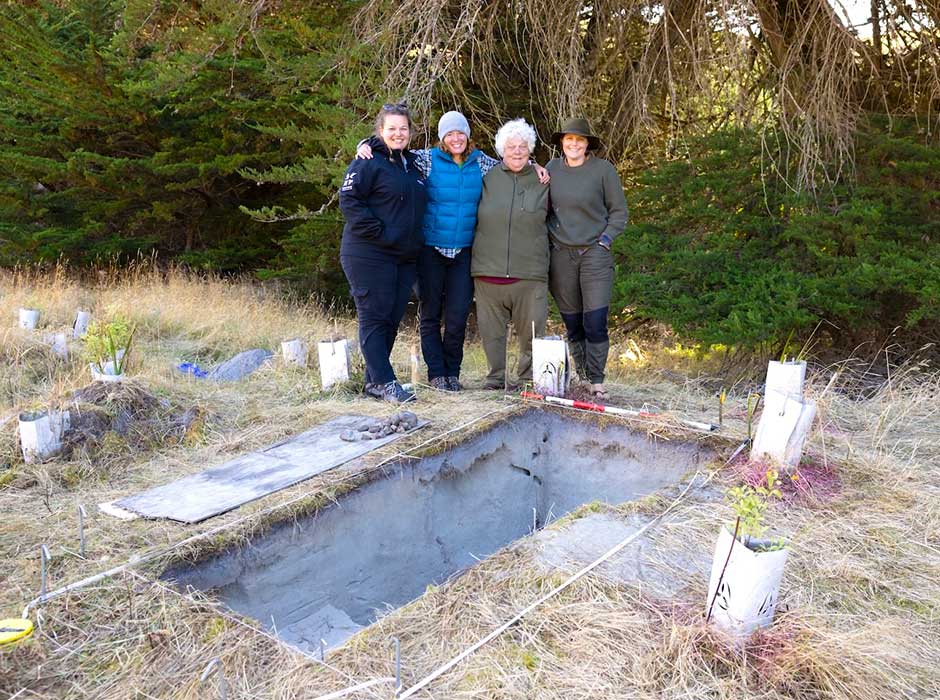
Claire, pictured centre, was able to conduct an excavation at Whareakeake in 2023. With her are volunteers Emma St Pierre, far left, and Lydie Leurquin, far right. PHOTO: Derek Morrison
While Covid delayed Claire’s project, the three were able to reassure each other that things will get better.
“There’s been a few deferrals, I think we’ve all been through some personal hardships. You know, this is what it is to be a mother and be a part of a family,” Claire says.
In 2021, Claire was finally able to go into Tūhura Otago Museum to do research, and her excavation went ahead in 2023.
Her PhD has taken six years to complete, but she doesn’t regret any of it, saying when dealing with important topics of the past you need time to “mature with them” and understand the responsibility of dealing with important materials.
“Personally I feel really grateful I had that time to think, and talk to people, because sometimes it takes a while to reach out to people.”
She’s very appreciative of the “tips and tricks” Brooke and Elaine have shared with her as she heads towards the finish line of her PhD.
After finishing her PhD, Elaine returned to Taiwan, but attended the graduation ceremony with her family in Dunedin on Saturday.
“It’s a nice feeling to have something to end this journey with, a big celebration.
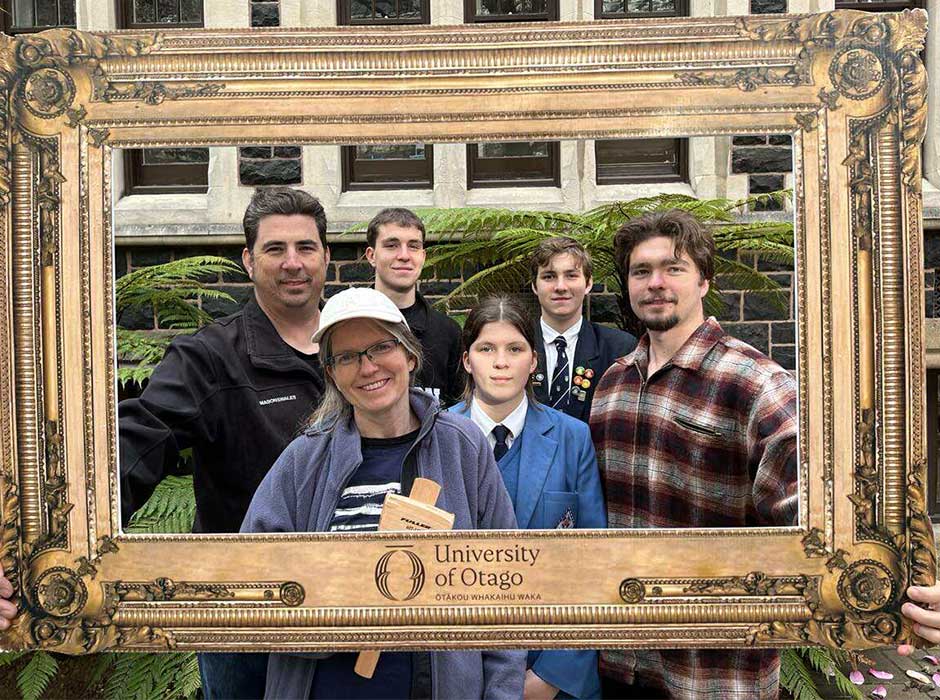
Brooke, second from left, with her family after having handed in her thesis.
Brooke feels it’s really important for her and her friends to celebrate their achievements.
When she started her PhD, her oldest kid was in high school and her youngest was still in primary school.
“I thought it was really valuable for them to see that people never stop learning.”
One of the satisfying things about graduation is recognising the achievement, not just for her, but for her family as well.
“They were part of the support, and sometimes the challenge, but they were always there. I decided, when I started my PhD, that my family wasn’t going to suffer, because they were my priority.
“That’s one of my successes – that I’ve finished and my family didn’t suffer for it.”
Coincidentally, May 2 – 10 is National Archaeology Week, Brooke says.
“Elaine and I graduated on May 9, and I think it’s pretty cool that two archaeologists get to graduate in Archaeology Week on what is like the ultimate celebration.”
-Kōrero by Koren Allpress, internal communictions advisor