
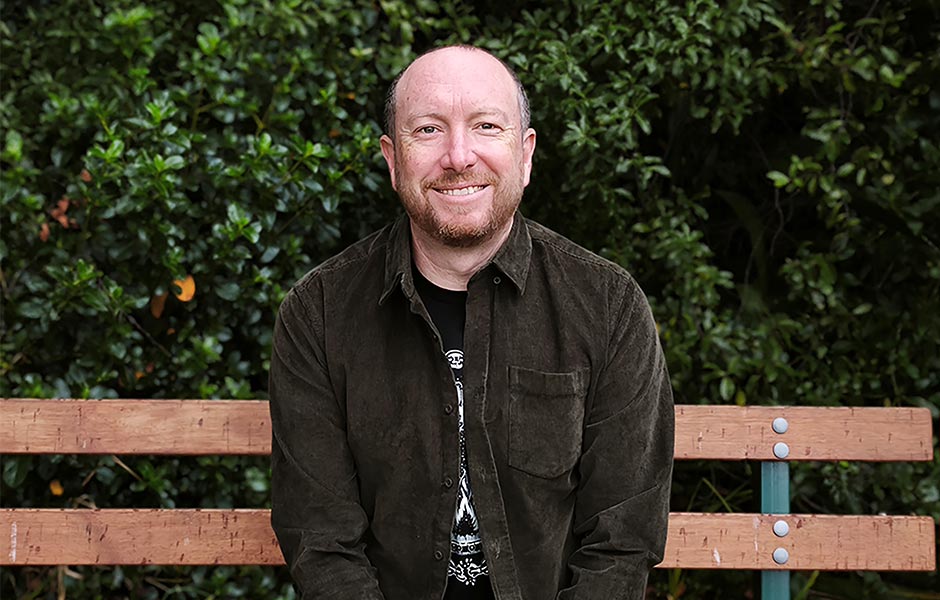
Award winning author and University of Otago Net Carbon Zero Programme Manager Craig Cliff has launched a collection of short stories titled 'Offshore Service'.
Award winning author and University of Otago Net Carbon Zero Programme Manager Craig Cliff has recently released his second collection of short stories.
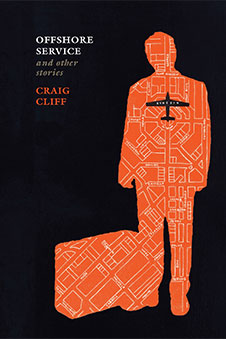
Offshore Service
Offshore Service, published by Otago University Press was officially launched last month. Otago University Press Publisher Sue Wootton says the launch, which took place in the Dunningham Suite of the Dunedin Public Library was a “hum of excitement”.
“Craig described the genesis of the collection, then treated the crowed to a reading of perhaps the funniest story in the collection, ‘The Waikato farmers’, “Otago University Press Publish Sue Wootton says.
“It was an evening of warmth and hilarity, a fitting celebration for a terrific collection,” she says.
The collection is Craig’s latest work exploring the emotional, economic, cultural and climatic forces that drive our decision making. The short stories follow characters navigating change, uncertainly and “familiar shores” in recognisable locations across Australia and New Zealand.
Gess Sheridan sat down for a Q&A with Craig where he shared insights into his writing, the influence of Ōtepoti, the connections between his creative and professional worlds and some sage advice for aspiring writers looking for somewhere to start.
Q&A with Craig Cliff
How has living in Ōtepoti and working at the University influenced your writing and your view of contemporary New Zealand?
They say the best views of the city come from out of town, so leaving Wellington for good in 2021 helped put in perspective my experiences as a central government bureaucrat. The novel I’ve been working on since 2022 is set in Wellington and inhabits that world of policy analysts, poetry readings and politicians who complain about cycleways.
The collection's characters often find themselves "beyond familiar shores". What drew you to writing stories about people navigating unfamiliar places and circumstances?
After finishing undergrad study, I moved to Brisbane to start full-time work. It was 2004 and the economic pendulum had swung hard in Australia’s direction with the resources boom. I stayed a little over three years before heading to the Northern Hemisphere for a proper OE. When I got back to New Zealand the pendulum had swung back this side of the Tasman. I resented the implication that I was part of these trends, that I was following the money and the headlines, when I felt I was making these decisions for personal reasons (romance, adventure, family). So I got interested in exploring characters who have crossed the ditch in one direction or the other, what they thought they were doing, and what they find out.
Over the past 15 years the pendulum has swung a few more times and I guess being able to see patterns (or believe in them) is part of getting older. The process of aging is a kind of forced migration. I look at my kids starting intermediate and high school, and I think about my experiences and the fact I can’t go back there myself. It’s like I’m looking at my kids from the other side of a ditch. So there are also stories in Offshore Service are about people trying to revolt against time and the responsibility of adulthood.
How important is it for literature to respond to issues like climate change, migration and social change?
It’s dangerous for a writer to set out to write about a big topic like climate change, and even more dangerous to try and write something important. The best books to me are those that combine all the elements – character, setting, plot – and can be both utterly specific and universal.
When it comes to short story collections, I like them to go all sorts of different places. Sometimes climate change is explicitly mentioned, such as with the avid cyclist who keeps getting run off the road by utes in the story, ‘Ranger Ranger Ranger’. And sometimes it sits underneath the whole story, driving the plot, like the story, ‘Kia Kaha, Ōtepoti’ where climate refugees from different parts of the world start turning up on people’s doorsteps in Roslyn and Māori Hill. But it’s a bit like in real life. If all I ever talked to my friends about was climate change, they’d stop inviting me.
You have a remarkable ability to draw familiar feelings and emotions from unfamiliar characters. What do you think is the trick to writing characters that people will connect with?
Honesty, or the illusion of honesty. It’s still revolutionary, even today. Social media gives us all this access to the lives of other people – we know more about strangers than at any other time in human history – but it is so curated and mediated that it doesn’t fully ring true. In fiction, your characters can say the unsaid things, which creates a sense of intimacy. Like friends sharing a secret, or a handwritten letter from a lover.
How does your work in the sustainability office and your work was a writer influence each other?
Part of being a writer in Aotearoa is accepting that you need another way to earn an income. At the most basic level, working at the University helps to financially sustain me and my family. But the work I do in Toitū te Taiao sustains me in other ways – the interactions with students, involvement with meaningful research, collaborations across the city, Otago and Aotearoa, the work to keep climate change at the forefront of people’s decisions and be better ancestors for future generations – that’ll get you out of bed each morning!
Are there stories or themes emerging from sustainability, climate or social change that you feel New Zealand literature has only just begun to explore?
The obvious one is artificial intelligence. Pip Adam’s new novel, kluge, tackles this head on, and I’m expecting a lot more books to centre their plots around AI in the coming years. But writers, especially poets, have been exploring the affordances and implications of computer-assisted text for a lot longer.
I did a collaboration with Lech Szymanski from the School of Computing back in 2017 where we trained a Large Language Model on song lyrics from Dunedin Sound bands. It was the early days of LLMs and everything sounded vaguely coherent. New Zealand poets like Gregory Kan and Jiaqiao Liu have taken this thread a lot further.
Of course, today’s GenAI models are often built on stolen work and a disregard for the environmental costs. In the Sustainability Office we are trying to support decisions the University makes regarding AI adoption by making the greenhouse gas emissions from AI use more evident, but – perhaps unsurprisingly – it’s a struggle to get believable, consistent data from these companies.
What advice would you give to students or members of the community who are beginning their journey into creative writing?
Just write.
Planning and research can be a form of procrastination.
When I wrote my historical novel, The Mannequin Makers, I did research beforehand and had a sense of where everything would go and how things would connect, but every time I put words on the page I found things I didn’t know (what would people be eating for dinner in 1903? what would they use for light?), and discovered connections in the work better than I could have come up with in months of pre-planning. Writing tells you what you need to research and what can be changed in the next edit.
Even if you’re writing something contemporary, you can get pulled out of writing by the need to know all the answers. What kind of car should they be driving? When would an EV need to charge on this journey? If you leave your word processor and open up your web browser to find the answer, good luck getting back to your writing.
Just write, leave square brackets and notes to yourself in the text, and get that first draft done.
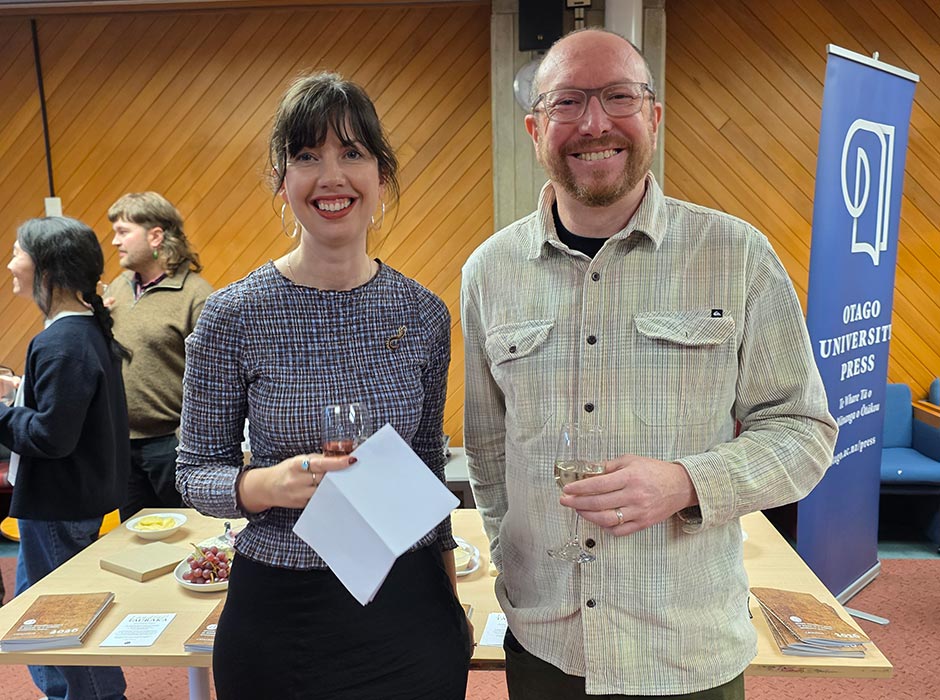
Craig Cliff with local poet Hera Lindsay Bird, who launched 'Offshore Service' with a speech last month.