
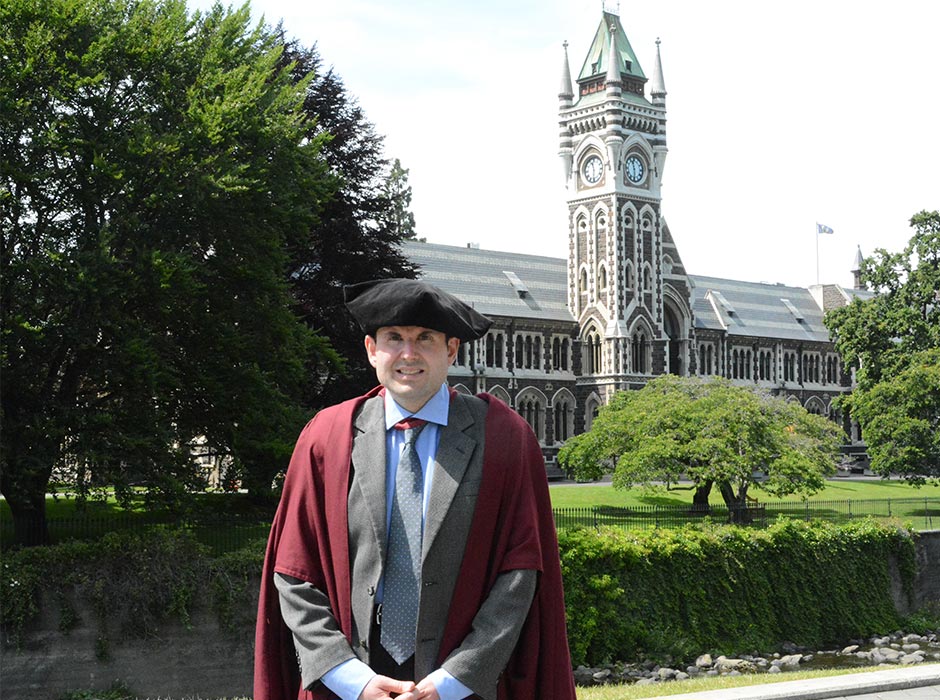
Dr Geoffrey Miller graduated at the weekend with a PhD in Politics. His Arabic language skills were key to his research into the Middle East, he says. “…I always thought if you want to understand a region, you have to understand its language and culture.”
Dr Geoffrey Miller’s thesis begins in January 2001, when Phil Goff made the first-ever visit to the United Arab Emirates by a New Zealand Foreign Minister.
On 11 September of that year, the 9/11 attacks on New York and Washington sparked a ‘war on terrorism’, with US-led invasions of Afghanistan and Iraq.
Over the next 25 years, New Zealand’s ties with the Gulf region have grown and become more diverse, but until now there has been virtually no published research on this important relationship.
Geoffrey’s thesis ‘Unlocking the Middle East: New Zealand’s Relations with the Gulf States in the 21st Century’ provides valuable analysis and insight into explaining these dynamics, and future implications and opportunities.
Geoffrey crossed the stage at an Otago graduation ceremony on Saturday, 13 December with a PhD in Politics. His thesis has been placed on the list of Humanities Exceptional Doctoral Theses, placing it in the top 10 percent of all examined.
“I am so honoured, I never thought what I was doing was exceptional,” Geoffrey says.
Geoffrey was a Year 11 student at Logan Park High School, Dunedin in 2001. He vividly recalls Otago Politics Professor Robert Patman’s commentary on the 9/11 attacks, providing a New Zealand perspective on an international event.
Geoffrey began his undergraduate studies at Otago a year after the Iraq War began.
“I remember a huge part of the Politics programme was talking about the ramifications and the origins of the war.
“I was hugely interested in what was going on in the Middle East. But I always thought if you want to understand a region you have to understand its language, and culture,” Geoffrey says.
Geoffrey completed a Diploma in Language and Culture (German), alongside a Bachelor of Arts with Honours in Politics.
He also holds a Master of Arts in Teaching English to Speakers of Other Languages (TESOL) from Victoria University of Wellington, and professional German-English translation qualifications.
He taught English at the Johannes Gutenberg University Mainz in Germany for several years. Then, after taking night classes in Arabic while living in Germany, Geoffrey decided to take the immersion route, buying a one-way ticket to Cairo, travelling the Middle East and developing his Arabic language skills.
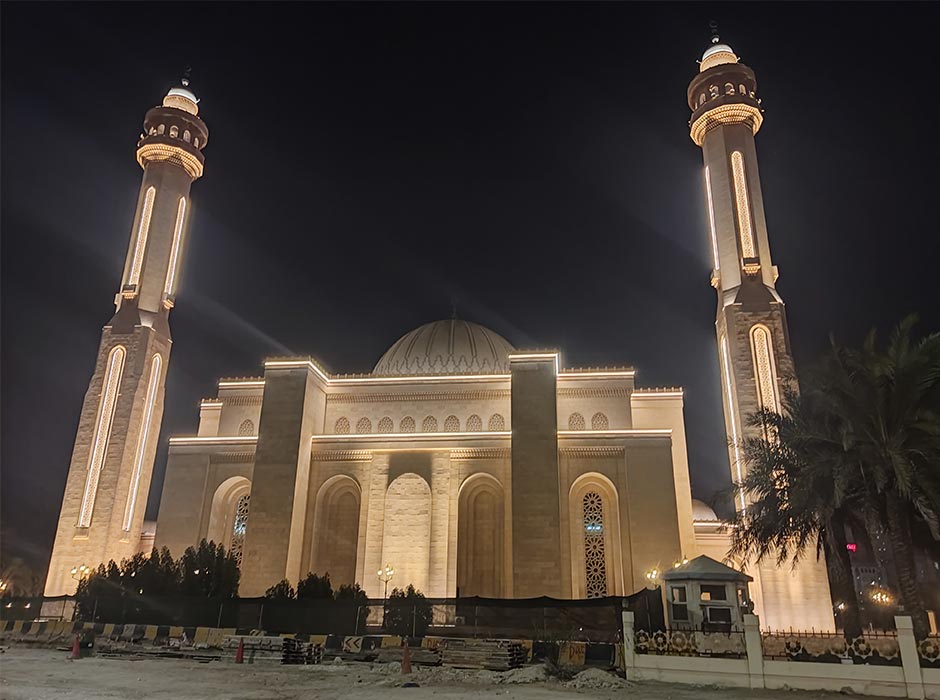
Geoffrey Miller has travelled extensively in the Middle East, taking an immersion route to learning the language and cultures. Pictured is the Al Fateh Grand Mosque in Bahrain.
In his thesis, Geoffrey examines the political relationship between Aotearoa and the six countries of the Gulf Cooperation Council (GCC), comprising Bahrain, Kuwait, Oman, Qatar, Saudi Arabia and the United Arab Emirates.
“Trade and business are the bedrock of New Zealand’s relations with the Gulf, which is interesting because I think most of New Zealand’s Western partners tend to look at the region primarily through a security lens – more than one of economic opportunity. “
The GCC is now New Zealand’s sixth-biggest export market. In the year to June 2025, exports from New Zealand to this bloc reached a new high of over NZ$3 billion. In exchange, the Gulf sells significant quantities of oil-based products to New Zealand.
“New Zealand’s high-quality food exports, such as dairy, meat and fruit, are popular in the Gulf states, which have an appetite for luxury and the wealth to pay for it.
“Food security is a major concern across the Gulf, which has no permanent rivers but houses a growing population of more than 60 million people in a hot, desert climate,” says Geoffrey.
Beyond trade, the study also finds New Zealand’s links with the Gulf are deepening in other areas such as aviation, education and defence. Geoffrey suggests that any future strategy to deepen these relationships should include a focus on developing cultural connections.
“With the exception of Saudi Arabia, these countries have broadly similar populations to us – and it is interesting what impressions people there have of New Zealand.
“New Zealand’s collective response to the 2019 Christchurch mosque attacks is strongly admired in the Gulf."
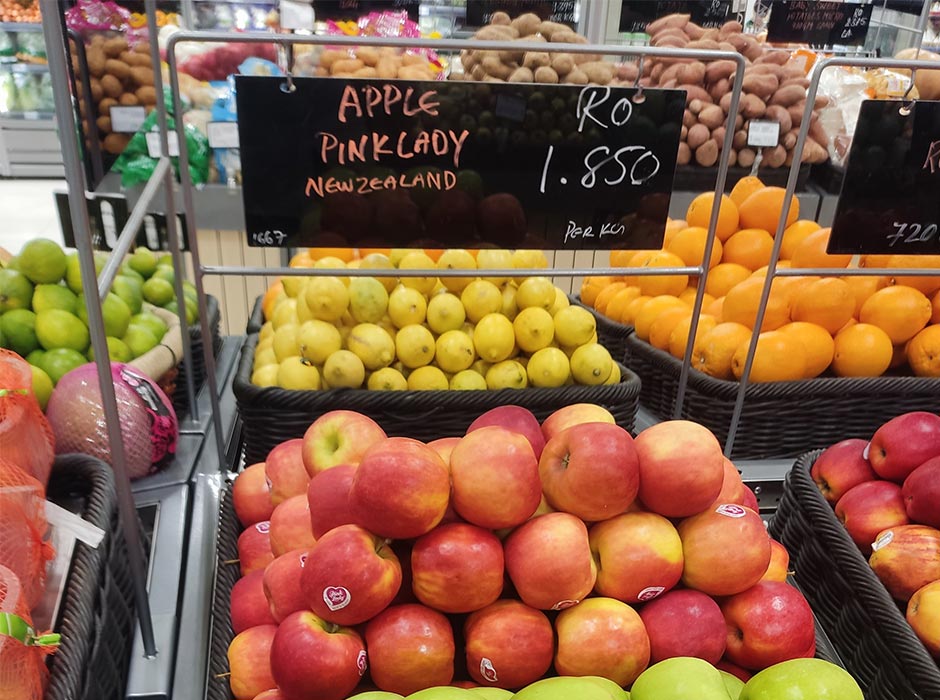
New Zealand apples on sale in Oman. “New Zealand’s high-quality food exports, such as dairy, meat and fruit, are popular in the Gulf states, which have an appetite for luxury and the wealth to pay for it,” Geoffrey Miller says.
“What could have really damaged our reputation instead seemed to build connection. Indeed, many of my Gulf interviewees would proactively bring up and praise the way New Zealand responded to the tragedy.”
As part of the research, Geoffrey interviewed nearly 50 people across both New Zealand and the Middle East. He worked closely with Gulf embassies and foreign ministries to obtain access to key figures and decision-makers during his fieldwork trip to the region in late 2023 and early 2024.
The interviewees include former New Zealand foreign minister Murray McCully and the UAE’s Ambassador to New Zealand, His Excellency Mr Rashed Matar Sultan Alsiri Alqemzi, along with many other important individuals active in diplomacy, business, academia and the media.
Geoffrey says his Arabic language skills hugely helped in building his relationships in the Middle East and deepening his understanding of the subject matter.
“Language is a great starting point, it’s very powerful,” Geoffrey says.
“I think it really signalled I had done my homework and people took me more seriously as a result.”
Geoffrey is very grateful to the Politics programme, including all the staff and his fellow PhD students, saying the programme “really does punch above its weight”.
His father Peter, who is also keenly interested in New Zealand politics, has been a key supporter, reading all the draft chapters of the thesis.
Alongside his studies, Geoffrey has been committed to sharing his insights with the wider public.
Since starting his PhD in 2022, he has had more than 20 articles published in the Otago Daily Times, and by many other New Zealand and international outlets. He has also been interviewed many times by national and international media.
“I think New Zealanders are really interested in what’s going on in the world. The wider public are very much interested in these issues. They appreciate someone breaking down these big geopolitical shifts from the New Zealand perspective.”
As well as being Geoffrey’s lecturer during his undergraduate studies in the early 2000s, Professor Robert Patman was Geoffrey’s primary supervisor on his thesis. Robert says Geoffrey’s research is exemplary and essential.
“Geoffrey has written a ground-breaking PhD thesis on New Zealand’s relations with the Gulf States, as there has been virtually no previous published research on this topic.
“He has used Arabic language skills and the innovative and prolific use of the Official Information Act to unlock a lot of new information and analysis on this increasingly important relationship,” Robert says.
Read an opinion piece Geoffrey wrote recently for the New Zealand Herald: As Saudi Crown Prince visits Washington, what’s New Zealand’s strategy for the Gulf?
– Nā Antonia Wallace, Communications Advisor - Kaiarataki Pārokoroko
Politics - Tōrakapū
From international relations to political theory, NZ politics to comparative studies – empower yourself with Politics at Otago.
Find out more