
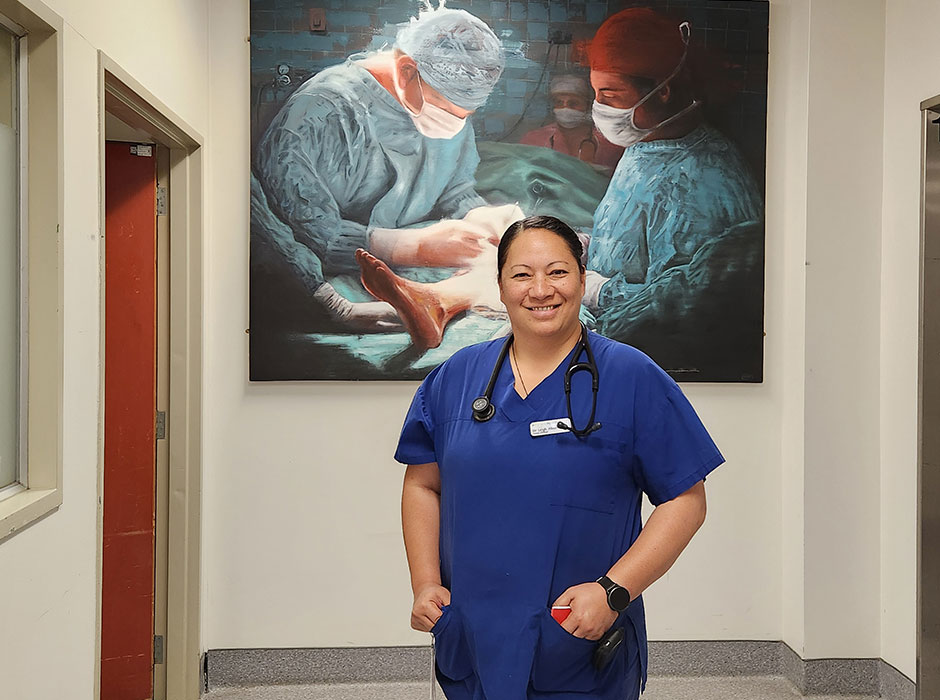
Ready to serve… Leigh Albert, who graduates on Saturday, says her life experience makes her a better doctor.
Otago medical graduand Leigh Albert’s delight at becoming a doctor is evident, and for good reason.
This wahine Māori and single māmā of three worked three jobs while a full-time student and an army medic.
“I’m so glad to be graduating. Juggling everything was the hardest part. It’s difficult for people not in that situation to understand – you have to work so much harder to reach the same level as everyone else in your class,” she says.
Leigh (Ngāti Hine (Te Tai Tokerau), Te Whānau-ā-Apanui, Ngāpuhi) graduates with a Bachelor of Medicine and Bachelor of Surgery (MB ChB) in Dunedin on Saturday.
A house surgeon at Dunedin Hospital, there were some advantages to being an older student with a range of life experiencem Leigh says.
Her circumstances prepared her for some of the challenges of working as a doctor, such as having to balance work and whānau, and putting in long hours.
A member of the New Zealand Defence Force since 2003, Leigh has also had a lot of experience with trauma and high-stress situations.
She has been deployed internationally, including the Middle East, and was on the ground following the 2011 Canterbury earthquake.
“As a med student in emergency scenarios, I found I operated really well in those situations. I keep calm, can adapt quickly and am able to lead teams.”
She says her “real world experience” also makes it easier for her to connect with patients and she picks up on small social cues that provide important context, which may be missed by others. That information leads to a better, more holistic plan for the patient.
“People need to feel safe with you if they are going to share things about themselves.”
Leigh says one of the things she enjoys most about medicine is working in multidisciplinary teams to get the best results for patients.
“Medicine is a team sport; you can’t do it alone.”
Leigh grew up in a small rural area in Motatau, Northland, and she’s dreamed of being a doctor since she was in primary school. She had a “lot of sadness and grief” when a teacher told her she wasn’t bright enough to study medicine, but a tragedy prompted Leigh to rethink.
In 2018, her partner drowned saving their daughter and twin sons.
“After my partner’s accident I thought, nothing else can hurt me, so I’ve got nothing to lose by trying.
“Despite the experiences I’ve had, I did medicine and came out the other side. It doesn’t matter how hurt you are, you can get there, but your resilience, determination and commitment to your goal will be tested.
“If you want it badly enough, you don’t have to be the cleverest student, just the hardest working.”
Leigh says Otago has some “amazing staff” and one of the best things about studying here was the great support provided by groups and organisations such as the Māori Centre, Kōhatu Centre for Hauora Māori, Te Oranga ki Ōtākou and the Otago University Medical Students’ Association.
“As difficult as my road has been, I’ve had a great support network that bolstered me.”
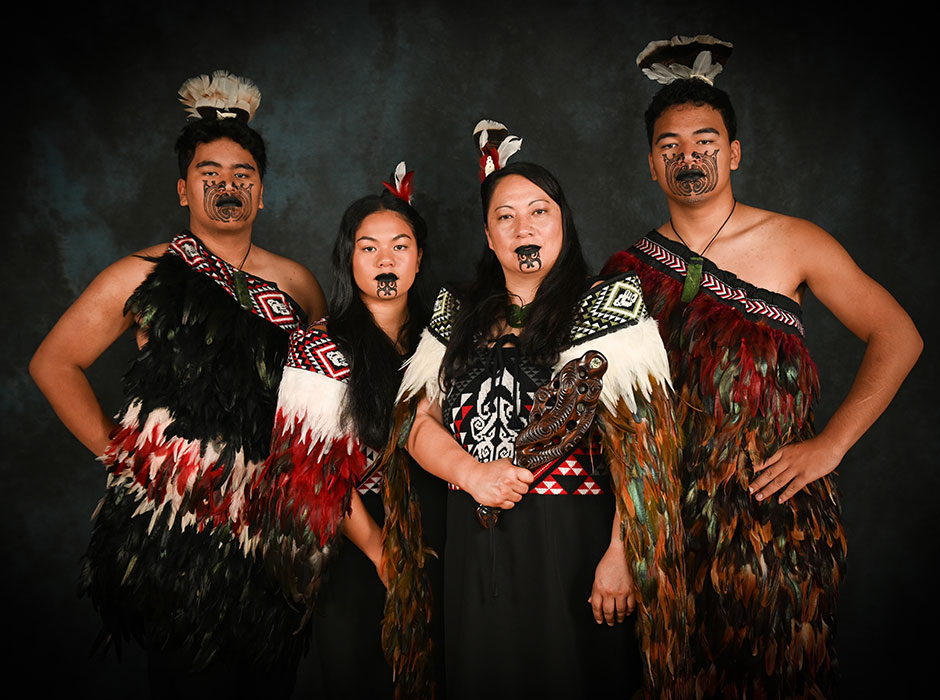
Leigh Albert, pictured here with her children (from left) Tawhiri, Manea and Sam, says for her, finishing medicine is not an individual success, but a whānau achievement.
Leigh praised Otago for providing a range of pathways into health professional programmes such as medicine. She believes it is important to have empathetic, enthusiastic students from varied backgrounds.
“When you’re a doctor, you don’t just bring to the job what you’ve learnt in medical school. You also bring your values and background, and that makes you a better doctor, able to provide holistic health care for Aotearoa New Zealand.”
She intends to use her skills and experience to contribute to better health outcomes for Māori. Leigh says recent political changes have made it harder to be Māori in the health system, but she is determined to contribute to the good work that has been done.
In the longer term, she hopes to return to Northland and serve her people and the NZ Defence Force, with the aim of being trained in both rural hospital medicine and general practice.
Leigh is thrilled her whānau will be there when she graduates on Saturday and two of her military friends are travelling from Australia and the United States to celebrate with her. She’s particularly excited her whānau and friends can join her for the Oath Reading Ceremony beforehand.
Leigh is proud she has achieved her goal while keeping her family together despite practical and financial challenges.
Her sons are both prefects at King’s High School and her daughter is a second-year Otago Bachelor of Science student, majoring in Physical Education with a minor in Māori Studies, who is also interested in medicine.
Leigh says finishing medicine is not an individual achievement, but a whānau achievement shaped by years of shared resilience, patience and love.
“My children did not just watch me become a doctor; they lived every challenge, every sacrifice and every triumph alongside me and this is just as much their success as it is mine.”
- Kōrero by Andrea Jones, Team Leader, Divisional Communications
Study Medicine at Otago
Help provide high-quality, patient-centred, evidence-based care and help improve health outcomes for patients in Aotearoa and worldwide.
Explore Medicine