
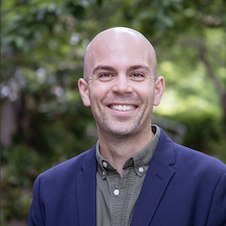
 Dr Matthew McNeil recently joined the Department of Biochemistry as a new lecturer – the first of three new lecturers starting with us this year. He hasn’t travelled far, having already built a successful research group next door in the Department of Microbiology and Immunology. He and his group are settling into the third floor and plan to continue their work on bacterial genetics.
Matt generously answered some questions we fired his way so we could share a little about him.
Where did you come from originally?
Auckland, New Zealand
What brought you to the Department of Biochemistry?
The diversity of research areas. Finding out about what others are doing in different areas is a great way to get new ideas.
What questions or problems are currently at the heart of your research?
Our work is centred on understanding how mycobacterial pathogens adapt to antibiotic pressure, changes in environment or stresses they might encounter within an infected host. Long term we want to leverage this information to develop new therapeutic strategies to combat these pathogens
What methods, organisms, systems, or approaches do you work with most?
We work with mostly Mycobacterium tuberculosis and Mycobacterium smegmatis, but are expanding our work to include a wider range of mycobacterial pathogens. We use genetic manipulation of mycobacteria, high-throughput genetic screens, physiological assays, antimicrobial susceptibility assays and ‘-omic’ based approaches like transcriptomics and metabolomics.
What does a “typical” day look like for you (if such a thing exists)?
Coffee. Helping staff and students design, perform and interpret experiments, writing manuscripts and new grant applications. I’m also enjoying the teaching component that comes with an academic position.
When you’re not doing research, what do you enjoy spending time on?
When not at work, I’m with my family.
What’s something you like about living in Dunedin?
Everything. It is a pretty city that is very liveable. There are some really good bakeries, cafés and restaurants, neat bars and shops, events and shows, and proximity to some great holiday spots.
What advice would you give to students or early career researchers?
Take advantage of the opportunities that can come with science. It is a great way to travel the world, live in interesting places and be exposed to new ways of doing things.
Favourite piece of lab equipment or software?
A biological safety cabinet
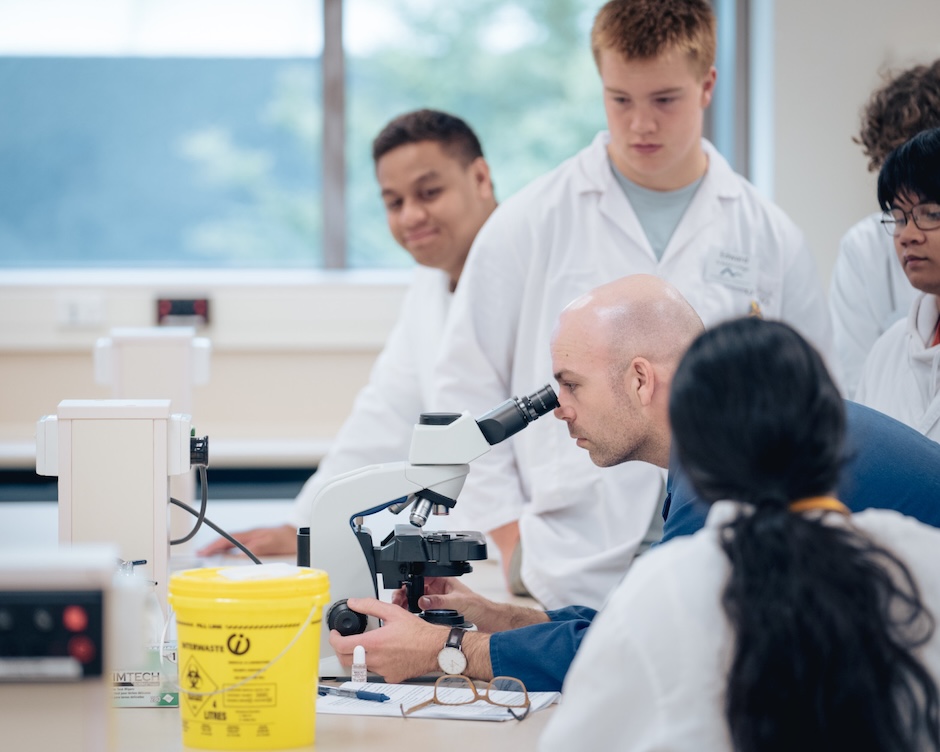
Dr Matthew McNeil shows some students how to use a microscope.