
Q&A with Joseph Balfe, 20Twenties Young Alumni Award winner 2025
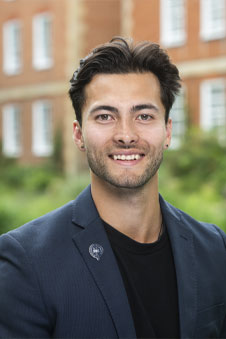 After completing a degree in Music at Otago, Joseph soon became fascinated by the idea of a career in neuroscience. He graduated with a BSc in Neuroscience in 2022 and completed his MSc with Distinction in 2024.
Joseph is currently completing a Doctor of Philosophy in Psychiatry at the University of Oxford, England, working in its Translational Neurostimulation Laboratory to develop new treatments for depression.
Joseph also spent four years in residential leadership within the Otago colleges during his studies, and he remains actively involved with music, having just been placed first in an international guitar competition in Warsaw, Poland.
Q: How did you react when you heard you had received the award, and what does it mean to you?
It was a delightful taste of home – I was pleasantly surprised and very honoured. It means a lot to me to receive such a recognition, given that Otago has been an enormous part of my life and personal development.
During my time at Otago, I made lifelong friends, experienced the highest of highs, the lowest of lows, developed professional and personal connections, conducted years of research, discovered my passions in life, spent many late nights cramming in the Central Library, and so much more.
If anything, receiving this award encapsulates just how much Otago has shaped who I am today, and it feels like a very special way to celebrate and reflect on a chapter of my life that I will always carry with me.
Q: What path have you followed since graduation?
After graduating with my MSc from Otago, I applied for numerous doctoral programs across the world. I was lucky enough to land a fully-funded Clarendon Scholarship from the University of Oxford to study my DPhil (PhD) in Psychiatry in the Translational Neurostimulation Laboratory.
The time from making initial connections with professors to securing a position was roughly 11 months. During this time, I was working at Pacific Edge Cancer Diagnostics as a Clinical Trials Associate, where I worked on large-scale clinical trials using non-invasive genomic testing for detection and management of bladder cancer in the United States.
Most excitingly, however, I have been privileged to be working on the VentiMate™, which is a medical device co-invented and patented by myself and Associate Professor Yusuf Cakmak (Department of Anatomy). We discovered during my master’s that targeted non-invasive neurostimulation can prevent exercise-induced bronchoconstriction in real-time across three human studies.
This work led me to winning the Falling Walls Lab Aotearoa New Zealand competition hosted by the Royal Society Te Apārangi in 2024.
Our device is now undergoing a small-scale clinical trial to assess its potential in an asthmatic population. Watching this idea evolve from an unexpected scientific observation to a potential life-saving technology has been one of the most rewarding experiences of my career.
On the musical front, I have surprisingly remained very active! Last week, I was in Warsaw, Poland, competing as a finalist in the International Guitar Competition 2026, where I placed first worldwide. I am absolutely stoked with this result.
After finishing my Bachelor of Music at Otago, I was also lucky enough to perform in numerous shows across New Zealand, with my biggest highlight being a lead guitarist for the Rock Tenors Anthems Tour produced by Doug Kamo Creative Management.
Q: What inspires and motivates you to work in the areas you are involved with?
I am truly fascinated by the brain and the therapeutic potential of neuromodulation technologies to alleviate suffering. Neuromodulation is a rapidly developing field that uses targeted forms of stimulation (eg electrical, magnetic, ultrasonic) to alter neural activity by, quite literally, speaking the language of the nervous system.
Since I began my career in neuroscience, one question has continued to occupy my mind: how can we develop better treatments for the world’s leading cause of adult disability – depression?
Given what we understand about the brain, it is indeed possible to identify the cognitive mechanisms that sustain depression, and subsequently, deliver targeted neuromodulation to the implicated brain networks in an attempt to alleviate suffering.
This question sits at the heart of my PhD research, and I strongly believe that the application of neurotechnology to mental health can address a significant gap in psychiatric care.
Q: What are your plans for the future?
My plans are quite broad, but whatever it takes to make the world a slightly better place.
If I had to make a prediction however, I think I would like to start my own lab with the mission of better understanding the neurobiological basis of psychiatric conditions and using such information to facilitate the development of novel neuromodulation treatments.
While I plan to collaborate widely across the world in doing this, I hope to maintain my strongest connections within New Zealand to support the fast growth of our health technology ecosystem.
Q: Tell us about the highlights of your time at Otago, and how it has influenced you in your career and following your interests?
I had so many highlights with Otago in many ways. I think one of the most transformative experiences, however, was being fully immersed within the residential college life.
I met a tremendous diversity of talented people, people who wanted to change the world. I watched my peers display absolute excellence in their chosen disciplines – I was surrounded by future doctors, lawyers, entrepreneurs, musicians, politicians, scientists, and the list goes on.
At a fundamental level, I quickly realised that we were all really doing the same thing; putting energy and attention toward exploring our deepest curiosities and passions.
It was this realisation that initiated the possibility of me shifting my career into neuroscience in the first place, and I owe everything to Otago for allowing me to not only pull off a 180-degree shift but do it successfully.