
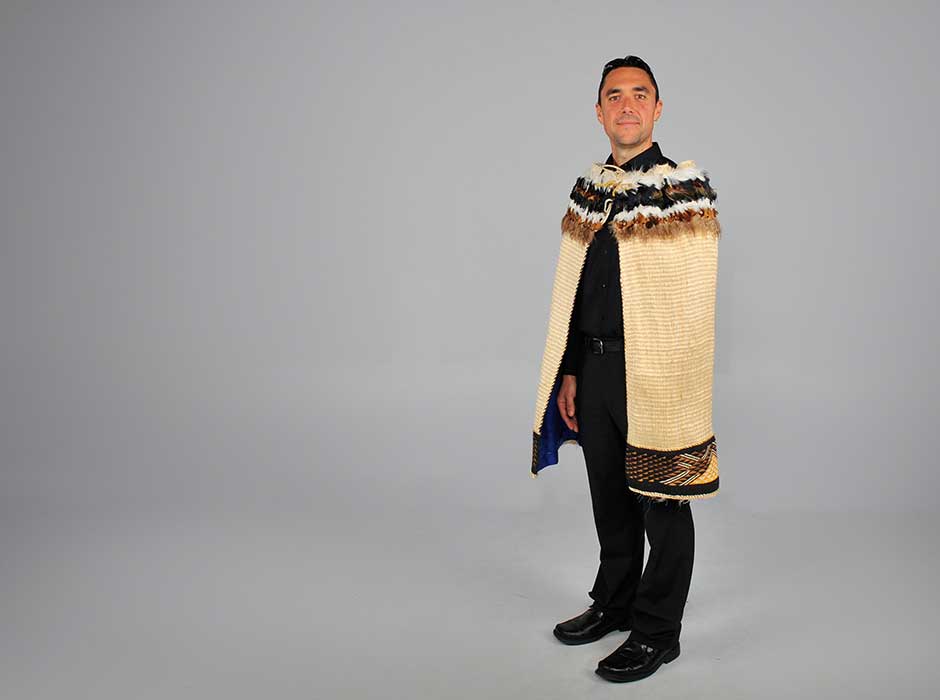
Professor Jason Gurney: “Even though I was never particularly academically gifted, I always knew that I wanted to do something that was bigger than myself, to contribute in a way that was beyond me, and not just focused on myself.” Photo credit: Luke Pilkington-Ching
An Otago Public Health researcher has combined his professional expertise with a deeply personal story in a powerful book, The Twisted Chain, longlisted for the 2025 Ockham New Zealand General Non-Fiction Award.
In it, Professor Jason Gurney (Ngāpuhi) explores the devastating impact of rheumatic fever – a preventable disease that continues to disproportionately affect Māori and Pasifika communities in Aotearoa New Zealand.
Jason grew up under the shadow of his father Keg’s rheumatic heart disease – a legacy of the rheumatic fever he developed when he was 14 in response to a group A streptococcal throat infection.
The disease left a long tail, his immune response to the infection causing heart damage, which surfaced with life-altering impact for him and his family decades later.
Gurney’s childhood had a lasting impact, as he explores in The Twisted Chain, published by Otago University Press last year.
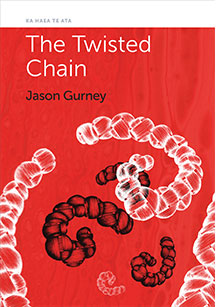
The Twisted Chain, which blends memoir, science and social commentary, was released last year and was longlisted for the 2025 Ockham New Zealand General Non-Fiction Award.
He writes: “Not knowing if your dad will live through the night is not something that any young son or daughter should ever have to endure. I experienced this nightmare more times than I care to remember.”
This, and his sister Nicole, who has a brain injury and is non-verbal, influenced his decision to embark on a career in public health and forged his commitment to make a difference in the world.
“Even though I was never particularly academically gifted, I always knew I wanted to do something that was bigger than myself, to contribute in a way that was beyond me, and not just focused on myself.”
Although he found tertiary study challenging, Jason completed a BSc at the University of Auckland followed by a PhD in Biomechanics. It wasn’t until he joined the University of Otago’s Wellington campus in late 2010, however, that he discovered his true calling – Epidemiology.
He was hired by then Public Health academic Dr Di Sarfati to work on a Health Research Council (HRC)-funded project examining the impact of comorbidity on ethnic disparities in access to cancer care. It was his first introduction to the field, and he says he couldn’t have asked for a better mentor.
“She remains my mentor to this day.”
Under Sarfati’s guidance, Jason quickly realised he was going to be a far better epidemiologist than he ever was a biomechanist.
“The science made intuitive sense to me,” he says.
“The bigger picture approach made sense, and I felt I had more capacity to make a difference to large populations of people, particularly Māori.”
He talks of epidemiology as a discipline which looks back to move forwards, a sentiment expressed in the whakatauki: ‘Kia whakatōmuri te haere whakamua: I walk backwards into the future with my eyes fixed on my past.’
“That’s really what epidemiology does – it sees the world as it is, and as it has been, and then tries to analyse the problem in a way that drives solutions.”
After that first project, he moved on to studies of rheumatic fever – the disease that had left such a mark on his own life. With two-thirds of cases occurring north of Hamilton, it made sense for him to be based in Auckland when, in 2014, he took up a role project managing a national study on rheumatic fever risk factors led by Professor Michael Baker. He has remained in Auckland, working remotely for the Wellington campus.
The national research project investigated the causes of rheumatic fever, firmly establishing that factors such as poor housing and overcrowding are key contributors to the disease. The work earned Baker and the research team – including Jason – the HRC’s Liley Medal in 2023.
In the nearly 15 years since he started working in public health, Jason has looked at a range of diseases from chronic conditions like diabetes and cancer, to infectious diseases like rheumatic fever.
The common thread? Health equity for Māori.
“That’s really what epidemiology does – it sees the world as it is, and as it has been, and then tries to analyse the problem in a way that drives solutions.”
He is currently leading a five-year research programme, again funded by the HRC, aimed at eliminating inequities in cancer survival for Māori.
“We’re examining the entire cancer care pathway – from diagnosis through to treatment – identifying points where Māori are doing better, worse, or the same as non-Māori across all cancers, so we can improve survival outcomes.
“Our job is to pinpoint where the health system should focus its resources to address the stark inequities that result in Māori having poorer survival rates for 23 of the 24 most commonly diagnosed cancers in New Zealand.”
The statistics on Māori health outcomes are confronting; the climate for public health funding is challenging. In the face of all this, Jason has one thing - hope.
When it comes to rheumatic fever, which primarily affects Māori and Pacific children and young adults, all that is needed is will, including the political will for change, he says.
“In a broad sense, we already know what we need to do to take massive action in preventing rheumatic fever.
“A strong example is the Healthy Homes Initiative, which looks at problems with dampness, coldness and leaks – all those things that create an environment within a house for group A streptococcus to thrive and spread – and then remedies them. Those programmes work: they reduce hospitalisations, they reduce pharmaceutical expenses.”
He also cites recent research led by colleague Dr Julie Bennett, which explores a new method of delivering penicillin to people with rheumatic fever.
Currently, patients with acute rheumatic fever require painful intramuscular injections of benzathine penicillin every month for at least 10 years to reduce the risk of new strep A infections and further heart damage. The new approach delivers antibiotics into fatty tissue rather than muscle, making the injections significantly less painful. It also allows for doses to be given every three months instead of monthly.
“Ultimately, I believe we are moving forward in the right direction,” Jason says. “And we will continue to head in the right direction because we must. It is a moral must.”
The news last December that he was being promoted to Research Professor left him completely delighted and, simultaneously, feeling like an imposter, he says.
“It is a privilege to be a professor and it is a privilege that I don’t take lightly. I was the first in my family to go to university – let alone do a PhD, let alone become a professor – so I feel extremely privileged, but also a strong sense of responsibility to fill the boots.”
Jason gave his Inaugural Professorial Lecture on Wednesday, 3 September.
-Kōrero by Cheryl Norrie
This story first appeared in issue 58 of the University of Otago Magazine. Check out the full edition here.
Study Public Health at Otago
Make a difference through collective action for a healthier world and Aotearoa
View