
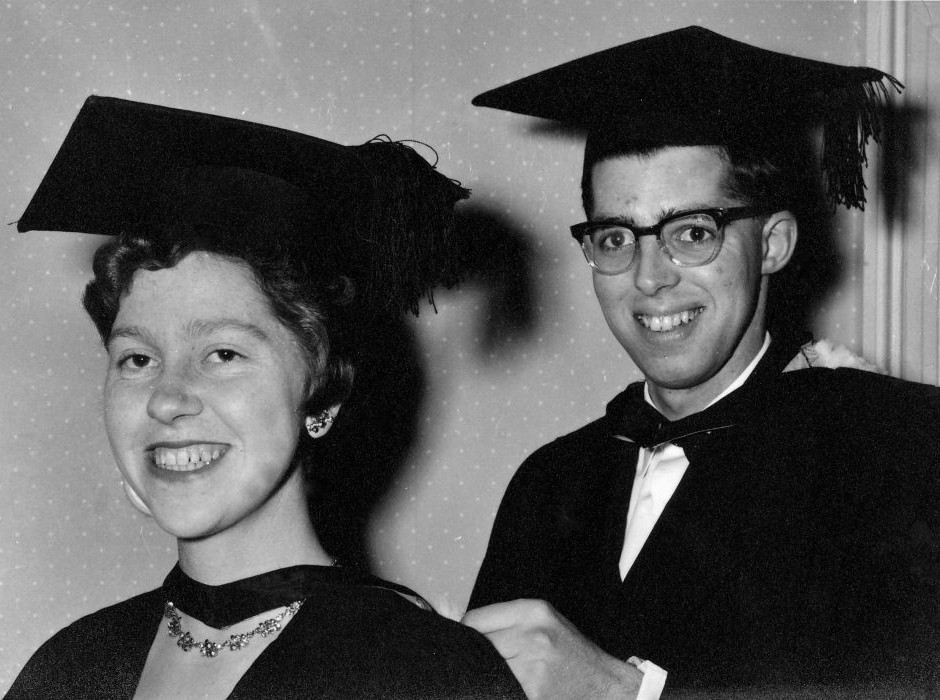
Emeritus Professor Tony Macknight and Dr Jocelyn Macknight at their graduation in the early 1960s.
To honour Emeritus Professor Tony Macknight’s contagious enthusiasm, innovative thinking and love of teaching, his family has created a special gift in his name, to encourage students to reach out around the globe for knowledge, connection and inspiration.
The Professor Tony Macknight Legacy Award will enable Otago’s Department of Physiology to offer scholarships to postgraduate students to attend conferences and methodology workshops or visit other laboratories to enhance their own research. In doing so, the Award will help grow the research tools and skills base within the Otago department.
“We think that would have made him happy,” says his wife Jocelyn, a fellow physiologist and Otago medical graduate. “Because in New Zealand, you're so isolated and you need people to talk to, both for the theory and how you do it, and for moral support.”
Tony was appointed a lecturer in the Department of Physiology in 1971 and was Head of Department from 1984 to 2002. He was made a Fellow of the Royal Society of New Zealand in 1981. After his death in 2022, his family decided to create an award to reflect and celebrate his sense of curiosity and engagement with the world around him, and to support both students and the department.
The gift especially recognises Tony’s advocacy of new approaches and technology in teaching and research.
“He thought anything could be done. He had this boundless enthusiasm,” Jocelyn says.
Alongside his many academic achievements, Tony also had a strong belief in helping others, and a wonderful ability to wholeheartedly launch into new passions.
The family – Jocelyn and six children Michael, Stephen, Richard, Linda, Lisa and Vicki – hope the gift will reflect that abundance of curiosity and enquiry, by enabling students to interact face-to-face with others in their areas of research.
Lisa says, “The idea is that this could be a turning point for someone who's in their postgraduate years. They get to go to somewhere overseas, meet someone, learn something new, get newly motivated and it might spark a whole new field or stimulate that interest further.”
A family story of innovation and enthusiasm
Connections with the University of Otago are woven through the Macknight family.
Both Jocelyn’s parents were graduates, and Medicine was something Jocelyn had always wanted to do, right from her childhood which was spent first in the United Kingdom and then Auckland. She thinks the reason Tony, who also grew up in Auckland, did Medicine was because when he was about 14 he was in hospital for quite a long time with kidney disease.
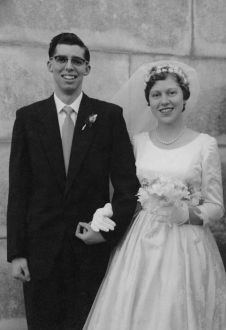
Tony and Jocelyn on their wedding day in May 1959.
The pair met on the first day of their histology lab in their first year as medical students at Otago.
One of only 10 women in a class of 110, Jocelyn says the women had been promised seats in the front, together. She wasn’t pleased when she arrived to find that this hadn’t been organised, and she had to find an empty seat, ending up next to Tony. Even though he kept copying her drawings that day, which she found irritating, the rest, as they say, is history.
Both went on to graduate BMedSc in 1961 and MB ChB in 1963. They worked in Auckland Hospital as house surgeons, then returned to Otago where Tony did his PhD and MD, and Jocelyn looked after their young family.
Once their children were a little older, Jocelyn also returned to Otago and worked in the Department of Physiology for 30 years, as a lecturer in Physiology and other medical subjects.
Prior to this, in the late 1960s Tony was awarded a Fulbright Scholarship to the United States, so with Michael, aged four, Stephen, two, and Richard nine months in tow, the family headed off to Massachusetts General Hospital in Boston, which is part of the Harvard Medical School. Tony’s research was into water and electrolyte movement.
After their return to Otago in 1971, one of Tony’s notable achievements for the department was securing enough money to buy an electron micro probe, which he had to travel to Germany to learn how to use.
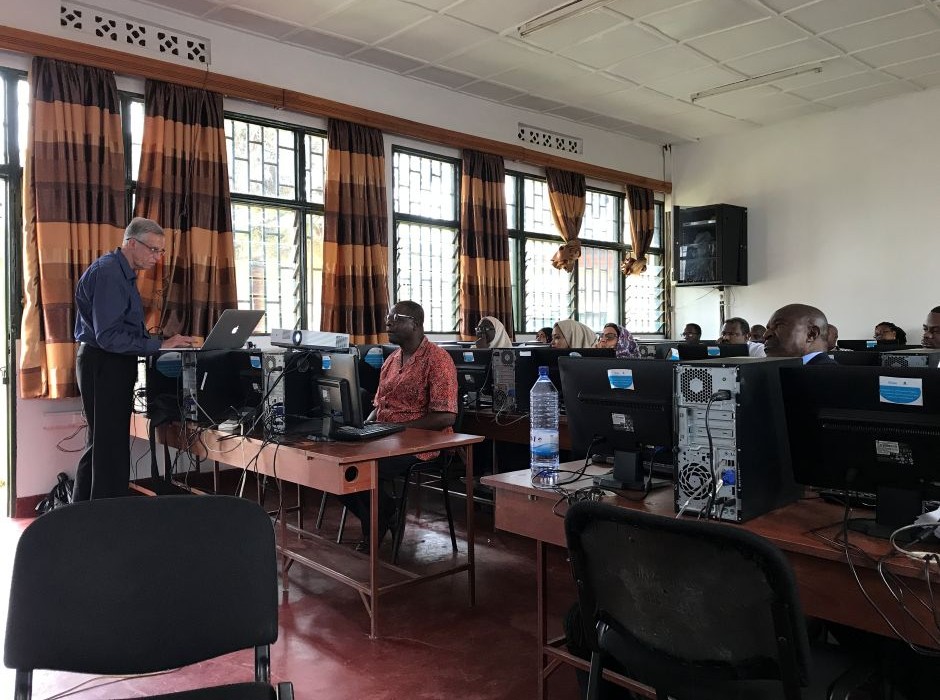
Professor Tony Macknight presenting at a workshop.
Another innovation led eventually to ADInstruments, which Tony and Michael established.
“The department oscilloscopes and chart recorders were getting old, and they were going to need new ones. And Tony had the idea that Michael might be able to make a gadget that could be run by a computer, to record and analyse electrical signals.
“And so Michael did his degree working on these things,” Jocelyn says.
With Michael’s know-how from his Otago degrees in Physics and Computer Science, they co-founded ADInstruments, which specialises in data acquisition systems for life science researchers and educators around the world. The award-winning Dunedin company now has nine offices and more than 170 employees, and Michael was awarded a CNZM in 2012 for services to science.
“The start of it all was Dad saying to Mike, is there a way to do this?” says Lisa. “It carried you along, his enthusiasm, it was really contagious.”
That enthusiasm stretched to what Lisa calls her parents’ “big passions” over the years, including turning 17 acres into a rhododendron garden after visiting similar gardens in England, and embracing Stephen’s vision to restore historic buildings in Dunedin.
As an engineer, Stephen steered the project, while the family chipped in many hours of labour. Today, he is credited with helping to ignite Dunedin’s warehouse precinct movement.
“Dad said, yes, let's buy it. They bought Consultancy House and Queens Gardens Court. And we were there every weekend for years, for years. That was huge,” says Lisa.
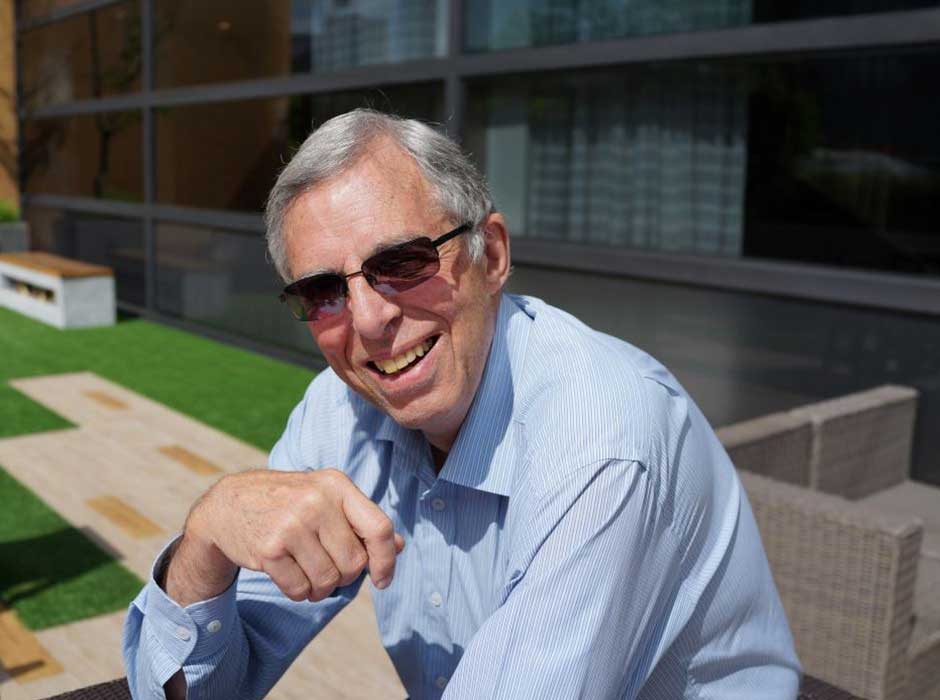
The Professor Tony Macknight Legacy Award will enable Otago’s Department of Physiology to offer scholarships to postgraduate students.
At school, Tony’s interests had been English and History, and Jocelyn says whenever he had any sort of passion for something, he would delve into the history of it.
His other passion was teaching. After he retired, Tony continued writing computer programmes for Lt, an online learning platform with content for life sciences, nursing and medicine students, which became a branch of ADInstruments.
Jocelyn says Tony was always keen to share his knowledge, particularly to those with less access to resources, and when he went to conferences overseas he would often attend meetings of the African Association of Physiological Sciences, donating money from the learning programme to the society and taking teaching workshops.
Tony and Jocelyn’s Otago connections carried on through the generations, with four of their children earning Otago degrees: Michael studied computer science and physics; Richard biochemistry; Lisa – who is now Publications Editor at Otago – studied psychology and neuroscience, and Vicki history and anthropology. Stephen and Linda studied elsewhere, Stephen doing engineering at Canterbury, and Linda studying vet at Massey.
Richard followed Tony into scientific academia, becoming a Professor of Biochemistry at Otago in 2021 – something Tony was very proud of.
First Award recipients value networking and new ideas
Otago PhD students Wey Qi Chin (2023), and Lijo Varghese (2024) are the first two recipients of Tony’s Award.
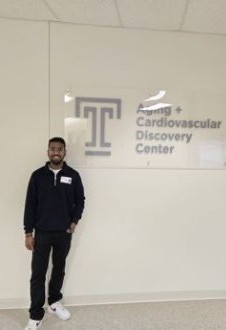
Lijo Varghese
Lijo travelled to Dr. Srikanth Garikipati’s lab, at the Aging + Cardiovascular Discovery Centre, Temple University, Philadelphia, USA in April this year, to be trained in research skills to bring back to Otago to enhance research into RNA based therapeutics and nanoparticle delivery systems. The funding from the award was used to cover flights and visa costs.
Lijo says he formed strong collaborations with the lab members, including post-doctoral fellows and PhD students and learned new skills and techniques.
“In my interactions with other lab members, we discussed possible research projects which can be done in collaboration between ACDC and Department of Physiology, University of Otago, especially around microRNA based therapeutics and nanoparticle delivery systems. I also had the opportunity to listen to some great research seminars led by prominent researchers.
“This exposure to research in the US has significantly enriched my academic and professional development.”
Wey Qi Chin attended the SREC-SCCL Symposium in August 2023 at the SwissTech Convention Center, in Lausanne, Switzerland.
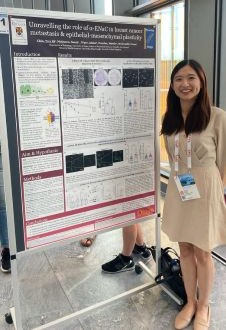
Wey Qi Chin
She presented her poster Unravelling the role of α-ENaC in breast cancer metastasis & epithelial-mesenchymal plasticity.
“The conference was held over four days and consisted of many exceptional plenary sessions and short talks presented by cancer researchers and clinicians from different parts of the world,” says Wey Qi.
“The poster and networking sessions were scheduled in between the talks, during which I shared and presented about my PhD project and gained feedback and different perspective insights into my work and findings. Ideas on study design and experimental techniques that could potentially be employed for further work were also discussed and exchanged.
“It was a great experience to be able to network with other cancer researchers while experiencing Switzerland’s scenery and cuisine. I spoke with a few lab leaders and their lab group members, sharing our work and potential future projects. It was intriguing to learn how different research was structured and conducted in different countries compared to New Zealand.”
Professor Fiona McDonald from the Department of Physiology says the Award is hugely beneficial for postgraduate students in Physiology, and for the Department.
“We especially appreciate the intent of the Award to support students to attend conferences, research methods workshops, or to gain experience in research skills that are not established at Otago, through visiting another laboratory,” Fiona says.
“In each case the students gain new knowledge, showcase Otago Physiology research, benefit from networking opportunities, and bring back knowledge to share with their research group, and the Department as a whole through giving a seminar.”
-Kōrero by Margie Clark, Communications Adviser
Department of Physiology
Physiology is the study of how our bodies work at the molecular, cellular, and organ systems levels.
Find out more