
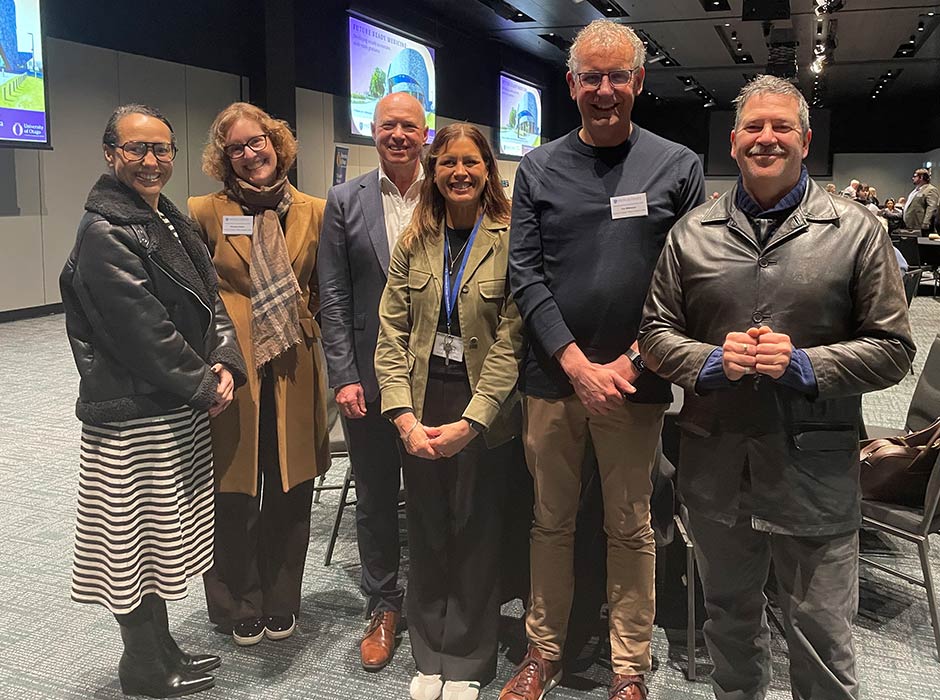
University of Otago staff attending the MDANZ conference. From left, Dr Maira Patu, Professor Suetonia Palmer, Professor Lutz Beckert, Professor Suzanne Pitama, Professor Tim Wilkinson and Pou Tiaki at the Faculty of Medicine in Christchurch Ōtautahi, Te Marino Lenihan.
Medical schools must move beyond training doctors in communities to becoming true partners with them to meet the health challenges of the future, University of Otago - Ōtākau Whakaihu Waka, Faculty of Medicine Dean Professor Suzanne Pitama says.
That message was at the heart of the annual Medical Deans of Australia and New Zealand (MDANZ) conference, held in Christchurch recently, where more than 120 medical education leaders gathered to explore how medical schools can better serve the communities they support.
The conference, themed Future Ready Medicine: Developing socially accountable, work-ready graduates, brought together deans from all 25 medical schools across Australia and Aotearoa New Zealand, representatives from the Australasian medical colleges, Indigenous health leaders and government officials involved in medical education. It was the first time the event had been held in the city.
The event opened with a mihi whakatau delivered by Te Marino Lenihan, Pou Tiaki for the Faculty of Medicine - Christchurch Ōtautahi.
Chairing the opening session, Suzanne challenged delegates to reconsider what social accountability should mean for medical schools.
"Medical schools recruit from communities, place students in communities, conduct research in communities, and often rely on communities for clinical teaching," she said.
She urged delegates to think beyond communities as sites for education and instead recognise them as genuine partners in shaping the future of healthcare.
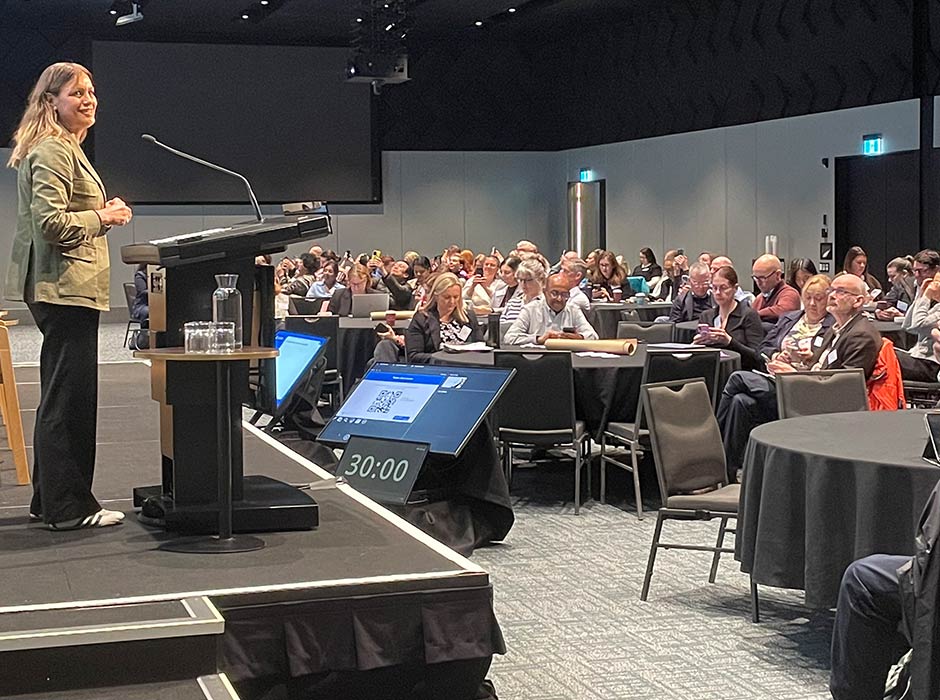
University of Otago Faculty of Medicine Dean Professor Suzanne Pitama chairs the first session at the MDANZ conference held at Te Pae in Ōtautahi.
Reflecting on the conference, Suz says bringing medical education leaders together provided an opportunity to discuss the issues currently facing medical schools, medical colleges and medical education across Australia and New Zealand.
"There was real energy around the conversations about how social accountability could become the foundation of medical education moving forward, how we measure whether we are truly part of our communities, and what impacts matter most in ensuring we are meeting their needs,” she says.
Throughout the conference, speakers explored how medical schools can prepare graduates with not only strong clinical skills, but also the values, experiences and cultural capability needed to improve health outcomes for the populations they will serve.
A keynote presentation from Professor Sonia Kumar, Founding Executive Dean of St Mary's University London, examined how equity and social accountability are shaping the development of a new medical school in the United Kingdom. She challenged delegates to consider whether medical programmes are producing graduates whose skills and values reflect the needs and expectations of their communities.
University of Otago researchers also featured prominently throughout the programme. Associate Professor Jennine Stairmand presented on Indigenous community engagement within Aotearoa New Zealand's medical schools, while Dr Maira Patu contributed to discussions on the future health workforce and the growing role of artificial intelligence in general practice.
The conference concluded with former University of Otago Acting Faculty of Medicine Dean, Professor Tim Wilkinson, examining one of medical education's most fundamental questions: who gets to become a doctor?
"The opportunity to study medicine is shaped long before students submit an application by factors such as their community, schooling, educational opportunities and aspirations, and continues well beyond admission through the support students receive during medical school and the careers they ultimately pursue," Tim said.
Tim said evidence from Australia and Aotearoa New Zealand demonstrates that widening participation initiatives successfully increases diversity within medical schools, while students admitted through these pathways continue to graduate at very high rates.
"We need to think about the whole journey. That means creating opportunities for students from a diverse range of backgrounds, supporting them to succeed during training, and ensuring our graduates are equipped and inspired to serve the communities that need them most,” he stressed.
The conference concluded with a shared commitment to ensuring medical schools not only educate excellent doctors but also strengthen the health and wellbeing of the communities they serve through equitable access, meaningful partnerships and a sustained commitment to improving health outcomes for all.
Kōrero by Lorelei Mason