
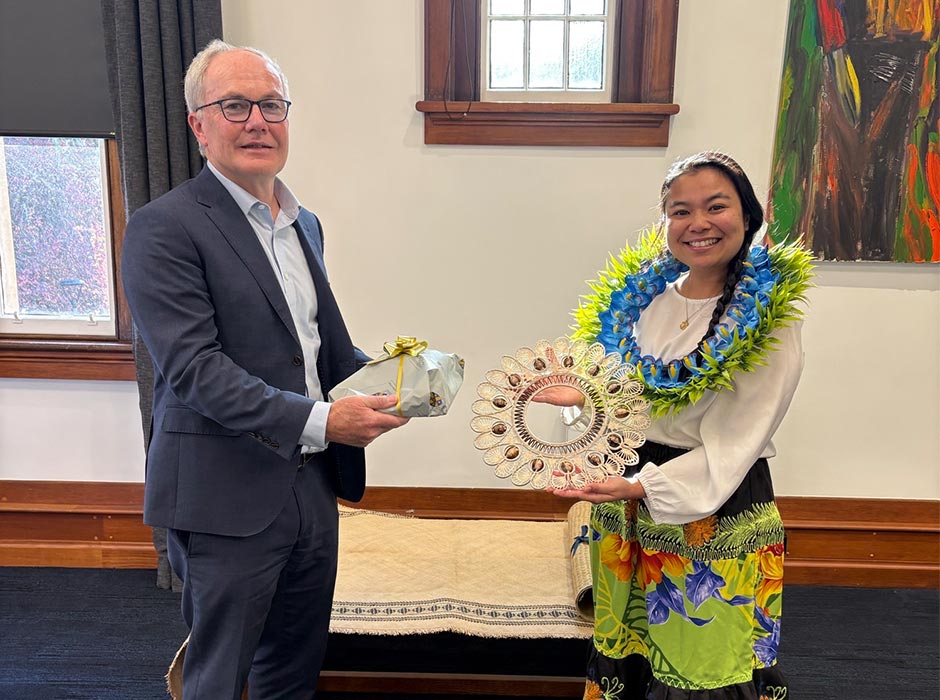
Deputy Vice-Chancellor Research and Innovation Professor Greg Cook and visiting marine biologist and deep-sea explorer Dr Nicole Yamase exchange gifts during her official welcome at the University earlier this month.
It isn’t every day you get the chance to hear from someone who’s been to the bottom of the ocean.
But that’s what happened when renowned marine biologist and deep-sea explorer Dr Nicole Yamase visited Otago this month for a series of events celebrating Pacific knowledge, Indigenous-led science, and climate advocacy.
Hosted by the Centre for Pacific Thought (CPacT), Dr Yamase’s visit included an official welcome, the Annual Pacific Lecture, a postgraduate masterclass, a screening of the documentary Remathau: People of the Ocean, and a community and student visit to the New Zealand Marine Studies Centre and Portobello Marine Laboratory.
CPacT Co-Directors Dr Allamanda Faatoese and Dr Charles Radclyffe were thrilled Nicole was able to visit Dunedin for the first time, taking time away from family responsibilities in Hawai’i where she works as Director of Impact with conservation organisation, OneReef.
Importantly, they highlighted that Micronesian voices are rarely centred in this way at the University, which made the visit particularly special for Pacific students and staff.
From the islands of Pohnpei and Chuuk, Nicole is the Federated States of Micronesia’s first PhD graduate in Marine Biology and the only Micronesian and Pacific Islander to have reached the bottom of the ocean.
The Annual Pacific Lecture, entitled 'From the Shallows to the Deep: A Micronesian Story of Ocean Identity and Stewardship', shared her incredible story of voyaging to Challenger Deep, the deepest part of the Mariana Trench, and her journeying as an Indigenous scientist.
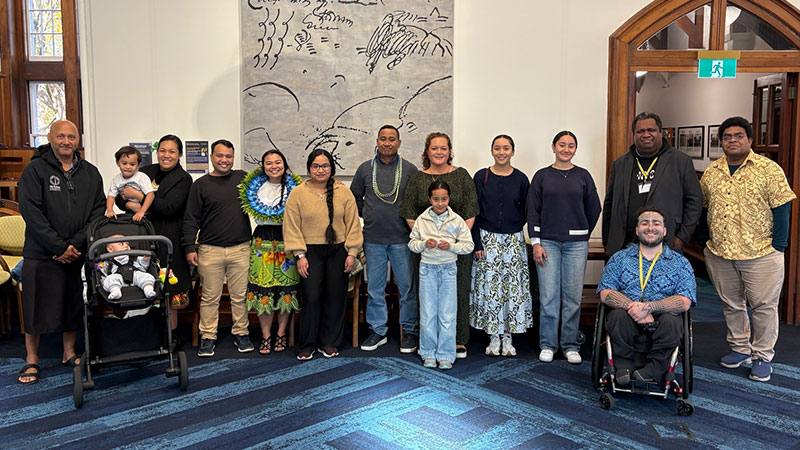
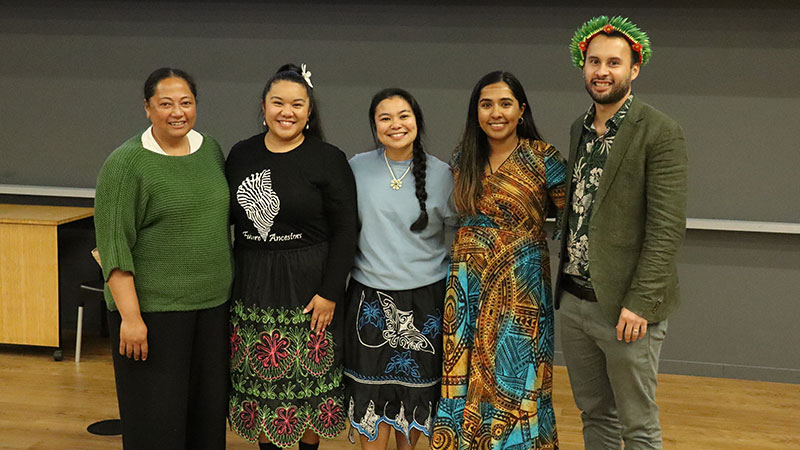
For many students, her story resonated far beyond science.
“Words cannot describe how much the beautiful film Remathau: People of the Ocean resonated with me as an Indigenous woman who is trying to include her cultural connection to the ocean in her career and education,” says Maia Renata Horn, a Māori Master’s student in Marine Science.
“From the self-doubt that Dr Yamase experienced due to the weight of representing her people and those who came before her, to the struggle to relate the science to her indigeneity, this film made me feel seen, it made me feel heard, and it made feel like I am not alone.”
For Maia, meeting Nicole was deeply affirming.
“She is a pioneer, quite literally venturing to where no other Micronesian has before.
“She is an inspiration, and I am fortunate to have people like her who paved the way and showed me, that despite challenges, there is space for Indigenous people and our ideas in marine science that are intertwined with our identity.”
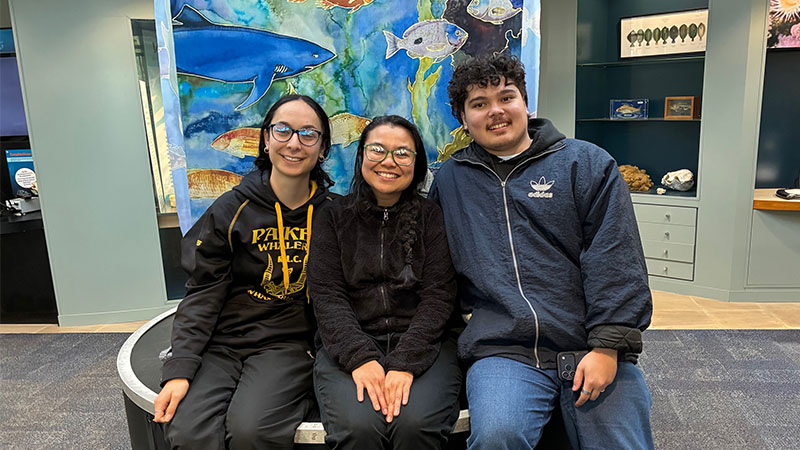
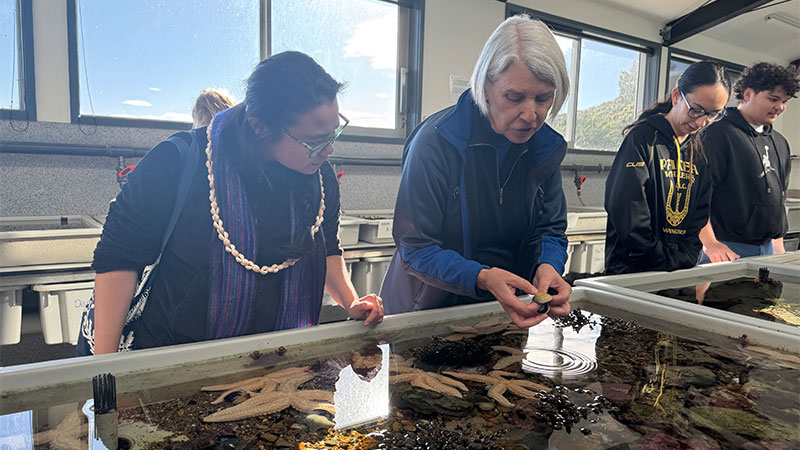
During a hands-on visit to the Marine Studies Centre, led by Dr Sally Carson, Nicole and visitors explored touch tanks, toured research laboratories, and joined rocky shore activities focused on marine biodiversity and citizen science.
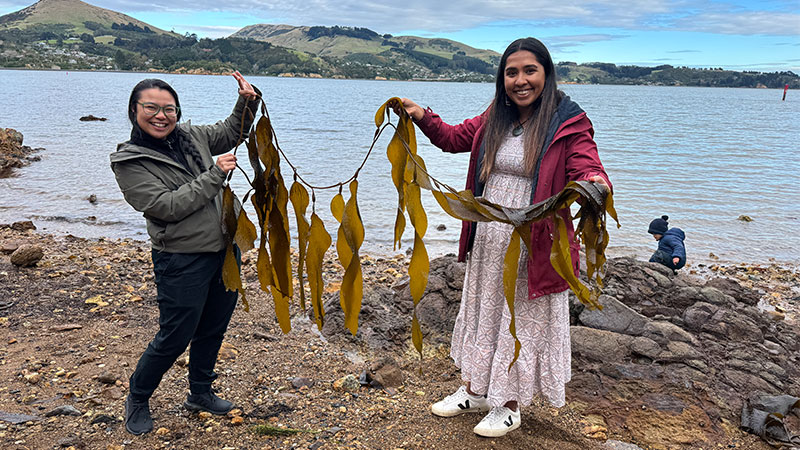
One memorable moment came when Nicole encountered giant kelp washed ashore at Portobello.
Otago’s first Pacific PhD Marine Science graduate and now postdoctoral researcher, Dr Namrata Chand, also joined the rocky shore exploration. She says Nicole was fascinated by the scale of Aotearoa’s temperate seaweed systems.
“She noted that tropical seaweed typically does not reach the same size or structural complexity as giant kelp found in colder waters, making this an especially fascinating and memorable observation for her,” she says.
Tauira Ryan Taei, who is a Marine Science graduate and is currently doing a Postgraduate Diploma in Science, said Nicole’s masterclass was a valuable opportunity to connect with people from across different departments and build meaningful relationships.
“One question that particularly resonated with me was how my identity is woven into my research. While I initially struggled to answer this, it ultimately helped me reaffirm who my research is for and why it matters on a more personal level.
“Hearing others reflect on this question was eye-opening, and learning about their motivations and journeys was the most rewarding part of the masterclass. I would love to do it all again!”
– Talanoa by Pacific Communications Adviser Viena Faiva
Marine Science at Otago
Marine scientists study the biological, chemical and physical processes in our marine environment. At Otago, we offer undergraduate and postgraduate degrees focusing on pure and applied research in marine science, oceanography and aquaculture.
More about Marine Science