
A new resource co-designed with Aotearoa New Zealand stroke survivors and their support people aims to make physical activity more accessible, achievable and meaningful for people adjusting to life after stroke.
Physiotherapy researcher Dr Ally Calder, from the University of Otago’s Faculty of Health Professional Programmes, has spent 12 years researching how people affected by stroke can be supported to become physically active, culminating in the launch of How to get moving after stroke.
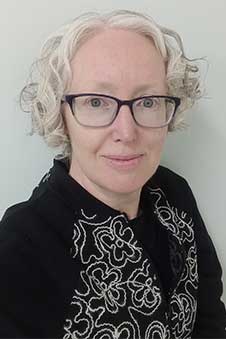
Dr Ally Calder
The free, open-access resource was launched at the Stroke Aotearoa New Zealand online café late last month, with the aim of reaching stroke survivors, whānau, families, friends, support people and health professionals.
Ally says the project began during her PhD in 2014, when she explored access to physical activity for men following stroke.
“At that time, we knew that information about physical activity after stroke was often lacking, conflicting or not individualised to people’s needs,” she says.
Her initial research involved 13 female partners of men living in the community after stroke, who worked alongside her using a participatory research approach to develop an educational booklet.
The resulting resource was subsequently tested and refined with 15 people living with the experience of stroke – six stroke survivors and nine support people, including partners, sons and daughters.
It took two years to recruit these participants, but their feedback helped keep the project moving.
“People told us, ‘this resource is brilliant’ and ‘I wish there was something like this when my husband was discharged’,” Ally says.
The latest version has evolved into a 34-page resource designed for both stroke survivors and their support people.
It provides accessible information about physical activity guidelines, ideas for getting moving, exercise intensity and safety, as well as practical advice about overcoming barriers, finding places to be active and accessing financial and community support.
It also explores the benefits of physical activity for physical function and mobility, mental and emotional wellbeing, heart health and brain health.
Importantly, the resource recognises that physical activity means different things to different people.
“Movement after stroke does not have to mean going to the gym or playing sport,” Ally stresses.
“We wanted to focus on possibilities – on what people can do, what they might gain from being active, and practical ways they can participate safely.”
The co-design process also highlighted the importance of language.
Participants found that terms such as “physical activity” and “movement” could be interpreted differently depending on a person’s previous experiences and circumstances. The word “carer”, for example, could affirm the role of some support people, while some stroke survivors felt it implied dependence.
The final resource therefore uses simple and strengths-based language, while recognising that there is no single approach that will suit everyone.
Ally says the research has also reinforced the importance of ensuring stroke survivors themselves have a voice in resources developed for them.
“Nothing about us, without us,” she says.
The resource includes spaces for people to set goals, reflect on their progress and record what they are achieving or finding challenging.
Stroke Aotearoa New Zealand Chief Executive Jo Lambert has written the foreword, providing an endorsement from the national stroke organisation.
Ally says the resource is the result of a long-term collaboration between researchers and people with lived experience.
“It has been a privilege to connect and collaborate with the participants. Their encouragement and willingness to share their experiences gave us the resilience to keep going.”
She acknowledges the resource has limitations. The people involved in its development were primarily NZ European people in heterosexual relationships, meaning the resource may not yet reflect the cultural perspectives and experiences of all stroke survivors and support people.
Future work will explore culturally specific approaches with Māori whānau, Pasifika āiga and other communities, as well as formats such as an audiobook and digital resources.
How to get moving after stroke is freely available online via this link: https://www.otago.ac.nz/physio/research/supporting-stroke-survivors
-Kōrero by Lorelei Mason
University of Otago, Christchurch
Research and study in Christchurch for a career in medicine and health science.
View