
Twenty-six University of Otago - Ōtākou Whakaihu Waka academics are being promoted to the position of Professor, with a further six promoted to the positions of Research Professor and Clinical Research Professor.
Vice-Chancellor Grant Robertson extends his congratulations to all those who have received promotions.
“Their success reflects the absolute commitment our kaimahi have to their respective fields and the hard work they have put in over many years.
“We know each of them is making an impact in Aotearoa, and beyond, and I have no doubt they will continue to do so.
“I’m excited to see what comes next for each of them."
Otago's promotion process involves thorough evaluation of each individual's record of contributions to research, teaching, and service to the University and community. It also involves input from international experts in evaluating the candidates' research contributions.
A further 33 academics are being promoted to Associate Professor and two to Research Associate Professor and Clinical Associate Professor.
The promotions take effect from 1 February 2026.
Professorial promotions
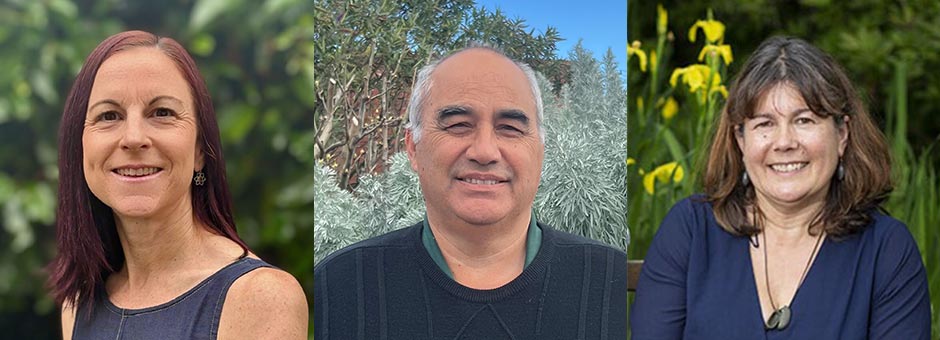
From left: Alesha Smith, Anaru Eketone and Anna Carr
Alesha Smith – School of Pharmacy
Alesha is a pharmacoepidemiologist and digital health researcher specialising in medicines optimisation, health data analytics, and equitable models of care. Her work focuses on improving the safe and effective use of medicines across Aotearoa New Zealand, with particular attention to equity, system performance, and the practical application of data in clinical decision-making. Alesha teaches across all Pharmacy programmes, including pharmacist prescribing and advanced clinical practice, where she leads curriculum innovation and assessment design. She works closely with Te Whatu Ora, PHOs, community pharmacies, and national agencies to translate research into operational tools that strengthen medicines management and support workforce capability. Her research has been funded by the Health Research Council, Te Niwha, ACC, and a range of government and industry partners. Alesha is committed to improving health outcomes through data-informed practice, sector collaboration, and digital innovation, and enjoys leading multidisciplinary teams that connect analytics, practice, and policy.
Anaru Eketone – Social and Community Work Programme
Anaru (Ngaati Maniapoto/Waikato) is a registered social worker with a practice background in youth work, community development, social work and health promotion. His primary research is on the principles and processes of Maaori oriented and Maaori directed practice. This includes research on the application of tikanga Māori and the conflict between European and Maaori expectations, including the steps and processes senior Maaori practitioners use when negotiating cultural and professional boundaries to keep both them and their clients safe. His current research is on Māori Suicide post-vention practices, charitable giving motivations, prison education and the social and economic history of his hapuu Ngaati Tamainupoo.
Anna Carr – Department of Tourism
Anna (Ngāpuhi, Ngāti Ruanui, Ngāruahine) is Head of the Department of Tourism at the Otago Business School. Her interdisciplinary research and teaching explore tourism and recreation management in protected areas, ecotourism, cultural landscapes, and Indigenous/community tourism development. She focusses on how visitors’ and locals’ recreation or conservation experiences can be informed by Indigenous and community narratives around environmental and place histories. Most recently, she has contributed to an RSNZ Marsden-funded project investigating perceptions of invasive species management. Her work has informed both academic publications and policy, with career highlights including co-authoring the World Indigenous Tourism Alliance (WINTA) Indigenous research protocol and supervising 29 PhD and 27 Master’s candidates. She is the founding co-director of the Centre for Recreation Research and works on five editorial boards, including the International Journal of Indigenous Business. Related research service has included membership of the NZ Mountain Safety Council National Research Committee (2007–16).
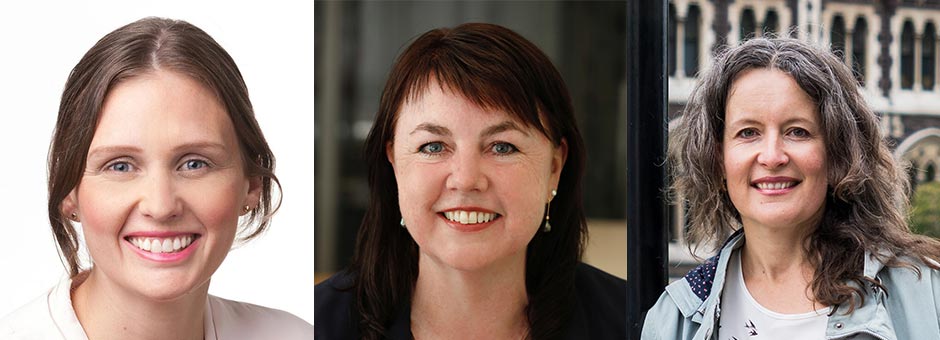
From left: Anna High, Arlene McDowell and Caroline Orchiston
Anna High – Faculty of Law
Anna’s research reflects expertise in a range of interest areas, including sexual violence, evidence, Chinese law and mindfulness pedagogy. Her research has been funded by the American Council of Learned Societies, the Marsden Fund, and the New Zealand Law Foundation. Anna has been recognised with several prestigious research honours, including the 2020 Asian Law and Society Association Distinguished Book Award; the 2022 Royal Society Early Career Research Excellence Award for Humanities; and the 2024 Rowheath Trust Award and Carl Smith Medal. Anna is a passionate teacher and recipient of a 2023 national award for excellence in tertiary teaching (Te Whatu Kairangi). Anna is co-director of the Otago Centre for Law and Society, co-founder and director of the Aotearoa New Zealand Mindfulness in Law Society, and has served on various national evidence law-related committees and faculties.
Arlene McDowell – School of Pharmacy
Arlene’s research interests are in improving the delivery of therapeutic compounds to humans and animals. Through the development of functionalised nanomedicines engineered for oral administration, Arlene and her colleagues have discovered new insights into the interactions of nanomedicines at the nano-bio interface. Arlene is also spearheading the emerging area of biopharmaceutics for application in wildlife species, advancing drug-delivery science that contributes to global conservation. She has held leadership positions in premier scientific societies including Chair of the Veterinary Committee of the Controlled Release Society and is an Editor for the European Journal of Pharmaceutics and Biopharmaceutics. Arlene is also committed to advancing education and has won prizes for both excellence and innovation in undergraduate teaching. She is the inaugural Director of the Bachelor of Pharmaceutical Science degree launched at the University of Otago in 2022, the first of its kind in Aotearoa New Zealand.
Caroline Orchiston (Research Professor) – School of Geography
Caroline is an interdisciplinary social scientist whose applied research investigates disaster risk management and risk reduction in the context of disruptive natural hazard events. She is passionate about producing impactful research that contributes to policy and practice. Caroline was the Science Lead for the award-winning AF8 [Alpine Fault magnitude 8] programme for eight years, which made a significant impact in improving awareness and readiness for earthquake hazards of national significance. She has led various national research programmes and teams, including as Associate Director for QuakeCoRE (NZ Centre for Earthquake Resilience), an MBIE Endeavour programme investigating earthquake sequences in central Aotearoa New Zealand, and the Rural programme in Resilience to Nature’s Challenges. Her research group includes numerous PhD candidates working on advancing knowledge of societal risk and resilience, community resilience and risk communication, including in rural and tourism contexts. Caroline has been the Director of the Centre for Sustainability Research since 2021.
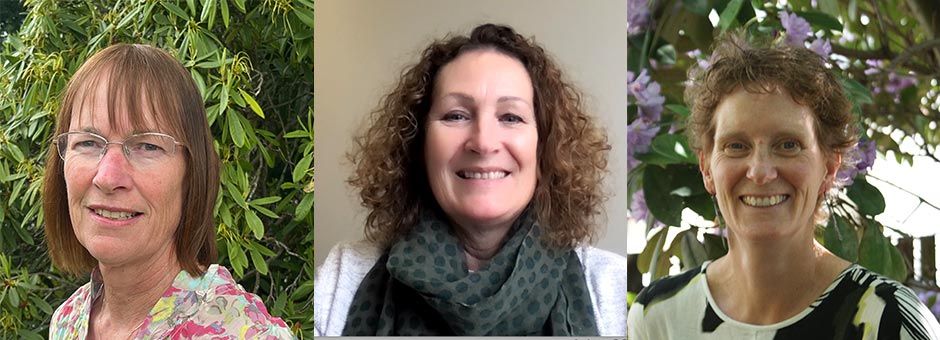
From left: Dawn Coates, Deborah Snell and Elaine Hargreaves
Dawn Coates (Research Professor) – Sir John Walsh Research Institute
Dawn is a cellular and molecular biologist with international recognition in the fields of bone regeneration, angiogenesis and tissue engineering. She conducted her PhD at Otago before going to Cambridge University for post-doctoral training and returning to AgResearch Invermay and then the University of Otago. Clinical and translational research has produced patented bone grafting granules, bone block constructs, surgical membranes and hydrogels with inclusion of antimicrobials such as silver nanoparticles and mānuka oil nanospheres. Research in fundamental sciences sees her as a recognised world leader in the transcriptomics and proteomics of deer antler stem cells, which grow bone at up to 2cm/day. Dawn has supervised to completion 30 PhD/DClinDent and four Masters/Honours students, who now contribute to both research and clinical excellence. She leads the Dental Engineering and Tissue Regeneration (DEnTRegen) programme and the Research Advisory Committee in the Faculty of Dentistry.
Deborah Snell (Research Professor) – Department of Orthopaedic Surgery and Musculoskeletal Medicine (Christchurch)
Deborah is a clinician scientist with a background in clinical and neuropsychology. Much of her clinical and research career has focused on improving rehabilitation outcomes for people living with musculoskeletal and neurological conditions, especially the psychological and psychosocial factors that influence those outcomes. She was one of the first researchers to systematically examine theoretically derived models of health and illness behaviour and outcomes after concussion. This work, spanning more than a decade, has expanded to include various psychological determinants of concussion recovery, more latterly focusing on validating effective psychological screening tools and building research evidence for treatment. She also directs clinical trials at Burwood Hospital in Christchurch, investigating a range of orthopaedic outcomes, including post-surgical pain, psychosocial and quality of life improvements. She particularly values working with postgraduate students and collaborating with other health and rehabilitation researchers, clinicians and service users around Aotearoa and internationally.
Elaine Hargreaves – School of Physical Education, Sport and Exercise Sciences
With a passion for health promotion, Elaine’s research is based in the psychology of lifestyle behaviour change with a particular focus on physical activity, sitting in the intersection of health psychology, public health and behavioural science. Her work investigates the psychological factors and social contexts that explain motivation for physical activity, and the psychological outcomes that result from being active. Elaine’s research has advanced exercise prescription practice by showing how and why exercise influences affective responses and the role they play in decision-making. It has advanced theory through examining the relationships between motivational profiles and physical activity participation and the social contexts that influence these profiles. She is most proud of the community-based interventions she has been involved in designing that have led to significant improvements in lifestyle behaviours and health outcomes. Elaine is the Dean of the School of Physical Education, Sport and Exercise Sciences.
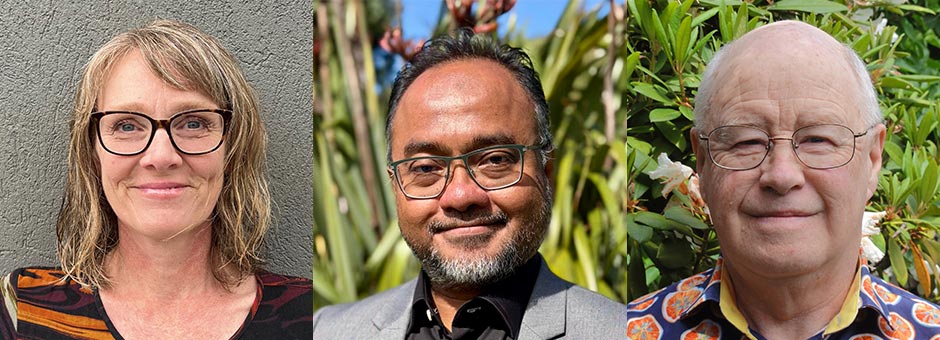
From left: Gabrielle Davie, Haizal Mohd Hussaini and Hugh Morrison
Gabrielle Davie (Research Professor) – Department of Public Health (Dunedin)
Gabrielle is an applied biostatistician who provides critical input across all stages of health research, specialising in projects using routinely collected data. Collaborating within multidisciplinary teams, she explores health disparities and inequities among New Zealanders while also undertaking methodological research on data quality. She has co-authored more than 100 publications on injury, and led research on diabetes-related fracture risk and the financial impact of injury in older workers. Gabrielle is an integral member of the rural health research team that developed the Geographical Classification for Health, now widely used by academics and government agencies. Most of her work is funded by the Health Research Council; current HRC-funded projects include evaluating the impact of rurality on health outcomes and healthcare delivery, a national falls prevention pathway and the economic impact of cancer on individuals. Gabrielle is Director of Research for her Department and an Editor for the International Journal of Population Data Science.
Haizal Mohd Hussaini – Department of Oral Diagnostic & Surgical Sciences
Haizal is an oral and maxillofacial pathologist whose clinical, academic, and research work spans New Zealand and Southeast Asia. He has a particular interest in advancing diagnostic excellence and improving outcomes for patients with oral cancer and complex oral diseases. As one of New Zealand’s two active academic oral pathology specialists, he is currently the Head of Discipline and provides expert consultation for both routine and challenging cases referred from across the country. His research encompasses early oral cancer detection, translational oral cancer immunology, and innovative biomaterials for pulp regeneration, supported by competitive external grants. Haizal is also involved in equity-focused research and service, working with Māori and Pacific communities to improve oral health outcomes, particularly in early oral cancer detection. In addition to his academic and clinical roles, Haizal serves as a Muslim chaplain on campus, providing voluntary pastoral care and enriching the faith and cultural life of the University community.
Hugh Morrison – College of Education
Hugh is a passionate historian in Te Kura Ākau Taitoka - University College of Education. He teaches in initial teacher education and education studies, from a background in geography, history, theology, high school teaching, youth work and adult education. His historical research focuses on British world religion and childhoods. He is committed to histories that cross boundaries, that draw on multiple insights from religion, empire, emotions, education and culture, and that give children and youth historical prominence. Recent projects include Scottish and New Zealand missionary children, children and religious education and a comparative history of religious childhoods. Hugh is using Otago-based studies and family histories to investigate settler childhoods in the early colonial and the inter-war periods. Internationally he has held visiting fellowships at several British universities and is active through the Society for the History of Children and Youth, as co-book reviews editor for the society’s journal.
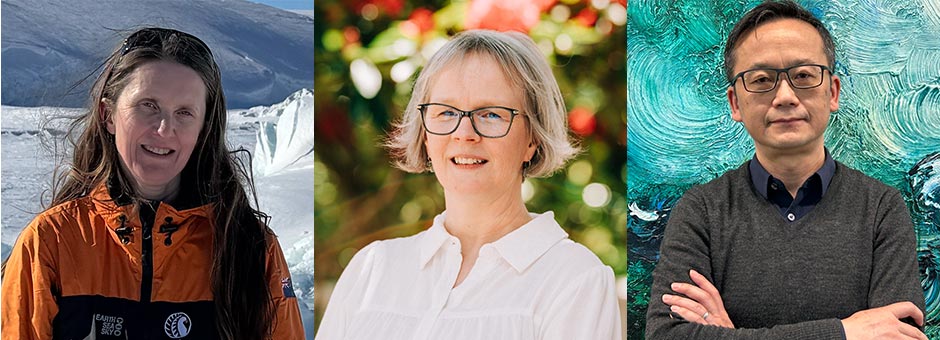
From left: Inga Smith, Jane Girling and Jeremiah Deng
Inga Smith – Department of Physics
Inga is a physicist whose research, lecturing, and service encompasses climate change impacts and climate change solutions. Antarctic sea ice’s formation and break-up in a warming world is her current research focus. Inga and her team investigate Southern Ocean interactions with fresh water from ice shelves and ice sheets using methods ranging from global-scale modelling to in-situ Antarctica observations. She also maintains an internationally recognised profile in two other interdisciplinary research topics: international transport greenhouse gas emissions, and energy use in buildings. Inga has led research funded by the Marsden Fund, Deep South National Science Challenge, and Catalyst Strategic Fund, and plays key roles in Antarctic Science Platform research. She values working with new and emerging researchers alongside her established international collaborators. Inga’s previous leadership roles include Co-Director of He Kaupapa Hononga – Otago’s Climate Change Network, Co-Chair of the CLIVAR/CliC/SCAR Southern Ocean Region Panel, and membership of the CLIVAR Scientific Steering Group.
Jane Girling – Department of Anatomy
Jane is a reproductive biologist whose research focuses on uterine function, particularly in relation to common gynaecological conditions such as endometriosis, pelvic pain, and abnormal menstrual bleeding. Recognising the importance of diverse perspectives in understanding menstrual cycle health, her research programme integrates both biological and psychosocial approaches. She is interested in how menstrual pain and bleeding disorders affect individuals and their families, and in developing better ways to provide information and resources that support wāhine and enhance quality of life. Jane co-founded the Menstrual Health Research Network and is excited to be co-leading the establishment of the new Centre for Menstrual Cycle Research at the University of Otago.
Jeremiah Deng – School of Computing
Jeremiah’s research spans a broad spectrum of computer and information sciences, centred on the theory and application of machine learning. His work covers neural networks and learning algorithms, computational intelligence, biomedical data analysis, pattern recognition, performance modelling of computer networks and systems, and AI applications in public health. As leader of the Pattern Recognition and Machine Learning (PRML) Group, he has developed interdisciplinary collaborations with colleagues in neuroscience and computer science to identify brain biomarkers for mental and cognitive disorders through the use of robust, reliable machine learning algorithms applied to EEG and fMRI data. He is passionate about teaching and mentoring, having supervised 12 PhD candidates to completion – many of whom have secured academic or research positions both in New Zealand and abroad. Jeremiah is a Senior Member of both ACM and IEEE, and sits on the board of the New Zealand Artificial Intelligence Researchers Association.
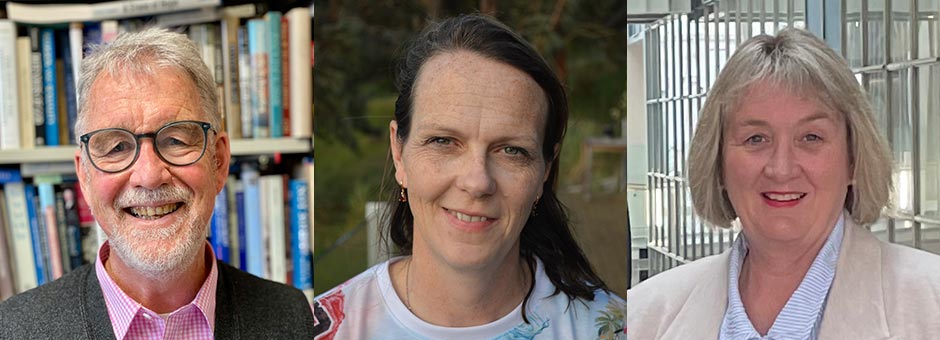
From left: John Stenhouse, Katherine Black and Lara Friedlander
John Stenhouse – History Programme
John’s research focuses on interconnections among history, science, religion, race, politics and gender during the nineteenth century, using New Zealand and the British empire as the main sites of investigation. His early - and ongoing - work on the Darwinian debates in New Zealand explored how and why settlers, scientists, politicians, church people and Māori leaders interpreted and applied Charles Darwin’s theory of evolution by natural selection during and after the New Zealand Wars. His research-informed teaching in this field won model course awards from the Templeton Foundation. Recent grant-funded research – with scientists Hamish Spencer and Diane Paul – investigated what made eugenics movements in British colonial contexts distinctive. He is writing a monograph on Christian missions and the sciences from antiquity to the present. Publications on this topic, and previous research, won John election to the International Society for Science and Religion in 2022 and an invitation to present the keynote public lecture at an international conference on the globalisation of modern science at Philadelphia in 2026.
Katherine Black – Department of Human Nutrition
Katherine’s research focuses on sports nutrition, athletic performance and health of active populations. Katherine’s research initially focused on the fluid and electrolyte needs of Paralympic athletes. Since joining Otago, Katherine has worked on nutritional interventions to improve performance of elite level athletes including Super Rugby and Olympic athletes. Katherine’s work now focuses on the health of female athletes from grass roots to elite and from adolescence to post-menopause. This research is aiming to provide a better understanding of their energy needs and designing interventions to ensure active women and girls are appropriately fuelled for long-term health and performance. Katherine is currently working on projects to dispel the disinformation seen in the media regarding the nutritional and exercise needs of active women throughout their lifecycle.
Lara Friedlander – Department of Oral Rehabilitation
Lara is Head of the Endodontic Discipline and Associate Dean Undergraduate in the Faculty of Dentistry. As a specialist endodontist, her research has a strong translational focus, bridging laboratory discovery with clinical application to improve patient outcomes and enrich teaching and student experience. She investigates pulp biology, tissue regeneration, and vital pulp treatment, and is internationally recognised for her expertise on the interplay between diabetes and endodontics. Lara is strongly committed to partnering with the dental profession through practice-based research and international governance roles where she works to ensure diverse perspectives are incorporated, research evidence is implemented, and practitioner and graduate competence continues to grow globally. Her leadership is further supported by a substantial research portfolio in dental education, where she has led international and university curriculum reviews, contributed to published TransTasman curriculum guidelines for undergraduate dentistry and specialist endodontic training, and led the development of clinical guidelines for the profession.
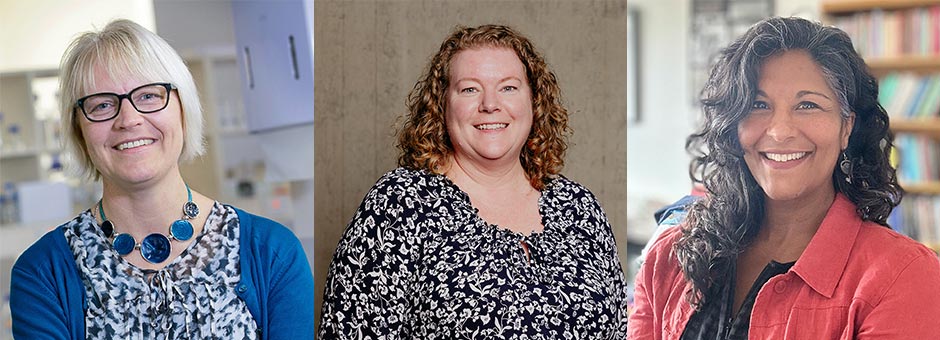
From left: Liz Ledgerwood, Louise Bicknell and Marcelle Dawson
Liz Ledgerwood – Department of Biochemistry
Liz works in the area of redox biology, aiming to understand how oxidants and antioxidants control cell functions. Her group was one of the first to demonstrate how antioxidant proteins translate an oxidant signal to a change in cell function in human cells, and her group has also discovered mutations in redox proteins that cause an inherited form of low platelets (thrombocytopenia). More recently her work has involved a collaboration with the Dunedin Study to understand the contribution of oxidative stress and mitochondrial dysfunction to human ageing, with a goal to unpick whether these factors are a cause or a consequence of ageing. Liz is Deputy Head of the Department of Biochemistry Te Tari Matū Koiora, and Associate Dean Academic in the Faculty of Biomedical Science. She is also an affiliate member of Mātai Hāora - Centre for Redox Biology and Medicine.
Louise Bicknell – Department of Biochemistry
Louise’s passion is providing families with answers about the cause of genetic conditions affecting their children. Her team uses DNA analysis and molecular biology approaches to discover and understand how previously unexplored genes underlie genetic disorders, with a focus on helping children with neurodevelopmental disorders or growth impairment. In 2020 she was awarded the Rowheath Trust Award and Carl Smith Medal, and has received multiple Marsden Fund awards to support her research. She works closely with clinical genetics and diagnostic laboratories in New Zealand, and has a significant international collaborator network, together enabling the identification of more than 25 novel disease genes, providing answers for more than 300 families globally. She is Co-Director of Genetics Otago Research Centre, and instigated New Zealand’s involvement in the Horizon Europe-funded European Rare Disease Research Alliance (ERDERA), for which she is now the New Zealand Principal Representative on the ERDERA Governing Board.
Marcelle Dawson – Sociology, Gender Studies and Criminology Programme
Marcelle is a sociologist with an interest in social movements, protest and alternative futures. She also has a ‘side hustle’ in the socio-cultural analysis of sport. Her varied research interests are held together by an abiding commitment to critical humanism. Recent research projects address the relationship between ideology, affect and popular resistance, with the aim of understanding how shared emotional bonds, rather than more traditional affinities, inspire people to build solidarity across difference. Before joining the University of Otago in 2012, Marcelle worked at the University of Johannesburg, where she continues to hold an honorary role as Senior Research Associate. She has been a member of the International Sociological Association (ISA) since 1999, serving as Vice-President of the ISA’s research committee on Social Movements and Social Classes for a four-year term. From 2022-2024, she served as Head of Sociology, Gender Studies and Criminology.
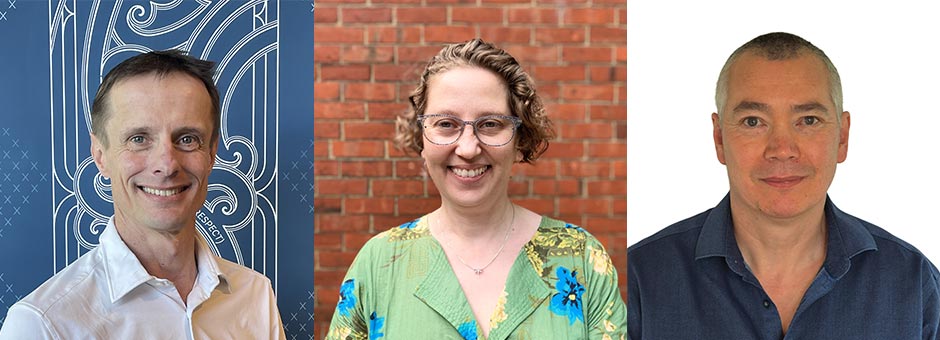
From left: Martin de Bock, Melanie Beres and Michael Jack
Martin de Bock – Department of Paediatrics and Child Health (Christchurch)
Martin de Bock is a paediatric endocrinologist in the Department of Paediatrics, Ōtautahi. His primary research focus is on using diabetes technology to improve the lives of people with diabetes. This has further expanded into translational research with an equity focus, including leading international consensus statements for the management of children with type 1 diabetes. He has more than 135 international peer reviewed publications, including in lead journals such as The New England Journal of Medicine. His role in translating clinical research into clinical practice was recognised by the Royal Society Beaven Research Medal in 2025.
Melanie Beres – Sociology, Gender Studies and Criminology Programme
Melanie is an internationally recognised scholar in gender, sexuality, and sexual violence prevention. Her research explores the meaning and communication of sexual consent, the social norms that shape intimate relationships, and strategies for preventing sexual violence. Melanie was the founding Academic Director of Te Whare Tāwharau, the University of Otago’s sexual violence support and prevention centre. She leads applied research on whole-campus models for sexual violence prevention, integrating policy, education, and support services. Her recent work focuses on primary prevention systems and implementation principles for dismantling the foundations of sexual violence and fostering ethical, equitable relationships. Melanie bridges research and practice through initiatives that span local and national levels. She leads a Community of Practice with several Dunedin high schools to co-design prevention strategies, advises Vine (Violence Information Aotearoa), and partners with MSD and ACC on national contracts to develop a unified approach to violence prevention. Melanie is the Deputy Pro-Vice-Chancellor of the Division of Humanities.
Michael Jack – Department of Physics
Michael’s research spans both fundamental and applied topics in sustainable energy. His applied research focuses on integrating renewable energy resources and designing future energy systems. Electricity systems are undergoing fundamental changes due to the rapid growth of distributed energy resources and new technologies – such as electric vehicles – creating a plethora of new challenges and opportunities. His team is interested in understanding future patterns of electricity use and how flexibility – achieved through efficiency, smart control, or energy storage – can enable greater uptake of variable renewables, while also creating a fairer, lower-cost, and more resilient energy system. Michael also conducts fundamental research on the non-equilibrium statistical mechanics of chemical-to-mechanical energy conversion by biological proteins, which could lead to the development of new, ultra-efficient energy technologies. Michael is the director of the Sustainable Energy Programme and co-convenor of the Otago Energy Research Centre, an expansive, multidisciplinary network of energy researchers.
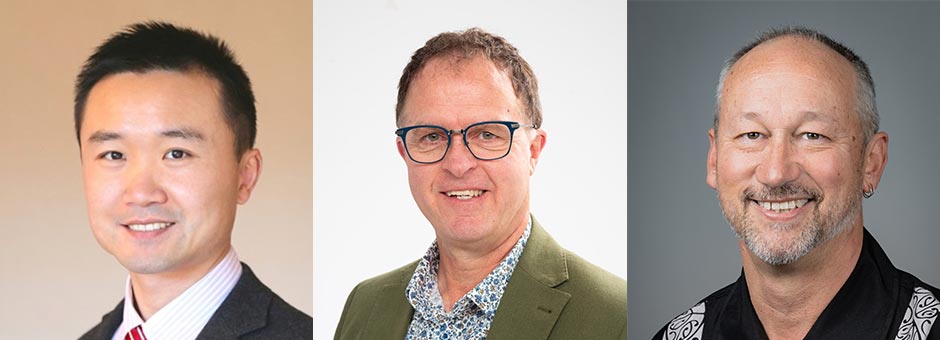
From left: Peter Mei, Phil Bird and Phillip Wilcox
Peter Mei – Department of Oral Sciences
Peter’s research interests include biofilms, biomaterials, atomic force microscopy, randomised controlled trials, 3D imaging, halitosis, and tooth demineralisation and remineralisation. He has published more than 180 papers in peer-reviewed international journals, including 13 articles published in journals with an impact factor greater than 10. His work has been recognised with more than 30 prestigious international awards, such as the Houston Oral Research Award from the European Orthodontic Society, the SJWRI Clinical Research Award, the IADR Oral Biology Research Award, and the SJWRI Postgraduate Supervisor Award. He also holds honorary professorships at several universities and serves as an associate editor and editorial board member for multiple leading international dental journals.
Phil Bird (Clinical Professor) – Department of Surgery and Critical Care (Christchurch)
Phil is an otolaryngologist (ENT surgeon) with subspecialty expertise in otology, neurotology, and lateral skull base surgery. A senior surgeon and founding member of the Southern Cochlear Implant Programme, he has extensive experience in all aspects of cochlear implantation. His research focuses on cochlear implant surgery, outcomes, and equity of access, as well as the delivery of therapeutic substances from the middle ear to the inner ear. Phil established the first human model of corticosteroid pharmacokinetics in the inner ear and is actively involved in a multi-institution collaboration of scientists, engineers, and clinicians exploring innovative approaches to inner ear investigation and drug delivery via the round window membrane. Passionate about teaching, Phil provides ENT education at all levels – from fourth-year undergraduate students to surgeons completing advanced otology fellowships. He has coordinated undergraduate ENT teaching in Christchurch since 2000.
Phillip Wilcox – Department of Mathematics & Statistics
Phillip (Ngāti Kahungunu, Rongomaiwahine) is a geneticist and bioethicist whose work bridges statistical genomics with mātauranga and tikanga Māori. His research began in forest genetics, where he helped pioneer genomic tools for radiata pine and contributed internationally recognised insights into the genetic basis of disease resistance in forest trees. During the past decade, he has become a leading figure in Indigenous genomics, co-leading major national initiatives such as the Aotearoa Variome and Rakeiora Pathfinder projects, which develop genomic resources grounded in Māori values and Indigenous data sovereignty. His work is widely recognised for reshaping how genomic technologies are designed, governed, and taught to ensure equitable outcomes for Māori and other Indigenous communities. Since 2005 he has been the convenor of MapNet and led the Virtual Institute of Statistical Genetics. He is Deputy Director (Māori) of the Maurice Wilkins Centre, co-chair of the Ira Tātai Whakaeke Trust, and a senior leader in the international Summer Internship of INdigenous peoples in Genomics (SING) network.
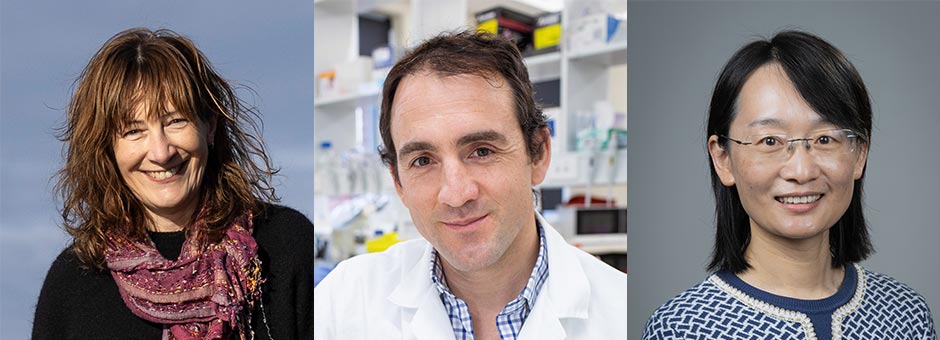
From left: Sophie Bond, Tim Hore and Ting Wang
Sophie Bond – School of Geography
Sophie is a geographer whose work focuses primarily on community responses to social and environmental change. This work is focused on two overlapping themes. The first involves research with grassroots communities seeking justice and self-determination, and is grounded in theories of environmental democracy and climate justice. The second theme relates to community engagement in planning and governance. Recent work in these areas involves a focus on climate justice and climate change adaptation and includes a ten-year research collaboration with both communities and local authorities in South Dunedin. Sophie’s research prioritises the needs and interests of the communities and organisations she works with and translates findings into formats that are useful for them. It is underpinned by her commitment to decolonial research practices and social and environmental justice. Sophie is a committed teacher, has supervised more than 40 postgraduate students and is Head of School of Te Ihowhenua, the School of Geography.
Tim Hore – Department of Anatomy
Tim is passionate about DNA and what it can tell us beyond its letter-by-letter code. He studies a range of mammals, birds and fish, and has shown that some of them do not always start life with a ‘clean slate’, reflecting that biological information can be inherited using non-genetic means. Tim also uses DNA to produce unique biological predictors — like the first DNA-based ageing test for sheep and the Androgen Clock, which estimates long term male hormone exposure. Tim also probes hard to study stretches of DNA and uses gene editing to test ideas about how they work. Recently, his group functionally proved that in some situations there are more than one kind of protein making machine in cells, and that variants of these machines can influence whether an animal develops as male or female. Together, his work shows how DNA stores hidden layers of information that guide development, health, and ageing.
Ting Wang – Department of Mathematics & Statistics
Ting is a statistician whose research sits at the interface of statistics and geophysics, advancing the forecasting of natural hazards. Her work focuses on developing novel statistical models to better understand and forecast earthquakes, volcanic eruptions, and extreme geomagnetic storms. She has led and contributed to major research programmes funded by the Marsden Fund, MBIE Endeavour, EQC, and the National Science Challenges. Ting’s work has been recognised with several honours, including the New Zealand Statistical Association Early Career Research Award, the University of Otago Early Career Award for Distinction in Research, and the New Zealand Statistical Association Littlejohn Research Award. She has served as an Associate Editor of the Australian and New Zealand Journal of Statistics since 2017 and was Associate Dean (Research) for the Division of Sciences from 2019 to 2022. A committed teacher and supervisor, she has supervised and published with students from undergraduate through to PhD level.
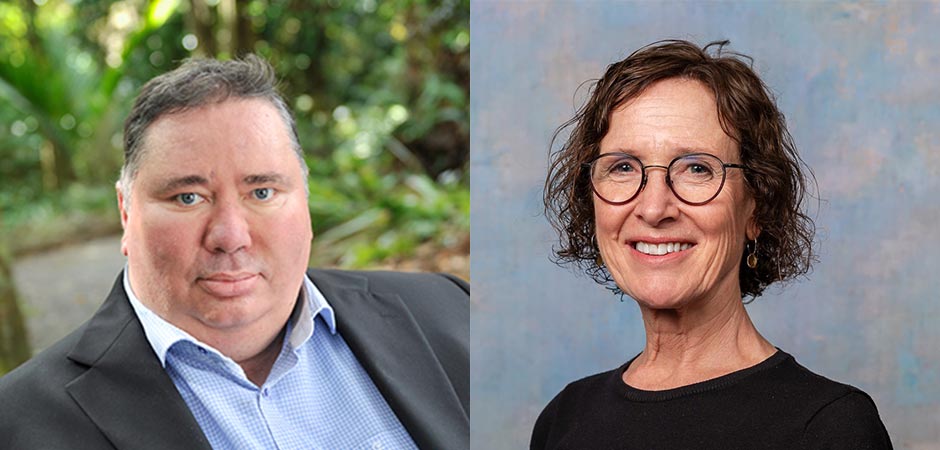
From left: Tristram Ingham and Trudy Sullivan
Tristram Ingham (Research Professor) – Department of Medicine (Wellington)
Tristram (Ngāti Kahungunu ki Heretaunga, Ngāti Porou) is a clinical epidemiologist with decades of experience in healthcare research. His work advances equity across respiratory health, tāngata whaikaha Māori (Māori disability) and health services’ governance. He uses kaupapa Māori and mixed-methods research to translate evidence into policy and system change in Aotearoa. Tristram led the development of Whāia Te Ao Mārama, the Māori Disability Action Plan 2018-2022 and is Chair of the Te Ao Mārama Aotearoa Trust, a nationwide organisation representing Tāngata Whaikaha Māori. He was made a Companion of the King’s Service Order (KSO) in this year’s New Year Honours for services to survivors of abuse in care. In 2024, he received the ONZM for services to the disability community. Tristram is an honorary fellow of the New Zealand College of Public Health Medicine, a member of the Institute of Directors New Zealand and a member of the Royal Society Te Apārangi. He is Deputy Head of the Department of Medicine on the Wellington campus.
Trudy Sullivan – Department of Public Health (Dunedin)
Trudy is a health economist whose work is grounded in real-world application. Her particular area of expertise is in measuring and valuing health-related quality of life. She led an innovative programme of research to value two key health instruments used by national agencies to guide resource allocation. She applies multi-criteria decision-making methods to explore and better understand the general public’s preferences for prioritising health care and other publicly funded services. Her collaborative research covers a wide range of topics including the cost-effectiveness of a community programme for adolescents with weight concerns and the productivity losses associated with alcohol consumption, and is the New Zealand representative on a major international research initiative collecting population health data from 15 countries. Trudy is passionate about using health economics to inform effective decision-making, focussing on equity and accessibility, and brings this passion and commitment into her teaching and leadership roles.
Promotions to Associate Professor
Adele Woolley (Pathology and Molecular Medicine)
Angela Curl (Public Health, Christchurch)
Brett Nicholls (Media, Film and Communication)
Charl Rapsey (Psychological Medicine)
Christina McKerchar(Public Health, Christchurch)
Cindy Towns (Medicine, Wellington)
Dinithi Ranasinghe (Accountancy and Finance)
Francesc March de Ribot (Medicine, Dunedin)
Heleen Du Plessis (Music)
Helen Harcombe (Public Health, Dunedin)
Jeanne Snelling (Faculty of Law)
Joerg Hennig (Mathematics & Statistics)
John Aarts (Oral Rehabilitation)
John Woodfield (Surgical and Critical Care)
Karen Greig (Archaeology)
Kate Morgaine (Oral Sciences)
Kc Li (Oral Rehabilitation)
Metiria Stanton Turei (Faculty of Law)
Michael Maze (Medicine, Christchurch)
Olivia Harrison (Psychology)
Paul Szyszka (Zoology)
Robin Quigg (Public Health, Dunedin)
Rory Miller (Centre for Rural Health)
Rosie Brown (Physiology)
Sean Connelly (School of Geography)
Simon Guan (Oral Diagnostic & Surgical Sciences)
Simon Horsburgh (Public Health, Dunedin)
Sin Wen Lau (Languages and Cultures)
Stephanie Godfrey (Zoology)
Stephen Inns(Medicine, Wellington)
TilmanDavies (Mathematics & Statistics)
Travis Ingram (Zoology)
Viktoria Kahui (Economics)
Promotion to Research Associate Professor
Cristina Cleghorn (Public Health, Wellington)
Promotion to Clinical Associate Professor
John Edmond (Medicine, Dunedin)