
The Department of Biochemistry (te Tari Matū Koiora) is proud to announce the winners of the annual department student academic awards and scholarships.
Each year the department awards prizes and scholarships to outstanding students, encouraging them to continue research careers within biochemistry. The prizes are funded by generous donations from former staff, students, and their families.
Visit the prizes and scholarships webpage
The following students have been awarded prizes and scholarships on the basis of their academic performance in 2025
Please take the time to read more about each of them – they are an inspiring group, with exciting adventures ahead!
The Edson Prize in Biochemistry (300-level)
For the student in the 300-level BSc(Hons) class who has reached the highest attainment in biochemistry.
Sam Anderson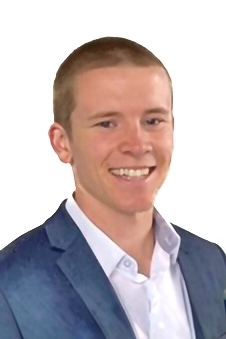
Sam has just graduated with a Bachelor of Commerce and Science majoring in accounting and biochemistry, a relatively rare combination, in both of which he has demonstrated a high level of academic performance.
He has recently joined business consulting firm PwC New Zealand in their graduate programme.
In addition to his academic interests, he is a passionate athlete, and loves getting outside to train for multisport and adventure racing events, including recently tackling GODZONE, one of the world’s premier adventure races.
The Edson Prize in Biochemistry (400-level)
For the student in the 400-level class who has reached the highest attainment in biochemistry.
Jordan Doran
I grew up in North Canterbury, and since I figured out what science was in high school, I have always enjoyed it.
Initially I wasn't sure what I wanted to do at university. I was interested in health, but not keen on doing medicine directly, and decided that I'd like to keep my options open doing mostly maths and life science-related papers. Moving through my degree, I realised I was more interested in biochemistry and genetics and dropped my remaining maths papers to focus on those subjects.
I found a summer research project after third year that combined health genetics and biochemistry in Professor Louise Bicknell's lab, which continued into a fourth-year honours year project. I loved the molecular biology side of things, and the idea that the work I did could make an impact on individual people's lives was amazing - the one thing I've always wanted to get out of my work was helping people.
I have now moved to Australia to start a PhD at the Murdoch Children's Research Institute, part of the Royal Children's Hospital and the University of Melbourne. My research will focus on studying neurodevelopmental disorders related to histone methylation using stem cells, eventually using drug screening to find early intervention treatments for children diagnosed with a rare genetic neurodevelopmental disorder. Ultimately I want to have a career in research that is close to the clinical, patient-facing side of things.
The George Petersen Prize
For the student(s) who have shown the greatest promise for original research in the 400-level class.
Summer Paulin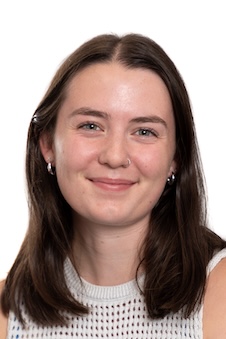
I have always been excited by science, as I love being able to understand the hidden processes behind everyday life, as well as the dynamics of so many unique animal species. Growing up I always wanted to (and still want to) have a career like David Attenborough or the late Jane Goodall.
I am Dunedin born and raised, so Otago University was the natural choice for me as it was just down the road. I studied a double major in zoology and biochemistry, and also picked up some classics papers for interest along the way. I particularly loved that protein biochemistry showed how ’smart’ the designs of biological processes are, and how evolution guided the relationship of protein structure and function. This led me to my fourth-year honours project under the supervision of Professor Peter Mace, where I investigated interacting domains within the COP1/SPA complex, a key regulator of photomorphogenesis in the model species Arabidopsis.
Outside of studies I enjoy reading, running, and rotating through different arts and crafts. I am currently working while I figure out my next steps - whether that’s with further research or a job overseas, it will definitely be related to science!
Sophie Tunnicliffe
Originally from the Kāpiti Coast, I came to Dunedin specifically to study biochemistry. I always liked science (and have ‘sciency’ parents) and biochemistry enabled me to combine my favourite sciences at high school - biology and chemistry.
Last year I carried out my honours research project in the Cancer Genetics laboratory with Associate Professor Anita Dunbier, looking at oestrogen-receptive positive breast cancer, and three genes involved in metastasis, working towards the development of an improved metastatic oestrogen receptor positive breast cancer model. This year I am continuing this research with the Dunbier group, studying towards an MSc.
Onwards from my Master's I still want to do further study, as well as travelling overseas for a bit, ultimately aiming to have a career in cancer research. Outside of study, I make the most of the beautiful outdoors we have access to in Otago, with running, bouldering and tramping adventures.
The Mervyn Smith Prize
For the student with the highest level of attainment in the first year MSc class.
Jordan Cohen-Ronen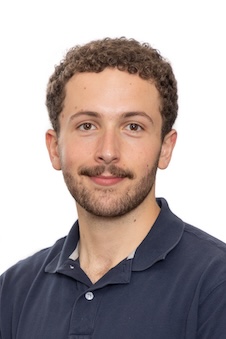
I found my way into biochemistry through personal experience. As a child in Wellington, I was diagnosed with Crohn’s disease and complete heart block, which gave me an early and confronting look at what happens when biological processes go wrong. Spending months in and out of the hospital gave me a fascination with how medicines work, what drives disease, and what was happening inside my body at the cellular level. That curiosity led me to study biochemistry at the University of Otago, where I fell in love with structural biology. I’m now entering my MSc thesis year, researching poxviral immunomodulatory proteins in Professor Kurt Krause's lab.
I’m proud and grateful to be solving protein structures of my own and contributing to the development of potential new treatments for autoimmune disease. I hope that one day, a child sitting in a hospital bed looking into their disease, as I did, might be looking at the results of research I contributed to.
Outside the lab, I work for KnowYourStuffNZ, where I run drug-checking clinics to reduce drug harm. It’s incredibly rewarding to see my scientific skills translate into real benefits for people in the community. In my spare time, I’m an amateur jazz/metal guitarist (yes, both) and an enthusiastic (if occasionally pretentious) cinephile. After completing my MSc, I plan to pursue a PhD overseas to further develop my expertise in structural biology.
The Joan Mary Anderson Prize
For the student(s) in the 400-level class who show(s) greatest promise for contributing to plant science.
Max Spiers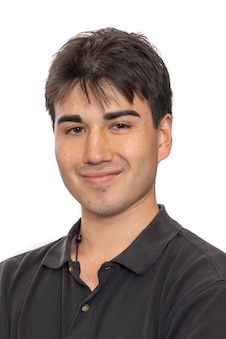
I'm from a big farming region (the Waikato) and while I never was extremely passionate about agriculture, I was always surrounded by it. Seeing the importance of agriculture from a young age was a primary motivator in doing a BSc in biochemistry with a double minor in genetics and botany. I believe that solutions for the world's biggest issues such as developing sustainable energy, feeding a growing population and treating future pandemics are hidden in the plant kingdom. My summer internship with Barenbrug NZ has already given me insight into these issues within a New Zealand context.
This year I will be investigating proteins suspected to be involved in plant flowering within Associate Professor Lynette Brownfield’s ‘night break’ project. If successful this will allow greater synchronisation of plant flowering times for seed harvest, ultimately reducing waste and offering significant improvements in yield. I'm extremely happy to already be involved in a project with direct, real-world agricultural impact.
To balance study, I’m involved in futsal, football, roller-skating and mountain biking (I have been treasurer of the Otago Uni Bike Club for two years). Looking ahead, I'd love to do research overseas and explore the world through my degree - lots of unique plants out there!
Riley Macdonald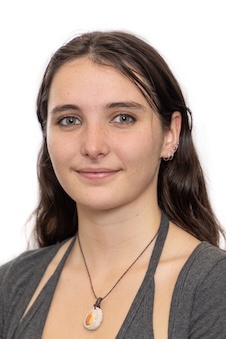
I originally came to Dunedin to study zoology because I loved biology and had a passion for sustainability. I picked up genetics as a minor in my second year of undergraduate study, but by third year I had changed it to a major as I knew this was the direction I wanted to go in. I loved genetics because it seemed like such an innovative and evolving science and I was excited by all the potential applications I was being introduced to in my course. Specifically, lectures about genetics in crops and agriculture in a first-year botany paper caught my attention, revisited in a third-year plant biotechnology paper, and from there I knew that this area excited me and would enable me to really make a difference in the sustainability of modern life.
I am currently doing my honours project in Associate Professor Lynette Brownfield's lab, looking at floral induction and circadian rhythm in Brachypodium as a model for temperate grasses, a very economically important group of plants.
I'm not sure what my next steps are but I'm looking forward to learning more this year about what a career in research might look like. Outside of school I enjoy a good hike, a good book, or a good cafe!