
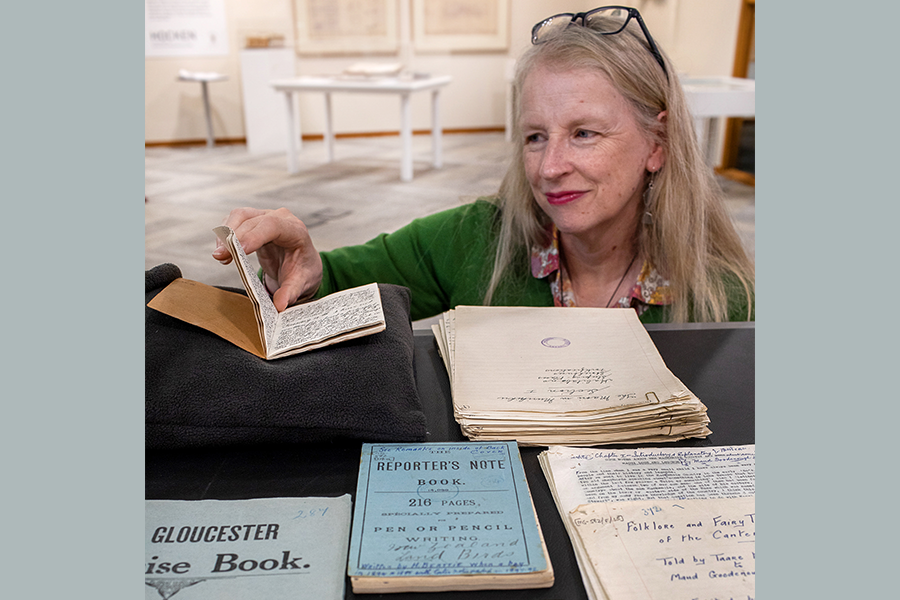
Hocken Head Curator, Archives, Anna Blackman: “Kāi Tahu has identified the Beattie Papers as a very significant collection … It has also been recognised by the UNESCO New Zealand Memory of the World register.”
The University of Otago’s Hocken Collections is embarking on a major digitisation programme that will make more of its material available online.
One important part of the digitisation work focuses on archival material related to the southern iwi, Kāi Tahu, and the Hocken has appointed Rauhina Scott-Fyfe (Kāi Tahu, Kāti Māmoe) to the role of Māori Archivist to spend a year working on the project.
Scott-Fyfe, a former University of Otago Māori Studies student and Māori language tutor, is working under the guidance of Head Curator, Archives, Anna Blackman, and is involving local rūnaka in the Kāi Tahu Digitisation Project, which is centred on digitising and making available online material from the Herries Beattie Papers.
“Kāi Tahu has identified the Beattie Papers as a very significant collection,” Blackman says, “and that is borne out by the amount of research it gets. It has also been recognised by the UNESCO New Zealand Memory of the World register.”
James Herries Beattie (known as Herries) was a Gore-born journalist and author of Scottish descent. UNESCO describes him as an extremely thorough researcher whose papers “document the traditional knowledge and memories of 19th century South Island Māori and Pākehā during a key time in New Zealand history, a great deal of it based on conversations and interviews”.
According to UNESCO, the information he collected has been repeatedly used by researchers because it provides “reliable and detailed historical and ethnographical data not found elsewhere”. It includes thousands of South Island Māori place names.
Beattie donated most of the papers to the Hocken between 1955 and 1972, the year he died at the age of 90. The papers were added to the Memory of the World register in 2018.
Scott-Fyfe says it is not simply a matter of digitally copying material but also of describing the material – including titles, dates, and context – to increase “findability” online.
Of Kāi Tahu descent from Puketeraki and Oraka Aparima, Scott-Fyfe says the project is also not limited to increasing visibility and access for those who might connect with the material.
“It is partly about building relationships with our local rūnaka – Ōtākou, Puketeraki and Moeraki – as well as other Kāi Tahu whose ancestors’ stories are included in this material.”
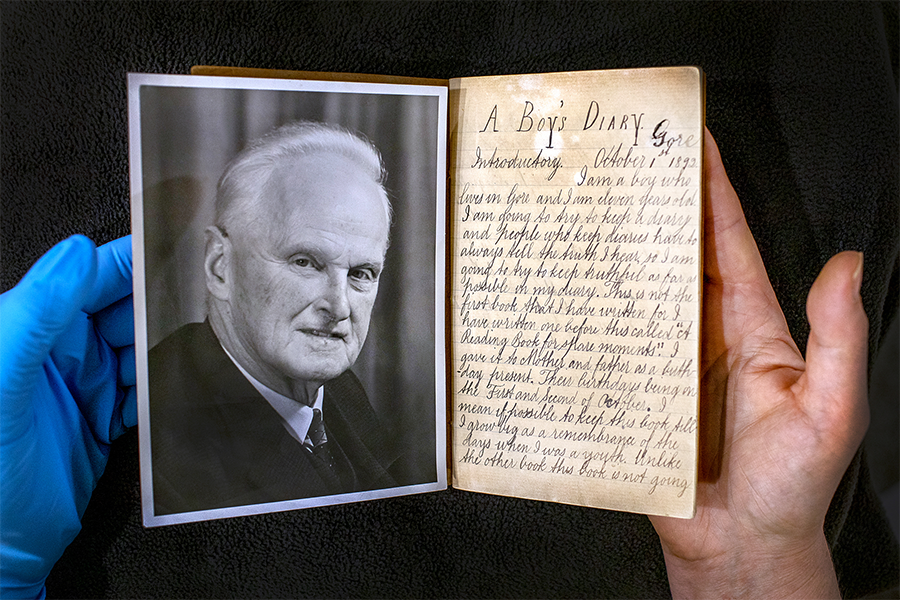
Herries Beattie’s diary and photo – just a small part of the significant collection which is being digitised.
Scott-Fyfe is mindful of the special nature of the Kāi Tahu material when it comes to handling and use. “The materials are considered to be taoka to Kāi Tahu, because they contain interviews with our tīpuna, and in many cases they are the sources of what we know about tratraditional practices.”
The Hocken is planning to have the entire Beattie collection digitised by the end of the 12-month project, with online access to the collection available from early next year.
Scott-Fyfe is also hoping to digitise some other archival material related to Kāi Tahu, similarly working with advice from mana whenua and the iwi’s Archives Team.
The physical task of digitising the material is being undertaken by a leading digitisation specialist, New Zealand Micrographic Services, at the Hocken, financed by a University of Otago Alumni grant.
Hocken Librarian, Catherine Hammond, says digitisation is important for preservation, particularly of fragile material held by the Hocken.
She says digitisation also has the obvious benefit of broadening access to material by making it available to researchers around the world, in addition to publicising the Hocken’s collections.
“What we want to do is highlight the strengths and the richness of the collections.”
Blackman says the Hocken has been digitising material, mainly artworks and photographs, for several decades. Many of the artworks have been made available online through the University’s OURHeritage (Otago University Research Heritage) database, and the photographs via the Hocken’s popular Snapshop database and its Hākene database.
The Hocken, in collaboration with the University’s Centre for Research on Colonial Culture, has also digitised and put online the letters and journals of the missionary, Samuel Marsden, via the Marsden Online Archive.
Hammond notes, however, that only a small proportion of the Hocken’s “amazing research collections” has been digitised so far, and only some of that is currently available online. The vast majority of users (and the Hocken gets up to 5,000 research visits each year) still front up to the Anzac Avenue building in Dunedin to view original material.
Although the current project only runs for a year, Hammond says they will be looking to continue the Hocken’s digitisation programme beyond that.
Hand-in-hand with the current digitisation project, the Hocken is re-developing its digital delivery platform on its website.
Blackman says this will bring together existing online material such as the Snapshop database; a host of digital copies of mainly artworks and photographs created over the years in various one-off digitisation projects, but not previously put online; and the newly digitised Kāi Tahu material. The Hocken is hoping to launch the redeveloped site by the end of the year.
As part of the redevelopment, a digital unit has been established at the Hocken, led by a newly-appointed Senior Imaging Technician, Richard Munro.
“The Hocken has about 400,000 books, and about 11 linear kilometres of archives, more than 17,000 artworks and well over 1 million photographs, so it is always going to be a percentage that is digitised,” Hammond says.
She says she can envisage a time, however, when significant parts of the collections at the Hocken will be available to online researchers globally.