
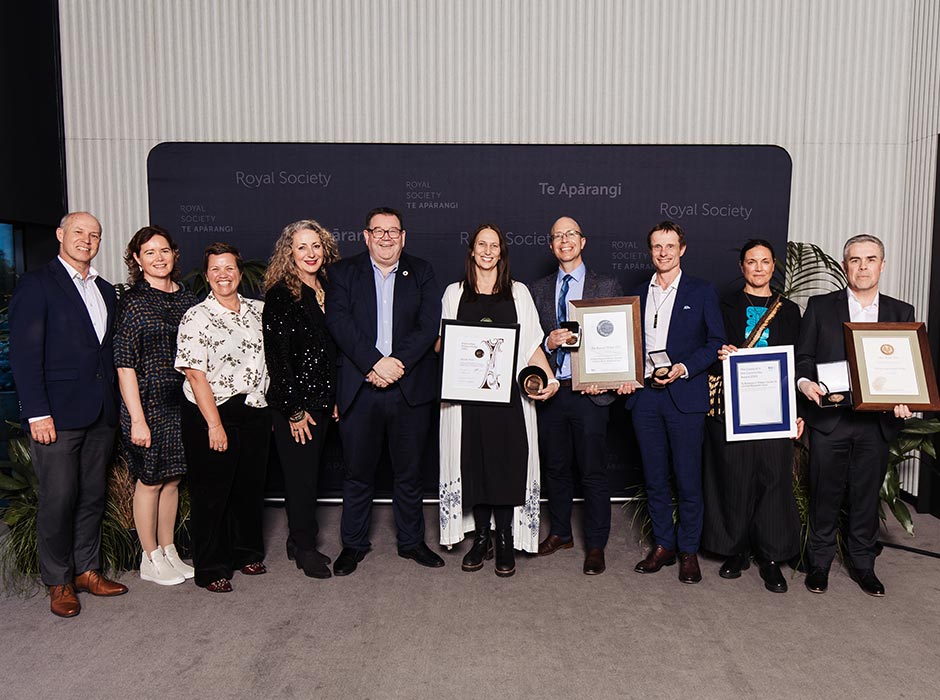
Vice-Chancellor Grant Robertson with Otago staff and researchers at the Royal Society Te Apārangi Research Honours event in Christchurch last night. Photos: Royal Society Te Apārangi
Five University of Otago – Ōtākou Whakaihu Waka academics have been honoured with four major awards for their research in Indigenous law, genetics, diabetes, and falls prevention.
Deputy Vice-Chancellor (Māori) Distinguished Professor Jacinta Ruru (Raukawa, Ngāti Ranginui), of the Faculty of Law, received the Royal Society Te Apārangi Humanities Aronui Medal for her work on how colonial legal systems should recognise Indigenous peoples’ interests in land and water.
Professor Logan Walker, of the Mackenzie Cancer Research Group, Christchurch, received the Health Research Council’s prestigious Lily Medal for his work into the impact of genetic changes on our health.
Associate Professor Martin de Bock and Professor Ben Wheeler, of the Department of Paediatrics and Child Health (Christchurch and Dunedin), jointly received the HRC’s Beaven Medal for their work creating automated insulin delivery technology for diabetics.
While the research team from Te Rūnanga o Ōtākou Taurite Tū, led by Katrina Pōtiki Bryant (Waitaha, Kāti Māmoe, Kāi Tahu), of the School of Physiotherapy, won the HRC’s inaugural Catalyst in the Community Award for its rūnaka-based, kaupapa Māori falls prevention research.
The awards were presented at a Royal Society Research Honours event in Christchurch last night.
Vice-Chancellor Grant Robertson congratulates all five on their achievements.
“Each of them is an expert in their fields and their work has had significant impact both here in New Zealand and overseas.
“I know their work is driven by the desire to create positive outcomes for the public, and it is fantastic for them to be recognised with these honours,” he says.
The awards
Humanities Aronui Medal – Professor Jacinta Ruru (Raukawa, Ngāti Ranginui),
Faculty of Law
This Royal Society Te Apārangi medal is awarded for research or innovative work of outstanding merit in the Humanities.
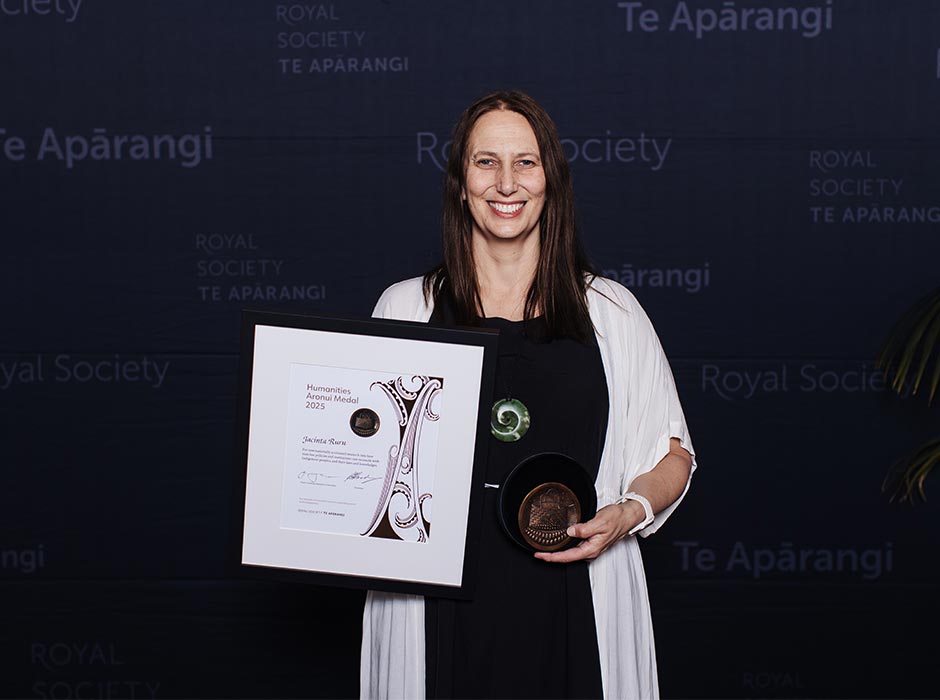
Deputy Vice-Chancellor (Māori) Distinguished Professor Jacinta Ruru (Raukawa, Ngāti Ranginui), of the Faculty of Law, received the Royal Society Te Apārangi Humanities Aronui Medal.
Professor Ruru received the award for her groundbreaking and internationally acclaimed research which has shaped legal interpretations of the rights and responsibilities of Indigenous peoples around the world.
Within Aotearoa New Zealand, her work focuses on how law and policy can uphold Te Tiriti o Waitangi by enabling Māori to care for, own, and manage lands and waters.
She has advanced innovative options including granting legal personhood to natural features such as mountains and rivers. She also successfully campaigned for inclusion of tikanga Māori into the teaching at all New Zealand law schools.
She says it is an “incredible honour” to receive the award and “empowering to see national recognition of Māori-led research win such an eminent medal”.
“Law has so much power and potential. It reflects the values of society. I’ve always been really interested in how our modern legal system can recalibrate to reflect modern values of reconciliation with iwi Māori.
“I have worked with many researchers across the University, nationally and internationally to collaboratively advance my research programmes and it is wonderful to see this work recognised.
“I particularly thank all Māori leaders past and present who have generously given to this country, inspiring me to be brave in putting forward ideas for how we can make, understand and learn about the laws of this country.”
Professor Ruru joined Otago’s Faculty of Law in 1999 after graduating with her law degree. She describes it as an “incredible opportunity” to forge a career of teaching and research.
Reflecting on her career, she says time spent doing her PhD in Canada with a world-leading Indigenous law academic was “really transformative”. Another highlight was the opportunity to co-lead Ngā Pae o te Māramatanga New Zealand’s Māori Centre of Research Excellence which is such an essential institution for this country to empower multidisciplinary Māori research across the whole country.
“I now have the most exciting opportunity to work with senior leaders across the University to further build practices for valuing Māori language, knowledge and ways of working as Otago’s new Deputy Vice-Chancellor Māori.”
Lily Medal – Professor Logan Walker, Mackenzie Cancer Research Group (Christchurch)
This Health Research Council of New Zealand award recognises recent research which has produced a significant breakthrough within the health and medical fields.
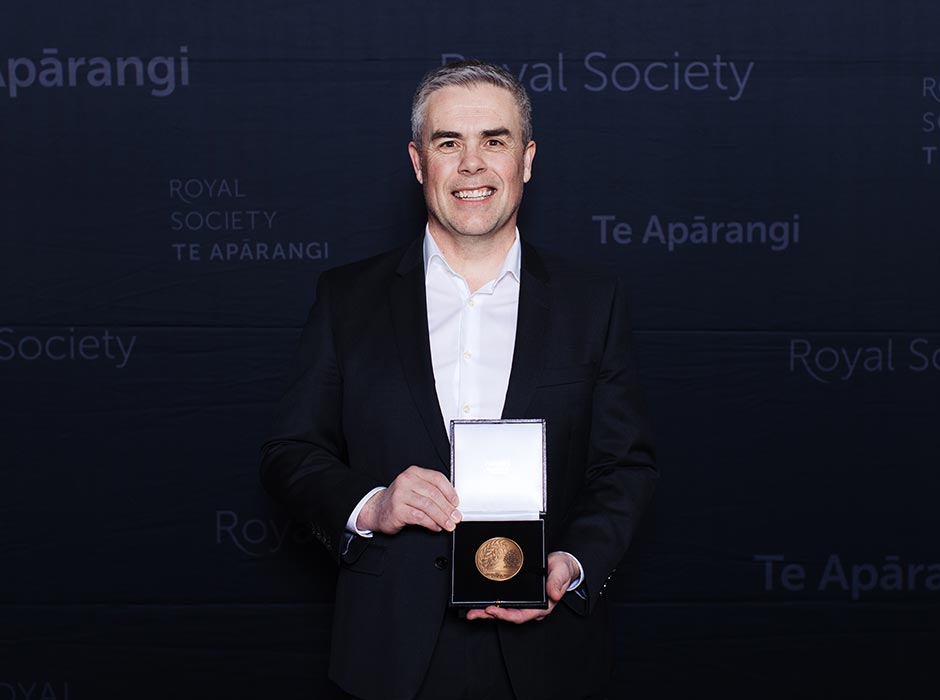
Professor Logan Walker, of the Mackenzie Cancer Research Group, Christchurch, received the Health Research Council’s prestigious Lily Medal.
Professor Walker received the award for his work integrating complex RNA splicing biology into practical clinical recommendations that are now being used by major diagnostic laboratories in New Zealand and worldwide to improve the accuracy of diagnostic tests for genetic disorders.
RNA splicing occurs during gene transcription and is essential for the proper expression of genes. When something goes wrong with this process, diseases can result.
Professor Walker was lead author on a paper, published in the American Journal of Human Genetics, that created a new framework for incorporating RNA splicing evidence into the clinic, enabling laboratories to classify genetic variants with greater confidence, improving diagnostic rates and enabling earlier clinical interventions.
The paper represents a major international breakthrough in the field of clinical genomics and has set a new global benchmark for the technique. It is already demonstrating significant impact on health outcomes, healthcare practice, and precision medicine initiatives, both in Aotearoa New Zealand and globally.
He feels honoured to receive the award, particularly as he joins the prestigious list of previous recipients.
Looking back on his career, he is most proud of developing a research programme in genetic health, in collaboration with “amazing researchers from all over the world”, which is directly benefiting the health and wellbeing of people globally.
“The future of genetic health requires tests that bring certainty for patients, whānau and health professionals. Our research in the area of RNA diagnostics is helping achieve this here in New Zealand and around the world,” he says.
Professor Walker is grateful for the support he has received, the HRC and University for supporting the work; his “fantastic team” of co-investigators; and two valued colleagues and friends who encouraged him with his application, Associate Professor Louise Bicknell and Professor Suz Pitama.
Beaven Medal – Associate Professor Martin de Bock and Professor Ben Wheeler, Department of Paediatrics and Child Health (Christchurch and Dunedin)
This Health Research Council of New Zealand award recognises excellence in translational health research, that has had high impact on clinical practice and patient health.
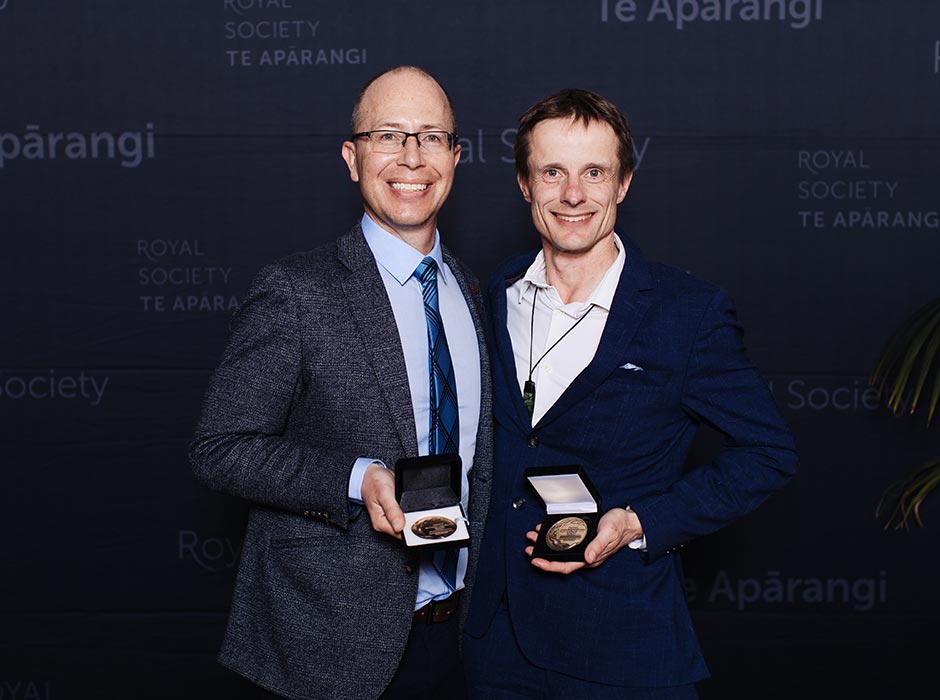
Professor Ben Wheeler, left, and Associate Professor Martin de Bock of the Department of Paediatrics and Child Health (Dunedin and Christchurch), jointly received the HRC’s Beaven Medal.
The pair received the award for their collective research and collaborations with industry that have directly driven the nationwide adoption of automated insulin delivery and continuous glucose monitoring for New Zealanders living with type 1 diabetes.
This landmark achievement, which was confirmed in October 2024 when Pharmac announced full funding of these technologies for all New Zealanders with type 1 diabetes, was underpinned by the team’s research and leadership in partnership with Diabetes New Zealand and the diabetes community.
The team’s clinical trials and contribution to international guidelines have helped make automated insulin delivery the gold standard globally for treating type 1 diabetes.
Associate Professor de Bock says they feel honoured to receive it on the behalf of a large team of researchers, healthcare professionals, and people with diabetes.
It is particularly special for them to be the first diabetes researchers to receive it, given its namesake Sir Donald Beaven’s link to and passion for diabetes research.
They have dedicated their careers to the field, working from the earliest devices and first-in-human studies, all the way through to mass translation of the technology once it was commercially available and funded.
“Our research provided the evidence of impact but also helped expel fixed beliefs about who could and couldn’t benefit from the technology – and as such our research always held equity front and centre,” Associate Professor de Bock says.
“We are incredibly proud to see every person with type 1 diabetes getting free access to automated insulin delivery, seeing it change their lives for those who previously could not access it due to cost, and safe in the knowledge with those newly diagnosed that they don’t have to walk the path of high burden and unhealthy glucose levels, so that they can greatly reduce, if not completely avoid, the complications of diabetes.”
Professor Wheeler acknowledged all the people who participated in their research, along with their teams for their support and guidance, and funders for supporting their vital mahi.
Of particular importance for them both was to thank their families who stood by and supported them working so hard in this space.
“I think it’s fair to say that we share a great passion for improving the lives of people with diabetes and have devoted many hours – much of it outside normal work hours – in order to achieve this,” Professor Wheeler says.
Catalyst in the Community Award – Te Rūnanga o Ōtākou Taurite Tū Limited, led by Katrina Pōtiki Bryant (Waitaha, Kāti Māmoe, Kāi Tahu), School of Physiotherapy
The Health Research Council’s inaugural Catalyst in the Community Award honours an exceptional researcher or research team that has facilitated change or accelerated translation and uptake of findings to produce a significant impact locally in the community, bringing about transformation of health outcomes.
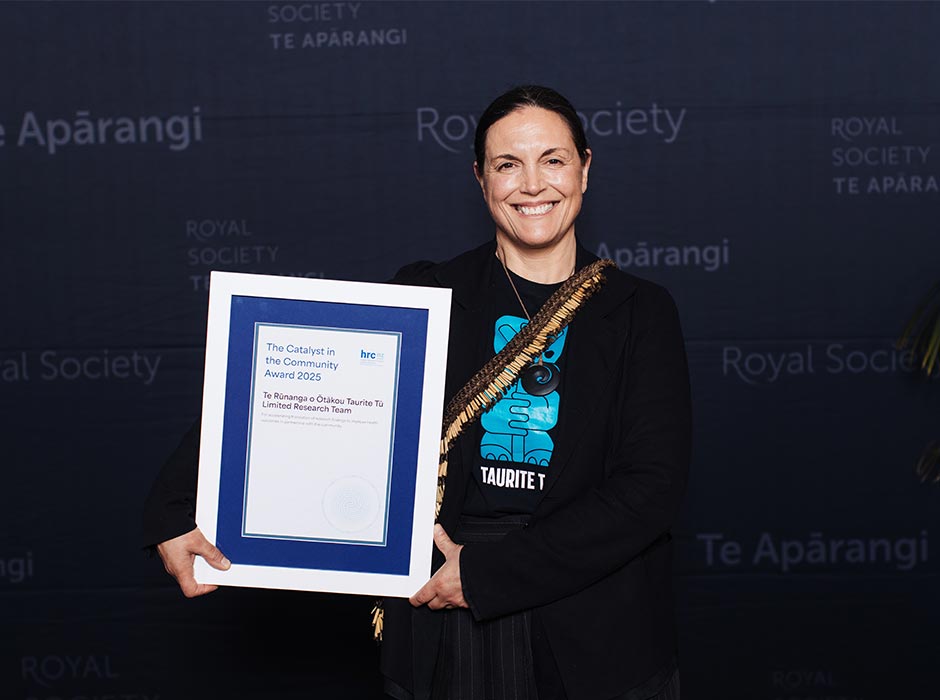
The research team from Te Rūnanga o Ōtākou Taurite Tū, led by Katrina Pōtiki Bryant, of the School of Physiotherapy, won the Health Research Council’s inaugural Catalyst in the Community Award.
Te Rūnanga o Ōtākou Taurite Tū is a rūnaka-based, kaupapa Māori research unit led by pioneering Māori physiotherapist and researcher Katrina Pōtiki Bryant.
The team has built a robust research programme blending physiotherapy, mātauranga Māori movement practices, kaumātua engagement, and public health expertise.
Its Tāurite Tū programme, a uniquely Māori approach to falls prevention rooted in both western science and traditional Māori practices, has significantly reduced falls risk and injury rates for Māori aged 55-plus, with consistently high participant retention and attendance rates.
“Existing falls prevention programmes typically have low Māori engagement. Our Tāurite Tū programme reverses this trend through an engaging, culturally grounded model that incorporates ti rākau, poi, mau rākau and whakaoriori alongside physiotherapy-based exercises,” says Ms Bryant.
There are now 28 Taurite Tū programmes being delivered by iwi-based organisations in largely rural communities across New Zealand, with more coming on board with the support of partnerships with ACC and WellSouth.
“We’re delighted that we’ve been able to upskill many communities in healthcare delivery. While there are certain key things we need to teach to have the desired impact on reducing falls, it’s great to then let the organisations run it in the way that works for them and their tikanga.
“Kaumātua engagement and feedback is always at the heart of what we do.”
Ms Bryant says, while the research came out of Te Rūnanga o Ōtākou, there was a “huge collaboration” of Otago teams and researchers involved.
This included the Centre of Health, Activity and Rehabilitation Research in the School of Physiotherapy, Research Co-ordinator Donna Keen, world-renowned falls researchers Professor Leigh Hale and Professor Debra Waters, Associate Professor Bridget Robson, and Māori researchers Professors Jo Baxter and Emma Wyeth.
The University’s Media Production Unit and School of Performing Arts also supported the development of high-quality resources disseminated to research units in Māori communities, enabling the research to be conducted within communities effectively.
“This is an example of a true te Tiriti-led project out of Ōtākou Whakaihu Waka,” she says.