
Research centres are celebrating securing money from the recent Ōtākou Whakaihu Waka University of Otago Research Centre funding round.
Each of the eight successful centres, which cover a diverse range of research areas, will receive a total of $200,000 over four years.
 Martin Gagnon
Dr Martin Gagnon, who was speaking as Acting Deputy Vice-Chancellor Research and Enterprise, says it is the first time the University of Otago Research Centre funding has been awarded since 2020. Prior to that, the funding had been awarded every three to four years since 2006.
“I’m really happy that two out of eight funded centres are in Humanities and Social Sciences – areas of research that are under pressure due to policy changes from the Government,” Martin says.
The successful centres are the Centre for Medical Humanities, the Centre for Pacific Thought, Climate Health Aotearoa, the Centre for Neuroendocrinology, the Centre for Menstrual Cycle Research, the Centre for Computational Culture and Heritage, the Cardiovascular Research Centre, and ASPIRE Aotearoa.
When spoken to, representatives from several of the centres noted how increasingly difficult it was becoming to secure funding for research and, as such, were grateful for the support from the University.
The funding will help many of the Centres build networks, promote their research and continue to grow their knowledge base.
Martin says a total of 26 Centres applied for funding. A panel comprised of members of the University Research Committee then assessed and discussed all applications.
The calibre of applicants made the process difficult, he says.
“There were a lot of quality applications that could have been funded but we just didn’t have the resources to award them all.
“Tough decisions had to be made. Thank you to all applicants for putting in strong proposals.”
In addition to the funding, the Centres are provided with administrative support, centrally, through the Research Committee funding.
Read more about each Centre:
Centre for Medical Humanities
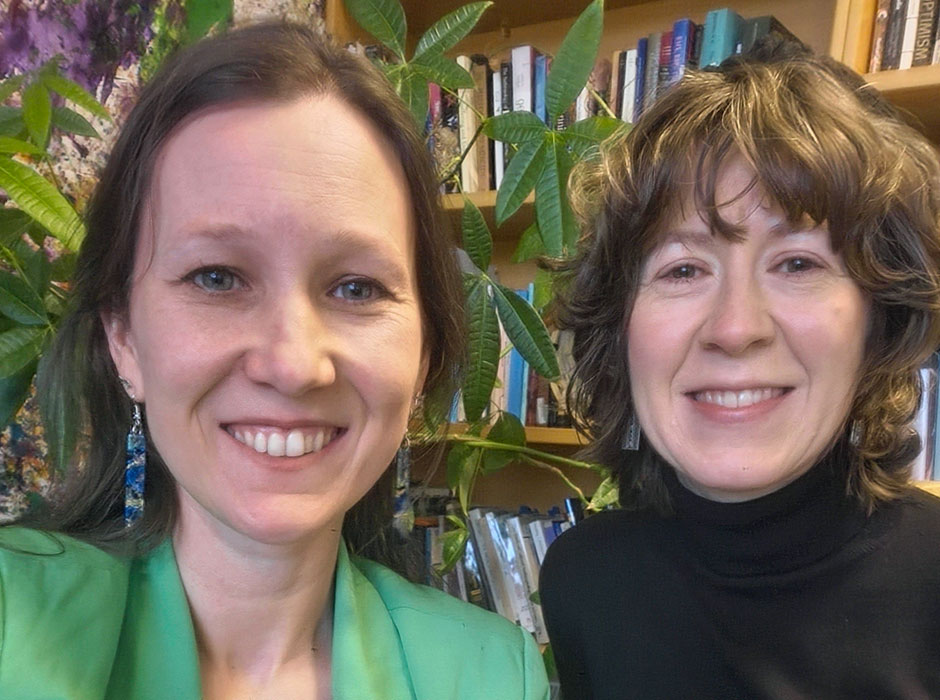
Pictured is Centre for Medical Humanities Director Dr Susan Wardell, left, with Deputy Director Professor Maebh Long.
Centre for Medical Humanities Director Susan Wardell says the team at the centre – which is the first of its kind in Aotearoa – is “incredibly excited” to have been awarded the funding.
“It is encouraging to have recognised that the Medical Humanities is of so much strategic value to the University of Otago – linking to its history and existing strengths, while also supporting the possibility for new and innovative cross-disciplinary work.”
This new Centre will focus on aspects of health experiences that are often ignored or unseen and will provide critical, holistic, and culturally-informed insights that complement the larger goals of medicine, she says.
Medical Humanities is an interdisciplinary area of scholarship that examines the cultural, social, philosophical, historical, ethical, and structural contexts of health, disability, and wellbeing.
The Centre’s work can inform health policy, support the growth of medical/professional competencies, uphold Mātauranga Māori and Pacific knowledge, and will place a strong focus on creative community events to stimulate public conversations about pressing topics.
Susan says the funding will enable the Centre to connect a variety of people from different fields – including from lived experience communities – to help shape its future plans.
“We want to ensure we respond to both existing expertise at Otago, and specific social needs in Aotearoa, to make our efforts meaningful.”
Centre for Pacific Thought
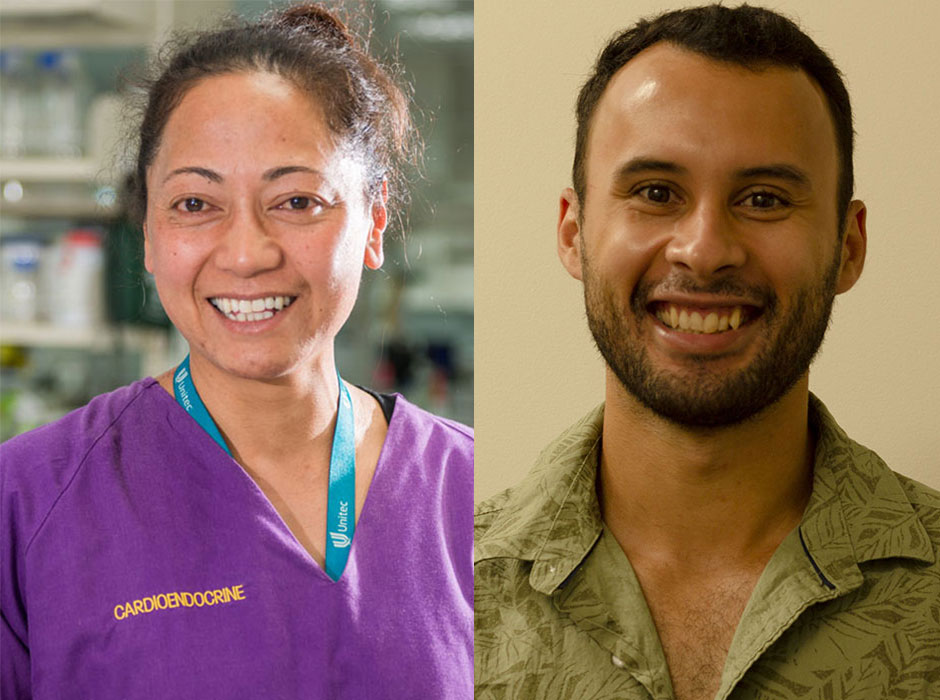
Pictured are Centre for Pacific Thought Co-Directors Dr Allamanda Faatoese (left) and Dr Charles Radclyffe.
Dr Allamanda Faatoese and Dr Charles Radclyffe are Co-Directors of the Centre for Pacific Thought, formerly Pacific Thought Network (PacTNet).
“Being awarded Centre status is a great honour for our multi-divisional, multi-disciplinary, multi-institutional, and ethnically diverse team,” Allamanda says.
“Building on the success of Pacific Thought Network (PacTNet) since 2020, the Centre will expand its work to have greater impact and long-term sustainability. It will unite researchers from the Humanities, Social Sciences, Health, and Sciences to co-design solutions that meet Pacific peoples’ needs in culturally appropriate ways.”
The Centre aims to strengthen Pacific research and teaching by bringing together experts from different fields who work with and within Pacific communities.
“It fills a major gap at the University of Otago, as no other group provides an interdisciplinary space focused on Pacific research and education.”
Allamanda says the funding will support ongoing activities such as monthly Talanoa sessions, the Annual Pacific Lecture featuring leading international Pacific academics, and related events such as the Pacific Masterclass and Pacific Panel.
The Centre will also launch a new annual multi-day symposium inspired by the creative and dialogic approach of Tawata Productions, a Māori and Pacific theatre collective.
The symposium will unfold over three stages across 18 months: Karu (Seed), where research ideas and teams are introduced; Tupu (Sprout), where progress and challenges are shared; and Ahune (Harvest), where completed research is presented and prepared for publication.
“This innovative format encourages mentorship, creativity, and ongoing collaboration, and is expected to produce at least one to two Pacific research outputs each year.”
Another new initiative is a biennial Pacific Research Week, which will bring together the annual Pacific Panel, Pacific Voices symposium, and postgraduate workshops. This will be delivered in partnership with Otago’s campuses, the Pacific Islands Centre, Va’a o Tautai, Te Tumu, and Pacific student and academic networks across the University.
Climate Health Aotearoa
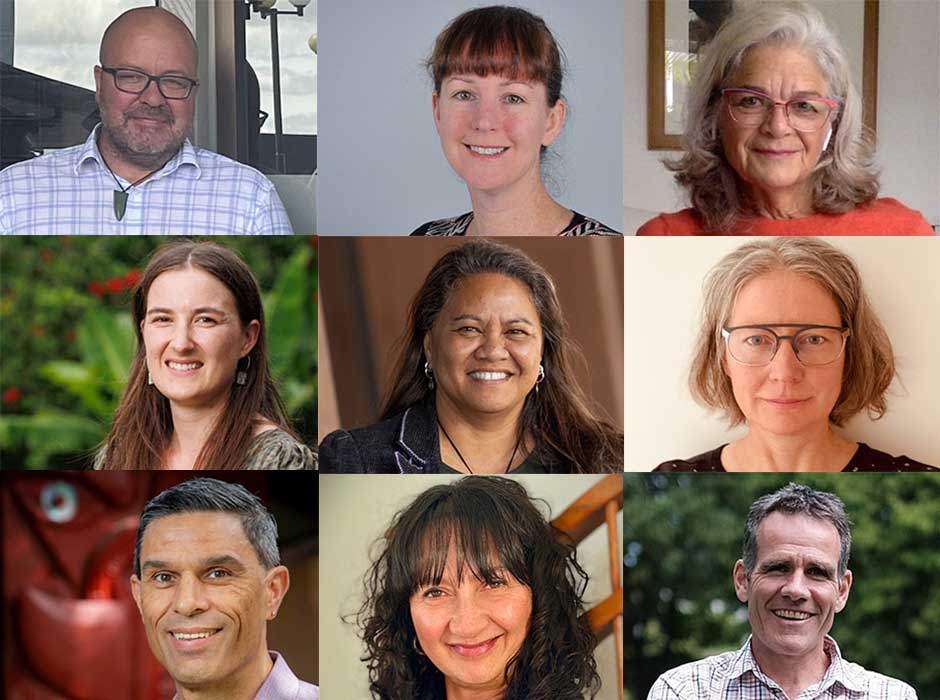
Pictured are members of the Climate Health Aotearoa steering group. Top row from left: Dr Ken Taiapa, Dr Cristina Cleghorn and Dr Christine Winter. Middle row from left: Grace Shaw (co-ordinator), Professor Bridgette Masters-Awatere and Professor Alex Macmillan. Bottom row from left: Associate Professor Rhys Jones, Fran Munro and Professor Jim Cotter.
Professor Alex Macmillan is the tangata Tiriti Co-Director of Climate Health Aotearoa and Dr Rhys Jones (Ngāti Kahungunu, Waipapa Taumata Rau) is the tangata whenua Co-Director.
Climate change is increasingly seen as the greatest threat to global public health, exacerbating many existing global and national health inequities, Alex says.
“Our work examines climate change through public health, kaupapa Māori and Indigenous lenses,” she says.
“The funding is a very timely acknowledgement of the importance of climate change as an immediate and unfolding health issue, where we need to place people’s health in the context of healthy ecological systems.
“We’re really excited to build on our existing foundational work, including the opportunity to take a national, values-based, and strategic approach.”
Alex says the funding will be prioritised to support Māori and Pacific postgraduate students into early/ mid-career research opportunities in climate change and health, deepen relationships with iwi, hapū and communities, and strengthen international partnerships – especially in the Pacific, the United Kingdom and Canada.
“Having formal Centre status will also allow us to build relationships with similar centres internationally.”
The Centre generates policy, iwi and community relevant research in three connected areas: the health effects of climate change; the health equity implications of climate action and inaction (mitigation, adaptation); and the health sector’s own responsibilities and responses.
Centre for Neuroendocrinology–Te Pokapū Mātai Tauwhiti Io Tōpū-Taiaki
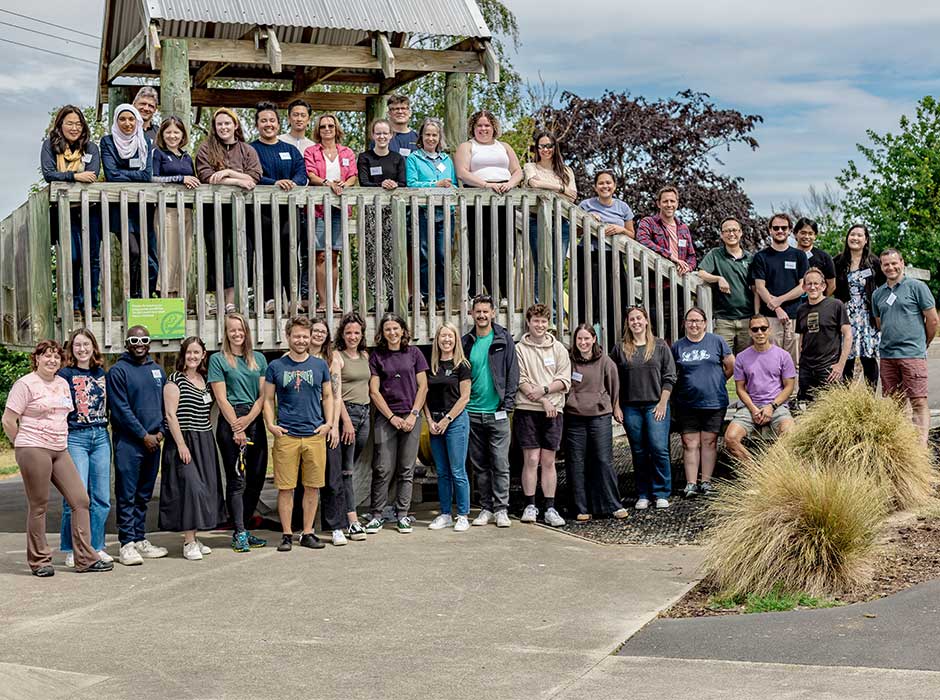
Pictured are members of the Centre for Neuroendocrinology, with Centre Director Associate Professor Karl Iremonger, front row eleventh from the left (in a green T-shirt).
Associate Professor Karl Iremonger is the Director of the Centre for Neuroendocrinology–Te Pokapū Mātai Tauwhiti Io Tōpū-Taiaki. Karl and Deputy Directors Dr Rosie Brown and Professor Greg Anderson lead the Centre for Neuroendocrinology (CNE), which is comprised of principal and affiliate investigators, research staff and students.
“The core focus of our research is to advance understanding and treatments of neuroendocrine and neurological disorders that impact people in Aotearoa,” Karl says.
“It is becoming increasingly more difficult to secure funding for biomedical discovery research from national funding sources in New Zealand. In times like these, University based funding for research centres becomes even more important.
“As such, we are very grateful for continued Research Centre funding, which will allow us to continue to expand our world-leading biomedical research.”
The Research Centre funding will allow the CNE to support the next generation of young neuroendocrine researchers in Aotearoa, Karl says.
“It will also allow us to grow our connections with communities, clinicians, industry and policy makers to increase the impact of our research discoveries.”
The CNE is an internationally recognised rōpū of researchers with world-class expertise in the areas of neuroscience, endocrinology, genetics and pharmacology. CNE research has been at the forefront of key discoveries in the areas of reproduction, maternal health, metabolism, aging, mental health and genetic determinants of disease.
Centre for Menstrual Cycle Research
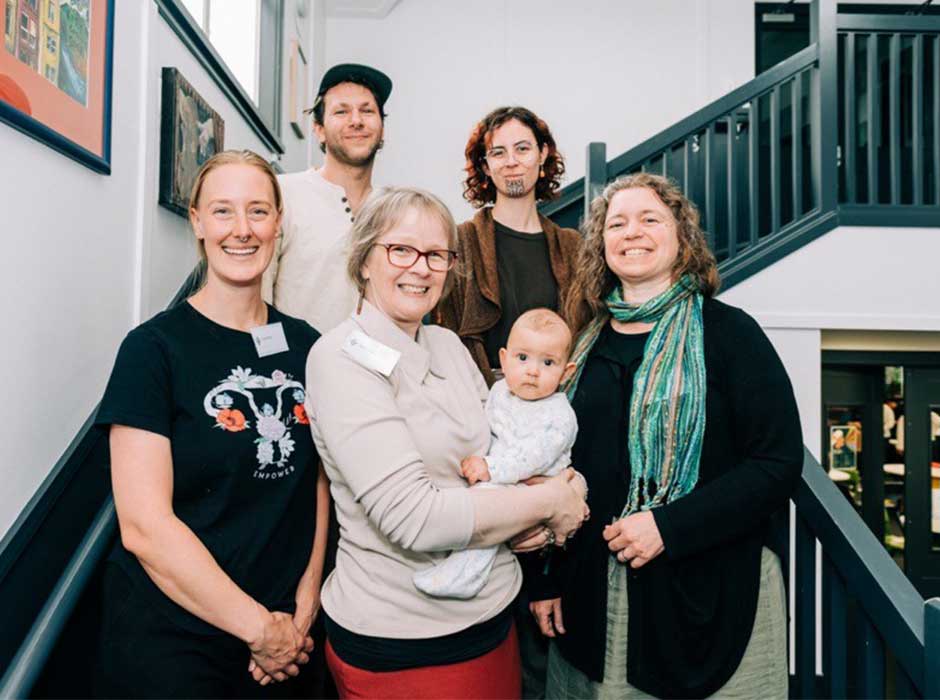
Pictured are members of the Centre for Menstrual Cycle Research Steering Committee at the 2024 Menstrual Health Research Network Hui in November 2024. Top row from left: Nicholas Anderson and Isobella D’Aiello. Bottom row from left: Dr Claire Henry, Co-Director Associate Professor Jane Girling, baby Rowy and Co-Director Associate Professor Bryndl Hohmann-Marriott. Photo: Pio Manoa
Associate Professor Jane Girling says the Centre for Menstrual Cycle Research aims to improve the mental, physical, and spiritual hauora of wāhine, menstruators and communities in Aotearoa New Zealand and across the Pacific.
Jane (Department of Anatomy, Faculty of Biomedical Sciences and the Division of Health Sciences), and Associate Professor Bryndl Hohmann-Marriott (Sociology, Gender Studies and Criminology Programme, School of Social Sciences and the Division of Humanities), are Co-Directors of CMCR.
“Almost every aspect of menstrual cycle health and wellbeing is crying out for additional study, increased awareness and improved support,” Jane says.
“Our goal is to promote and facilitate research related to the menstrual cycle that is interdisciplinary, collaborative, and encompassing multiple knowledges.
“We aim to bring together researchers who engage in research related to the menstrual cycle across Science, Medicine and the Humanities.”
Bryndl says the CMCR has a strong multi-disciplinary focus, with representation across all Divisions and campuses.
“The research topics and approaches used by Centre members are diverse. For instance, we have: benchtop scientists who study the physiological processes going on in the brain, ovary and uterus; researchers who study the experiences of patients with gynaecological conditions; social scientists at the forefront of data rights and sovereignty in menstrual tracking apps; historians and experts in ethics who consider the implications of menstrual cycle research now and in the future.
“These cyclic processes have multiple impacts and meanings biologically, personally, socially and culturally.”
CMCR will use the funding to extend the reach of its research, build further connections with local communities and develop research capacity.
Centre for Computational Culture and Heritage
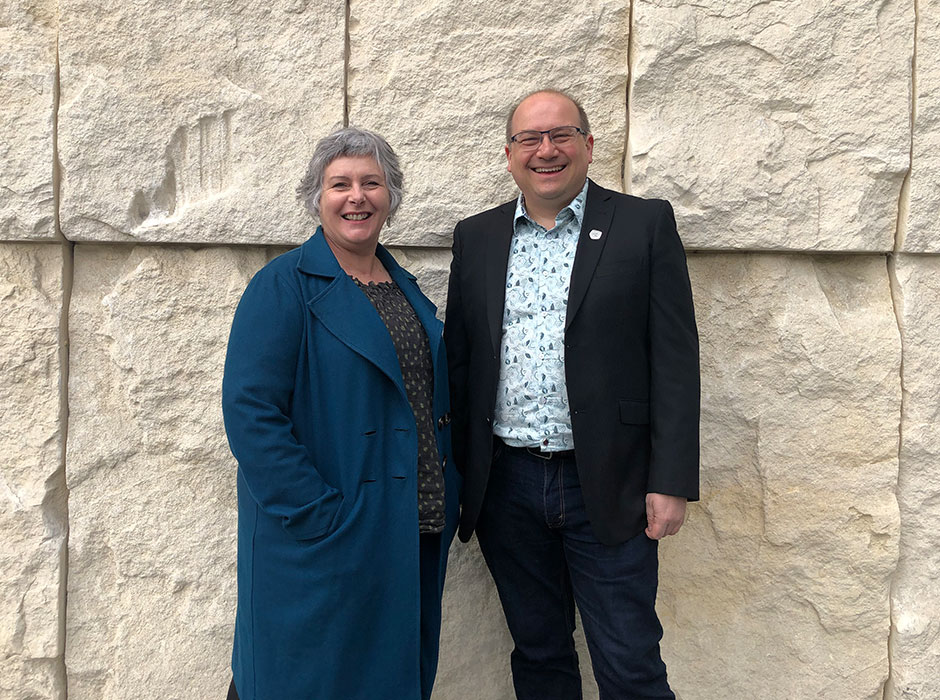
Pictured are Centre for Computational Culture and Heritage Co-Directors Dr Karen Greig (Archaeology Programme), left, and Professor Steven Mills (School of Computing).
The newly funded Centre for Computational Culture and Heritage (CCCH) will bring together researchers from all Divisions of the University as well as partners across the creative, culture, and heritage sectors and collaborators from Otago Polytechnic. Its goal is to establish Otago as a leading research centre at the intersection of computation and culture, heritage and technology, and science and art.
Co-Directors Steven Mills (School of Computing) and Karen Greig (Archaeology) are excited to see the new Centre launch.
“The Centre will support new connections between researchers in disparate disciplines, enable innovative exploration unique to our place in the world, and encourage a broader view of what is meant by both ‘computation’ and ‘culture and heritage’,” Karen says.
"This builds on our existing research excellence, strong ties with mana whenua, and the rich cultural heritage and collections of the University, the city, and the communities we serve."
Steven says the humanities and cultural sectors are hugely valuable, and new tools from the computing side will open up new opportunities.
"Being able to bring people together to work in this space with innovative technology is very exciting, and promises to be very rewarding. These opportunities will lead to economic, social, and environmental benefits," he says.
“The funding is very helpful as it allows us to carry out work to help get new collaborations started, but the aim is to use that as a seed for larger projects funded from outside the Centre.”
The funding will go towards making new connections and building capacity, including events such as research sandpits, hackathons, workshops, and wānanga.
Cardiovascular Research Centre

Pictured, from left, are members of the Cardiovascular Research Centre, early career researchers Tausi Tausi, Elena Cruz and Madyson Hintz.
Professor Peter Jones is Director of the Cardiovascular Research Centre, which is made up of three research units across the University campuses; HeartOtago (Ōtepoti), Christchurch Heart Institute (Ōtautahi) and Departments at the Wellington campus (Pōneke).
Peter says while cardiovascular research at Otago has gained longstanding national and international recognition – and the three units have also been previously recognised individually – this round of Research Centre funding marks the first time cardiovascular research at Otago has been recognised by the University as a whole.
“This feels like a validation of all the hard work and our desire to work as a cohesive team. It is also thrilling to be able to do all the exciting activities we have planned.
“Whilst I am Director, this Centre is a huge team effort. The enthusiasm, commitment and vision of the Directors at the three units are what makes this so exciting.”
The Centre aims to increase inter- and trans-disciplinary collaboration nationally across the three campuses, whilst promoting equity, diversity and inclusion, and supporting early-mid career researchers (EMCR).
Upholding Māori as Te Tiriti o Waitangi partners and recognising Pacific communities as equity groups with distinct needs is another objective of the Centre, as is embedding and strengthening kaupapa Māori and Pacific principles.
Most of the funding will go towards enhancing inter-campus collaboration, particularly focusing on the Centre’s EMCRs and providing them with an improved training environment, Peter says.
“It will also allow us to initiate strategic projects. We also all have a longstanding commitment to community engagement and health literacy. Some of the funding will allow us to continue this with our existing community partners but also grow it to work more with underserved communities.”
ASPIRE Aotearoa
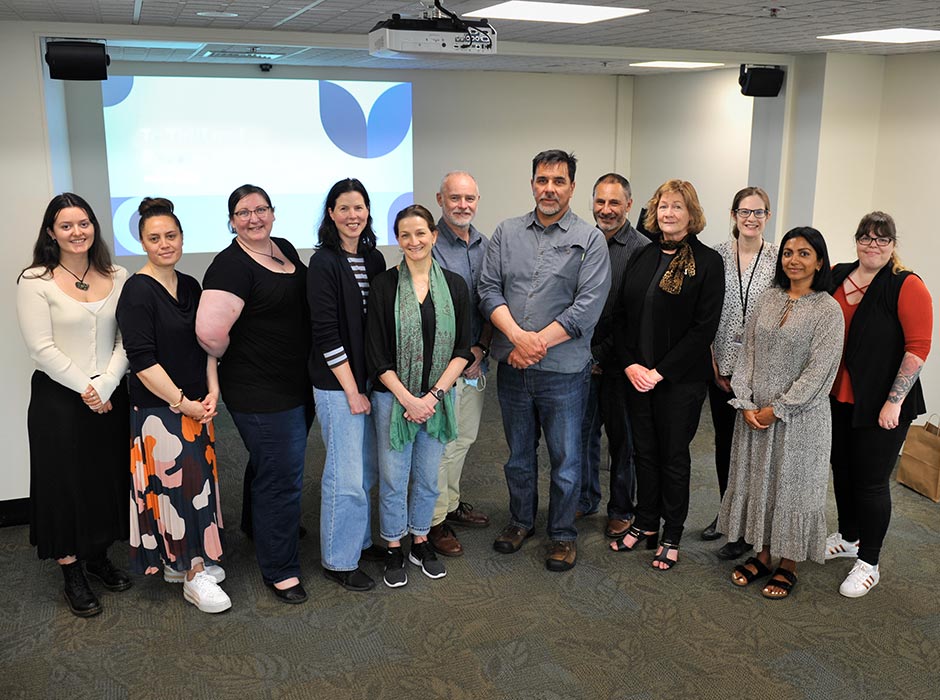
Pictured, from left, are members of the ASPIRE group: summer student Olivia Sloan, research fellows Lani Teddy and Dr Michaela Pettie, Co-Director Dr Jude Ball, Programme Manager Jacqui Hadingham, former Co-Director Professor Richard Edwards, Co-Director Associate Professor Andrew Waa, Workshop Convenor Richard Ngatai, Co-Director Professor Janet Hoek, research fellow Dr Janine Nip and summer students Miriam George and Katie Frost.
Professor Janet Hoek, Dr Jude Ball and Associate Professor Andrew Waa, co-direct ASPIRE Aotearoa, an international research collaboration focused on advancing evidence to support Aotearoa New Zealand’s tobacco endgame goals and reduce health inequities, particularly for Māori.
In addition to receiving Research Centre funding, ASPIRE has received the University’s Research Group Award, which provides a one off grant of $5,000.
“Funding is always useful, and this funding is especially useful, given our increasingly grim research-funding environment,” Janet says.
“We’re very grateful for the University’s recognition of our work. We only need to look within our own Department to see many highly productive and talented research groups; it’s very special to be recognised when there are so many deserving research teams.”
The Research Centre funding will help ASPIRE reduce the precarity of some members by ensuring they can undertake work not directly linked to grants (e.g., supervision, grant writing, Centre promotion, and invited talks).
“The funding means we can invest in our superb early and mid-career researchers who often do far more than their grants support. We’re excited to have some new opportunities for them.”
While ASPIRE is based within the Department of Public Health in the Faculty of Medicine’s Wellington campus, members come from many Departments and span all campuses.
“Our diverse membership enables us to undertake varied studies. For example, our current programme includes large-scale population surveys, experimental studies, qualitative research, and document analyses. The findings document smoking and vaping behaviours, explore policy impacts, and critically review tobacco industry practices,” Janet says.
“Centre members also spend a lot of time working with people who have lived experience of smoking and vaping. It’s a privilege to have these conversations, which add richness and complexity to findings from our surveys and experimental studies.”
ASPIRE has also budgeted funds to support new science communication strategies and has recently worked with some inspiring artists and animators who have developed novel ways of communicating the Centre’s work.
“We place a high priority on science communication, and we’re lucky to have some very creative people in our Centre. We will now be able to develop their innovative ideas to share our findings both in Aotearoa and internationally, where many of our collaborators are based.”
ASPIRE is planning a symposium to mark its 15th anniversary next year.