
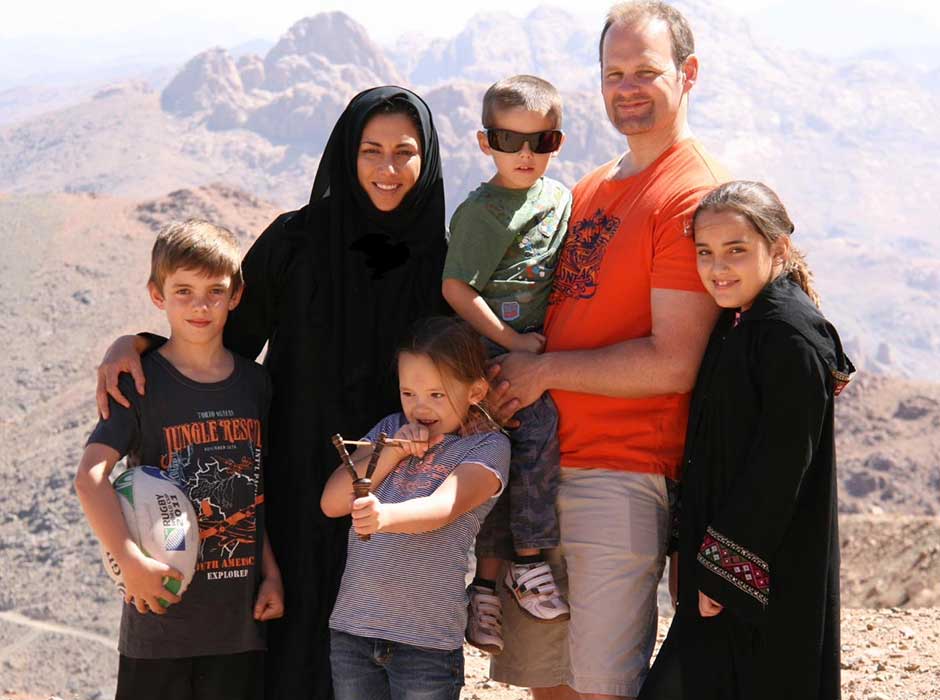
Otago Medical student Māia Lockyer (right) pictured with her family in Saudi Arabia about a decade before her big move to Dunedin.
Though from Hastings and born in Auckland, Māia Lockyer moved to Dubai when she was five and Saudi Arabia when she was eight, before making a solo return to New Zealand as an 18-year-old.
“I was so ready to come home,” she says.
“It was my first real experience living in New Zealand, coming here to Dunedin.”
After spending 13 years of her life in the Middle East, Māia (Ngāti Kahungunu ki Heretaunga, Ngāti Porou, Rongomaiwahine) made the decision to study medicine at the University of Otago – Ōtākou Whakaihu Waka.
“It was actually really good for me, for growing my independence and learning how to be an adult, but pretty early on as an 18-year-old.”
She had initially planned to study law in Auckland but quickly changed her mind while visiting her uncle's graduation at Otago and “seeing all the support for Māori students here”.
Having changed plans in the span of a week, Māia relied on support from Tū Kahika – the Māori Health Sciences Scholarship programme, as she settled into a new community.
“I didn't get a scholarship; they just welcomed me into their whānau and let me come to all of their extra tutorials.”
The support received through staff and students involved in the programme “made a world of difference".
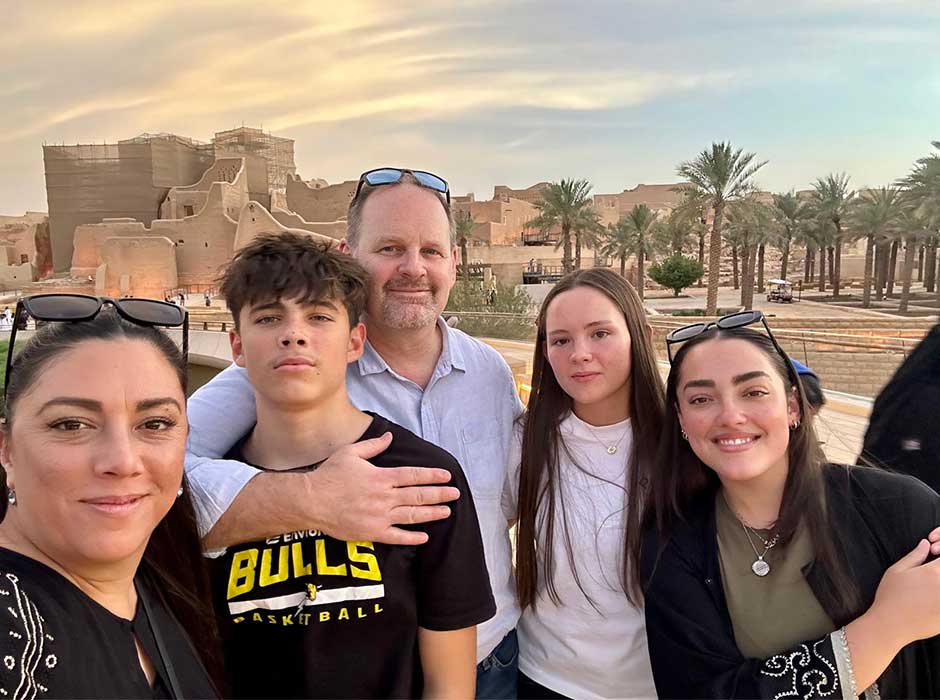
Māia Lockyer (right) and her family in Saudi Arabia soon before her awaited return home.
In 2023, Māia became Tumuaki of Te Oranga Ki Ōtākou, the Māori medical society for Otago students. During this time, she aimed to establish health initiatives to “give back” to the local community.
“… especially while we're studying here and being advantaged by what Dunedin has to offer us.”
Māia decided to organise a tent at Polyfest, delivering free blood pressure tests to students and members of the public. Of those who visited her tent, many took blood pressure medication but were asking her questions around what blood pressure even meant.
The experience reaffirmed why Māia chose medicine. It also inspired her to create the social media page Haumanu Hauora, helping to bridge the gap of understanding for underserved communities.
“We exist in a healthcare system that does not adequately inform our people. That means that we're not able to get fully informed consent, first of all, but it also influences the ways our people engage with their health.”
Haumanu Hauora is run by Māia and a group of 10 clinically trained students who she already had friendships with, a few of whom had experience producing social media content. The page includes videos providing advice or explanations on health topics in a way that is both more digestible and accessible.
"At first [my family] were a bit like, ‘What are you doing? Focus on your degree’. But I'm very stubborn. I'm the oldest of four and I'm very much my mother's daughter. Nobody can try and convince me otherwise when I'm set on something."
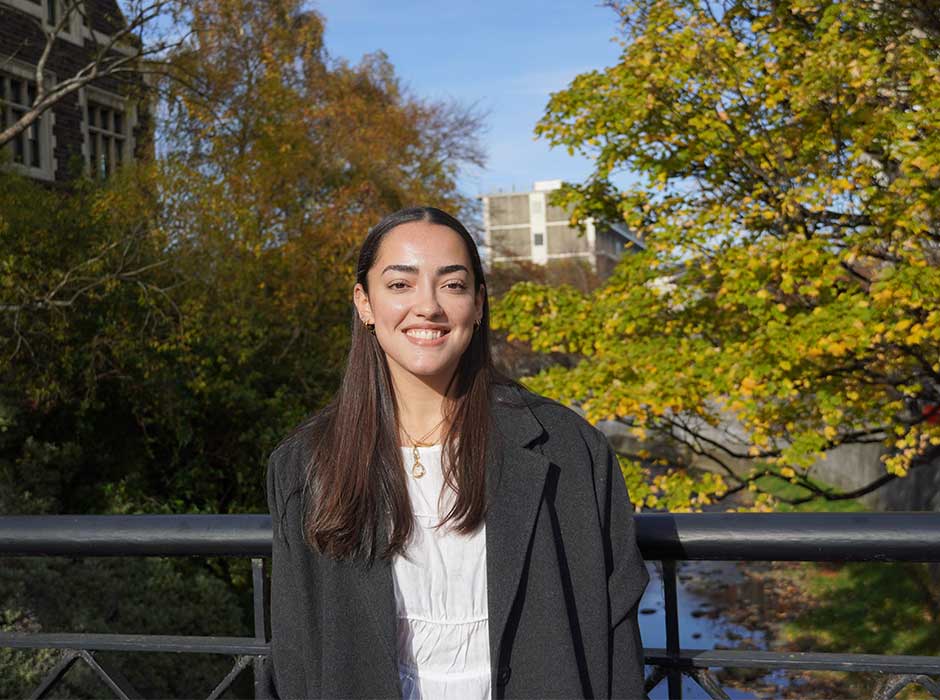
Otago tauira Māia Lockyer says finding reasons to be passionate makes medical school worth it.
Juggling the page along with her degree has not been an easy feat, but the feeling of excitement she gets making a difference keeps her going. Especially hearing stories from her audience on seeking medical help after viewing her content.
“We had someone say that they're now seeing a cardiologist for their heart conditions, but they would’ve had no idea to even go to the GP in the first place had they not seen our video.”
Moments like these make medical school worth it, she says.
“It can be a bit of a depressing workforce to be walking into; you have to find reasons to be passionate about it.”
Now, the page has about 10,000 followers across Facebook, Instagram and TikTok, with some videos reaching tens of thousands of views.
Māia initially planned to specialise in emergency medicine for its fast-paced, ever-changing environment, which she thrives in. But the more she researched Māori and Pacific health and witnessed the lack of representation, her reasoning began to shift.
“I've realised the importance of having Māori and Pacific in our emergency department.
“We carry such a high burden of disease and are more frequently visiting emergency departments with higher needs and while feeling so vulnerable walking into a space with no prior understanding or exposure.”
If Māia could leave everyone with one message, it would be the importance of empathy.
“We tend to carry this blame and judgment culture for people who don't understand their health. But that lack of understanding sits within the context of poor socio-economic backgrounds, cultural differences and family responsibilities.”
These misjudgements create the idea these patients are non-compliant, when in reality many do not have the experience to know what is happening and why.
“Understanding is a privilege, and that if we don't do the work to help close that gap in terms of understanding between people who are health literate and people who aren't, then we're always going to have those health inequities.”
Haumanu Hauora can be found across Facebook, Instagram and TikTok.
–Kōrero by Ani Ngawhika, Māori Communications Adviser
Division of Health Sciences
The Division of Health Sciences has campuses in Christchurch, Dunedin, and Wellington. We deliver undergraduate programmes in Biomedical Sciences, Dental Technology, Dentistry, Health Sciences, Medical Laboratory Science, Medicine, Oral Health, Pharmacy, Physiotherapy, and Radiation Therapy.
View