
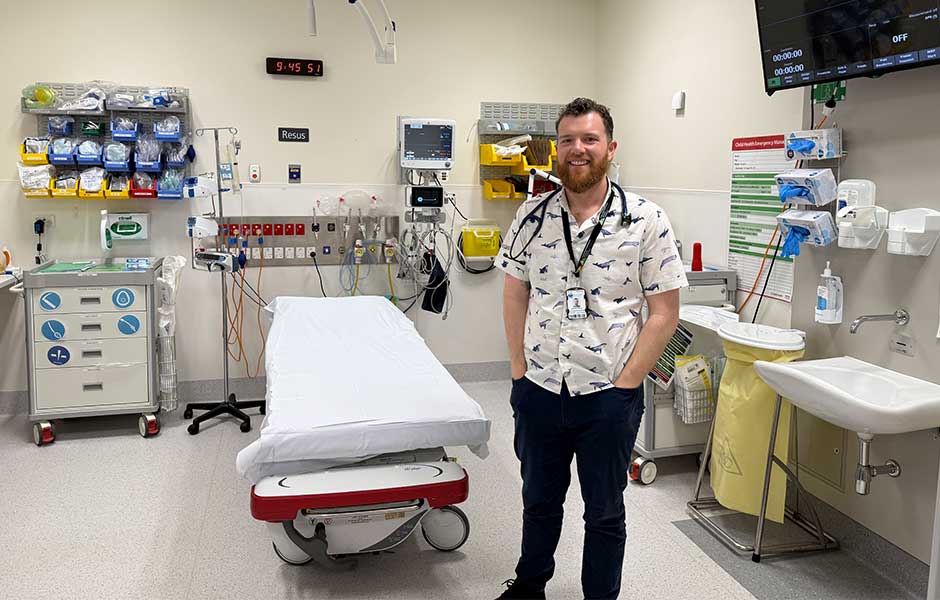
Dr Jonathan Penno enjoys the variety of working in rural medicine at Te Nīkau Hospital and Health Centre in Greymouth.
Working in rural medicine is a very rewarding career, says Greymouth doctor Jonathan Penno.
“For me, it feels like the right job, in the right place,” he says.
It’s clear this Otago alumnus is a big believer in the benefits of giving rural medicine a go. A part-time GP and part-time rural hospital generalist in Greymouth since 2022, Jonathan is also a Senior Professional Practice Fellow in the University of Otago’s Centre for Rural Health. In that role, he is the Assistant Co-ordinator of the Rural Medical Immersion Programme (RMIP) on the West Coast. Jonathan completed Otago’s Postgraduate Diploma in Rural and Provincial Hospital Practice (now known as the Postgraduate Diploma in Rural Clinical Practice (PGDipRCP) and co-convenes a postgraduate paper on cardiorespiratory medicine in rural settings.
Rural medicine won’t be the right path for every doctor, but Jonathan encourages all medical students to try it out during their training, whether as part of the RMIP or on a short-term placement.
“Students need to say yes to clinical experiences and clinical exposure, and you definitely get a wide range of experiences in a rural setting. Generalism as an undergraduate is a great thing for people’s learning.”
Born and raised in Dunedin, Jonathan didn’t have a long-term goal to be a doctor, rather his interest in science-related subjects in school was the springboard for trying to get into medical school.
However, as a fourth-year student, he felt “lost” in a big hospital environment.
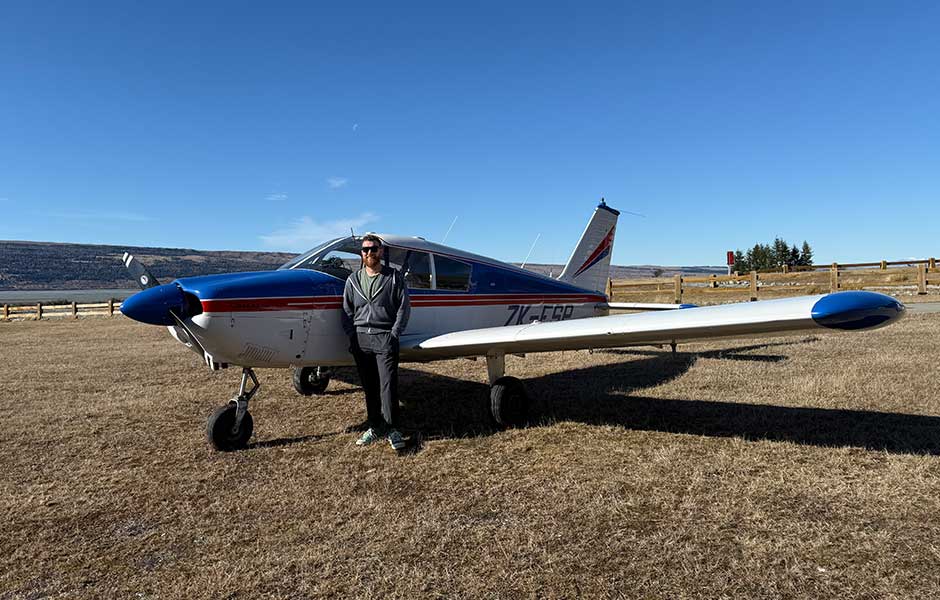
When time allows, West Coast doctor Jonathan Penno likes to put his pilot’s licence to good use.
“I found it overwhelming. It was hard to know what to do and there were expectations that I wasn’t sure I could meet,” he says.
His flatmates were applying for the RMIP and, although he didn’t know much about rural hospital medicine at that point, he decided to apply. Jonathan was accepted to the programme and was based in Balclutha for his fifth year.
Balclutha’s co-located hospital and GP practice made for a close-knit team and he really enjoyed the connection with the hospital community, being given responsibility and feeling useful.
“I felt like I was really part of the team, not just an annoying med student.
“I really valued being able to do RMIP, it catered to my individual needs.”
After graduating with his MB ChB, being a house officer at Ashburton Hospital also “scratched that itch of wanting to feel not just like a cog in the system, but that what I was doing was of value”.
Jonathan says his two current part-time roles give him the right balance and provide the opportunity to create close connections with patients. For example, while working in the emergency department he once diagnosed someone with cancer, treated them on the ward and then worked with them as their GP once they had been discharged.
He enjoyed being a student at Otago and says it prepared him well for his medical career.
“The teaching staff are great; I couldn’t have had better clinical teachers.”
- Kōrero by Andrea Jones, Team Leader, Divisional Communications
Rural Medical Immersion Programme
The Rural Medical Immersion Programme aims to cover the clinical knowledge and skills of the ALM5 curriculum through experiential learning, while promoting students' understanding of rural health and healthcare delivery.
Find out more