
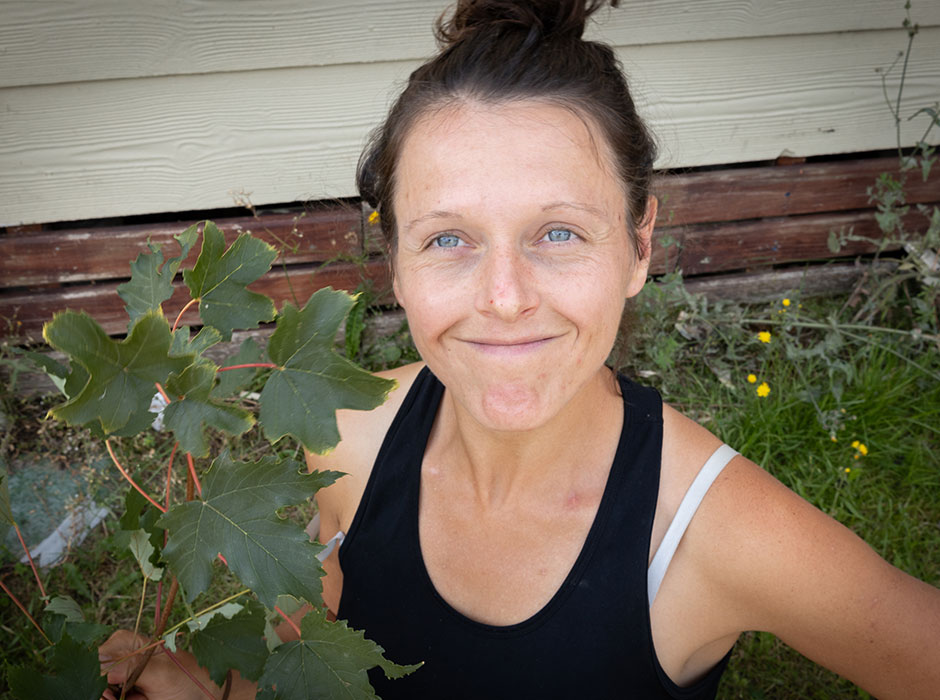
PhD candidate Stefanie Storz is looking at behaviour of sycamore trees in Aotearoa.
It’s a team player in the forests of Europe but in Aotearoa New Zealand’s native bush the sycamore could well take over.
PhD candidate Stefanie (Steffi) Storz, of the Department of Botany, is carrying out her Doctoral research in Central Otago, looking into how sycamores grow in Aotearoa, the impact they have on the environment and the best way to halt their invasion.
Sycamores were brought from Europe to Aotearoa in the 1880s specifically to serve as an ornamental tree, Steffi says.
“People adore their uniquely shaped leaves and summer shade, but they often aren't aware of sycamores’ unwanted, invasive behaviours,” she says.
A large part of the tree’s success can be attributed to its ‘helicopter’ seeds, which children love to play with.
“While they are quite fun to watch as they spin through the air, they are actually expert travellers. Those wings allow them to travel on the wind for up to 3km to find a new home.”
Steffi says because Aotearoa’s plants evolved in isolation, they’re susceptible to hostile plants.
“Our plants grew up on islands with no large land mammals to eat them, so most of them never felt the need to develop defence mechanisms like thorns, toxins, or fast growth. Then, humans arrived with ‘pro-athletes’ like the sycamore.”
In addition to that, sycamores are winter-deciduous, meaning they shed their leaves over a short period before winter, covering the ground. Most of Aotearoa’s native plants are not winter-deciduous, and it’s not yet clear what impact sycamores leaf fall has on the native species in the understory – the plants growing beneath the main forest canopy.
Sycamores are also incredibly adaptable and can grow just as happily on a salt-sprayed coastline as they can on a cold mountain slope, Steffi says.
“Most of these invaders are equipped with innate defence mechanisms and grow much faster than our local plants. They don't just take up space; they restructure the native ecosystems, changing soil chemistry and shading out native species. It’s an ecological issue, but also an economic burden for forestry and agriculture.”
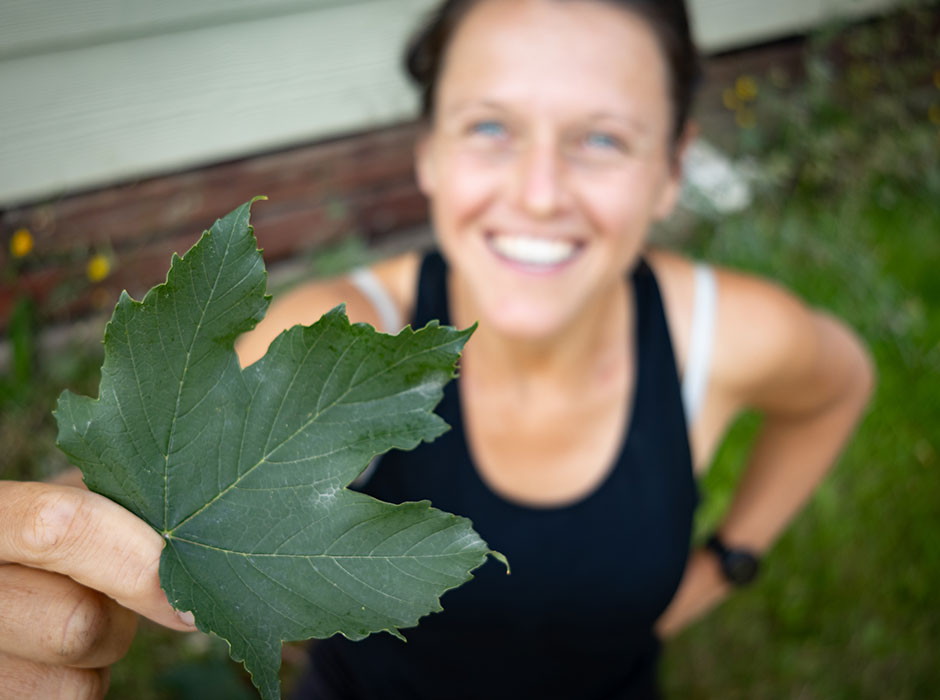
Stefanie says that in forests in Europe the Sycamore acts like more of a 'team player'.
One curious thing about the sycamore, Steffi says, is that in Europe the tree acts as a “team player” that lives alongside other trees and plants, but in Aotearoa it creates dense monocultures – spaces where only sycamores grow.
“I’m investigating if sycamores could potentially act as a ‘nurse plant’ for other invasive or native species and help them to regenerate.”
For anyone looking to remove a sycamore from their property, Steffi advises them to “be aware of the sycamore’s ability to coppice”.
“If you just cut the trunk, the stump will grow back with even more stems.”
A specific herbicide is required to kill the root system, she says, while small seedlings need to be pulled out “as soon as possible before they get a foothold”.
One of Steffi’s goals is to find out which method of removing sycamores is most effective without leaving chemical legacies in the soil that may hurt surrounding native plants.
Steffi says she is taking a “transdisciplinary approach” to her research by trying to involve diverse disciplines – including non-academic participation.
“I’m talking to the people on the ground, who are doing the work and have a lot of practical knowledge. I want to combine hard academic science with the "dirt-under-the-fingernails" knowledge of locals, landowners, and contractors. They see things that academic textbooks sometimes miss.”
Steffi is running a survey to collect information about methods people have used to remove sycamores from their property. Anyone interested in contributing can reach her here stost847@student.otago.ac.nz