
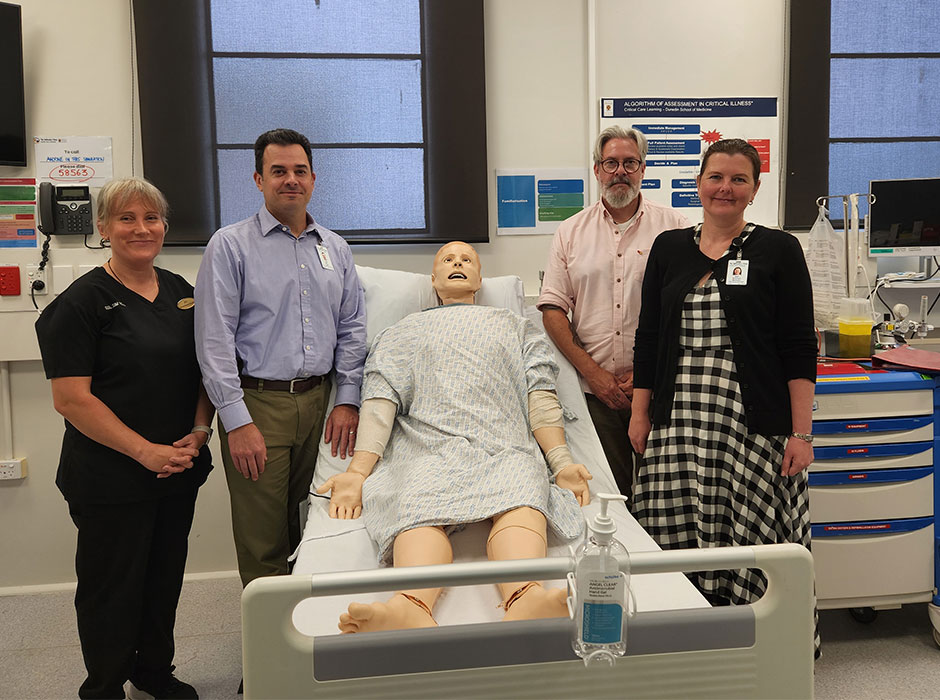
The Otago Clinical Skills Laboratories team (from left) Simulation Educator Joanne Robertson-Smith, Director Dr Erik Rufa, Operations Co-ordinator Paul Medeiros and Professional Development Unit Nurse Manager Bronwyn McGuire with a mannequin used to train medical students.
Whether it’s checking a mannequin for vital signs or working through an emergency scenario, it’s important Otago medical tauira can practise their skills in a safe, training environment.
Medical simulation is an important bridge to clinical practice, helping students translate what they learn into patient care, the new Director of the Otago Clinical Skills Laboratories (OCSL), Dr Erik Rufa says.
The laboratories are a joint initiative between the University’s Faculty of Medicine and Health New Zealand | Te Whatu Ora Southern. They provide tutor-led clinical skills training and education to medical students and HNZ clinical staff.
“Taking part in simulations means students can be more confident when they take care of patients in a clinical environment,” Erik says.
“They get to experience and think about what happens before they are faced with a real situation. This is particularly helpful with scenarios that may not happen very often in real life.”
The laboratories are located in Dunedin Hospital’s Fraser Building, and working alongside Erik are the rest of the skilled OCSL team – Operations Co-ordinator Paul Medeiros, Simulation Educator Joanne Robertson-Smith and Professional Development Unit Nurse Manager Bronwyn McGuire.
Paul says it’s vital for hospital staff and students to have the opportunity to share ideas and clinical experiences in a training environment. This helps develop the health workforce and support positive clinical change.
As well as working with mannequins and other simulation technology, students also take part in role-playing scenarios, where actors pose as patients for students to interview, examine and diagnose.
Erik says medical education traditionally focused on knowledge and learning about disease and treatment, but it’s important to also learn how to communicate and interact with other health professionals. Simulation is a great way to learn to work as a clinical team, and how to plan ahead and ask for help at an early stage.
As well as helping to train future doctors, OCSL staff provide a range of in-situ hospital and off-site simulations to improve patient care and help health professionals work well together as a team. This enables health professionals to develop, refine and maintain their clinical skills and feel more confident managing emergency situations.
Joanne gives the example of running an emergency anaphylaxis scenario at Dunedin’s Wakari Hospital for public health staff who carry out vaccinations in schools.
“It’s about helping them feel ready to deal with emergencies. There’s a staff wellbeing aspect too, as they will feel less stressed and more confident than if they hadn’t practised.”
Debriefing after the simulation sessions is also important so those taking part can reflect on what happened and any lessons learned.
Bronwyn says over time the OCSL has changed from being a facility into a service.
“It isn’t just a place to get education, it’s become outreach. And we have been accepted in the hospital as a team.”
The OCSL team aims to foster a culture of equity, inclusion, psychological safety and patient safety in everything they do.
Introducing Dr Erik Rufa
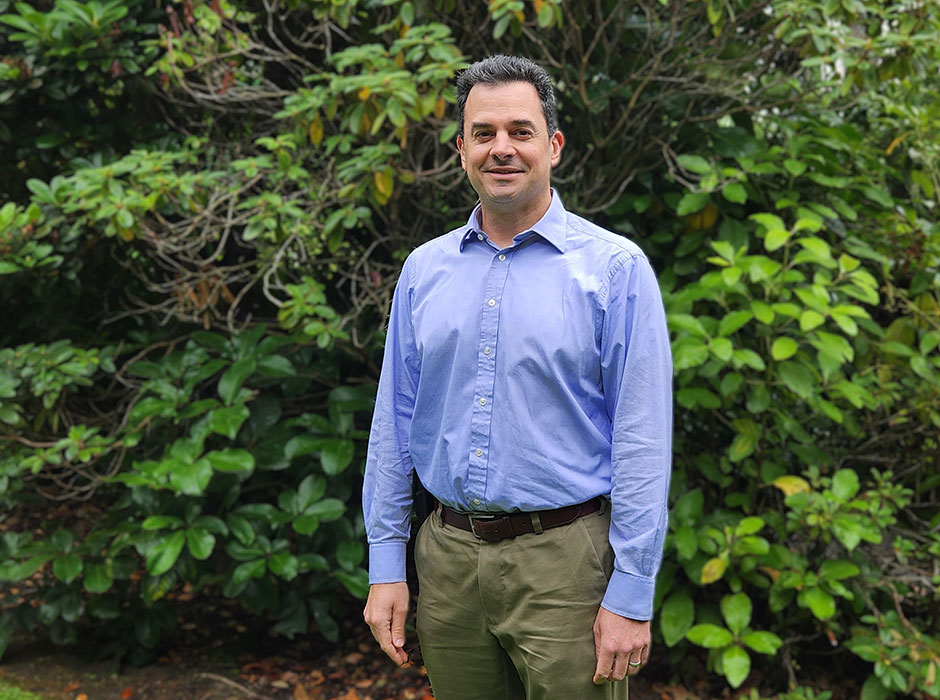
New OCSL Director Dr Erik Rufa is keen to spread the word about the great work the team is doing to improve medical education and patient care.
Taking up the mantle of Director of the Otago Clinical Skills Laboratories (OCSL) has given Erik the opportunity to return to his strong interest in medical simulation.
Born in the United States, Erik is an internal medicine specialist who worked in simulation in the Boston area for seven years before becoming the Director of Education for the simulation centre at the State University of New York Upstate Medical University.
Following his move to Aotearoa New Zealand in April 2022, Erik worked at Gisborne Hospital and was the Faculty of Medicine’s Associate Dean for Tairāwhiti.
He took up the role of OCSL Director in December, and is also Convenor of Clinical Skills for the Faculty of Medicine – Dunedin, and a part-time internal medicine consultant at Dunedin Hospital.
Erik is keen to build on the important partnership between the University and the hospital.
“I’d like to further integrate the OCSL into quality and safety programmes and systems at Te Whatu Ora Southern so we can continue to improve patient experiences.”
Erik also wants to develop interprofessional educational opportunities between the two organisations.
He praised OCSL staff, who are “a small team doing so much with limited resources”.
“One of my goals is to grow the OCSL team, spaces and equipment in order to support improved patient care through experiential learning.”
Now settled with his family in Ōtepoti Dunedin, Erik says he is enjoying the city and getting to know University and hospital colleagues.
- Kōrero by Andrea Jones, Team Leader, Divisional Communications
Otago Clinical Skills Laboratories
The Otago Clinical Skills Laboratories (OCSL) are a joint initiative between the Faculty of Medicine and Health New Zealand and Te Whatu Ora Southern (HNZ).
View