
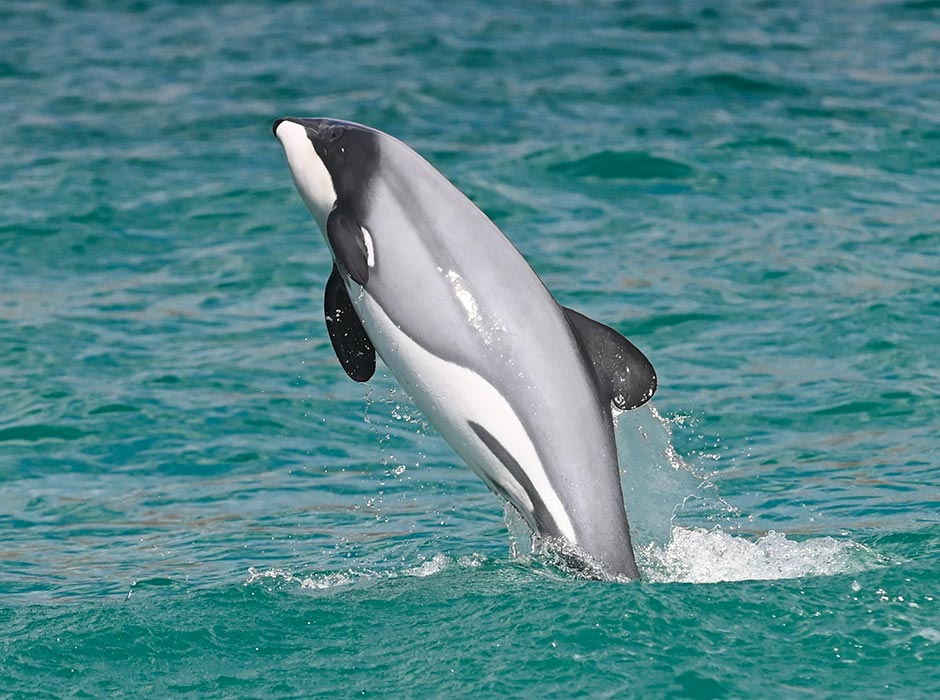
Endangered Hector’s dolphin enjoying the waters of Akaroa
Creating genomes from DNA is hugely important for managing threatened species –understanding their past and how they have adapted to their environment helps conservationists protect them.
But sampling free-swimming underwater aquatic mammals is tricky, and that means pulling together a quality genome using their DNA is also a challenge.
Researchers at the University of Otago’s Department of Anatomy have developed some clever workarounds to successfully assemble the first high-quality reference genomes for Aotearoa New Zealand's endangered Hector's and critically endangered Māui dolphins, despite working with degraded DNA samples.
The process developed by Dr Alana Alexander, PhD candidate Sebastian Alvarez-Costes, and colleagues from Otago, the University of Auckland, Massey University, Oregon State University, and the University of Munich provides several crucial insights into these rare marine mammals.
Threatened by human activities due to their coastal habitat and small population sizes, Hector's dolphins are classified as endangered, while the Māui dolphin is among the world’s most critically endangered marine mammals – fewer than 100 individuals remain in the wild.
Sebastian, who did the computational analysis, says the research shows that these dolphins have maintained small populations for thousands of years, making them inherently vulnerable to environmental changes and genetic drift.
Hector's and Māui dolphins split into separate subspecies approximately 20,000 years ago, coinciding with the last major ice age. This likely isolated different populations along New Zealand's coastline, eventually leading to the subspecies we see today.
The genome study revealed some concerns for Māui dolphins, which showed 40 per cent lower genetic diversity than Hector's dolphins. The research indicates the Māui dolphin might be at risk of inbreeding based on the patterns seen in its genome.
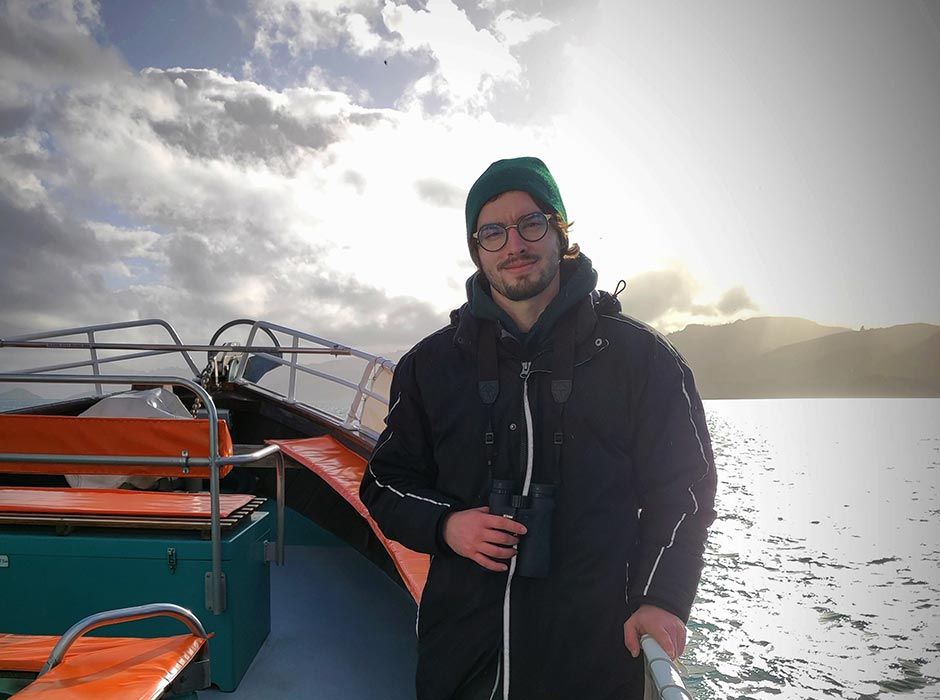
Sebastian Alvarez-Costes, who is researching Aotearoa New Zealand’s endangered dolphins
Comparing them to species already known for reduced genetic diversity like river dolphins and some baleen whales, raises serious concerns about the Māui’s dolphin’s ability to adapt to new environmental challenges.
“What’s also particularly concerning is their reduced genetic diversity may hamper their ability to adapt to other emerging threats like climate change,” Sebastian says.
While the challenges are great, this genomic information arms conservation managers with a deeper understanding of each population's genetic health and evolutionary history.
“That will contribute to better-informed decisions about protection measures.”
Not only does New Zealand have more understanding of these dolphins, the new processes the team developed using genomes of closely related species are creating a buzz in the science community.
Sebastian says studying rare animals, like the Māui dolphin, means most available tissues come from archived collections stored in less-than-optimal conditions, leading to DNA degradation.
“Rather than abandon these valuable but imperfect samples, we looked at how we could work with what we had.
“Using high-quality genomes from closely related whales and dolphins, particularly the bottlenose dolphin and vaquita, allowed us to create a reference framework to properly assemble and organise the fragmented DNA pieces from Hector's and Māui dolphins.”
The result was developing an innovative genome assembly process (pipeline) that leverages "synteny" – that is similarities in the order of genes between related species and the structure of their chromosome.
The technique proved remarkably successful, with more than 99% of the genome successfully mapped to chromosomes. These now look to be some of the best assembled genomes available for any whale or dolphin in the world.
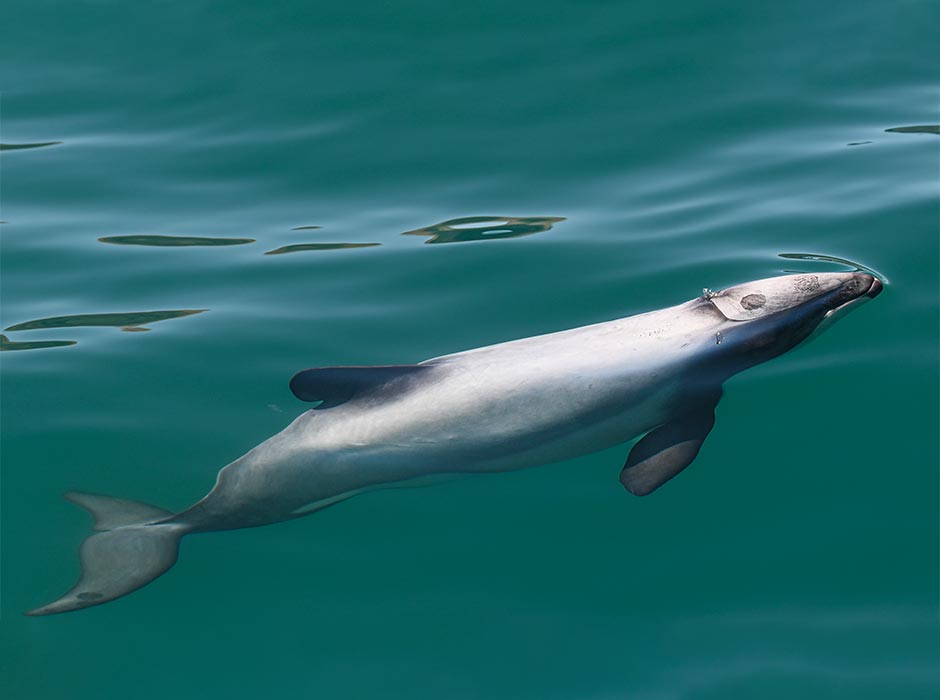
A sighting of the endangered Hector’s dolphin in Otago Harbour
Globally, conservationists are excited for the implications beyond this project from this innovative new approach.
Growing concern about the impacts of reduced genetic diversity for endangered species has driven efforts to build more genomes for a range of species across the world.
“The Hectors and Māui dolphins project has therefore become an exemplar genome for these researchers – it demonstrates that valuable genetic insights are possible even from suboptimal DNA samples. That means that our pipeline can provide potentially be used to generate high-quality genomic resources in other species,” he says.
Interestingly, Sebastian has come to Otago from Mexico, where there are some strong parallels between Hector’s and Māui dolphins here, and vaquita (a type of porpoise) in his home country.
“It’s been a fascinating experience, and I feel privileged to work with these taonga in Aotearoa,” he says.
These dolphins have important roles as kaiārahi (guides) for the great voyaging waka that travelled to Aotearoa and for wairua (spirits) of those who have passed returning to the ancestral homeland of Hawaiki. As such, they and their data are both taonga and tapu, and treating them with respect is paramount.
The project involved consultation with the iwi that had rangatiratanga and kaitiakitanga (sovereignty and responsibilities) for the area where the samples were obtained.
“Part of the obligation that we have to iwi and hapū is to look after data derived from these dolphins, which is why we are storing the genomes on the Aotearoa Genomics Data Repository, helping maintain the connections between iwi/hapū and the data collected from these dolphins.”
Sebastian says as well as support from Otago, they’ve also been lucky to have good backing through a Rutherford postdoctoral and Discovery Fellowship, Genomics Aotearoa, and international support via Nanopore’s ORG.one initiative.
~ Kōrero by Claire Grant, Communications Advisor, School of Biomedical Sciences
Publication details
Check out an infographic explaining the research.
Study anatomy at Otago
Anatomy is the inside story of who we are. From single cells to complex systems, anatomy helps us understand how we grow, move, think, and live.
Explore anatomy