
Ten University of Otago, Christchurch (UOC) researchers have been awarded Health Research Council of New Zealand Grants, supporting novel studies into aortic aneurysm repair, heart failure, brain cancer, AI, youth drug harm, and more.
Six of the ten have been awarded highly coveted Project Grants, each worth more than a million dollars, with two awarded Explorer Grants, and another a landmark Artificial Intelligence (AI) in Healthcare Grant.
They are among 23 grants awarded to University of Otago researchers in the latest Project (11), Emerging (2), Explorer (4) or AI Grants (1) funding round, worth more than $15.3 million in total.
This year, the HRC issued inaugural Request for Proposals for Artificial Intelligence (AI) in Healthcare grants, valued at $5 million.
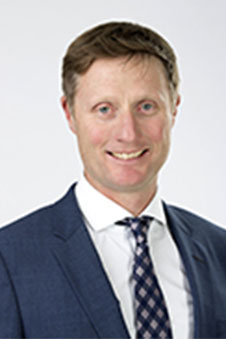
Professor Tim Eglinton
Head of UOC’s Department of Surgery and Critical Care, Professor Tim Eglinton, Research Fellow Dr Arthur Morley-Bunker, and others in a trans-disciplinary team, have been awarded $700,000 to support their cutting-edge research leveraging advancements in AI-driven computer vision models to improve diagnosis and better identify risk factors for gastrointestinal cancers.
Tim says existing methods of gastrointestinal cancer prediction are imprecise and often lead to over-treatment, exposing patients to unnecessary risky surgery or undertreatment, missing the chance to cure.
“Our research aims to develop automated, robust outcome prediction tools from digital images of biopsy specimens, combining them with other patient features to create predictive AI tools for bowel and pancreas cancer that are far more accurate than current methods,” Tim explains.
He says implementing this AI tool into clinical workflow would enhance diagnostic precision and prognosis, streamline workflow, and ultimately improve survival rates for these common cancers in New Zealand.
Project Grant awardee Dr Oliver Lyons from the Department of Surgery and Critical Care along with Professor Sue Crengle from the Dunedin campus, will investigate whether New Zealand women – who have a higher risk of aortic aneurysm rupture than men – might benefit from earlier keyhole surgical repair.
“Our study is part of an international trial of early keyhole surgery, comparing it to the current gold standard care in women with small aneurysms,” Oliver explains.
“This research aims to improve health equity and cardiovascular risk for women, particularly wāhine Māori, and provide evidence for sex-specific clinical guidelines for aneurysm repair.”
Associate Professor Anna Pilbrow, from the Department of Medicine, along with Dr George Wiggins from the Department of Pathology and Biomedical Science, will use their Project Grant to explore the mechanisms underlying inherited risk for heart failure.
“Although its estimated more than 25 per cent of our susceptibility to heart failure is inherited, genetic risk remains poorly understood, with current studies yielding few insights,” Anna says.
The team hypothesises that large copy-number variants (large deletions or duplications of DNA) may disrupt genes that are associated with development and progression of heart failure and explain some of the ‘missing’ heritability.
“Our project aims to understand how copy-number variants influence the risk of heart failure and poor survival in New Zealanders and may ultimately lead to better patient management through discovery of new drug targets and development of personalised treatment and management strategies,” Anna explains.
Professor Gabi Dachs, from the Department of Pathology and Biomedical Science alongside Associate Professor Tania Slatter from the Department of Laboratory Science in Dunedin, will use their Project Grant to test if brain cancer metastases are vulnerable to a drug commonly used to treat iron deficiency anaemia.
“Brain metastases have a poor prognosis and are challenging to treat, with difficult drug access,” says Gabi.
“We know that this anaemia drug can cross into the brain, so we want to test if brain metastases have an iron accumulation signature that leads to greater drug uptake, and if this is sufficient to target metastases by triggering cancer cell death by iron overload.”
Gabi says it is hoped this might provide a new treatment opportunity for those with otherwise limited treatment options.
Dr Rose Crossin (Department of Population Health) and Professor Joseph Boden (Department of Psychological Medicine) have also been awarded Project Grant funding for a study to help define and measure youth drug harm in New Zealand.
They say while our National Drug Policy aims to minimise alcohol and other drug-related harm, knowledge about how youth experience drug harm is limited, hindering the ability to quantify harms and to design and evaluate effective health promotion and early-intervention strategies.
“We will undertake a mixed-methods study using both qualitative interviews and a national survey to investigate how drug harm is experienced and conceptualised by Māori, Pasifika and non-Māori/non-Pasifika youth,” Rose explains.
“We’ll use the findings to develop measures to quantify the nature and extent of drug harm in Aotearoa’s youth, inform local and international policy and practice, and hopefully improve health and reduce inequities in drug-related harms, including injury and addiction.”
Dr Sarah Appleby, from the Department of Medicine is one of two UOC researchers awarded Explorer Grants. She will investigate whether a new blood test has the ability to better predict heart disease.
“Recent advances in detecting DNA modifications in blood have opened the door to a promising new set of potential biomarkers to better predict and identify people at risk,” Sarah explains.
“We will investigate oxidised mitochondrial DNA - released into the bloodstream when the heart is stressed or damaged - in both a heart attack model and blood samples from healthy volunteers who later experienced unexpected heart events, to determine whether it can serve as an early warning signal to identify at-risk individuals who might otherwise be overlooked.”
Professor Madhav Bhatia from Department of Pathology and Biomedical Science will use his Explorer Grant funding to investigate the role of lymphatics in chronic pancreatitis (CP).
“This study will be the first time that pancreatic lymphatics have been targeted as potential therapy in CP, with previous attempts all focused on single inflammatory agents,” Madhav says.
“This novel approach – using the body’s own drainage system – changes the frameshift for treatment of CP but has both a sound theoretical basis and highly encouraging early results from other fibrotic diseases.”
- Kōrero by Lorelei Mason
The Grants
HRC Project Grants
Dr Oliver Lyons, Department of Surgery and Critical Care, Christchurch, and Professor Sue Crengle, Department of Preventive and Social Medicine
Tackling gender inequity: The International Women's Aneurysm Trial
$1,439,803
Associate Professor Anna Pilbrow, Department of Medicine, Christchurch, and Dr George Wiggins, Department of Pathology and Biomedical Science
Copy-number variation: a source of missing heritability for heart failure?
$1,199,926
Associate Professor Tania Slatter, Department of Medical Laboratory Science, and Professor Gabi Dachs, Department of Pathology and Biomedical Science, Christchurch
Using an imaging drug to reduce brain metastases
$1,196,992
Dr Rose Crossin Department of Population Health, and Professor Joseph Boden, Department of Psychological Medicine, Christchurch
Defining and measuring drug harm for youth in Aotearoa New Zealand
$1,199,970
Professor Parry Guilford, Department of Biochemistry
Direct-to-stomach delivery of AKT pathway inhibitors for HDGC chemoprevention
$1,199,177
Dr Michael Pankhurst and Professor Greg Anderson, Department of Anatomy
Excessive FSH inhibition as a cause of ovulation failure in PCOS
$1,199,974
Professor Sarah Hook, School of Pharmacy
Development and delivery of oral prophylactic and therapeutic vaccines
$1,199,997
Associate Professor Lesley Gray, Department of Primary Healthcare and General Practice, Wellington
Acceptability and utility of cervical screening self-tests for big-bodied people
$1,199,831
Professor Peter Jones, Department of Physiology
Treatment of Alzheimer's disease via inhibition of ryanodine receptors
$1,197,729
Professor Sally McCormick, Department of Biochemistry
Uncovering the connection between serotonin and Lp(a) metabolism
$1,170,000
Professor Greg Jones, Department of Surgical Sciences
A DNA methylation marker of smoking exposure as a precision risk prediction tool
$1,107,917
Explorer Grants
Dr Sarah Appleby, Department of Medicine, Christchurch
Predicting cardiovascular events with a new blood test
$150,000
Professor Madhav Bhatia, Department of Pathology and Biomedical Science, Christchurch
Draining away pancreatic inflammation
$150,000
Dr Silke Neumann, Department of Pathology
Enhancing chemotherapy sensitivity in diffuse gastric cancer
$150,000
Dr Zeina Al Naasan, Department of Oral Sciences
Improving self-performed oral health – a digital technology solution
$150,000
Emerging Researcher Grants
Dr Brendon Roxburgh, School of Physical Education, Sport and Exercise Science,
Fit for treatment: Evaluating the feasibility of exercise during chemotherapy
$399,903
Dr Jane Taafaki, Va'a o Tautai - Centre for Pacific Health
Understanding occupational health and hazard exposures in rural Pacific meatworks
$399,999
HRC Artificial Intelligence (AI) in Healthcare Grant
Professor Tim Eglinton, Department of Surgery and Critical Care, Christchurch, and Dr Arthur Morley-Bunker, Department of Pathology and Biomedical Science
Improving gastrointestinal cancer outcomes with AI-enhanced digital pathology
$699,734
University of Otago, Christchurch
Research and study in Christchurch for a career in medicine and health science.
Find out more