
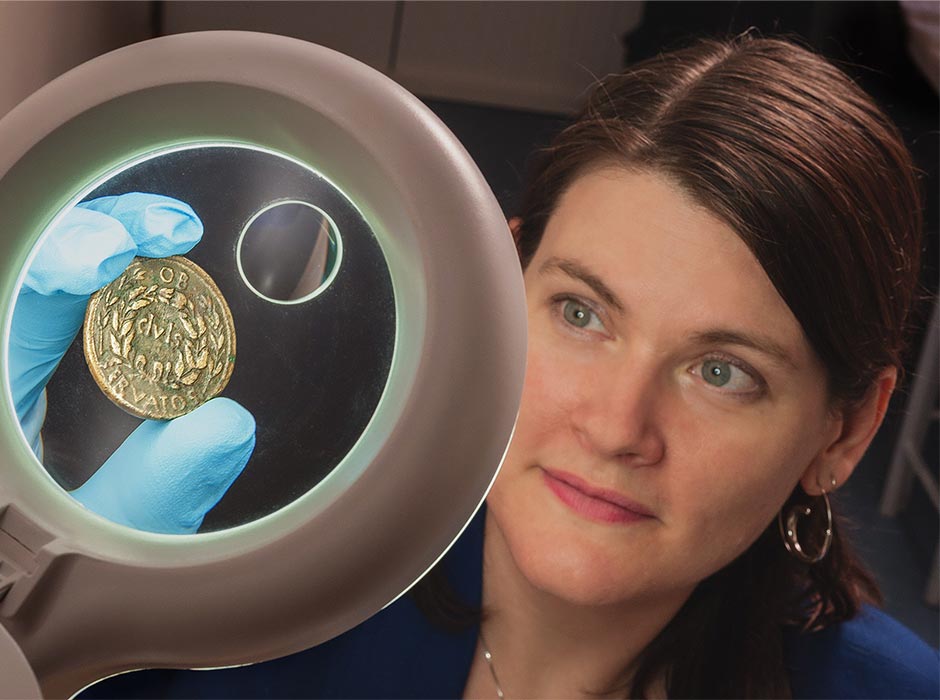
Associate Professor Gwynaeth McIntyre says Roman historian Suetonius is regularly dismissed as a reliable source because of his style and “tabloid” anecdotes. She is writing a volume that will showcase him as a historian and scholar in his own right.
An Otago Classics scholar will be taking a fresh look at author Gaius Suetonius Tranquillus, commonly referred to as Suetonius, a Roman historian who wrote during the early Imperial period of the Roman Empire.
Associate Professor Gwynaeth McIntyre, Te Puāwaitaka o Metatareina – Classics, has been awarded a University of Otago Prestigious Writing Grant to support her writing the volume ‘A Day in the Life: Reading Across Suetonius' de vita Caesarum’, which is intended to be part of a larger academic series.
“Suetonius’ work has captivated both ancient and modern audiences with all the scandalous anecdotes about those wielding supreme power,” Gwynaeth says.
The Classics scholar says Suetonius is regularly dismissed as a reliable source because of his style and “tabloid” anecdotes, and this volume will showcase him as a historian and scholar in his own right.
“He organises his narratives thematically rather than chronologically, allowing for a presentation of every aspect of an emperor’s life from childhood shenanigans to military and administrative successes, to sexual misadventures, even down to the minutiae of an emperor’s favourite foods or types of clothes he preferred,” Gwynaeth says.
The volume will focus on the 2nd century Common Era biographer’s presentation of the lives of Rome’s first twelve emperors, from Julius Caesar to Domitian.
Gwynaeth will explore Suetonius’ use of rhetorical framing and invective tropes to structure the biographical narrative of the lives of the emperors and their family members.
She says works such as Suetonius’ de vita Caesarum provide valuable insight into how the Romans viewed, engaged, and came to terms with autocratic rule.
– Nā Antonia Wallace, Kaitaraki Pārokoroko - Communications Advisor
Te Puāwaitaka o Metatareina
Otago's Classics Programme has an outstanding reputation for research and teaching, specialising in Greek and Roman art, archaeology, history, mythology, and society as well as the study of Greek and Latin language and literature.
Find out more