
Q&A with Maioha Watson (Waikato, Tūhoe, Ngāti Mutunga, Ngāti Manawa), 2025 20Twenties Young Alumni Award recipient
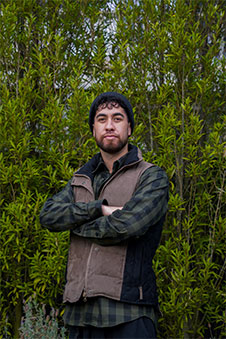 As a kaimahi in the Office of the Deputy Vice-Chancellor Māori, Maioha leads and supports the delivery of mihi whakatau and whakawātea on campus. He serves as a kaikōrero representative for the University during off-campus visits. Maioha also wrote the new karakia for Ōtākou Whakaihu Waka.
A champion of te reo Māori, Maioha is a licensed translator. He has also served as a Te Mana Ākonga Te Huinga Tauira Kaiwhakawā (National Māori Tertiary Students’ Association judge).
Maioha was an Aspiring Leaders Forum Delegate for Ngāti Mutunga last year and received a Prime Minister’s Scholarship, participating in a cultural exchange to Taiwan in 2025. He was an executive member of Te Rōpū Māori and was a composer for the association’s 30th anniversary EP/album.
Maioha graduated with a BA (Hons) in Māori Studies in 2024. He is currently studying towards a Master of Arts and is set to submit his thesis at the end of this year.
Q: How did you react when you heard you had received the award, and what does it mean to you?
I was genuinely shocked and really stoked. I had heard of the award and knew the calibre of past recipients, so I never imagined I would be considered. To receive it was both humbling and meant a lot.
It’s not just something I see as my own achievement. For me, it reflects the support of my whānau, friends, colleagues, and mentors who have backed me since I left home. I often say that my success isn’t mine alone, but the success of those who stand behind me. I feel incredibly grateful to have been recognised in this way.
Q: What path have you followed since graduation?
Since graduating, I have gone on to pursue a Master of Arts (thesis) in Māori Studies. My research focuses on the long-term impacts of kōhanga reo, particularly in relation to identity, language revitalisation, wellbeing, and Māori leadership.
Alongside my study, I am privileged to work at Ōtākou Whakaihu Waka in a role that supports the implementation of te reo Māori and tikanga across the institution. This allows me to bring together both my academic interests and my professional practice.
I am aiming to submit my thesis at the end of this year. Through this journey, I have been strongly encouraged by my supervisor, Professor Michael Reilly, as well as other mentors, to continue on to doctoral study. Pursuing a PhD is definitely something I am considering.
Q: What inspires and motivates you to work in the areas you are involved with?
What motivates me is seeing the next generation doing amazing things, and a strong sense of responsibility to my people as a young Māori. Much of that comes from my own upbringing and experiences, especially having come through kōhanga reo, kura kaupapa and wharekura. Those environments shaped who I am, and I see my work as a way of giving back to those foundations.
I’m also inspired by the people around me – Koro Hata and other kaimahi in the Office of the DVC Māori, my mentors and my peers, who continue to carry out and grow this work. Being able to contribute, even in a small way, to the intergenerational movement of language and cultural revitalisation is what keeps me grounded and motivated.
Q: What are your plans for the future?
In the immediate future, my focus is on completing my Master’s thesis. Beyond that, I see myself continuing to work within kaupapa Māori spaces – whether that’s through rangahau, professional practice, or community engagement – with a particular focus on strengthening te reo Māori and supporting Māori development.
Q: Tell us about the highlights of your time at Otago, and how it has influenced you in your career and following your interests?
One of the highlights of my time has been the relationships I’ve built with kaimahi, fellow tauira, and the wider Māori community on campus. Those connections have been incredibly important in shaping both my academic journey and my personal growth.
Being involved in kaupapa Māori spaces within the University has also been a highlight. These experiences have reinforced my commitment to working in areas that support Māori aspirations and outcomes.